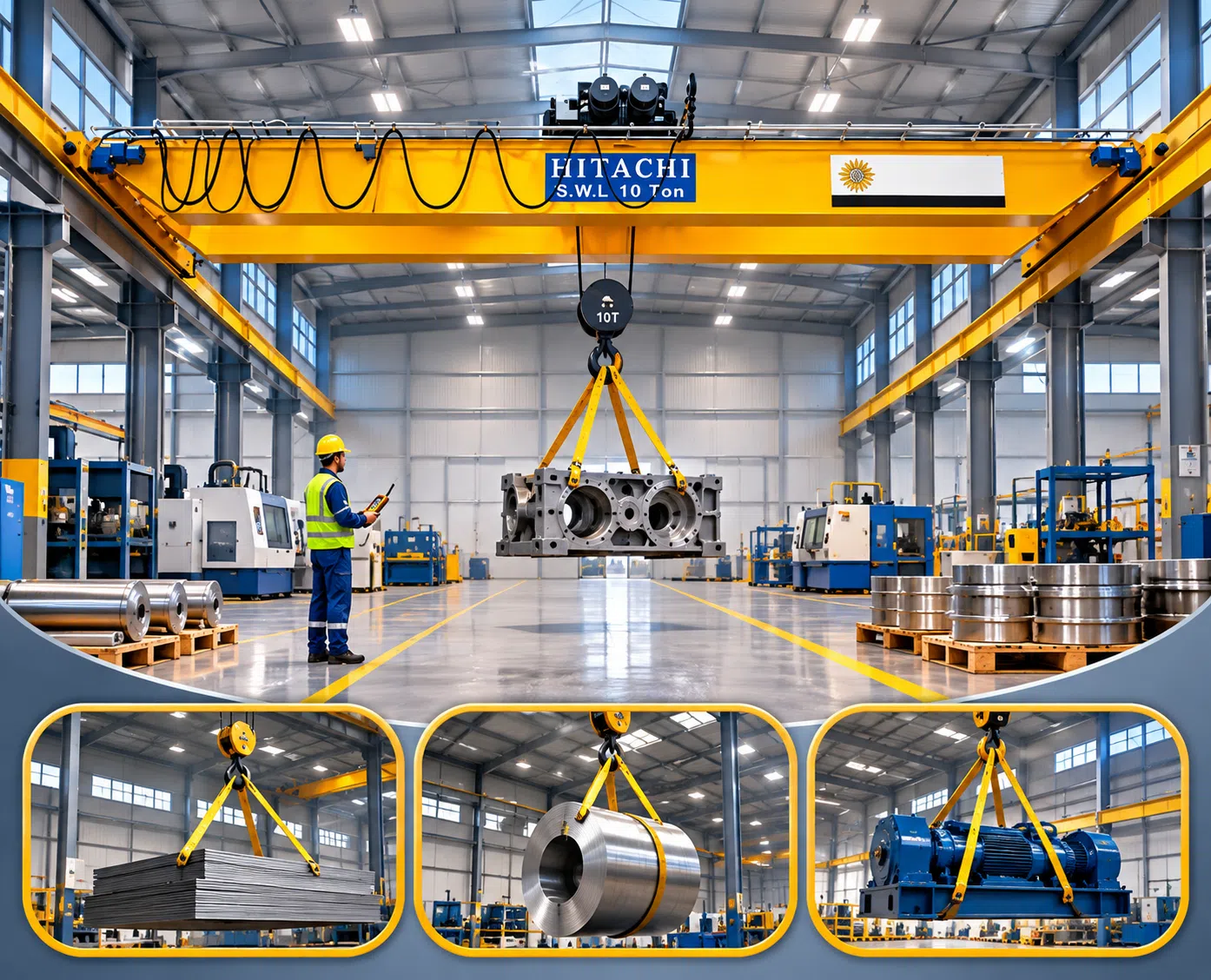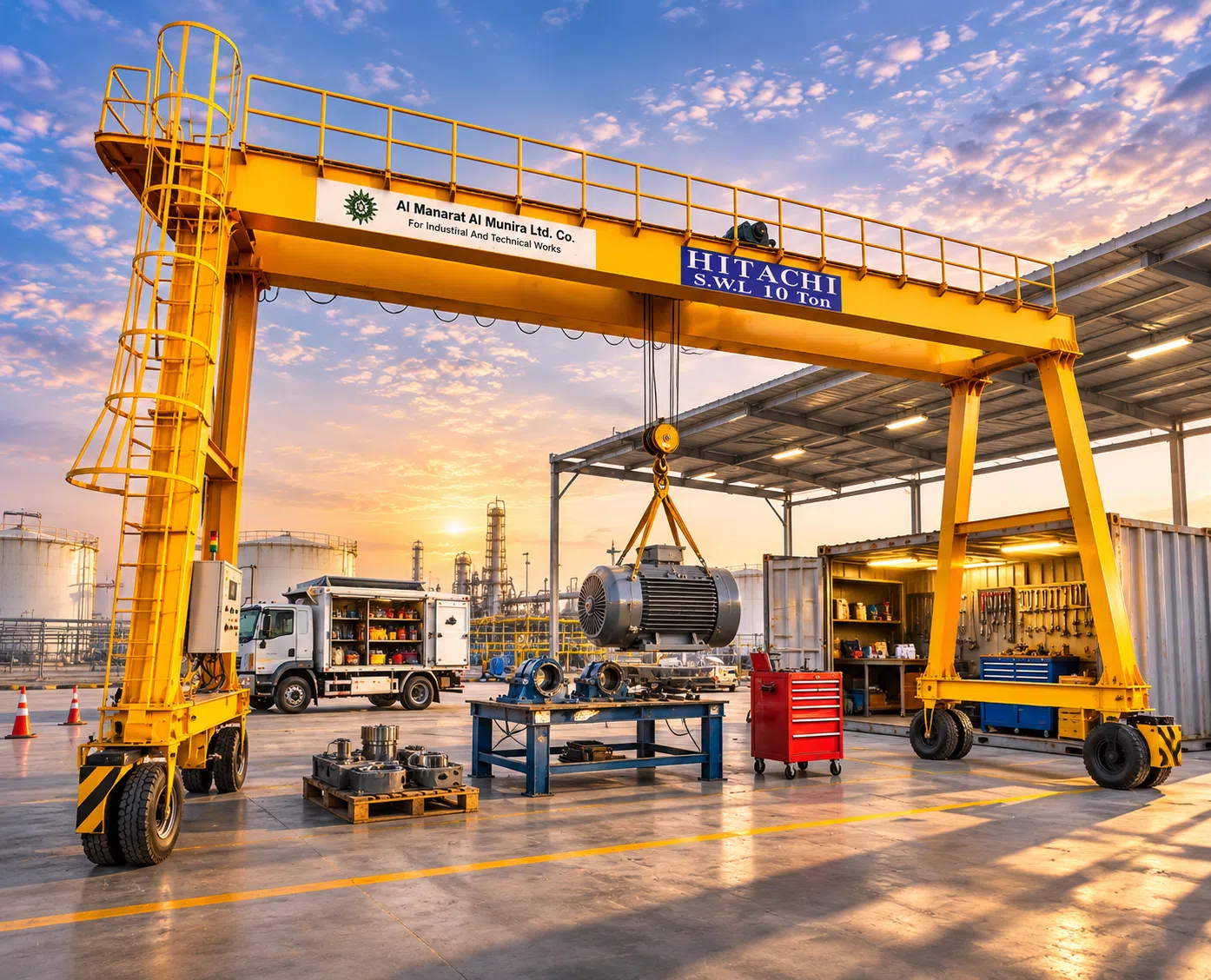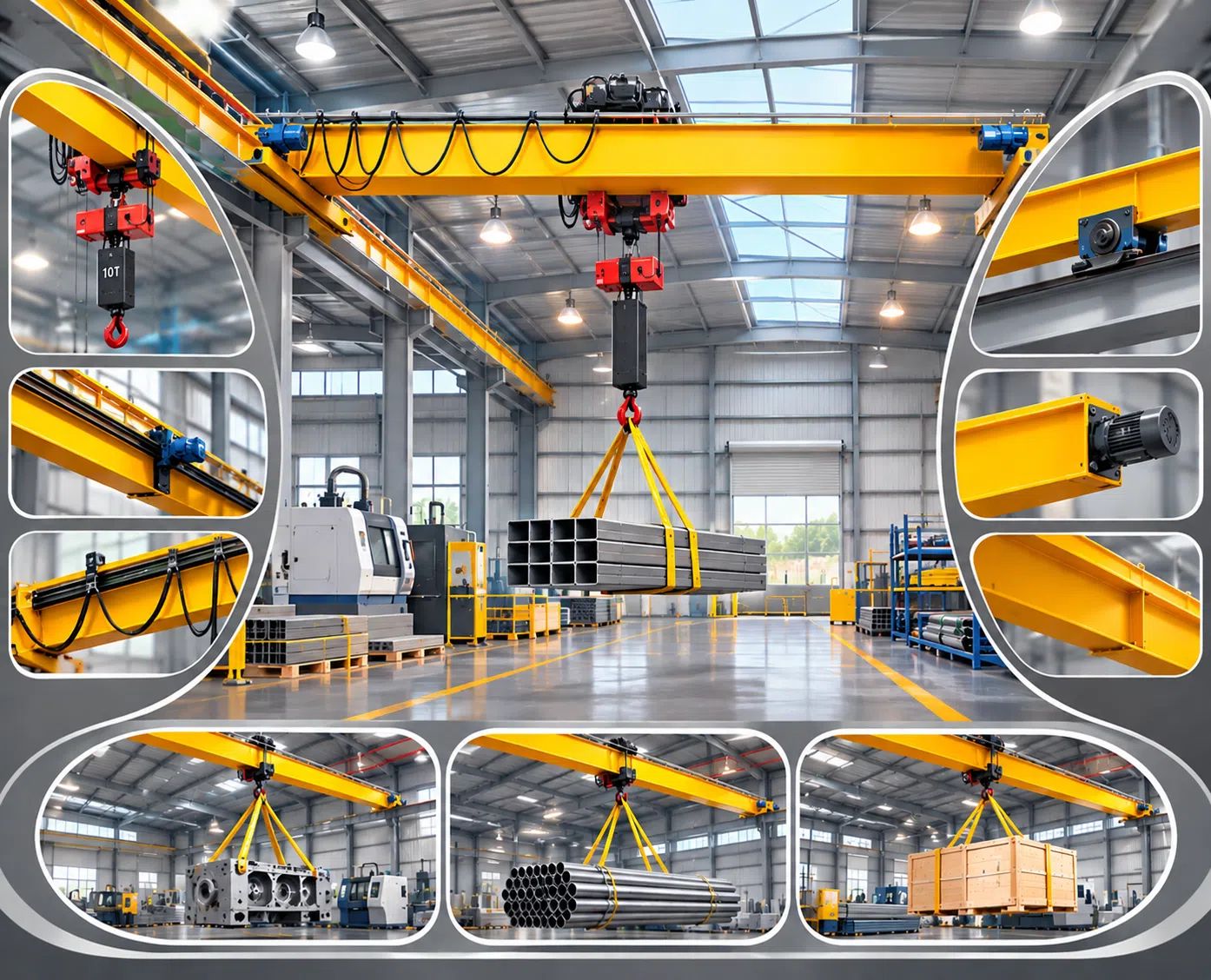

Wall-Mounted Cranes: The Ideal Space-Saving Solution for Crowded Factories
Equipment density inside manufacturing lines and assembly stations peaks when work tables and machines compete with truck aisles and forklift routes. Every square metre of the facility floor becomes an expensive investment that cannot afford to be wasted on large mechanical bases or additional support columns that obstruct worker movement. The challenge is even more complex in existing plants that rely on a general overhead crane serving the whole hall. Technicians have to wait a long time for the crane to be free to move a small part, which holds up the work station and lowers overall productivity. Given this difficult spatial and operational equation, wall-mounted cranes, in their various engineering configurations, stand out as a game-changing option that lifts the handling burden off the floor entirely by using the walls and the vertical concrete and steel columns, turning neglected vertical space into smart, highly efficient lifting stations.
What Are Wall-Mounted Cranes?
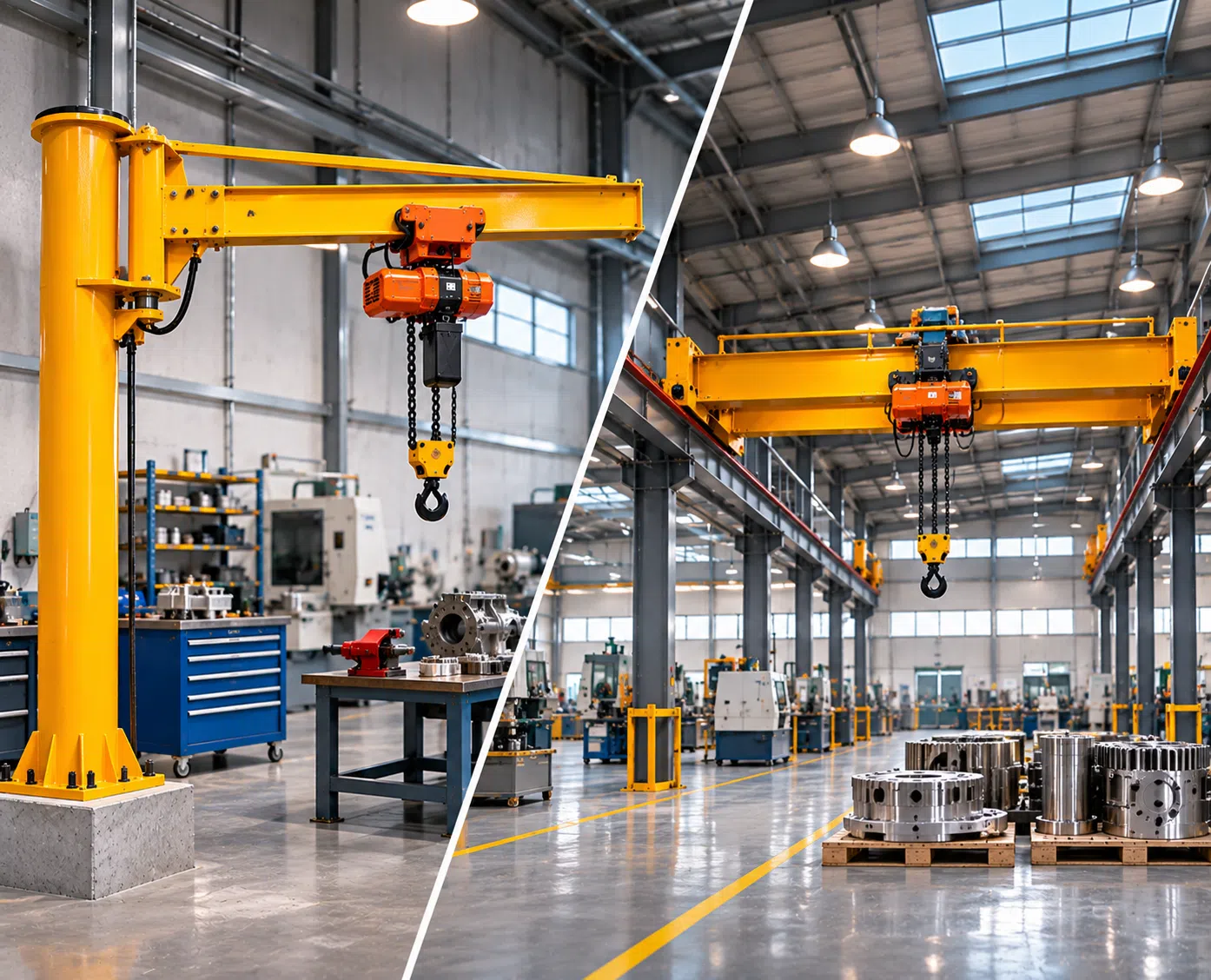
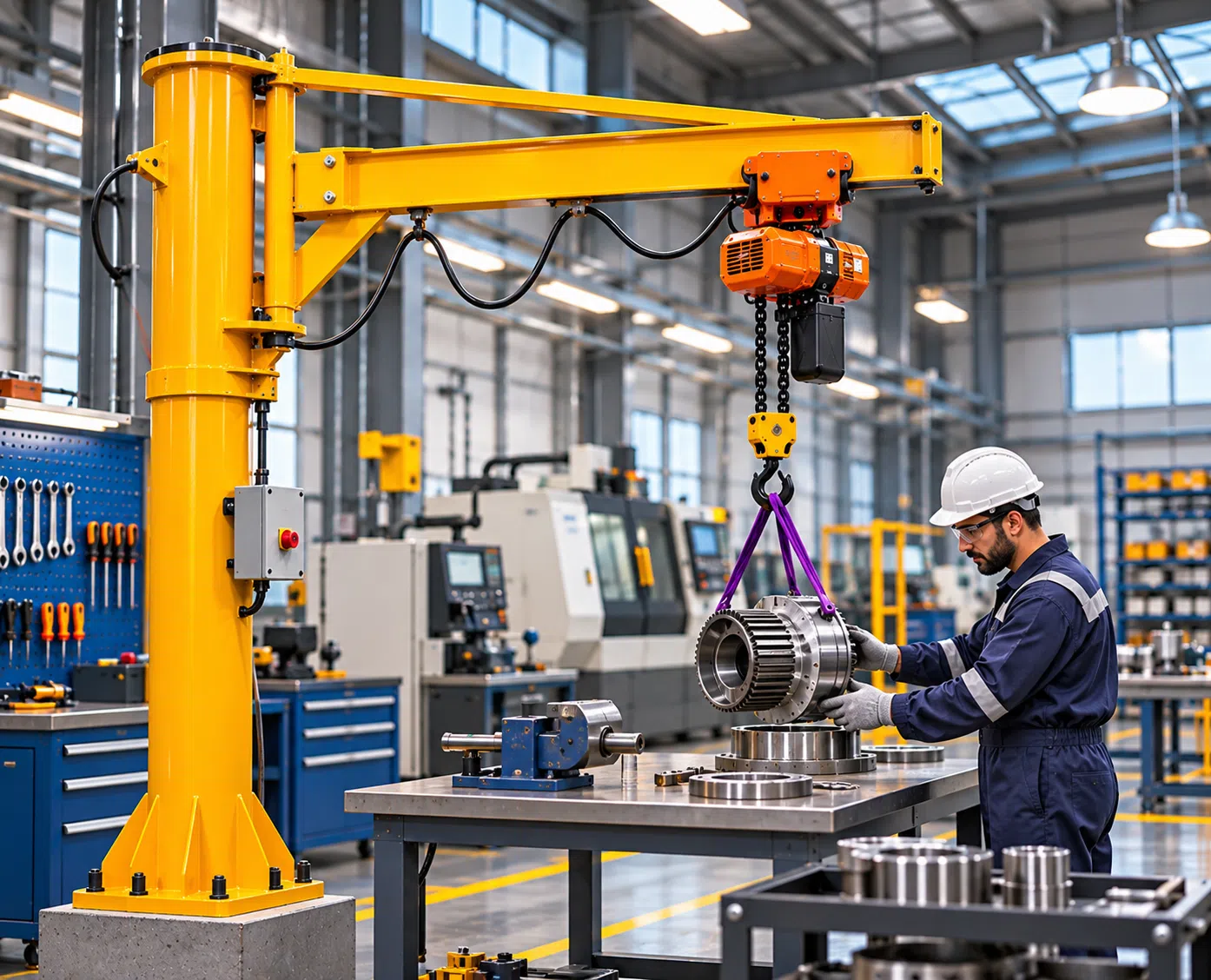
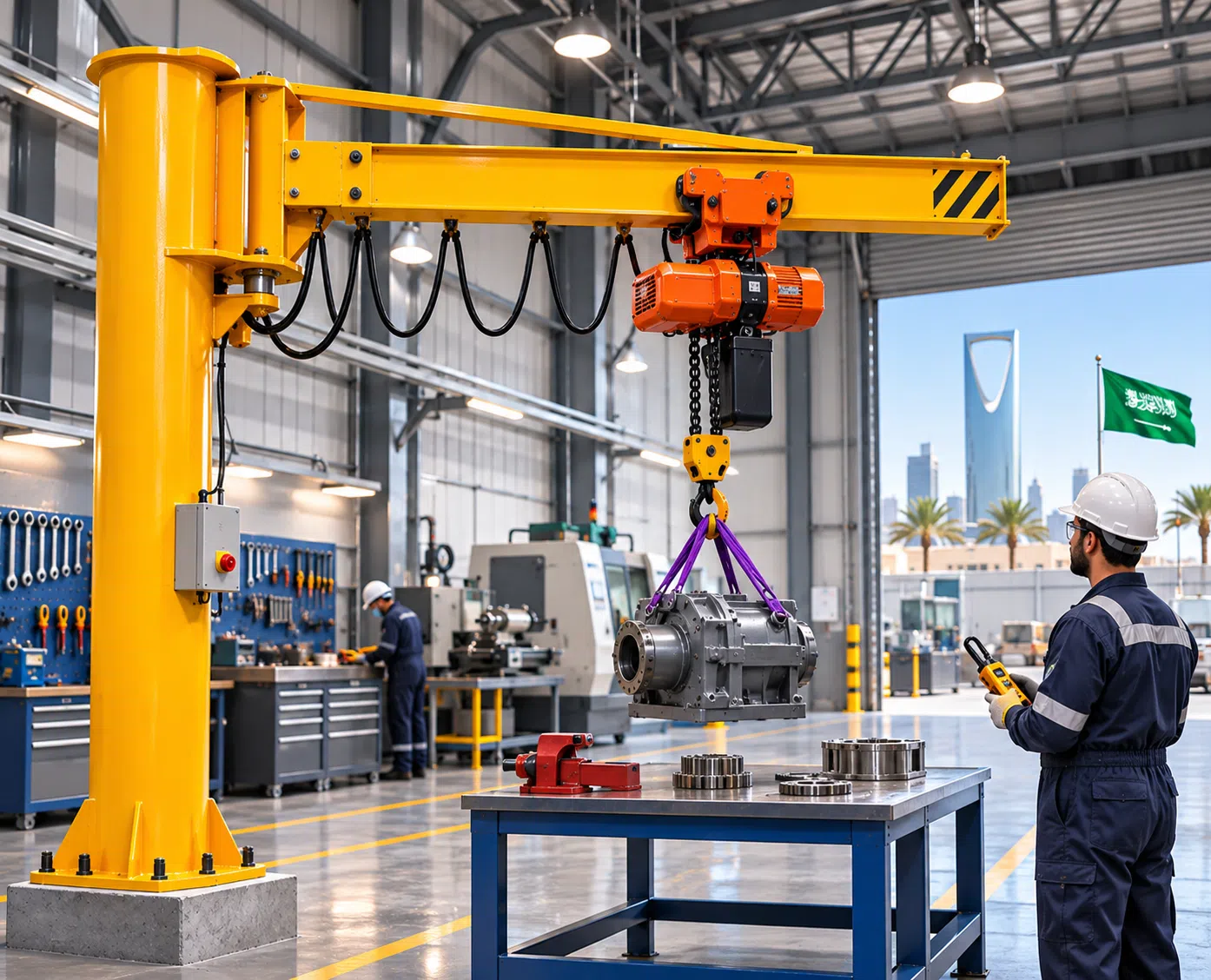
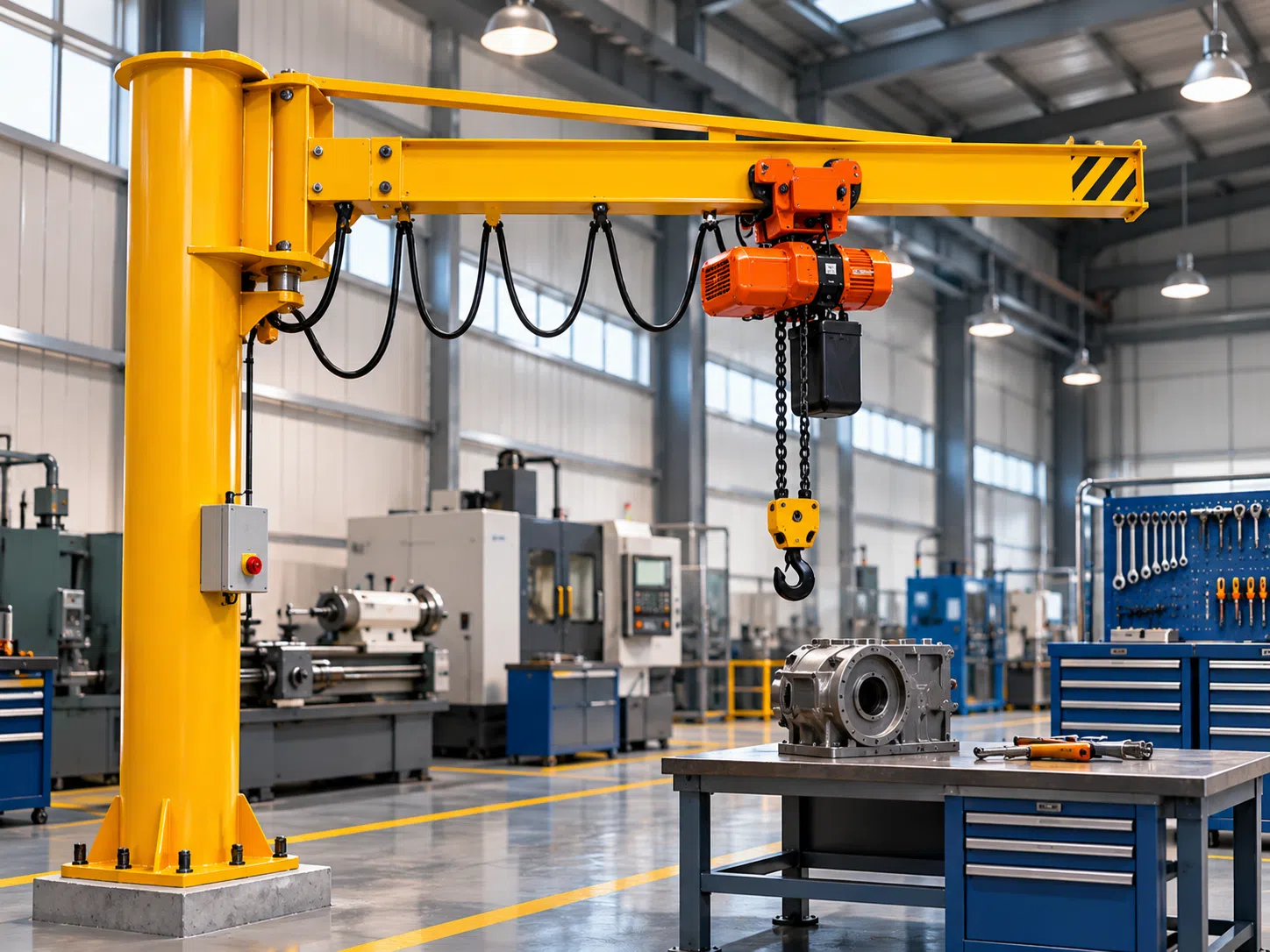
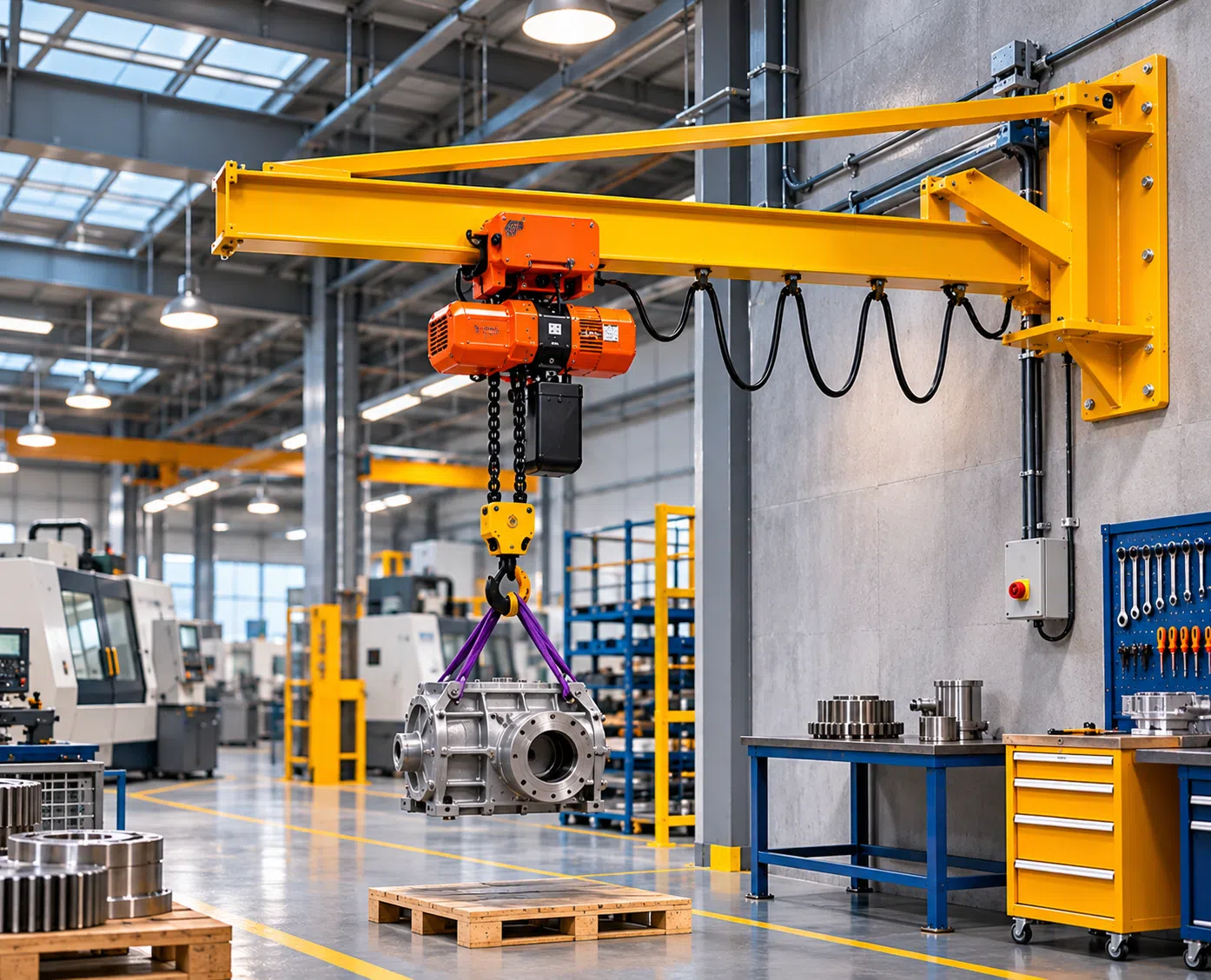
Wall-mounted cranes (Wall-Mounted Cranes) are mechanical lifting systems built around a horizontal cantilever arm fixed directly to the plant's reinforced concrete walls or the building's steel columns, without any contact with the hall floor. The hoist trolley travels along this arm to cover a semi-circular working area, with rotation angles of up to 180 or 200 degrees, providing a dedicated lifting platform for individual work stations.
These compact systems give crowded production halls immediate operational advantages:
- Freeing 100% of the factory floor beneath the crane for machines and forklift routes.
- Eliminating waiting times by giving technicians at maintenance and assembly stations a dedicated crane for each station.
- Reducing total construction costs by dispensing with costly ground concrete foundations or fabricated vertical steel columns.
The Mechanical Anatomy of a Wall-Mounted Crane System
These cranes derive their durability from the smart distribution of bending and moment forces onto the building's existing structure:
1. Wall Brackets & Hinges
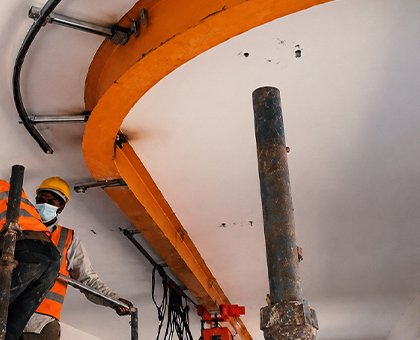
The mounting system consists of two steel plates, upper and lower, fixed with pre-tensioned bolts that encircle the column or are anchored deep into the concrete wall. The upper plate carries the tension forces from the weight of the load and the arm, while the lower plate absorbs the direct compression forces, with heat-treated spherical bearings ensuring smooth axial rotation.
2. Jib Boom
The arm is made from a rolled steel beam (I-Beam / H-Beam) with the trolley running on its lower flange, or from a hollow closed box section with an internal channel for the wheels to protect them from dust. This beam is engineered with calculated resistance to deflection (Deflection) when the hook reaches its maximum free reach.
3. Tie-Rod Support
In light, economical models, the arm is supported by an inclined steel rod that connects the outer end of the arm to the upper mounting bracket. This tie reduces the arm's self-weight while maintaining excellent lifting capacity, allowing very light manual rotation for the operator.
4. Hoist & Trolley
The trolley travels horizontally along the arm and is fitted either with an electric chain hoist for compact tasks and precise lifting, or with a wire rope hoist for heavy loads, with rigid mechanical stops at the end of the arm to prevent the hoist from leaving its track.
Types of Wall-Mounted Cranes in Manufacturing Environments
Crane designs vary to suit the engineering requirements and the space available inside the halls:
1. Wall-Mounted Cantilever Jib
Its arm extends horizontally at 90 degrees to the column and provides the maximum clear lift height (Clear Lift Height) below the arm, since there are no upper tie rods to obstruct lifting. This makes it ideal for halls with low ceilings that need the full available height.
2. Tie-Rod Supported Jib
Its arm relies on an inclined upper tie rod, which reduces the thickness of the arm beam and keeps its overall weight light. This design eases manual rotation for light and medium loads and offers an economical manufacturing cost for facilities.
3. Wall-Traveling Jib Crane
The most advanced model in this family. The whole cantilever arm travels lengthwise on beams and rails fixed along the factory wall, beneath the path of the main overhead crane. This lets it serve an entire row of consecutive assembly stations and move between them smoothly without needing multiple cranes.
Comparative Analysis: Wall-Mounted Cranes vs. Floor-Mounted Column Jib Cranes
The following points show the direct technical and operational differences between wall mounting and mounting on freestanding columns, to help you make the best decision for your factory:
- Floor space use and traffic aisles: Wall-mounted cranes leave the hall floor 100% clear and clean, with no ground obstructions, whereas column-mounted cranes need a circular area around their cast base, which takes space from aisles and restricts vehicle movement.
- Civil works and foundation costs: Wall-mounted cranes need no breaking up or concrete pouring in the floor and only require mechanical fixing to existing columns, whereas column-mounted cranes require excavating and pouring large reinforced concrete bases, adding to the cost and preparation time.
- Rotation angle range: The wall-mounted crane's rotation is limited to a semi-circle of 180 to 200 degrees at most because the wall blocks the path, whereas column-mounted cranes offer free full rotation of 360 degrees, covering an open circular work area.
- Reliance on the building's structural strength: A wall-mounted crane is closely tied to the soundness and capacity of the existing walls or columns to bear bending moment and tension forces, whereas column-mounted cranes rely on their own independent foundations without placing any stress on the hangar structure.
Industrial Applications Where Wall-Mounted Cranes Excel
This equipment serves vital sectors characterized by work stations lined up along the walls:
Turning Workshops and CNC Machine Feeding
The crane is mounted above each machine or between two adjacent machines. It lifts raw steel blocks and casting molds and lowers them with great precision into the clamping jaws without violent manual pushing, protecting sensitive machine tables and speeding up set-up between shifts.
Engine and Truck Assembly Lines
The crane allows the technician to lift cylinder heads and gearboxes, move them from wall storage racks and position them accurately on engine frames on the production line, with the ability to stop movement at comfortable heights that prevent back strain.
Welding and Mechanical Forming Stations
Welders use the wall-mounted arm to suspend steel parts and workpieces and adjust their angles in space during welding, saving the facility from buying expensive hydraulic positioning tables and fixtures.
Inspection and Final Packing Stations
Finished products are moved from the end of the manufacturing lines and stacked into shipping boxes or onto wooden pallets quickly and with complete safety, without occupying the central aisles of the hall.
Approved Safety Requirements for Installing and Operating Wall-Mounted Cranes
Loads suspended from an extended arm generate very dangerous tension and shear moments on the fixing points, which requires strict adherence to precise safety standards:
- Structural adequacy of mounting columns (Structural Adequacy): Engineering verification that the existing concrete or steel columns can resist the tension and shear forces produced by the maximum load at the arm's maximum reach, and use of steel-plate clamping systems (Clamping Systems) around the columns to prevent stressing the concrete.
- Mechanical rotation limiters (Rotation Stops): Installing adjustable steel stops on the rotation axis to limit the range of arm movement and stop it colliding with the hall walls, electrical cabinets or adjacent pipelines.
- Digital overload protection (Overload Protection): Fitting the crane hoist with digital load sensors that cut the lifting motion instantly if the operator tries to lift a weight beyond the rated capacity, protecting the mounting bracket and the arm from structural deformation.
- Rotation brakes and resistance to self-drift: Fitting the rotation axis with friction dampers that stop the arm from moving on its own because of a leaning wall or air currents inside the hall, ensuring the load remains perfectly stable until the operator guides it.
How Does "Al Manarat Al Monerah" Support You in Selecting and Equipping Wall-Mounted Cranes?
Al Manarat Al Monerah (almanratalmonerah.com) leads the engineering and manufacture of industrial lifting systems in the Kingdom and the Middle East, providing an integrated package of services to equip factories with the best space-saving solutions:
- Engineering survey and wall capacity verification: Visiting your facility and carrying out structural calculations for the hall columns and walls to determine the right type and length of wall-mounted arm, and ensuring no stresses beyond the building's safe limits are applied.
- Custom engineering fabrication to international standards (FEM/ISO/CMAA): Building cantilever arms and mounting brackets from high-strength steel plate, applying precise welding standards and non-destructive testing (NDT) to ensure a long service life without mechanical fatigue.
- Equipping the crane with genuine components and speed drives (VFD): Integrating European-certified electric chain or wire rope hoists fitted with motors of superior thermal insulation, along with frequency inverters that provide smooth acceleration and deceleration to prevent load sway.
- Certified on-site installation and precision laser alignment: Specialized engineering crews supervise the fixing of the wall brackets and laser-level the rotation axis to ensure very light, smooth rotation with no physical effort.
- Load testing and calibration certificates for the civil defense: Carrying out static load tests (125%) and dynamic load tests (110%) on site and providing official inspection reports proving the equipment's compliance with industrial and occupational safety requirements.
- Genuine spare parts readiness and fast technical support: Keeping motors, brakes, travel wheels and radio controls in local warehouses to secure fast preventive maintenance that protects your lines from sudden stoppage.
Al Manarat Al Monerah lets you contact its engineering experts directly to obtain a detailed study and a customized technical proposal that puts in your hands a wall-mounted crane system that saves your factory's space and raises its productive capacity to the highest levels with complete safety.
Frequently Asked Questions About Wall-Mounted Cranes and Saving Space
Can wall-mounted cranes be installed on walls built of ordinary brick or hollow block?
Mounting wall-mounted cranes on brick partitions or hollow blocks is strictly prohibited. This equipment requires strong reinforced concrete walls or solid concrete columns able to resist tension and shear forces, or mounting through steel beams and clamping collars that encircle the structural columns carrying the hangar.
What is the maximum available arm length for a wall-mounted crane and its maximum capacity?
Standard capacities for wall-mounted cranes usually range from 250 kg up to 5 tonnes. The standard arm length is between 2 and 6 metres to keep the moment forces applied to the wall balanced. In special designs, the arm can be extended over longer distances with additional tie rods and special engineering reinforcement of the columns.
How is the wall-mounted crane arm rotated while loads are suspended?
For light loads up to one tonne, the arm rotates manually and very smoothly through a comfortable guide handle attached to the hook, thanks to high-quality spherical bearings. For heavier loads, or when long arms are used, an electric motor fitted with a frequency inverter and connected to a slewing gear is installed, so the operator can rotate the arm left and right at the push of a button on the radio remote with full precision and safety.
Read also: Engineering Requirements for Installing a Monorail Crane in Assembly Lines