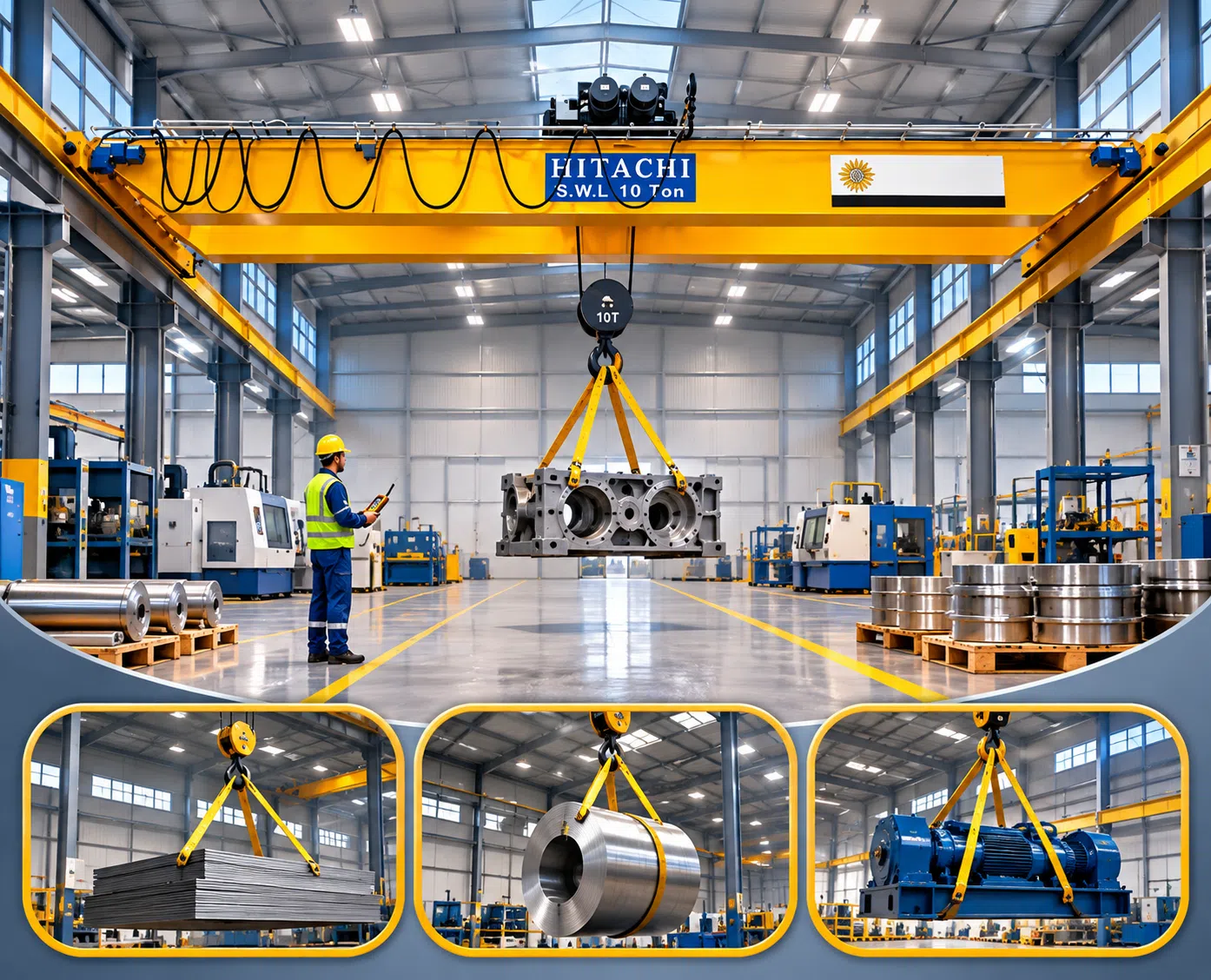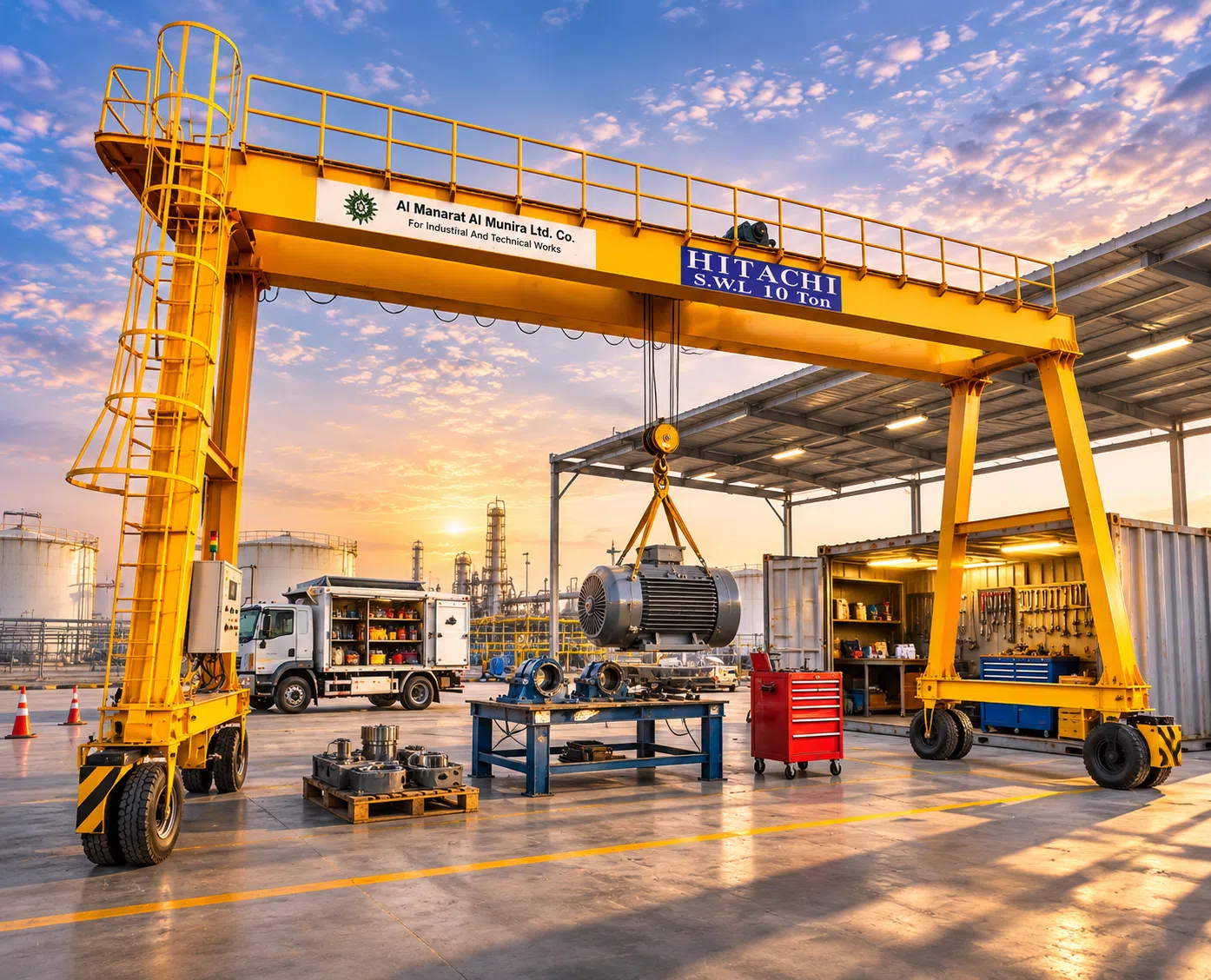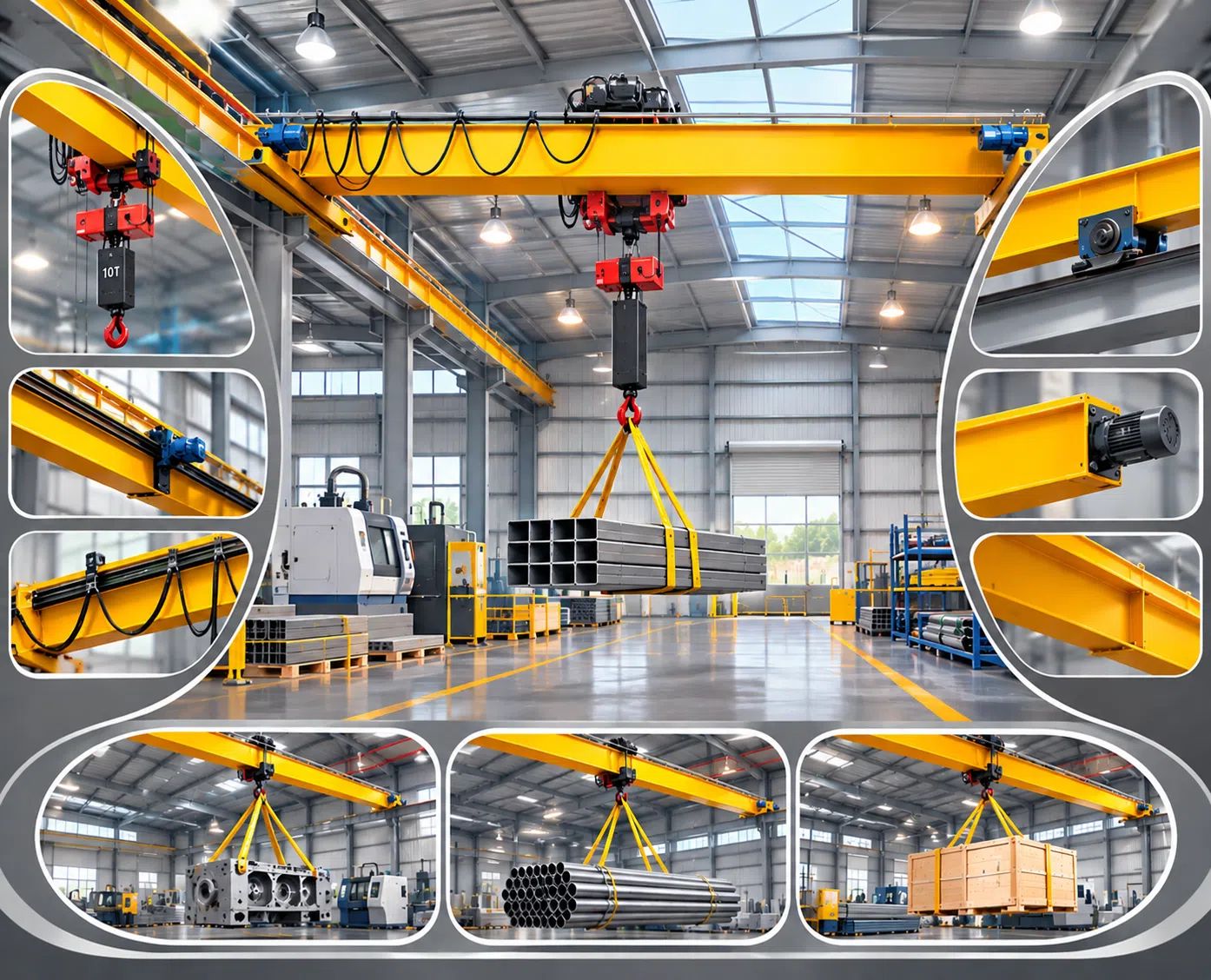

Why Jib Cranes Boost Individual Worker Productivity
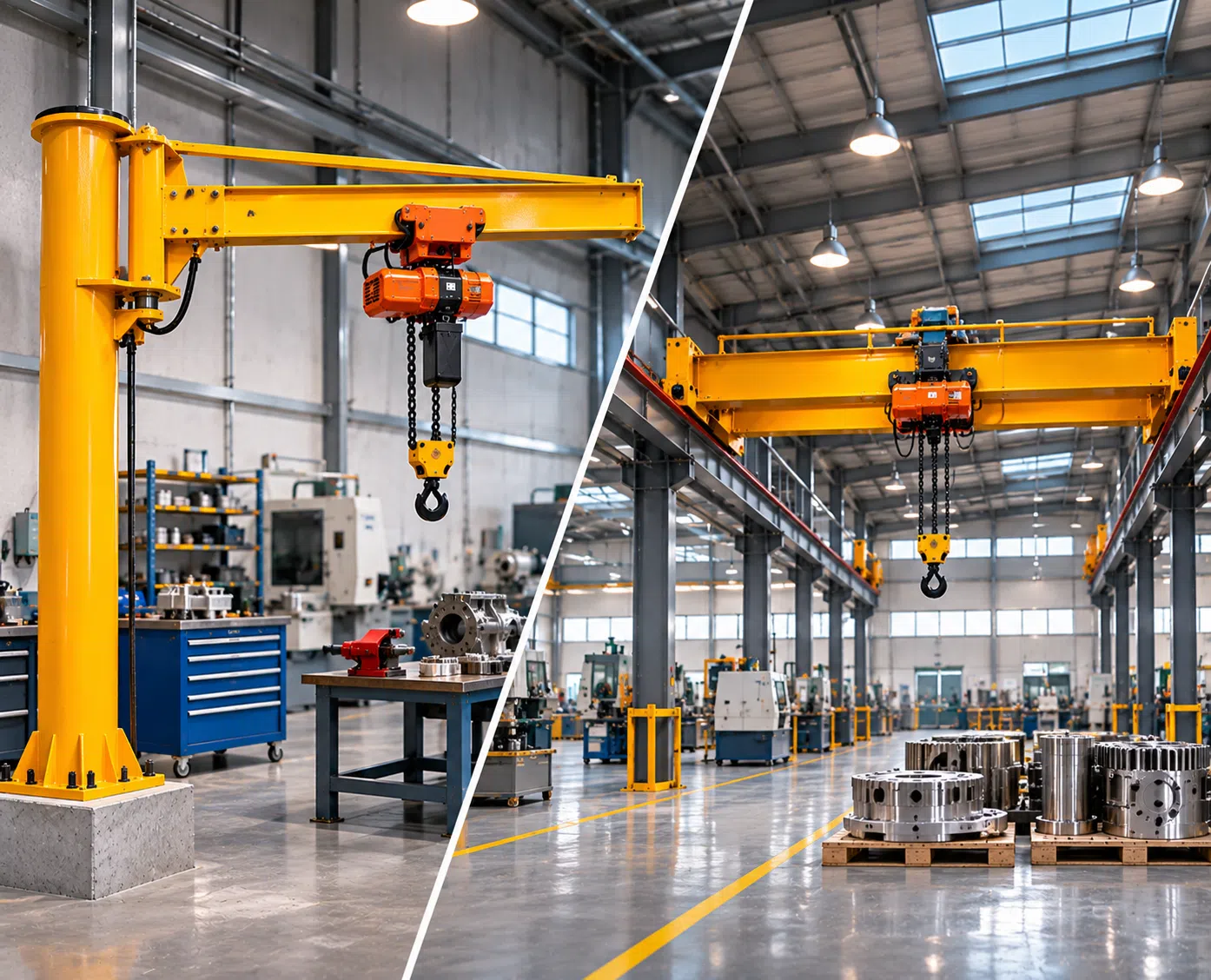
The profitability equation in modern industrial facilities depends on making efficient use of every minute of each worker's daily hours. Tasks that drain technicians' energy through manual lifting, or force them to stop repeatedly while waiting for the central hall crane, are hidden operational waste that gradually swallows profit margins. When a worker has to call a colleague to help lift a steel block, or spends a long time trying to fit a heavy mechanical part into a lathe, the pace of the entire production line slows. In this practical context, relying on jib cranes is a pivotal mechanical solution for re-engineering the individual work environment. They give each technician a dedicated rotating handling station that turns strenuous tasks into quick, smooth mechanical movements that multiply individual productivity and protect against cumulative physical strain.
How Do Jib Cranes Raise Individual Worker Productivity?
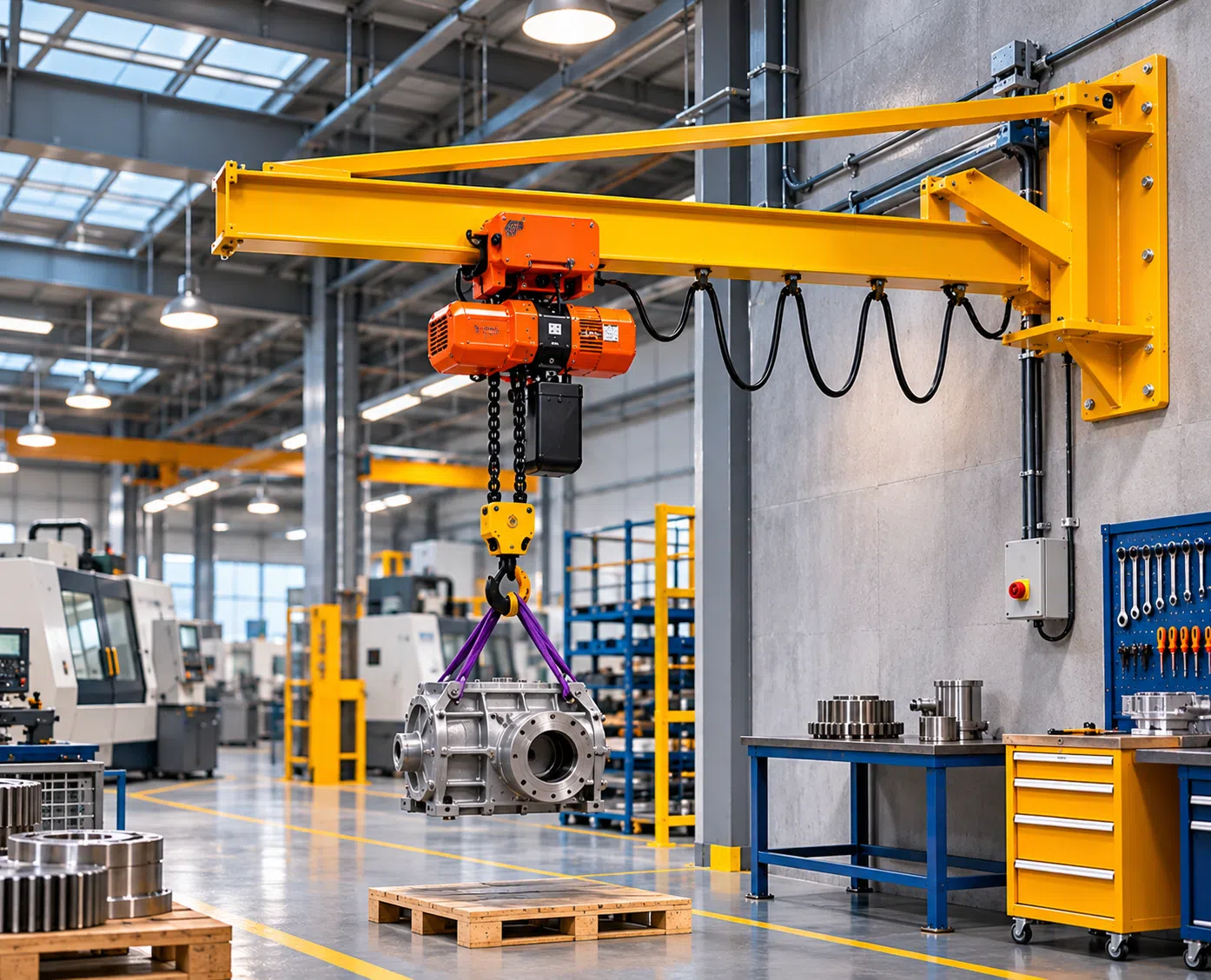
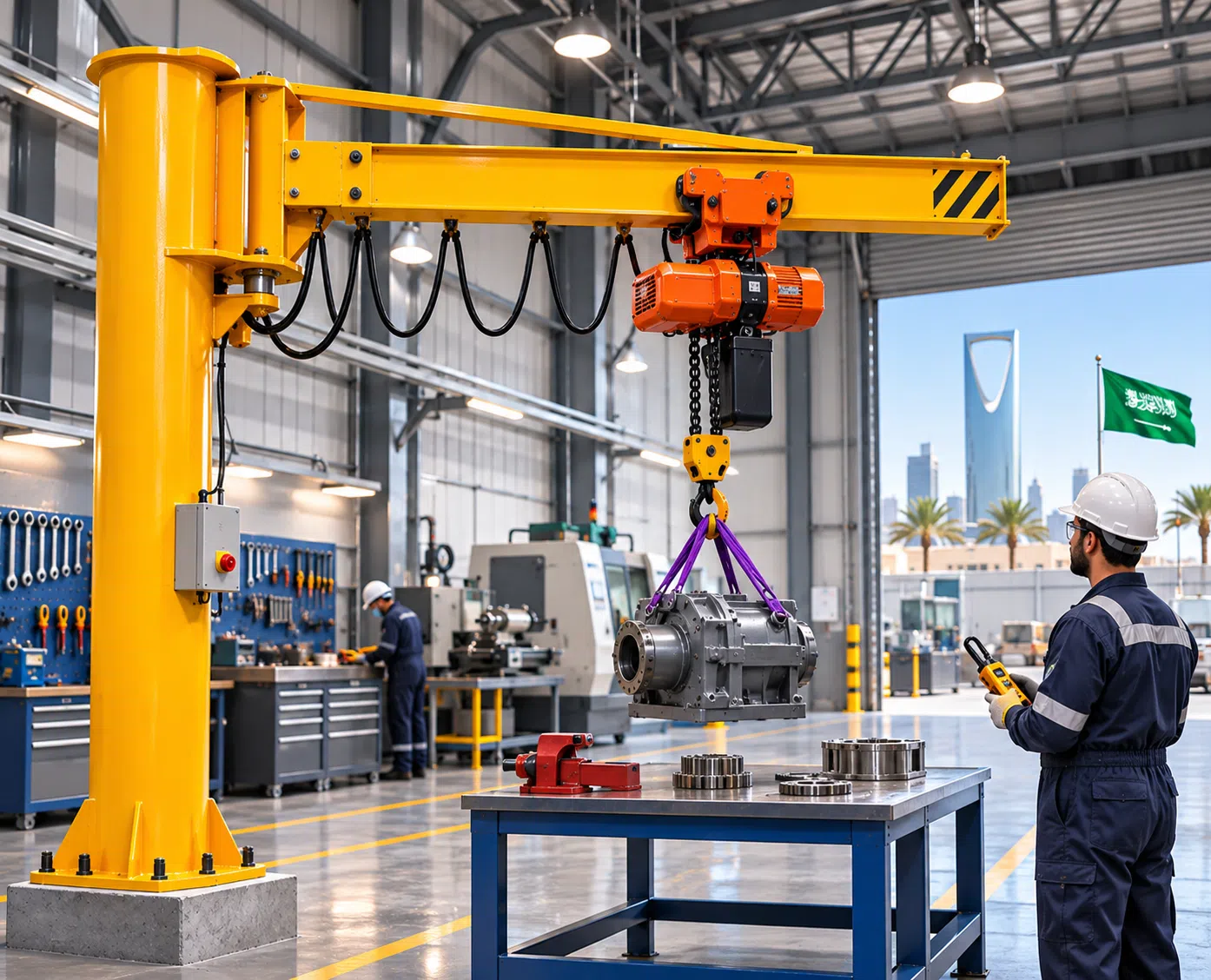
Jib cranes help multiply the productivity of the individual worker by eliminating long waits for shared overhead cranes, allowing a single worker to lift and position heavy loads alone without helpers, providing millimeter-precise control when placing parts in machines, and fully reducing the physical strain and muscle pain that lower a technician's energy and focus during shift hours.
This localized setup for factories and workshops delivers immediate operational results:
- Cutting part loading and unloading time at work stations by 30% to 50%.
- Freeing up the extra labor that used to be called in for manual help and redirecting it to direct production tasks.
- Reducing sick leave and absence rates caused by uncontrolled lifting injuries.
The Operational Dimensions of the Impact of Jib Cranes on Worker Performance
The impact of a jib crane goes beyond simply carrying loads; it reflects directly on the technician's behavior and efficiency through several engineering and environmental aspects:
1. Complete Independence and Eliminating "Dead Downtime"
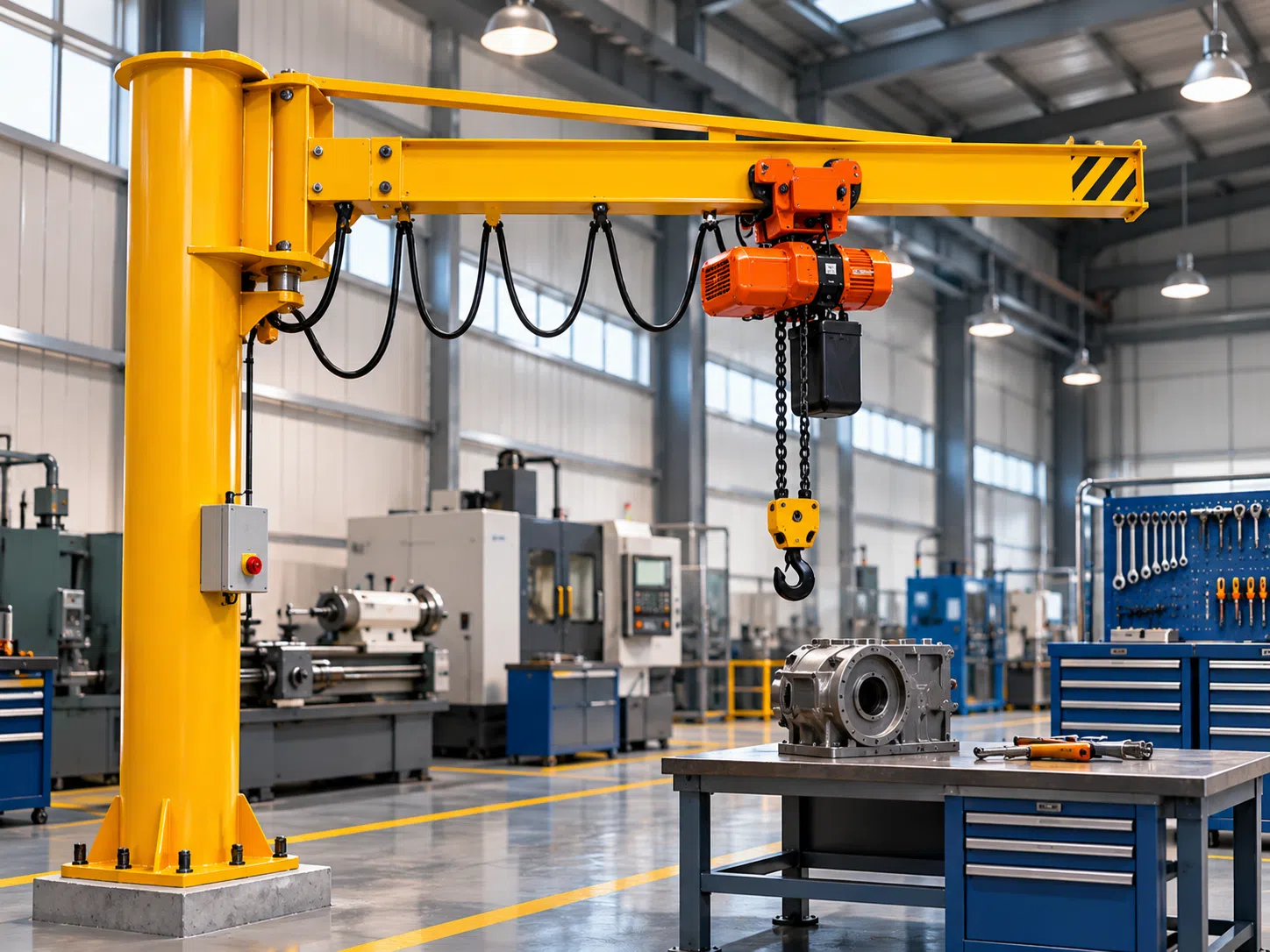
In halls that rely solely on a single overhead crane, the worker is caught in a trap of forced waiting. The overhead crane may be busy for several minutes unloading a truck at the factory entrance, leaving the CNC machine technician idle while waiting to pick up a 200 kg forming die. Jib cranes give each technician absolute independence. The arm hanging next to the machine is available instantly at the push of a button to lift and fit parts without any delay, keeping the production line moving continuously.
2. The "Single-Operator Workstation" Concept
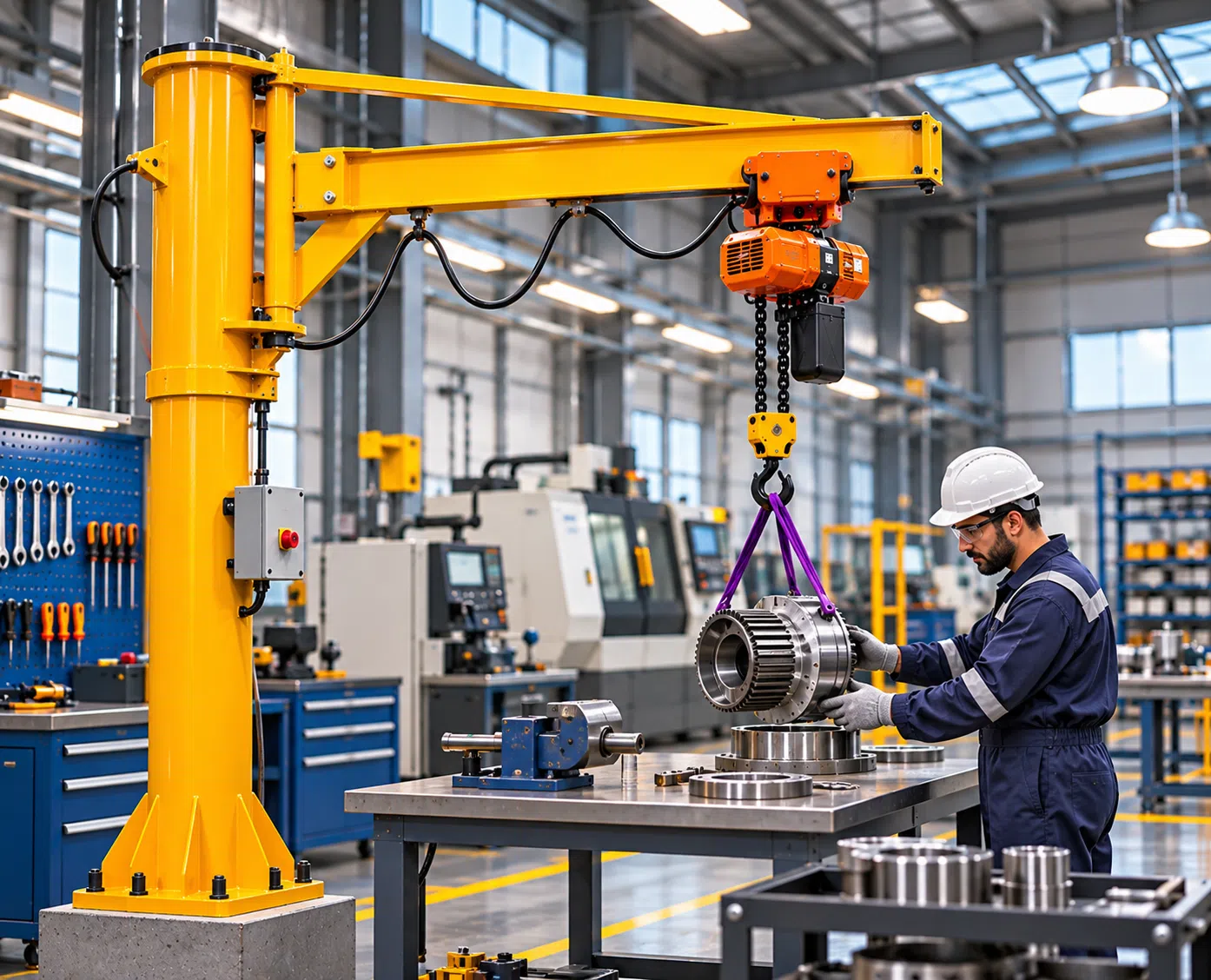
Handling parts weighing between 40 and 150 kg requires two or three technicians when relying on muscle effort, which repeatedly holds up adjacent work stations. Thanks to integrating a jib crane fitted with a modern electric hoist, a single operator can pick up the engine or metal plate, rotate it through space at up to 360 degrees, and position it precisely on their own, which raises the operating efficiency of the workforce.
3. Reducing Physical Strain and Improving the Human Work Environment (Ergonomics)
Constant bending, pulling and manual lifting drain the worker's energy after the first hours of the shift. Lower back pain and joint strain appear as a main cause of slowing work pace and of routine operating mistakes. Jib cranes allow the load height to be set very precisely at the operator's chest or eye level, which keeps the worker in a comfortable standing position and ensures they stay fully alert and precise until the end of the workday.
4. Positioning Accuracy and Protecting Products from Damage
Feeding milling machines and injection molds requires an extremely soft, quiet lowering. A violent impact from a part slipping from the hands or swinging could break the expensive machine jaws or scratch machined surfaces. Jib cranes supported by variable frequency drives (VFDs) provide ultra-smooth micro speeds that let the worker align fixing bolts and fastening holes with millimeter precision, free of any shocks.
Comparative Analysis: Technician Productivity with Jib Cranes Versus Manual Handling and Overhead Cranes
A field comparison between the different work patterns reveals the key differences in shift time use and technician safety:
- Part setup and clamping time at the machine: Manual clamping takes a long time and balancing effort, and the overhead crane wastes time waiting and traveling from a distance, whereas the jib crane completes the operation in a matter of seconds because it is permanently and directly above the work station.
- Dependence on other people: Manual handling requires calling extra workers to help with medium loads, whereas the jib crane lets a single technician carry out the lifting and lowering without distracting colleagues.
- Human error and damage rates: The chance of parts falling and getting scratched rises during manual lifting or with mobile floor-based lifting equipment, whereas jib cranes provide a completely stable suspended travel path that prevents random contact and preserves workpiece accuracy.
- Physical effort and endurance: A technician's performance deteriorates quickly as working hours go by when relying on muscle power, whereas performance stays stable and high throughout the shift when using a light-moving electric mechanical arm that requires no muscular effort.
Industrial Applications Where Jib Cranes Maximize Worker Productivity
The effectiveness of this equipment stands out at sequential manufacturing stations that require frequent, fast lifting of parts:
CNC Machining Cells (Turning and Milling)
The jib crane is installed between two adjacent machines. The technician lifts raw steel blocks from the storage bin and loads the first machine, then moves the part after initial machining to the second machine without touching the ground, which cuts the cycle time of each part to a minimum.
Engine and Mechanical Pump Assembly Lines
The crane lets the worker pick up heavy chassis parts, valves and cylinder heads and control their height at comfortable angles that allow bolts to be assembled and gaskets fastened without having to bend under suspended components.
Welding and Structural Fabrication Stations
The welder uses the arm to suspend steel joints and complex sections and rotate them in the air to reach difficult weld angles easily, which spares the workshop from using special fixtures and shortens the finishing time of welded structures.
Final Inspection and Packing Stations
Lifting finished equipment and moving it smoothly from the assembly line and placing it in packing crates or on wooden pallets quickly and safely, which prevents finished products from piling up at the end of the hall.
Smart Safety Features That Strengthen the Technician's Confidence at Work
High productivity is achieved when the worker feels completely safe while operating the equipment, which modern jib crane systems provide:
- Self-locking electromagnetic brakes (Fail-Safe Brakes): The brakes close automatically and tightly the moment the operating button is released or in the event of a sudden power outage, so the load stays fixed in the air with no sudden drop.
- Overload protection sensors (Digital Overload Protection): Cut the lifting circuit automatically if the part exceeds the crane's rated capacity, protecting the arm and mounting points from bending or structural stress.
- Adjustable rotation limiters (Rotation Limiters): Built-in mechanical stops that prevent the arm from rotating outside its designated range to avoid hitting adjacent walls or machines.
- Lightweight, comfortable wireless controls (Ergonomic Remotes): Let the operator stand at an ideal viewing angle at a safe distance and use the fingers of one hand to control all lifting, lowering and rotating movements.
How Does "Al Manarat Al Monerah" Support Your Facility's Productivity Plans?
Al Manarat Al Monerah (almanratalmonerah.com) leads the supply and manufacture of advanced lifting systems in the Kingdom and the Middle East, providing integrated solutions aimed at maximizing workforce efficiency inside factories and workshops:
- Engineering inspection and work environment study (Ergonomic Site Assessment): Visiting your workshop and analyzing work station dimensions and technician movement to determine the jib crane mounting locations and the arm length best suited to cover the work tables without wasting money.
- Manufacture and supply in line with international specifications (FEM/ISO/CMAA): Building structures and arms from high-strength steel, with treated rotation axes that provide light, smooth rotation requiring no steering effort.
- Equipping cranes with advanced electric hoists (chain and wire rope): Fitting the arms with modern hoists equipped with motors of superior thermal insulation and frequency inverters that secure micro speeds for precise positioning inside machines.
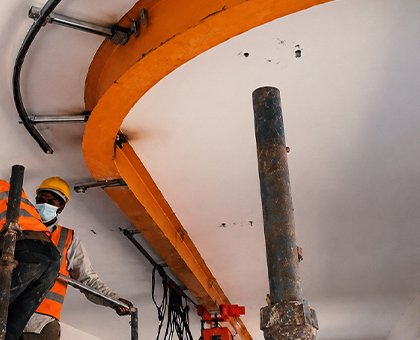
- Certified field installation and precision laser alignment: Specialized engineering crews supervise the foundation installation or wall mounting and set the rotation axis plumb by laser, so the arm does not drift on its own.
- Load tests and calibration certificates: Carrying out static and dynamic load tests on site and providing official certified inspection certificates qualified for acceptance by Civil Defense and industrial inspection bodies.
- Genuine spare parts availability and preventive maintenance contracts: Supplying motors, brakes, travel wheels and wireless controls from local warehouses to secure fast preventive maintenance that protects your workshop from any sudden breakdown.
Al Manarat Al Monerah gives you direct access to its engineering experts to obtain a technical study and a detailed price quote that puts the best jib crane solutions in your hands, designed to empower your workers and multiply your productive capacity with the highest standards of field safety.
Frequently Asked Questions About Jib Cranes and Individual Productivity
What Is the Ideal Load Capacity for Jib Cranes Used at Individual Work Stations?
The most suitable capacity for most individual turning and assembly stations ranges from 250 kg up to 2 tons. This capacity covers the weights of injection molds, engines and typical metal plates, and allows the use of a light arm that is easy to rotate by hand or with a small motor without taking up large amounts of space.
Does Operating a Jib Crane Require the Worker to Hold a Specialized Crane Operator License?
Operating jib cranes at work stations does not require a heavy-equipment license like that for forklifts or large overhead cranes. A quick in-house operator training course is sufficient, focusing on knowing the weights of the parts, using approved lifting slings, making sure the hook safety latch is secured, and using the emergency cut-offs.
How Does a Jib Crane Help Lower Employee Turnover at the Factory?
It directly improves workers' job satisfaction by removing the exhausting physical strain that causes joint and back pain. This creates a modern, comfortable work environment that encourages skilled technicians to stay at the facility and reduces quitting due to physical fatigue.
Read also: How Does a Suspended Monorail System Speed Up Logistics Operations?