
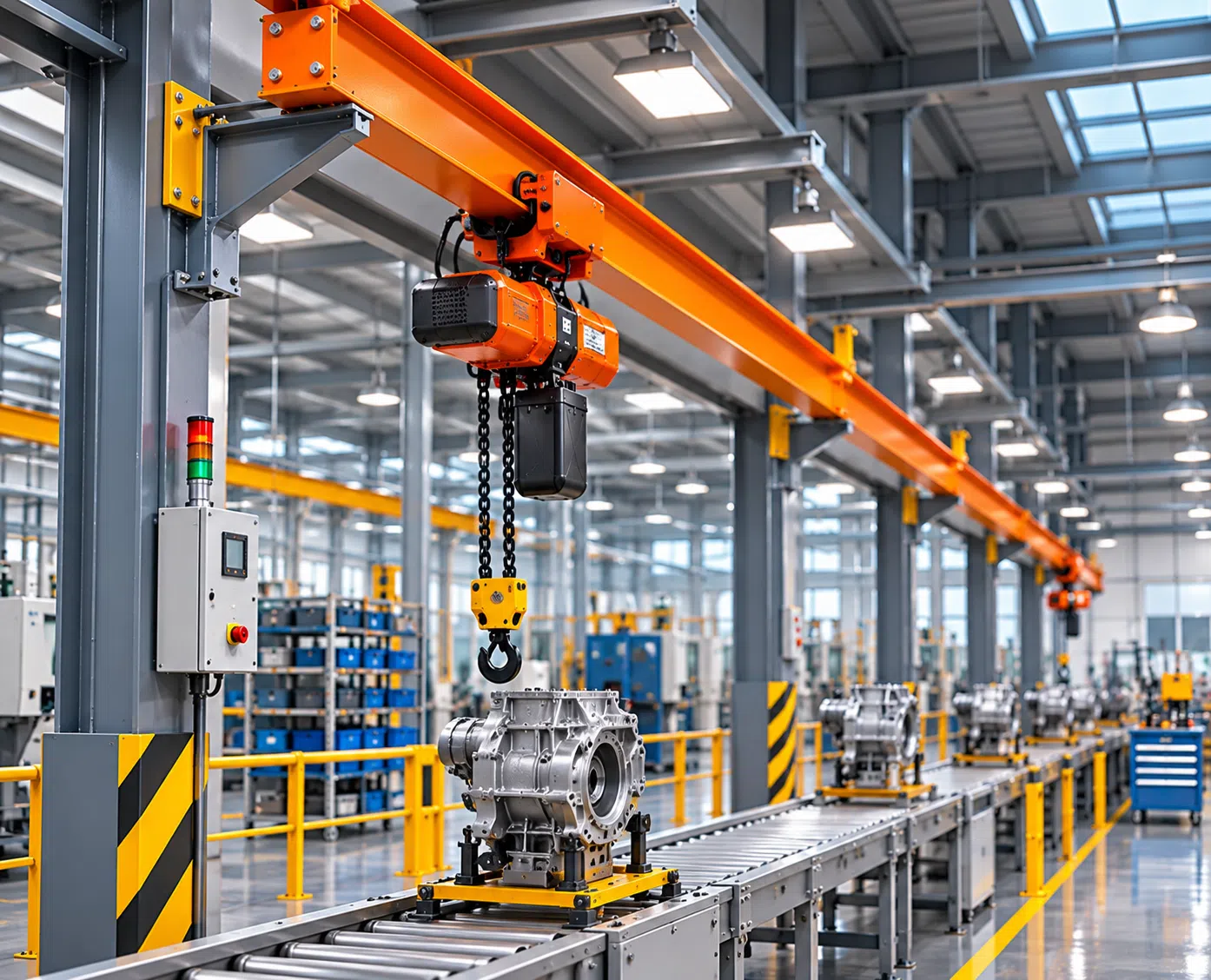
Engineering Requirements for Installing a Monorail Crane in Assembly Lines
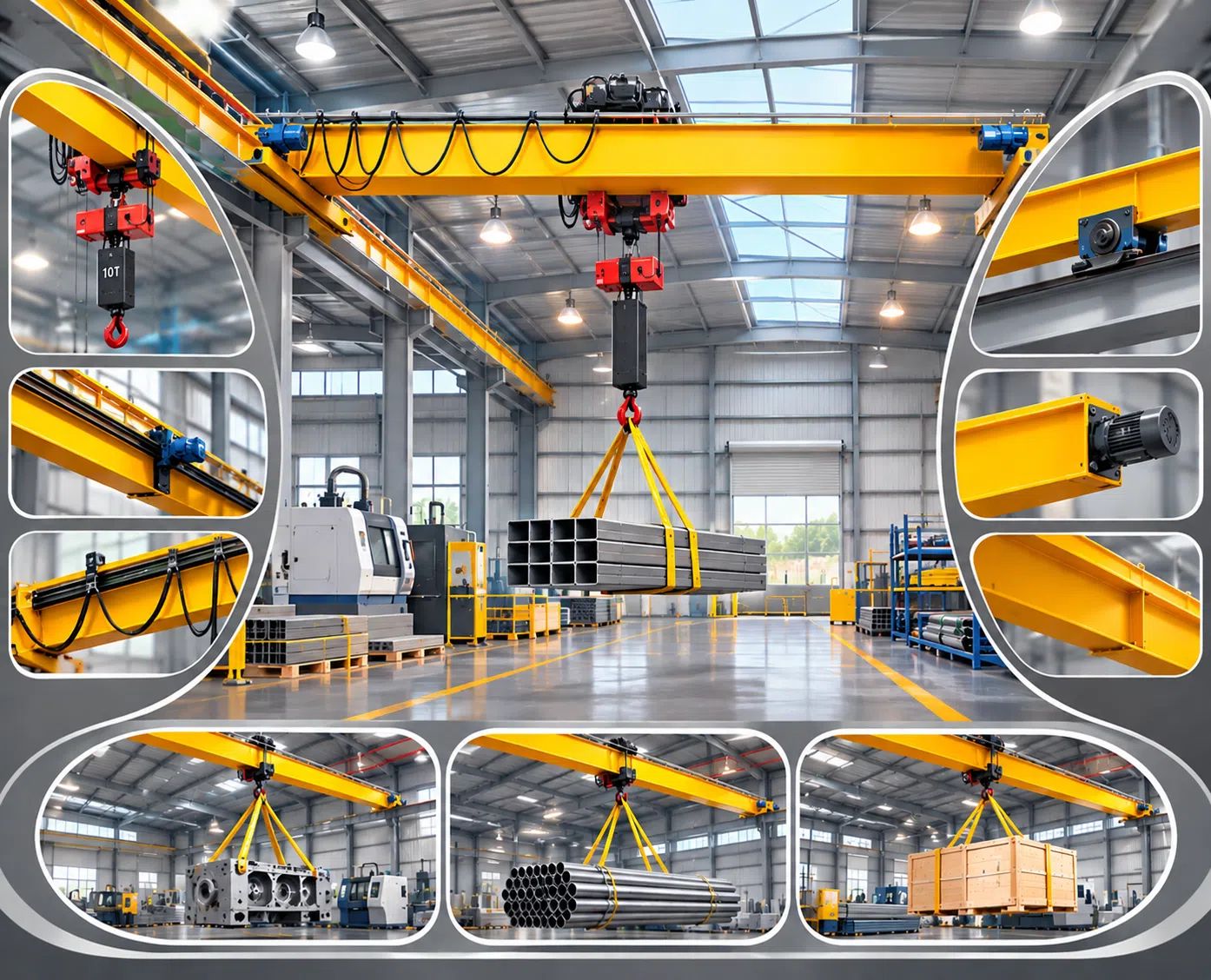
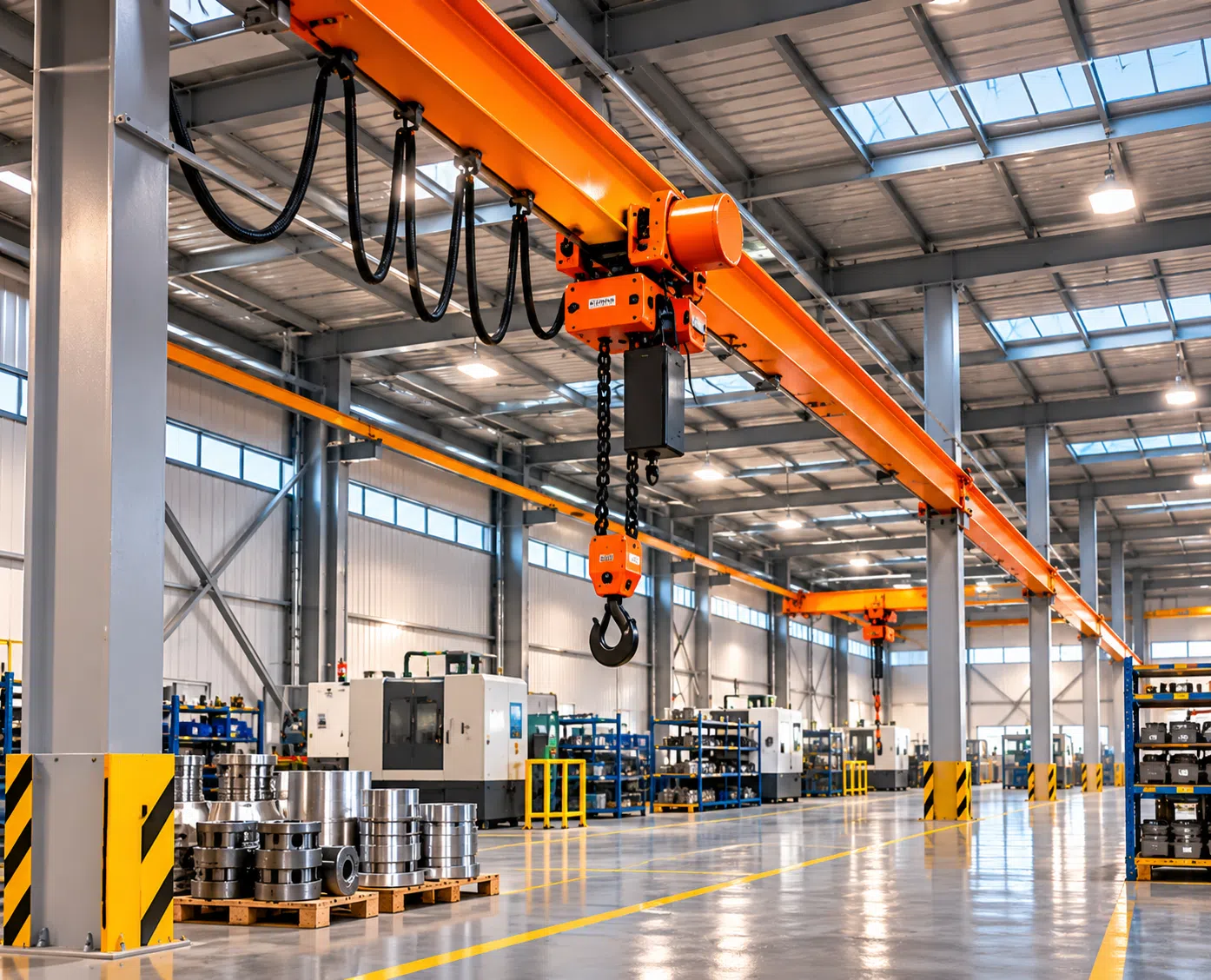
Assembly lines and sequential production lines depend on a continuous linear flow of mechanical components and spare parts between different work stations. Any deviation in the travel path, or uncontrolled vibration while parts are being moved, is a real threat to assembly accuracy and to the safety of technicians on the production line. Moving handling tasks onto a suspended overhead track is a highly effective engineering decision for freeing up floor space. However, monorail crane installation is not simply fixing a steel beam and hanging an electric hoist from it. It is an integrated engineering system governed by precise structural calculations, including the study of torsional moments, the distribution of dynamic loads on the roof trusses, and the setting of joint clearances and curves to the millimeter, to ensure smooth, silent movement that complies with global standards such as FEM, CMAA and ISO.
What Are the Key Engineering Requirements for Installing a Monorail Crane?
The mandatory engineering requirements for installing a monorail crane come down to a structural check of the load-bearing capacity of the roof suspension points, selecting a track beam section with deflection ratios that do not exceed the permitted limits (L/500 to L/800), designing curve radii and switches to match the trolley wheelbase, precision laser alignment of the track joints, and providing insulated electrical feed lines protected by safety systems and dual mechanical end stops.
Meeting these technical requirements precisely delivers strategic operational results:
- Preventing torsional stress (Torsional Stress) on roof structures and track beams as loads move through curves.
- Eliminating uneven frictional wear on travel wheels and steel flange edges.
- Securing a smooth assembly environment free of noise and vibration, in line with approved occupational safety requirements.
1. Structural Requirements and Load Analysis of the Supporting Structure
Studying the structural makeup of the trusses and roofs is the first and decisive step before starting any mechanical work:
Static & Dynamic Load Analysis
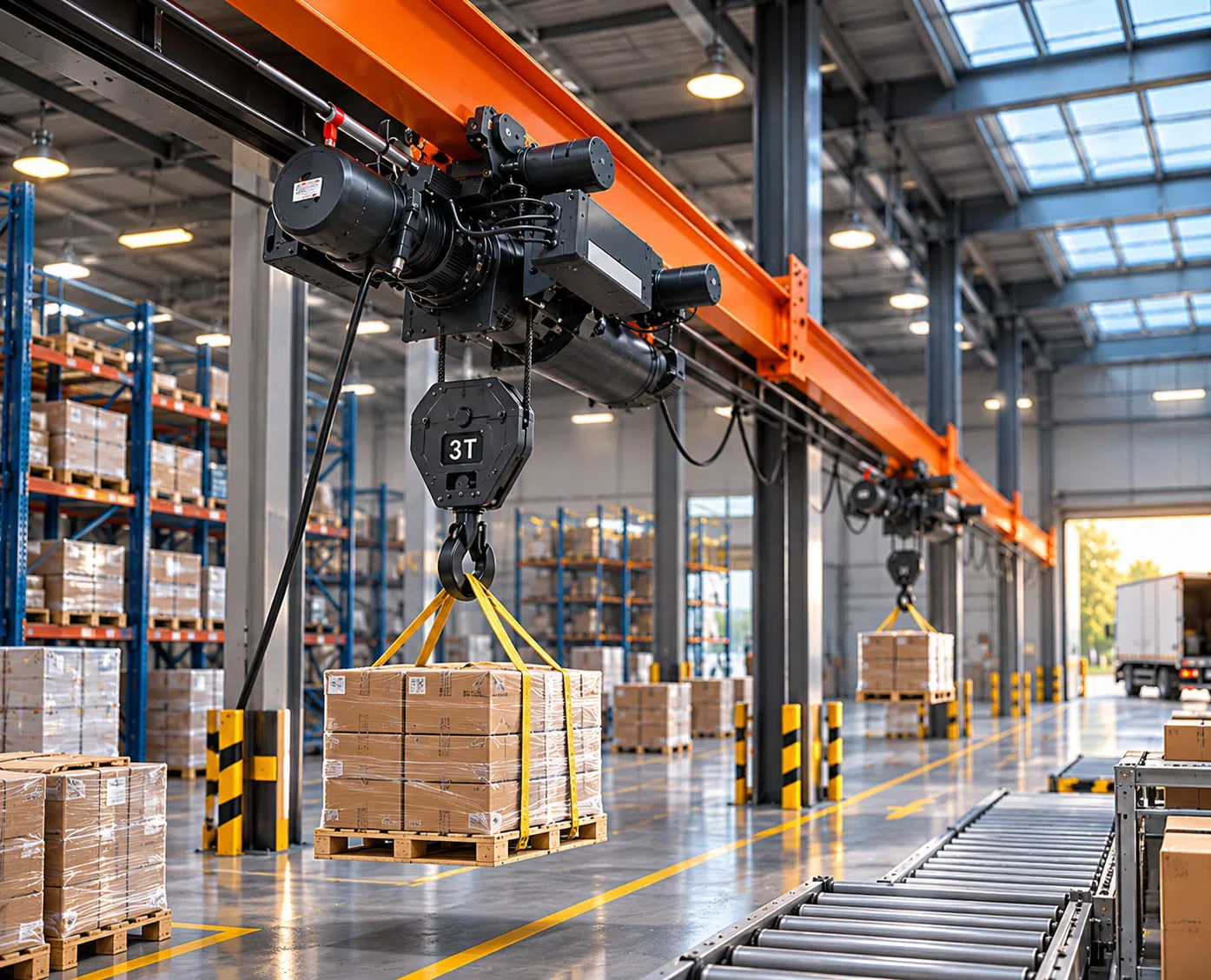
Calculations must not be limited to the nominal weight of the net working load limit (WLL). They must also add the self-weight of the monorail beam, the travel trolley and the hoist body, and apply a Dynamic Impact Factor, usually between 1.15 and 1.25 depending on the hoisting speed, to absorb the inertial forces caused by sudden stopping and starting.
Studying Torsion & Lateral Forces
Monorail beams are exposed to lateral torsional forces from load swing or centrifugal force as the trolley turns through curved sections. This requires reinforcing the track with lateral and diagonal supports (Sway Bracing) that connect the top flange of the beam to the roof structure, to prevent the steel section from twisting about its longitudinal axis.
Checking and Matching the Allowable Deflection
Engineering codes require that the maximum vertical deflection (Deflection) of the track beam, with the load at mid-span between two suspension points, not exceed a defined ratio (usually between L/500 and L/800 of a single span), to ensure the hoist trolley does not roll by itself toward the center and to keep the assembly line level.
2. Mechanical Criteria for Selecting and Fixing the Track Beam
The mechanical behavior of the system is determined by the quality of the steel sections and the accuracy of their fixing:
Rail Section Type (I-Beam vs. Enclosed Profile)
- Conventional rolled beams (I-Beam / H-Beam): Used for medium and heavy duties with loads above two tons. They require the lower running flange to be treated so that it is perfectly parallel and level with the tread angle of the trolley wheels.
- Enclosed Track Systems: The standard choice for light-component assembly lines up to two tons. They feature an internal running track that protects the wheels from the buildup of dust and manufacturing debris, and offer very little frictional resistance so trolleys can be pushed with great smoothness.
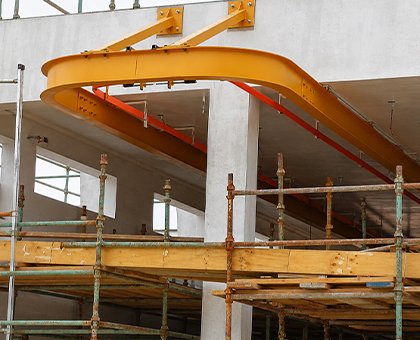
Curve Engineering and Bending Radius
When designing monorail tracks that wind around assembly lines, the curve radius (Curve Radius) must match the trolley wheelbase (Wheelbase). Arbitrarily tightening the radius causes the wheels to jam against the two flanges of the rail, damages the bearings and wears the rail edges at an exceptional rate.
Expansion Joints and Mechanical Gaps
On long tracks that connect different buildings or pass through several halls, thermal expansion joints cut at a 45 degree angle must be incorporated to ensure a smooth transition for the wheels without mechanical shocks, while accommodating the expansion and contraction caused by seasonal temperature changes.
Comparative Analysis: Monorail Crane Mounting Methods in Assembly Lines
The mounting approach varies with the available height and the structural capacity of the hangar. The points below set out the direct technical and operational differences between the common types:
- Ceiling-Suspended Monorail (direct hanging from roof trusses): It leaves the assembly line floor 100% clear for technicians and small transport carts, and uses no floor space. However, it requires a roof of exceptional structural strength and is subject to complex engineering calculations to prevent additional stresses on the building.
- Free-Standing Floor Monorail (independent steel structures): The monorail beam rests on steel columns and light portal frames sitting on floor foundations. This system places no weight on the building's roof and is easy to relocate or re-route in the future, but it takes up a narrow strip of floor space beside the assembly line.
- Wall-Bracket Suspended (cantilever fixing to wall columns): Used when the assembly line runs alongside a concrete wall or a row of hall columns. It uses less steel and keeps walkways open, but it is limited to straight linear paths along the wall, with no flexibility to enter the middle of the hall.
3. Electrical Equipment and Integrated Control Systems
Assembly lines require a safe electrical supply system that prevents sparking and gives instant response:
- Enclosed Conductor Rails (insulated copper): Installing compact, tightly insulated feed tracks (with a protection rating of at least IP23/IP54) running alongside the travel beam, using spring-loaded carbon current collector shoes to ensure stable contact even in curves, with no dangling cables to obstruct technicians.
- Smart variable frequency drives (VFDs): Programming the travel and hoist motors to run with gradual acceleration and deceleration that prevents vibration or sudden starts, keeping delicate parts steady as they are moved to the fixing stations.
- Safe low-voltage control circuits: Operating the handheld or wireless controls at low voltage (24 or 48 volts DC) to protect workers from electric shock in assembly environments that require frequent hand contact with the parts.
4. Occupational Safety Requirements and Mandatory Safety Devices
The engineering system is not complete without integrating a package of protective devices that prevent accidents in the field:
- Mechanical End Stops: Steel stops backed by polyurethane dampers or shock-absorbing rubber buffers, fixed at the ends of the rails to prevent the hoist trolley leaving the track if the operator exceeds the safe distance.
- Secondary Safety Cables: Running high-tensile flexible steel cables that connect the track beam directly to the roof support structure. These cables act as a passive emergency support system that prevents the rail falling if the main suspension bolts break or suddenly loosen.
- Interlocking Track Switches: Fitting rotating or sliding track-change switches with mechanical barriers and electrical cut-outs that cut power to the trolley and automatically close the track if the switch has not settled into exact alignment (100%).
- Anti-Collision Sensors: When more than one hoist operates on the same assembly line track, the trolleys are fitted with photoelectric or laser sensors that automatically stop the motors when they approach within a set safe distance, preventing loads from colliding.
5. Inspection and Operational Calibration Tests Before Handover (Commissioning)
After the mechanical and electrical installation is complete, the monorail system undergoes a strict engineering test protocol that includes:
- Precision alignment and track levelness check: Using laser scanning instruments to verify there are no vertical or horizontal differences at the beam joints exceeding 0.5 mm, and checking the tightening torque of the pre-tensioned fixing bolts with a calibrated torque wrench.
- No-Load Test: Running the trolley and hoist the full length of the track and curves back and forth to check smooth sound, stable current collection, and to test the limit switches and the emergency stop (E-Stop) button.
- Static Load Test (125%): Lifting a load equal to 125% of the crane's rated capacity at the weakest point on the track (the middle of the longest suspended span) and holding it for 10 to 15 minutes, to measure the deflection and confirm the beam returns to complete straightness without any permanent deformation.
- Dynamic Load Test (110%): Operating the crane through all its movements (lifting, lowering and travel through curves) with a 110% load to test the efficiency of the electromagnetic brakes and their instant response to stop without any mechanical slip.
How Do You Ensure a Certified Engineered Monorail Crane Installation with Al Manarat Al Monerah?
Al Manarat Al Monerah (almanratalmonerah.com) is a leader in supplying and engineering industrial lifting systems in the Kingdom of Saudi Arabia and the Middle East, offering complete execution services for assembly lines that ensure the highest degree of accuracy and safety:
- Specialized structural and site study: We visit production lines and carry out engineering inspections of hall roofs and a precise stress analysis, to design a custom monorail track that serves the assembly stations by the shortest path and with the smoothest flow.
- Fabrication and forming of certified steel tracks: We form box beams, curves and automatic track switches to FEM and ISO standards, with welds treated and tested by non-destructive testing (NDT).
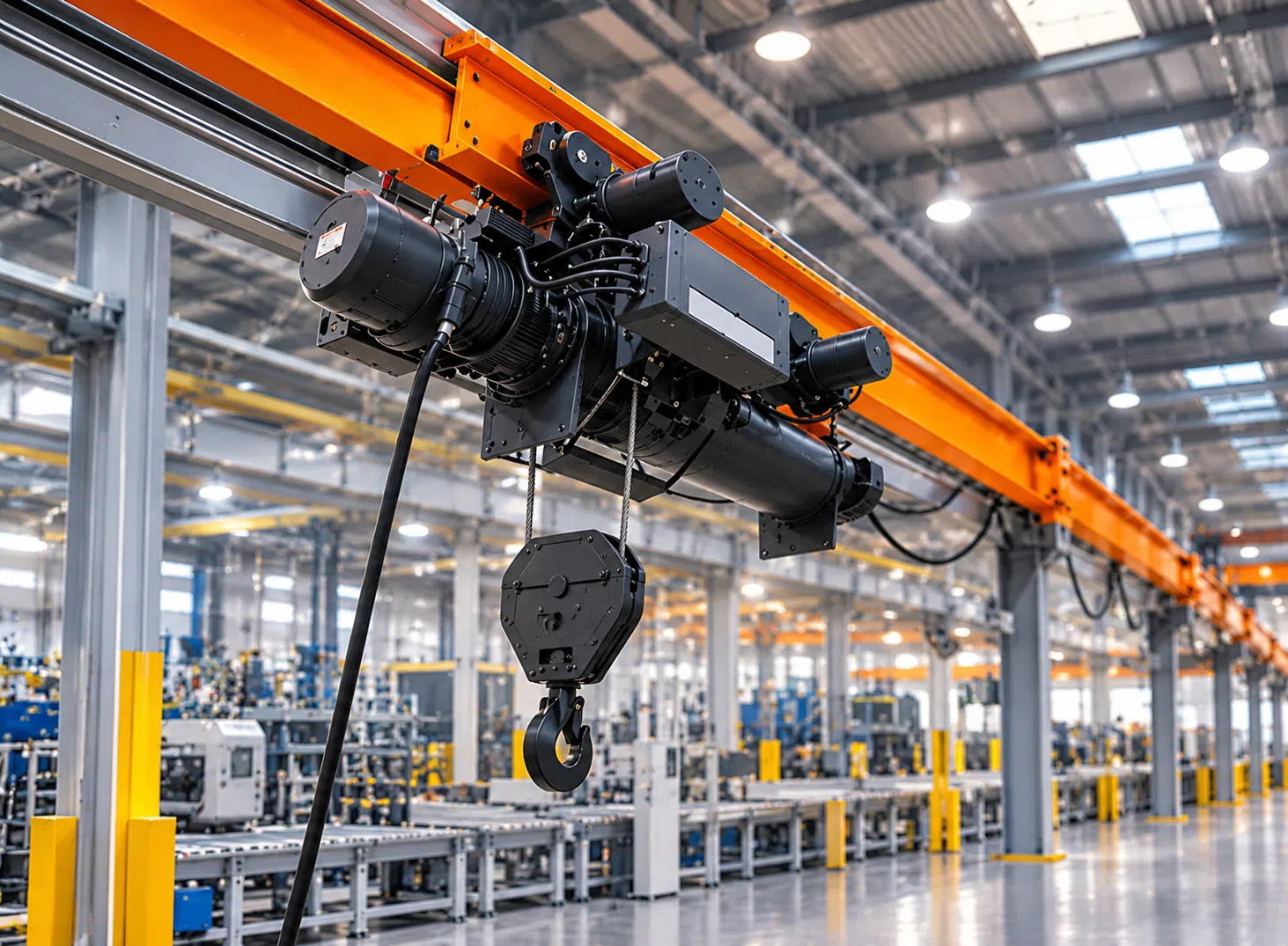
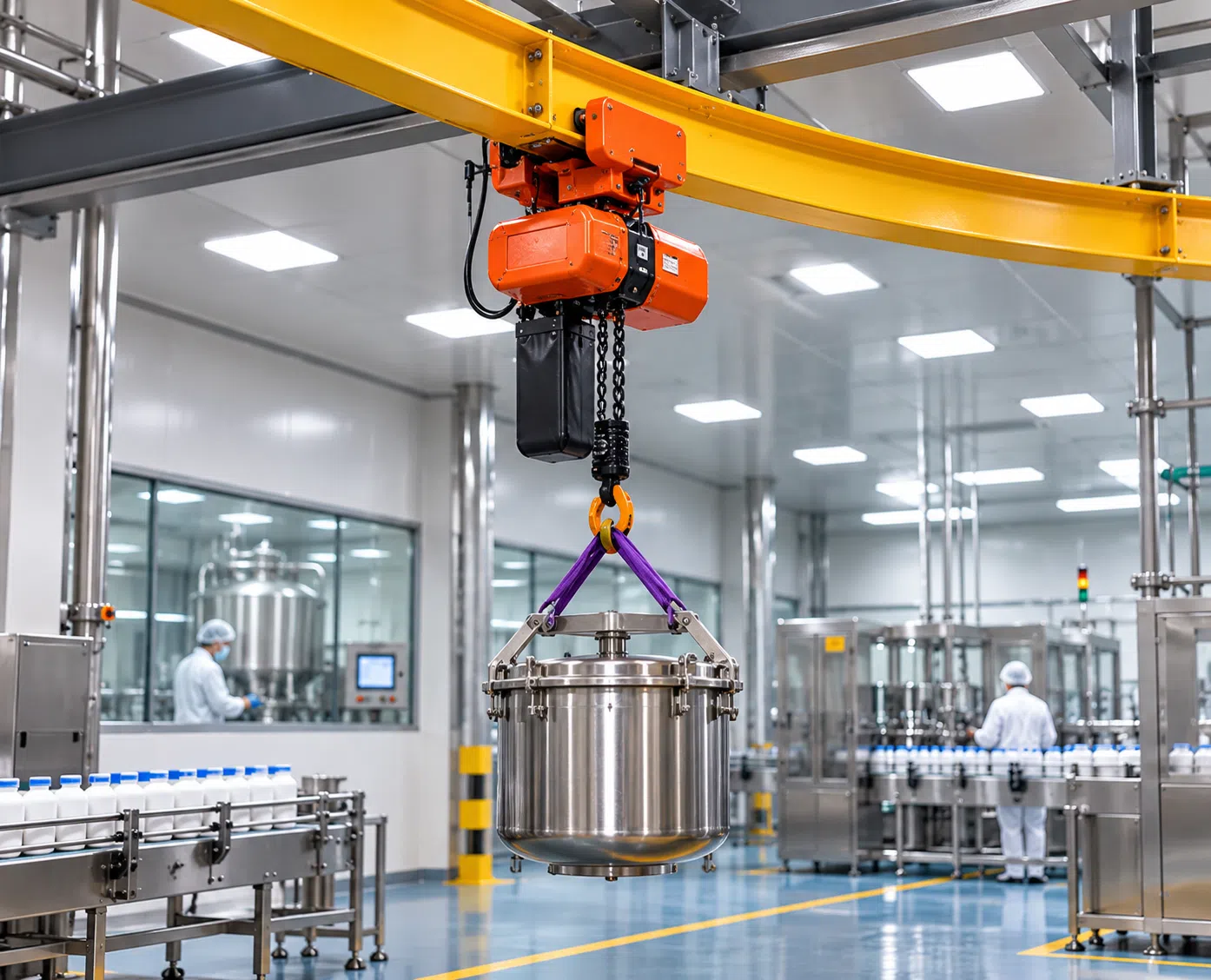
- Integration of the best electric hoist systems and frequency drives: We equip the system with European-certified electric chain or wire rope hoists fitted with energy-saving motors and instant electromagnetic safety brakes.
- An engineering installation team equipped with lasers: All installation and precision alignment stages are carried out by specialized engineers and technicians equipped with the latest optical measuring instruments and calibrated torque wrenches, to ensure quiet movement that lasts.
- Load testing and official calibration certificates: We carry out certified field load tests and provide the technical reports and inspection certificates needed for approval by civil defense and industrial inspection bodies.
- Preventive maintenance contracts and permanent spare parts availability: Local warehouses stocked with travel wheels, current collector shoes, brake linings and electrical panels ensure an immediate response that protects your assembly lines from any emergency stoppage.
Al Manarat Al Monerah gives you direct access to its engineering experts for a detailed technical study and a tailored quotation that puts in your hands a monorail crane system designed and installed to the highest engineering standards to multiply the capacity of your production lines.
Frequently Asked Questions About Monorail Crane Installation in Assembly Lines
Does installing a monorail crane require stopping the assembly line completely?
Al Manarat Al Monerah relies on smart scheduling of the structural and mechanical installation work. The tracks are prepared and their sections fabricated in advance off site, and the field installation is carried out during scheduled shutdown periods or on evening shifts and weekends, so the plant's production continues without interruption.
What is the difference between enclosed box sections and conventional steel beams in a monorail track?
Enclosed box sections have the wheels running inside a channel fully protected from dust and debris, with very smooth mechanical push movement and a very tight turning radius suited to light assembly lines. Conventional steel beams (I-Beam) are used for very heavy loads and harsh industrial environments with long distances between suspension supports.
How does the monorail system behave in the event of a sudden power failure?
Monorail hoists are fitted with self-locking electromagnetic fail-safe brakes (Fail-Safe Brakes) that close mechanically within fractions of a second as soon as the electrical supply is cut. This keeps the suspended part in place in the air with no drop or slip, and the brakes can be released manually with a dedicated lever to lower the load in complete safety in an emergency.
Read also: Jib Crane vs. Overhead Crane: Which Should You Choose for Your Workshop?