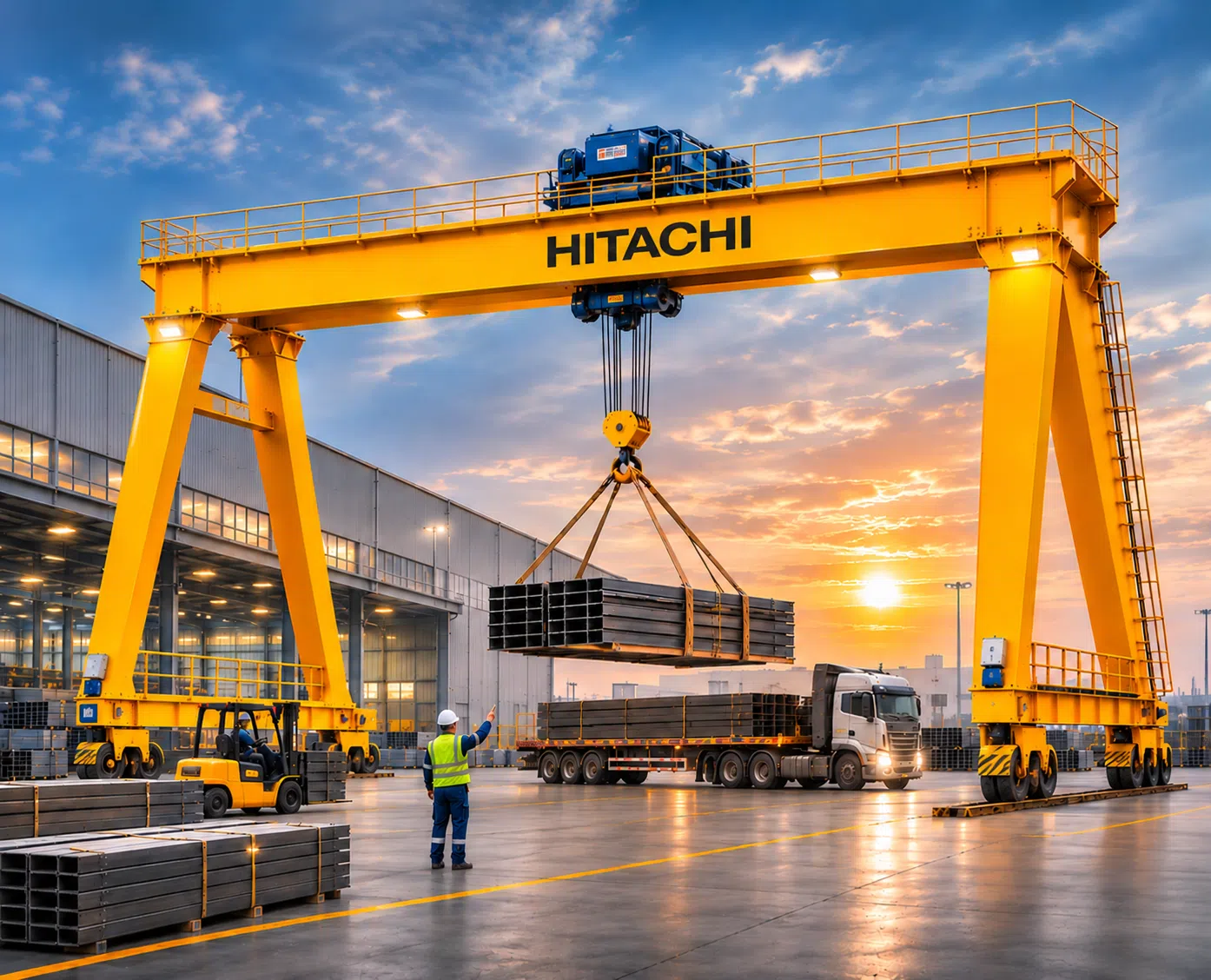

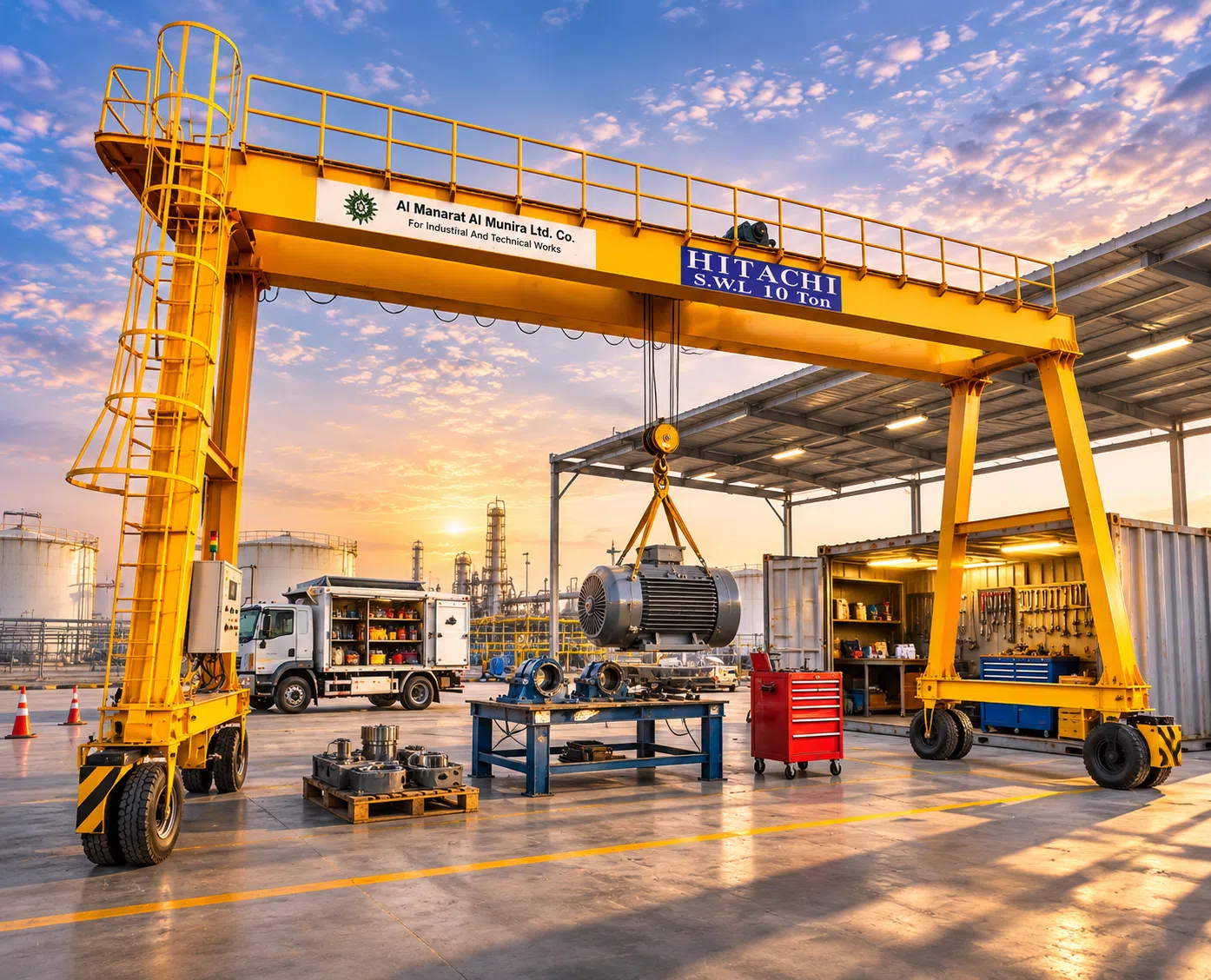
Advantages of a Portable Gantry Crane for Mobile Workshops and Maintenance Work
Field maintenance and the dismantling of heavy mechanical equipment create an operating reality full of sudden challenges. Technicians find themselves facing huge engines or submersible pumps that need immediate lifting and precise positioning in tight spaces or temporary workshops that completely lack any overhead infrastructure or ready concrete support columns to lift from. In such dynamic environments, calling in large hydraulic cranes becomes an unjustified financial waste. What is needed instead is flexible, lightweight lifting equipment that two people can transport and set up in a matter of minutes, and this is where a portable gantry crane proves its worth as the smartest logistical investment, combining mechanical load-bearing strength with an exceptional ability to maneuver and move smoothly between different work sites.
What Is a Portable Gantry Crane?
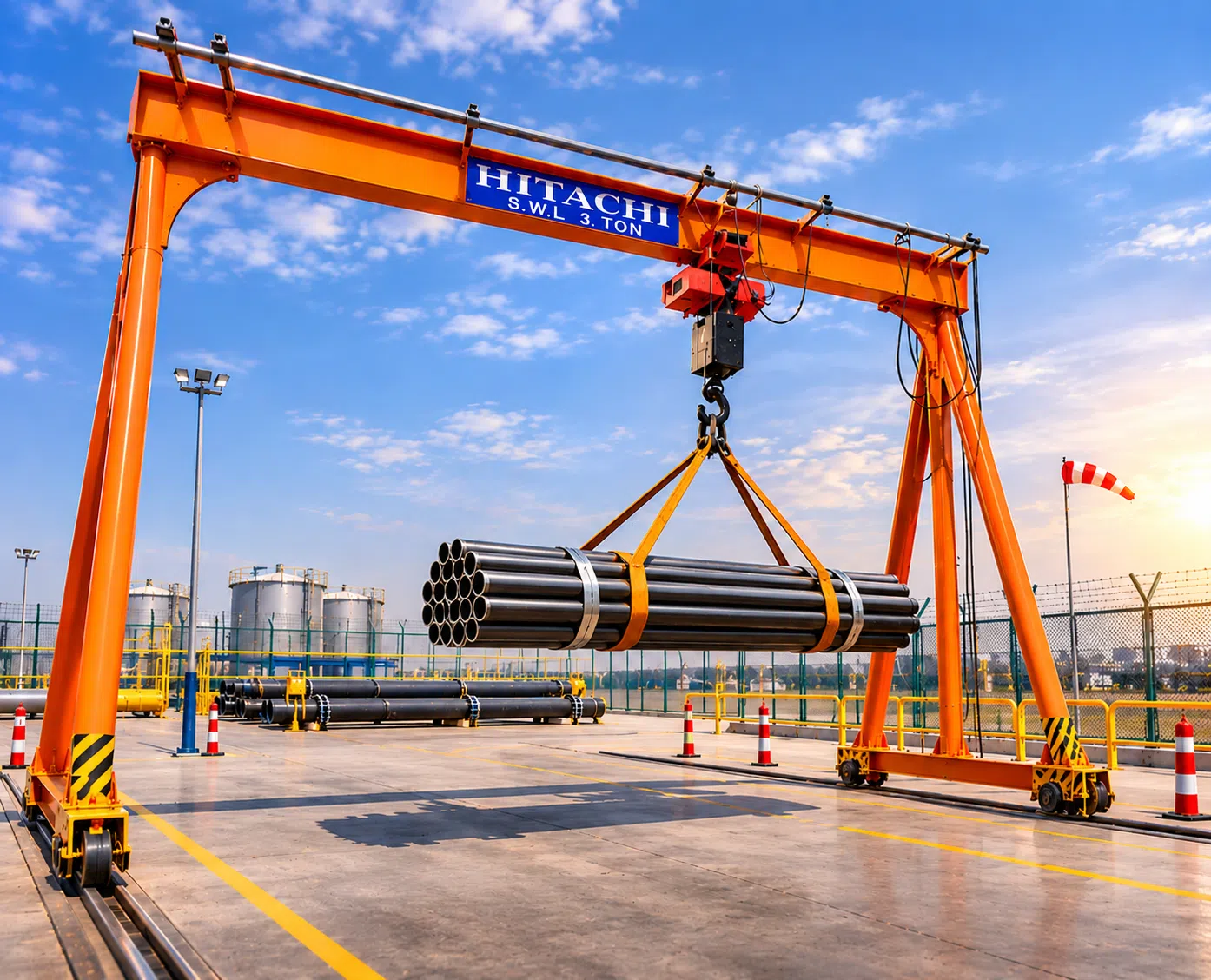
A portable gantry crane is a light to medium-weight gantry lifting system built on a horizontal beam carried on two legs of steel or reinforced aluminum. The legs sit on wheels that swivel freely through 360 degrees and are fitted with strong locking brakes, which lets the crane be moved by hand or mechanically across level workshop floors without any fixed rails.
This compact solution offers immediate operating benefits for maintenance teams:
- Easy dismantling, reassembly and transport on service maintenance trucks and pickups.
- The ability to enter narrow aisles, go under canopies and pass through standard warehouse door openings.
- Stable and safe lifting of loads typically ranging from 500 kg up to 5 or 10 tons.
Key Advantages of the Portable Gantry Crane in Technical Work Environments
These compact cranes outperform traditional lifting systems thanks to a set of design features that serve the pace of fast maintenance:
1. Freedom of Movement in the Field Without Rail Constraints
The crane moves on industrial wheels made of high-durability polyurethane or steel covered with oil-resistant rubber. This lets it travel quietly over smooth concrete floors without scratching floors or breaking workshop tiles, with the ability to steer the load in any direction with great precision.
2. Adjustable Height and Span (Adjustable Height & Span)
Modern models allow the leg height to be adjusted through telescopic mechanical mechanisms or manual hydraulic jacks with solid safety pins. This feature allows passage under low obstacles and air-conditioning ducts while the equipment is being moved, and then lets the beam be raised to the maximum required height once the lifting point is reached and the mechanical parts are to be unloaded.
3. Speed of Transport and Field Assembly (Knockdown Design)
Installing the crane does not require any welding or complicated preparation. The whole structure relies on high-tensile bolt and nut connections and quick-release hinges, which lets maintenance engineers break the crane down into easy-to-carry longitudinal sections, store them in the back of the mobile maintenance truck, and head straight to the customer's site.
4. Economical Cost and No Civil Works Expenses
This class eliminates the need to pour reinforced concrete foundations or lay costly ground rails and tracks, and it does not require structural modification permits for rented buildings, saving more than 60% of the capital cost compared with installing an overhead bridge crane or a large gantry on a fixed track.
Comparative Analysis: Steel Portable Gantry Crane Versus Aluminum Gantry Crane
Maintenance crews and workshops choose between two basic options in terms of construction material. The following points show the direct technical and operational differences to choose between them:
- Self-weight and ease of moving by hand: A gantry made of engineering aluminum alloys has exceptional lightness that makes carrying, moving and loading it by hand very easy without physical strain, whereas the steel gantry is heavier and needs two people or an auxiliary crane to unload and assemble it on site.
- Maximum lifting capacity and shock resistance: The steel gantry excels at carrying heavy weights and heavy-duty tasks, with capacities easily reaching 5 and 10 tons and a superior ability to withstand mechanical shocks in turning and leveling shops, whereas aluminum cranes typically range from 500 kg up to 3 tons at most.
- Resistance to chemical environments and corrosion: The aluminum crane is the standard choice for cleanrooms, pharmaceutical laboratories, water treatment plants and food plants because of its natural resistance to rust and its freedom from paint flakes, whereas the steel gantry needs protective epoxy coatings to guard it from rust in humid environments.
- Purchase cost and service life: The steel gantry comes at a lower, economical price compared with the price of heat-treated aluminum alloys, and offers a long service life and the ability to be repaired and modified in any local welding shop if needed.
Practical Uses and Applications of the Portable Gantry Crane
This compact equipment excels at many tasks that cover vital sectors, including:
Removing and Installing Truck and Agricultural Equipment Engines
Field maintenance garages and heavy equipment repair shops need to lift engines and gearboxes and move them out of the machine's frame. The crane lets you stand directly over the engine compartment and attach the hook, then lift the mass and roll the hoist fully backward without muscular effort or the risk of dropping sensitive parts.
Maintaining Pumps and Valves in Water and Desalination Plants
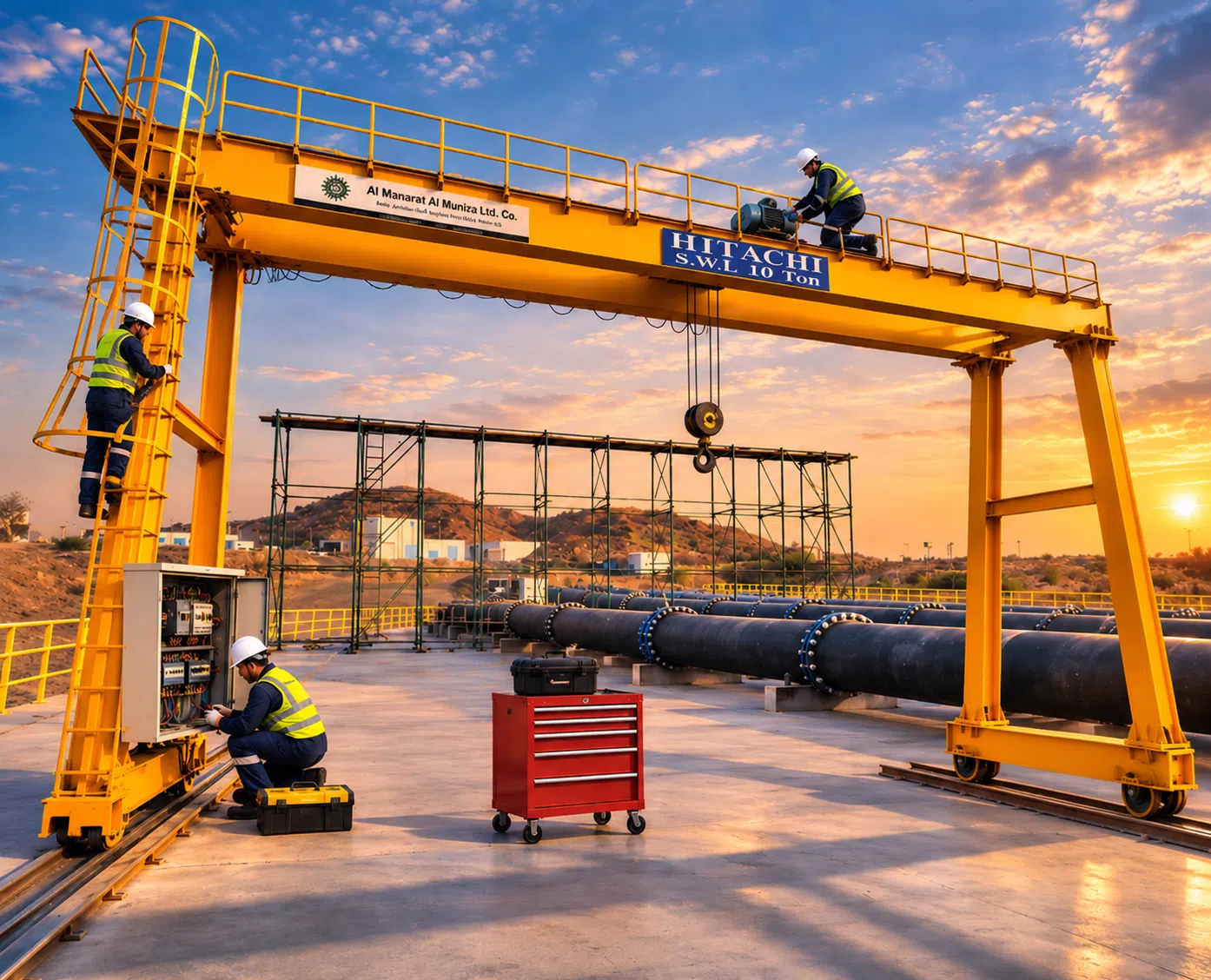
Many pumping stations are in remote areas or underground valve rooms that lack any fixed cranes. Here the portable gantry stands out as a quick rescue tool for maintenance teams to lower and lift heavy submersible pumps from wells, inspect them, and return them to their bases accurately and safely.
Loading and Unloading Trucks at Small Warehouses
If the facility does not have an equipped loading dock or lacks the budget to buy an expensive forklift, the portable gantry crane can be rolled to the back of the truck in seconds to unload crates and heavy machinery directly onto the warehouse floor.
Turning Shops and Feeding CNC Machines
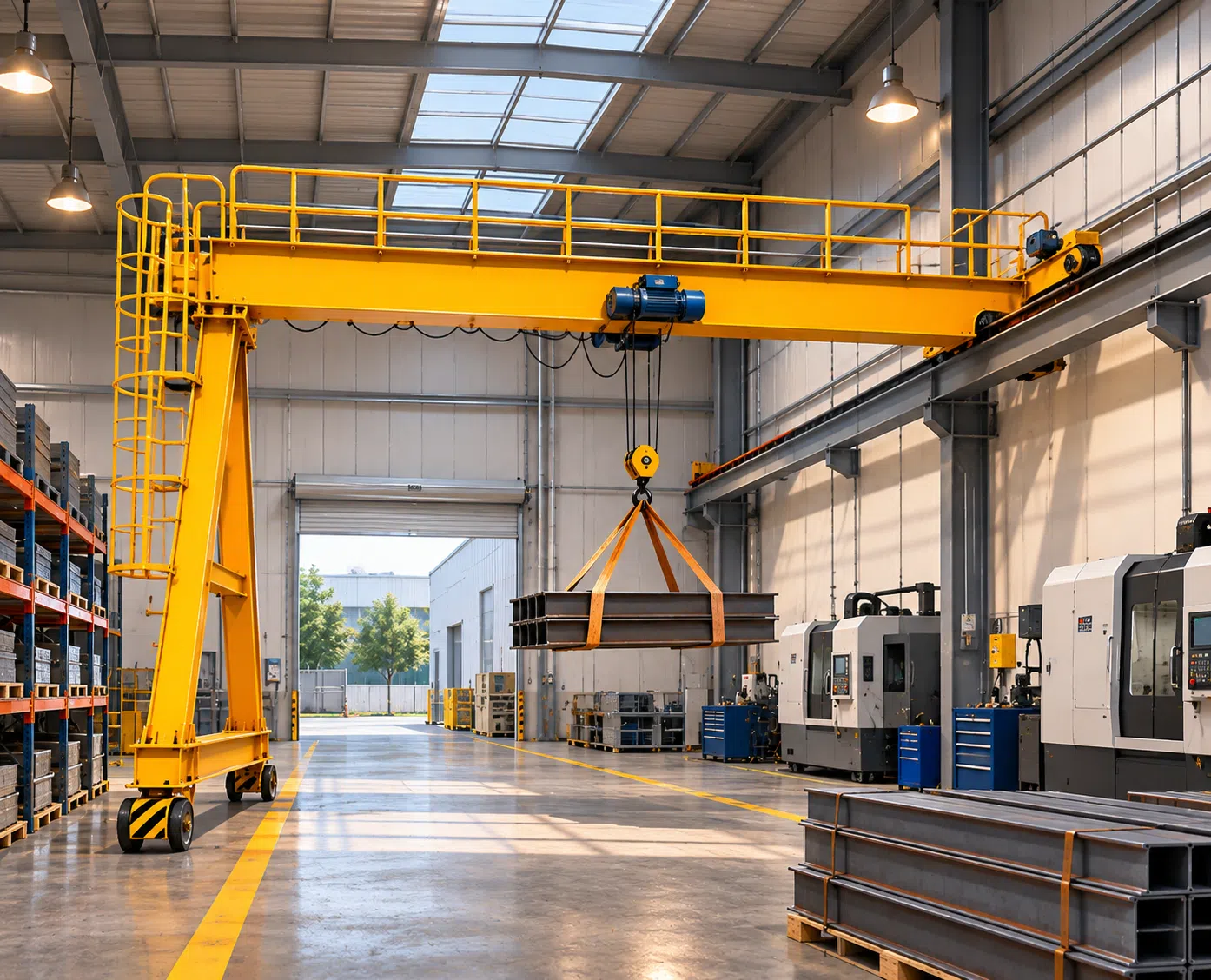
The compact gantry helps the technician pick up forming dies and steel blocks, move them precisely, and place them on the machine's work table, which protects the delicate machine axes from the shock of rough lowering and speeds up die change time between shifts.
Operational Safety Standards to Observe During Use
Working with these compact cranes requires adherence to specific operating protocols to avoid tip-over accidents:
- Engage the wheel brakes before lifting: It is strictly forbidden to start lifting any suspended object before the mechanical locking brakes on all four wheels are closed, to prevent the crane from moving while the load rises.
- Level floor free of holes: The crane must be used only on level, solid floors. If one wheel passes over a gap or slope while a load is suspended, it can upset the center of gravity and tip the crane over instantly.
- Straight vertical lifting and avoiding side pulls: These cranes are designed to carry loads along a direct vertical path. Pulling materials at an angle generates dangerous twisting moment that can bend the legs or break the wheels.
- Choosing the suitable hoist (manual or electric chain): Manual chain blocks are preferred for light weights and for precise mechanical control, whereas compact electric hoists are preferred when lifting operations are repeated, to save technicians time and effort.
How Does Al Manarat Al Monerah Provide the Best Portable Gantry Cranes?
Al Manarat Al Monerah (almanratalmonerah.com) guarantees its customers in the maintenance and contracting sectors portable lifting systems that combine sturdy construction with smooth operation:
- Engineering designs matched to your field requirements: Manufacturing and supplying portable gantry cranes in various capacities, with adjustable heights and spans to match the dimensions of your workshop and the heights of your facility's doors.
- Equipped with the strongest industrial handling wheels: Using advanced wheels fitted with double ball bearings and directional and swivel locking brakes that carry heavy loads and resist wear, chemicals and oils.
- Integration of certified original lifting systems: Fitting the cranes with certified electric or manual hoists built to the highest global quality standards, with automatic safety brakes and stress-resistant steel hooks.
- Load test certificates and technical support: Delivering the equipment after load testing and structural stability adjustment, with genuine spare parts such as wheels, bolts and gears available locally and immediately to ensure your field teams are not held up.
You can contact the experts at Al Manarat Al Monerah directly to discuss the dimensions of your site and the type of materials to be handled, and obtain a portable gantry crane precisely designed to give your workshop maximum operational flexibility with the best return on investment.
Frequently Asked Questions About Portable Gantry Cranes for Workshops
Can a gantry crane be moved while a load is suspended in the air?
The crane can be moved very slowly and carefully over a smooth, perfectly level floor, provided the load is at the lowest possible point close to the ground to avoid swinging or an upset center of gravity. It is always preferable, however, to move the materials to their position before lifting them vertically wherever this is possible from an engineering standpoint.
What is the difference between a fixed gantry crane and a portable one on wheels?
A fixed crane either rests on concrete foundations anchored with embedded bolts or travels on defined-path rails for very heavy loads, whereas a portable gantry crane relies on freely steerable wheels that give it the freedom to move to any corner of the workshop or be taken to an outside site without any structural constraints.
How is the most suitable type of hoist trolley chosen for a portable crane?
If the lifting is light and intermittent, a simple push trolley with a manual chain hoist offers a very practical and economical solution. When pieces weighing more than two tons are handled repeatedly, it is preferable to install an electric trolley or a geared trolley with a hand chain, to ensure smooth and controlled cross travel along the steel beam.
Read also: How to Determine Gantry Crane Prices Based on Capacity and Dimensions