
Double Girder Overhead Cranes: The Ideal Solution for Massive Loads
Heavy manufacturing environments, metal smelting plants and giant structure fabrication facilities impose extremely hazardous operating challenges. Conventional lightweight lifting systems cannot be relied on there, since their structures may sway or collapse under severe mechanical stress and the torsional moment created by handling enormous blocks. A snapped cable or excessive bending of the load-bearing girder is a disaster that costs a facility losses exceeding the value of its entire production line. This is where double girder overhead cranes take center stage as the strongest, most dependable and most stable long-term solution. They give major industrial facilities an exceptional ability to master extremely heavy weights and move them across wide halls, thanks to their twin box-girder structure and balanced distribution of load points.
What Are Double Girder Overhead Cranes?
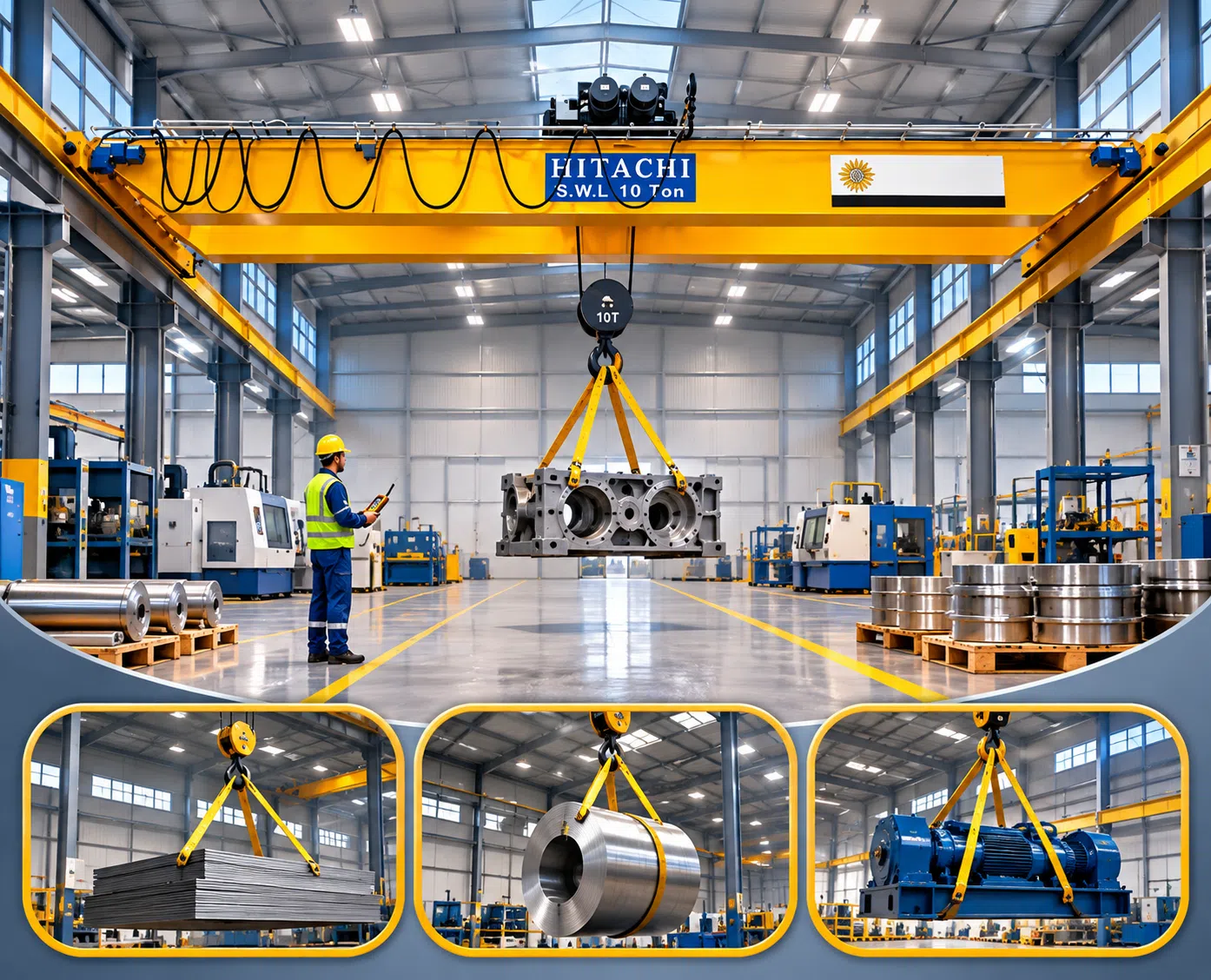
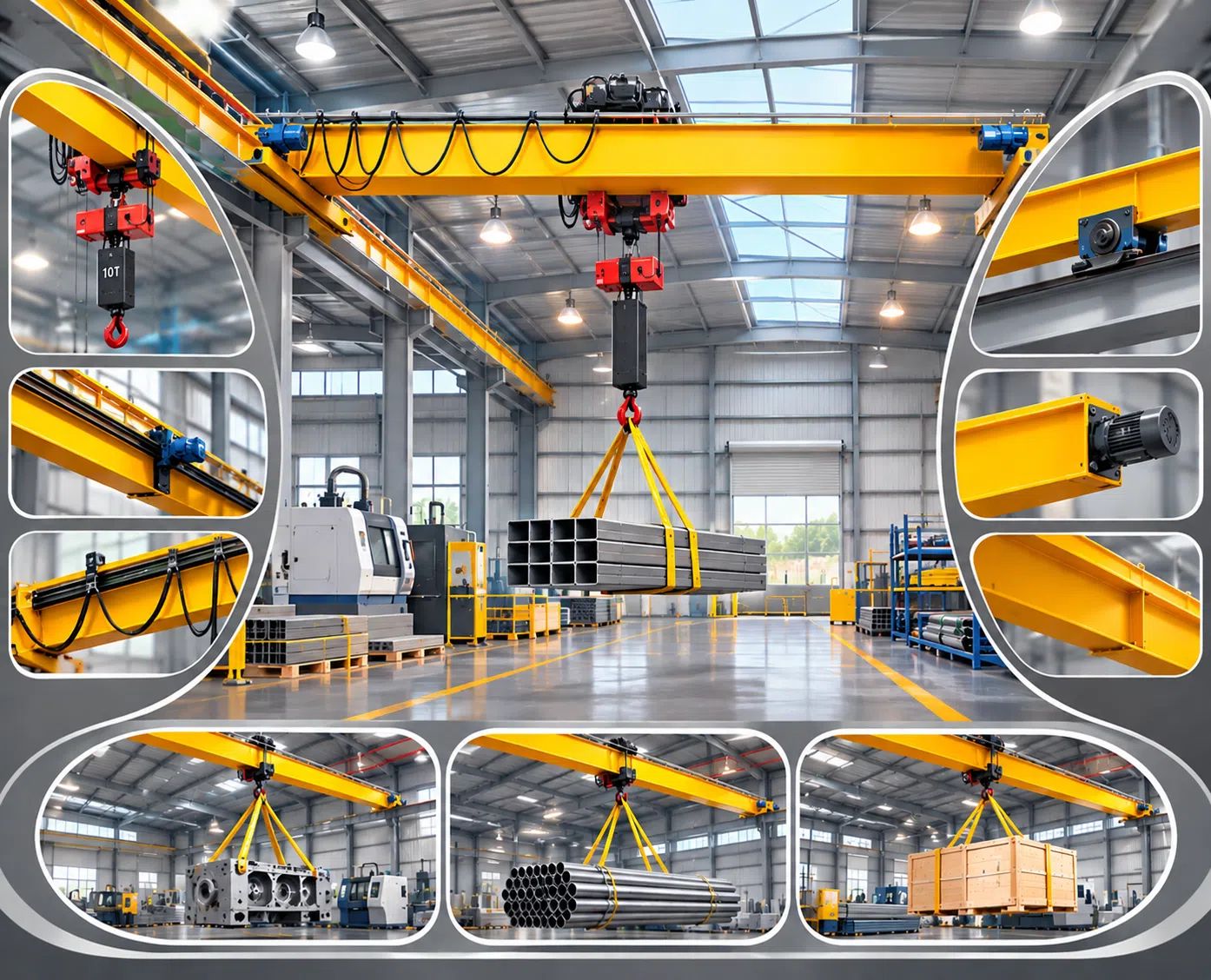
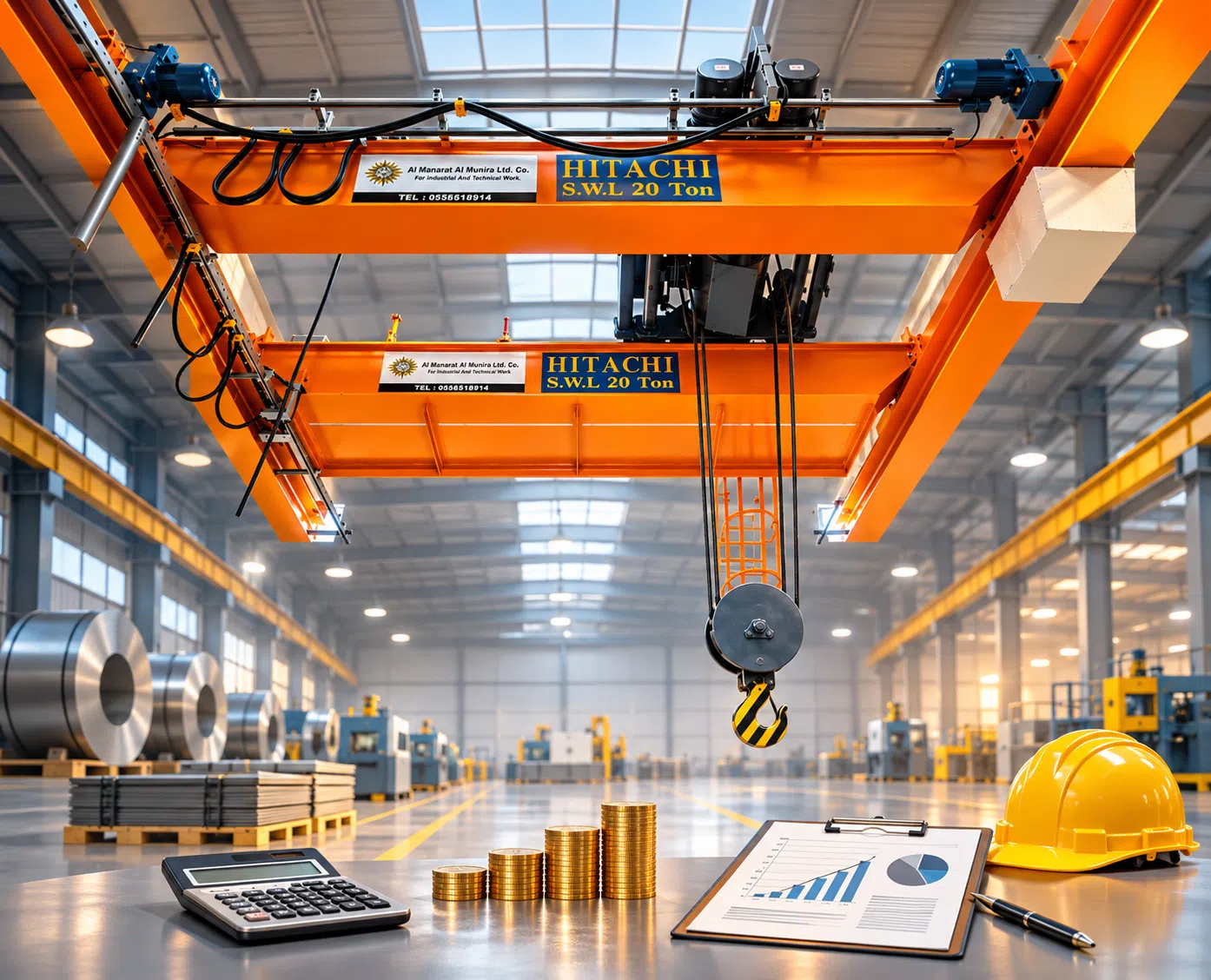
Double Girder Overhead Cranes are advanced lifting systems that rely on two parallel steel girders resting on the building's longitudinal runways. The hoist and winch trolley (Crab / Winch Trolley) travels on top of the rails on the two girders rather than hanging beneath them, giving it exceptional strength and engineering stability for handling giant loads and serving wide engineering spans.
This twin-girder structure gives large factories and facilities immediate operational advantages:
- Superior lifting capacities starting from 5 tons and easily exceeding the 250 to 500 ton mark in complete safety.
- The maximum available hook height (Hook Height), thanks to the trolley sitting on top of the girders.
- Coverage of giant halls with spans over 30 to 40 meters without the risk of structural deflection.
Mechanical Design and Strength Components of the Double Girder Crane
The secret of this system's strength lies in the integration of its engineered parts, which work as one uniform mass able to withstand the harshest stress conditions:
1. Twin Box Girders
The girders are fabricated from high-strength steel plates welded together to form closed box sections, reinforced internally with vertical stiffeners and Internal Diaphragms to absorb shear forces and resist bending. The girder is also designed with an engineered upward arch (Camber) so that it returns to perfect straightness when the maximum working load is lifted.
2. Top-Running Crab Unit
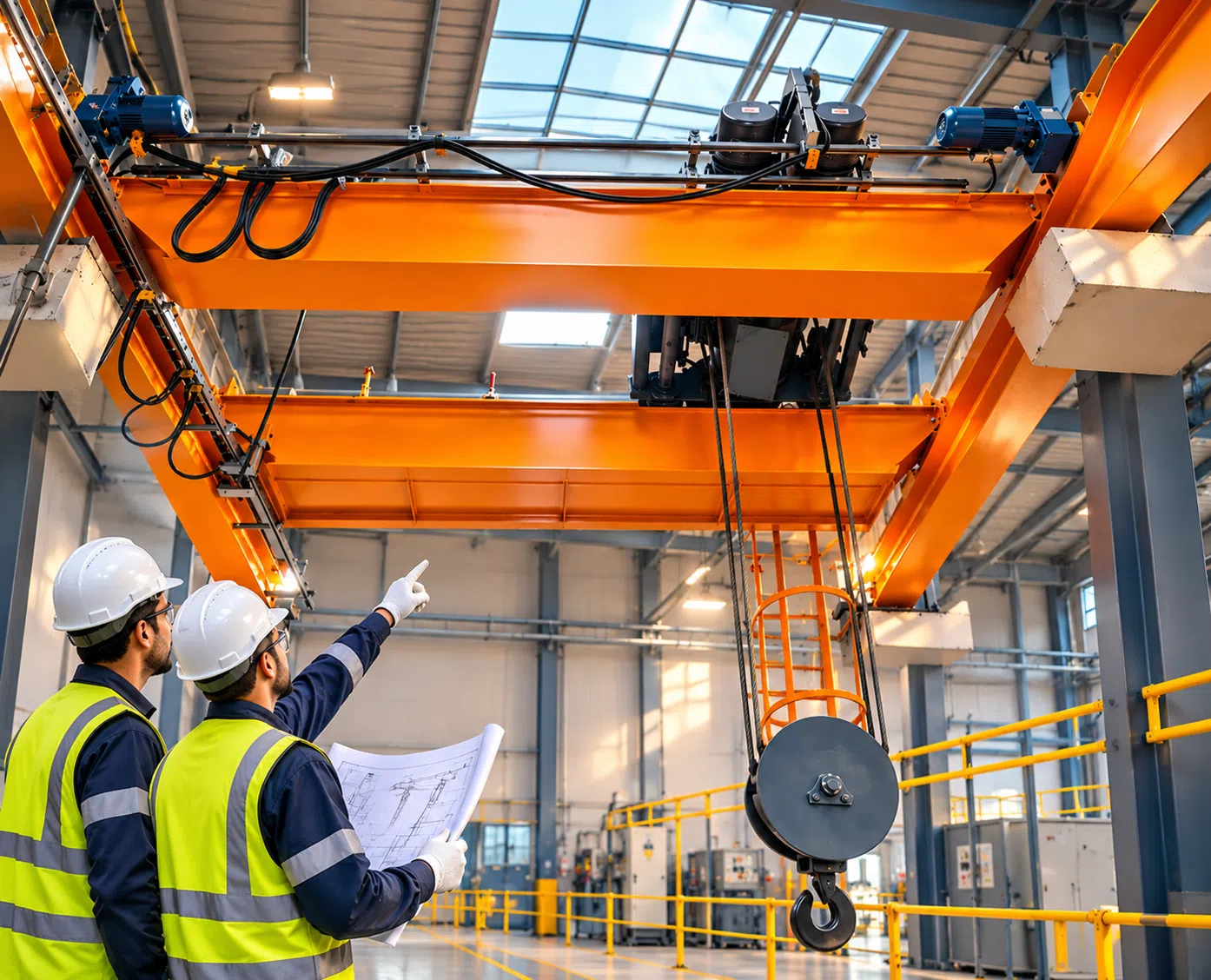
Unlike single girder cranes, the hoist trolley here rests on two rails fixed on top of the girders. This dual wheel arrangement gives balanced weight distribution and allows the integration of open hoist motors and large gearing (Open Winch Mechanism) capable of pulling thick steel ropes easily and quickly.
3. Full Service Walkways & Platforms
These cranes come as standard with walkway platforms surrounded by steel safety railings running the entire length of the girder. This gives maintenance engineers and technicians safe, easy access to inspect motors, lubricate gears, and monitor control panels and brakes, without hiring ground lifting equipment or erecting complex scaffolding.
4. End Carriages and Synchronized Travel Axes
The twin girders connect to end carriages fitted with four or eight hardened steel wheels, depending on the load size, driven by independent travel motors on each side with a synchronized control system, to ensure the crane runs in a perfectly straight line without any side friction against the rails.
Why Are Double Girder Cranes the Ideal Solution for Massive Loads?
There are many technical reasons that make double girder overhead cranes the only suitable choice for heavy and complex duties:
Maximizing Hook Clearance
In warehouses and workshops where high-pressure vessels or very tall metal structures are fabricated, every vertical centimeter matters. Because the hoist trolley runs on top of the girders, the steel hook rises between the two girders to the highest possible point directly under the building roof, giving exceptional flexibility to clear other machines and products inside the facility without any obstruction.
Tremendous Stability and Resistance to Skew and Vibration Forces
Massive weights generate huge dynamic forces during starting and stopping. The wide base of the twin girders offers inherent resistance to mechanical torsion (Torsion). This balance keeps the hook steady and stops lifted materials from swinging, even when moved at the maximum possible speed across the hall.
Auxiliary Hoist Integration on the Same Girders
The structural space of the double girder crane allows an auxiliary hoist (Auxiliary Hoist) to be installed beside the main hoist. This is used to lift light loads faster, or to flip and rotate giant metal molds and cast pieces in the air by running the two hoists together in precise coordination.
Comparative Analysis: Double Girder Overhead Cranes vs. Single Girder Cranes
To clarify the technical differences that drive the engineering decision in large factories, the points below highlight the main differences between the two systems:
- Load nature and maximum capacity: Single girder cranes are limited to light and medium lifting ranges up to 20 tons and rely on the hoist hanging from below, while double girder cranes handle extremely heavy loads starting from 10 tons and exceeding 500 tons, thanks to the trolley resting directly on top of the girders.
- Ability to cover wide spans (Span): A single girder loses stiffness and its efficiency declines on spans exceeding 22 meters, whereas a double girder can cover huge spans of up to 45 meters without sacrificing structural stability.
- Continuous use rates and classifications: Single girder cranes suit intermittent and medium duty classes, whereas double girder cranes are built to heavy and super-heavy duty classifications (Class E/F - CMAA) to run continuous round-the-clock shifts without stopping or thermal stress on the motors.
- Load path height relative to the building: A single girder loses part of the building's clear height because the hoist hangs below the flange, while double girder cranes make maximum use of the truss height because the hook rises between the two girders.
- Structural and foundation requirements: A single girder crane has a lighter weight that does not need heavy column reinforcement, whereas a double girder crane imposes large dead loads and high wheel reaction forces, requiring concrete columns or steel trusses with a special structural design to bear the pressures.
The Main Industrial Sectors That Rely on Double Girder Cranes
This system is a basic and central choice in many strategic industrial sectors:
- Iron, steel and foundry plants: Handling ladles of molten steel and hot castings at extreme temperatures that require thermal protection systems and multiple safety brakes.
- Shipyards and marine industries: Assembling and positioning giant hull sections and marine propulsion engines with great precision inside huge assembly hangars.
- Power generation plants: Lifting and positioning steam turbines, giant generators and huge electrical transformers during installation and periodic maintenance work.
- Large paper and printing mills: Handling giant paper reels and heavy steel coils that require precise movement and steady speed throughout the day.
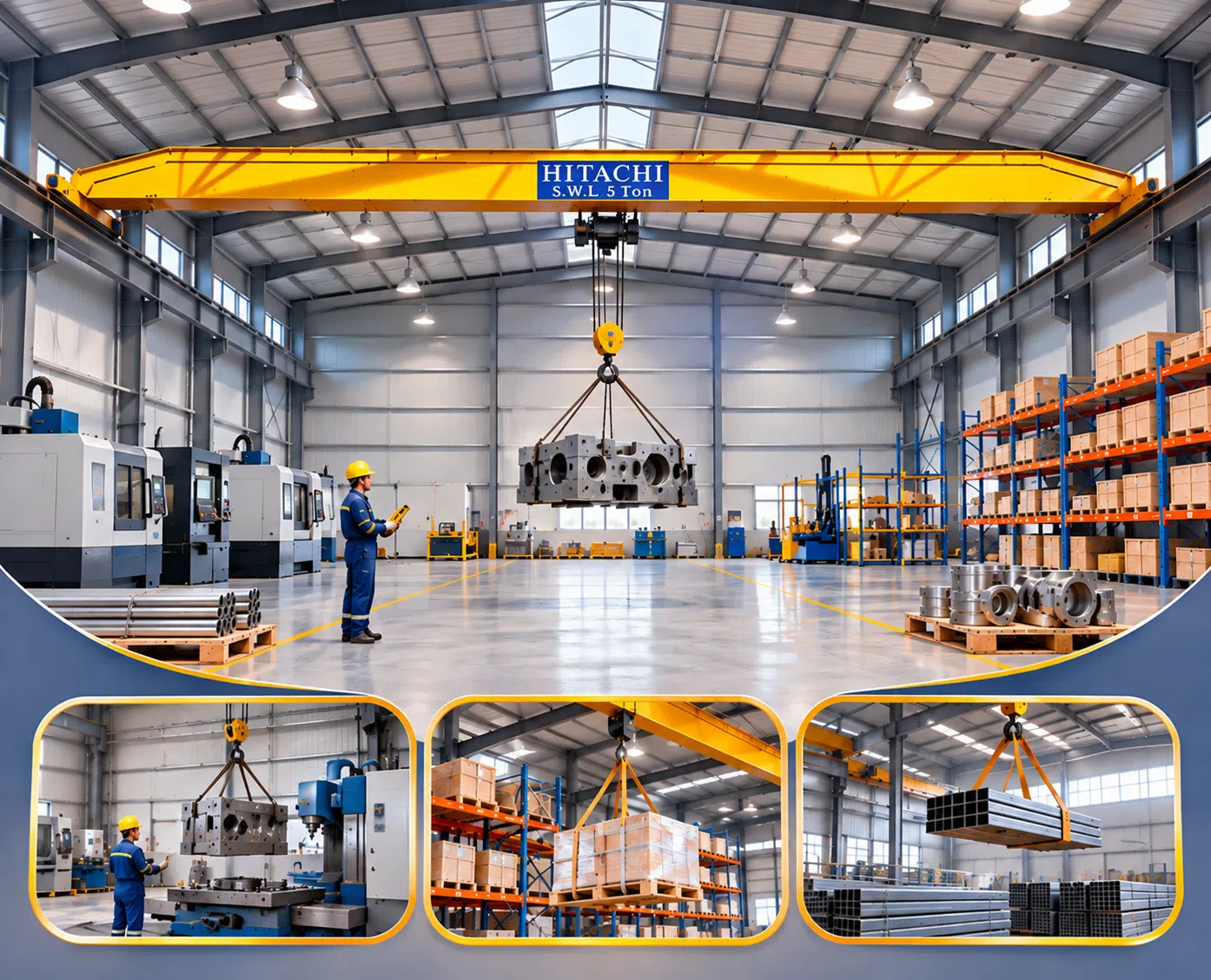
- Heavy machining and fabrication workshops: Feeding giant CNC lathes and milling machines with solid steel blocks and rolled plates without causing any operational vibrations.
Advanced Safety Equipment to Meet the Hazards of Extreme Weights
Managing massive loads requires advanced safety systems that ensure strict control of every part of the crane's motion:
- Dual Emergency Brakes: Electromagnetic brakes on the motor shaft, plus an independent hydraulic mechanical safety brake mounted directly on the hoist drum, to prevent the load from dropping immediately if a gear failure occurs.
- Anti-Sway Control: Advanced software inside the variable frequency drives (VFD) reads the motion path and automatically adjusts acceleration and deceleration to absorb pendulum movement and keep the load suspended with complete vertical stability.
- Digital load sensors with external display screens: Load cells built into the hoisting sheaves read the load accurately and cut off lifting as soon as the rated capacity is exceeded by 1%, while displaying the weight clearly to the operator on a large LED screen.
- Monitoring and predictive maintenance diagnostic systems: Thermal and vibration sensors on the motors and gearboxes record operating hours and detect any mechanical fault before it turns into a sudden breakdown that stops the plant.
Frequently Asked Questions About Double Girder Overhead Cranes
What is the fundamental difference between a standard hoist and the double girder crane's open winch?
A standard hoist is a pre-assembled, enclosed compact unit suited to loads up to 20 or 30 tons, whereas the open winch of a heavy-duty double girder crane relies on a separate motor, an independent gearbox and a large steel rope drum mounted on a shared steel base. This gives great ease of maintenance and part replacement under loads reaching hundreds of tons.
Can a double girder overhead crane be operated with a wireless remote instead of a cabin?
Yes, absolutely. Many modern factories prefer encrypted wireless controls with secure frequencies, which let the operator stand at a safe, clear distance, while operator cabins remain reserved for very high-speed cranes or extremely hazardous and hot environments such as foundries, protecting the driver through cabin air conditioning and filtration.
How are the double girder crane runway loads calculated for the factory building?
The structural engineer adds the self-weight of the two girders, the trolley and the hoist to the maximum rated load, multiplied by dynamic safety factors for vertical loads, horizontal loads and braking forces. This total is distributed over the number of end carriage wheels to determine the maximum point load on each wheel (Maximum Wheel Load), and the steel columns and concrete foundations are then designed precisely to suit it.
Read also: Why Is Al Manarat Al Monerah One of the Best Crane Supply Companies in the Middle East?