
How Does a Suspended Monorail System Speed Up Logistics Operations?
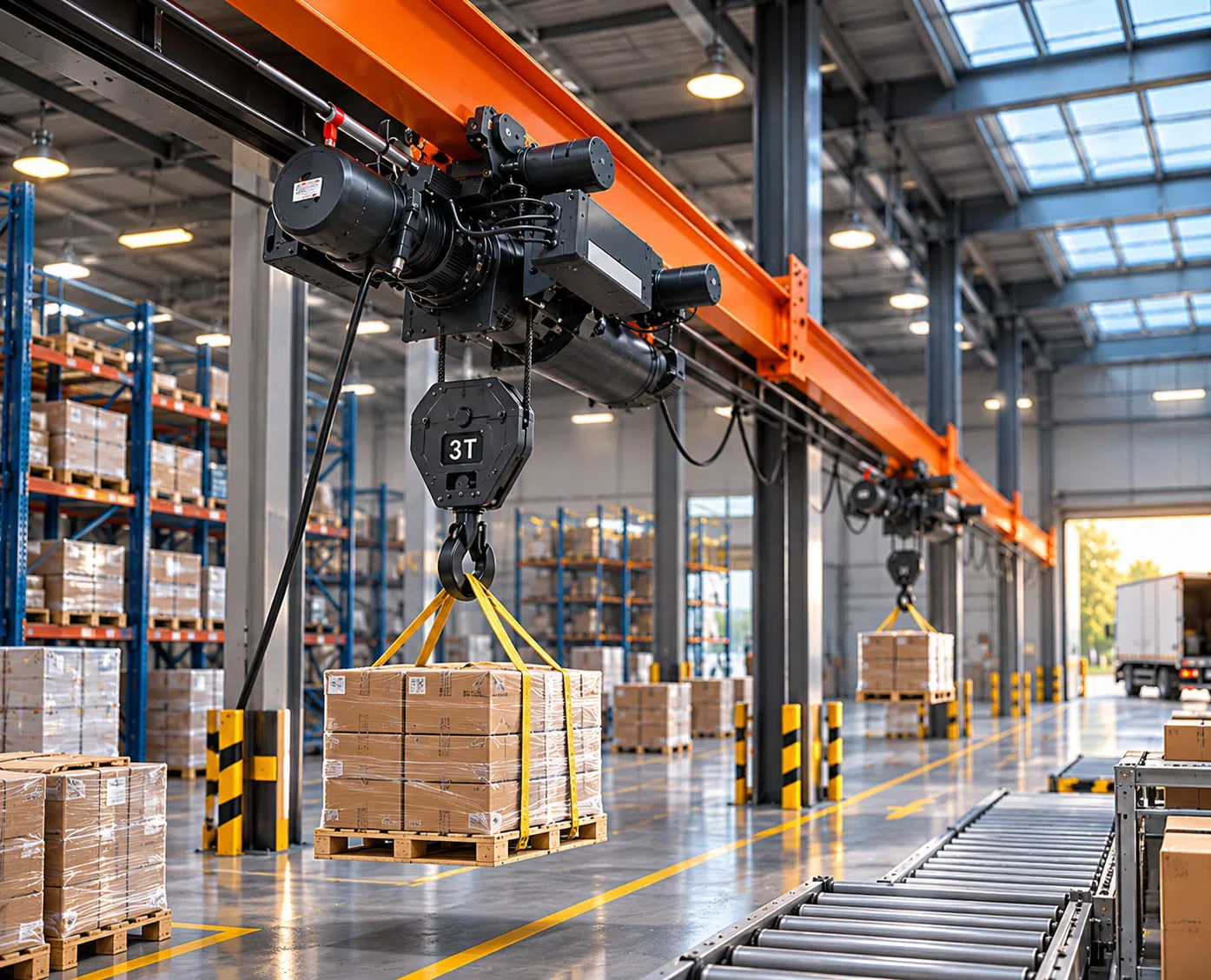
Logistics centers and smart warehouses today are racing to cut shipment processing time and meet instant-delivery requirements. Goods piling up in aisles, or slow movement of raw materials between packing platforms and sorting lines, is an operational obstacle that drains profits and disrupts shipping schedules. Traditional reliance on forklifts and ground tow carts is hitting hard limits as vertical storage density rises and floor traffic routes between machines and workers become crowded. To get past this bottleneck, the suspended monorail system has emerged as an advanced engineering option that redraws the logistics flow map entirely, by turning unused air space beneath the ceilings into fast, continuous transport arteries that move parcels and workpieces with extreme precision and no friction with floor traffic.
How Does a Suspended Monorail System Speed Up Logistics Operations?
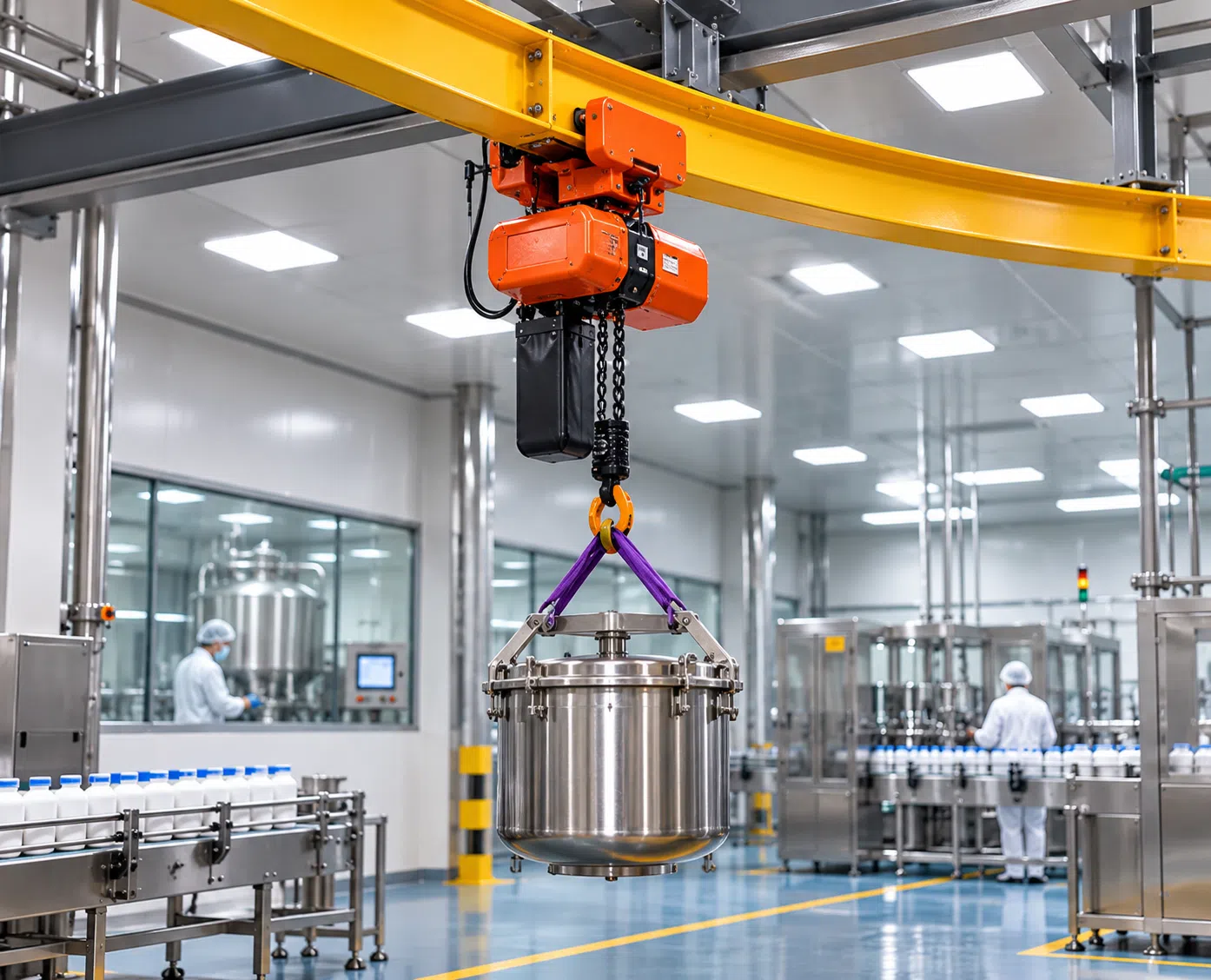
A suspended monorail system boosts the speed of internal supply chains by providing continuous overhead transport paths operating on a direct continuous-flow basis to deliver goods between receiving, storage and shipping areas, eliminating ground crossings and forklift bottlenecks, with the option of automatic connection to warehouse management systems (WMS) to move parcels along straight and curved routes at high speed without stopping.
Integrating this system into logistics facilities delivers immediate gains:
- Cutting material transfer cycle time between sorting and processing stations by 40% to 60%.
- Freeing 100% of the facility floor for stacking goods and increasing warehouse capacity.
- Nearly eliminating collisions between ground vehicles and damage to cartons and transported products.
The Engineering Mechanisms Behind the Monorail's High Speed
The system's efficiency depends on the integration of its mechanical and electrical structure, designed for continuous, controlled operation:
1. Direct Overhead Flow and Avoiding Floor Obstacles
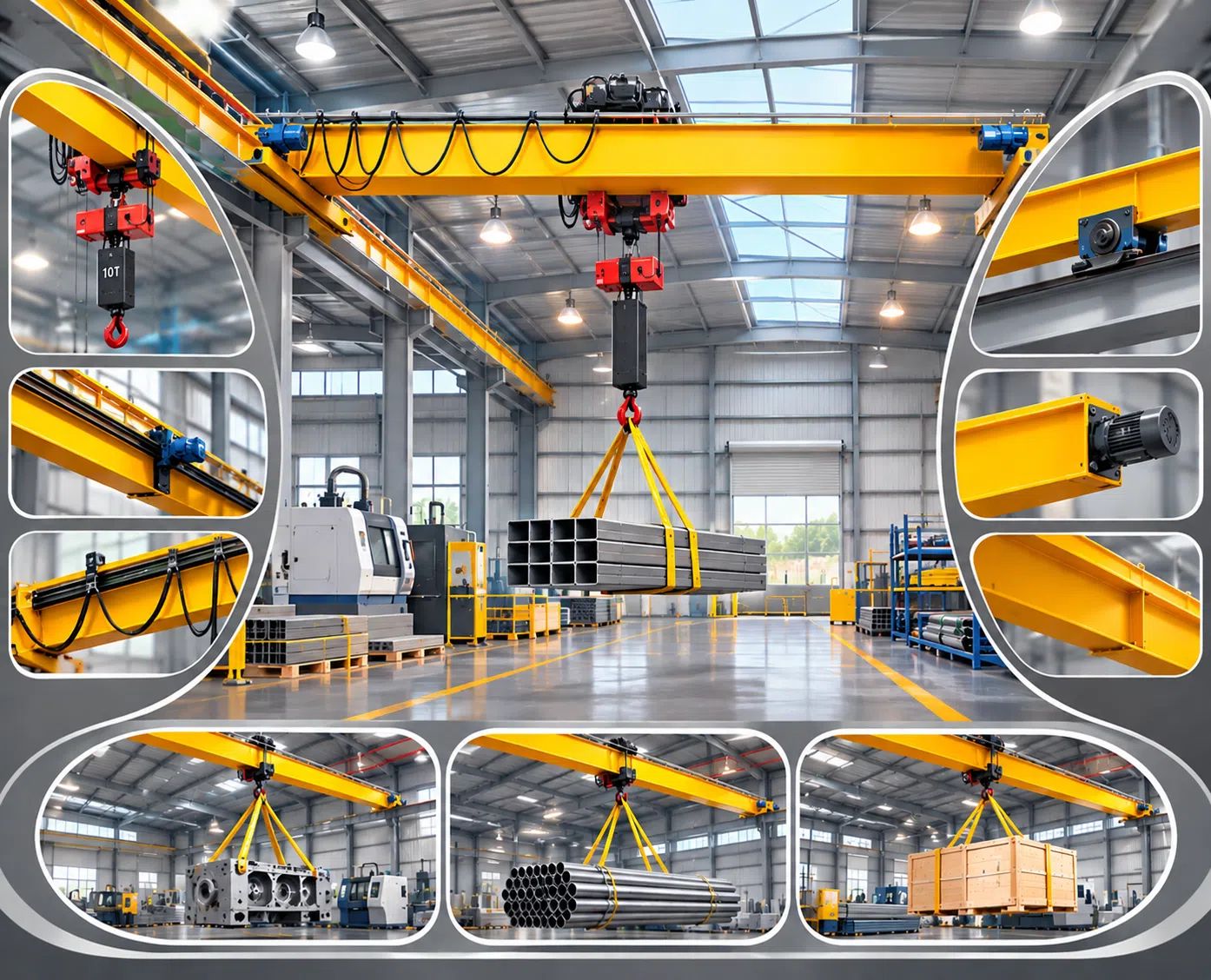
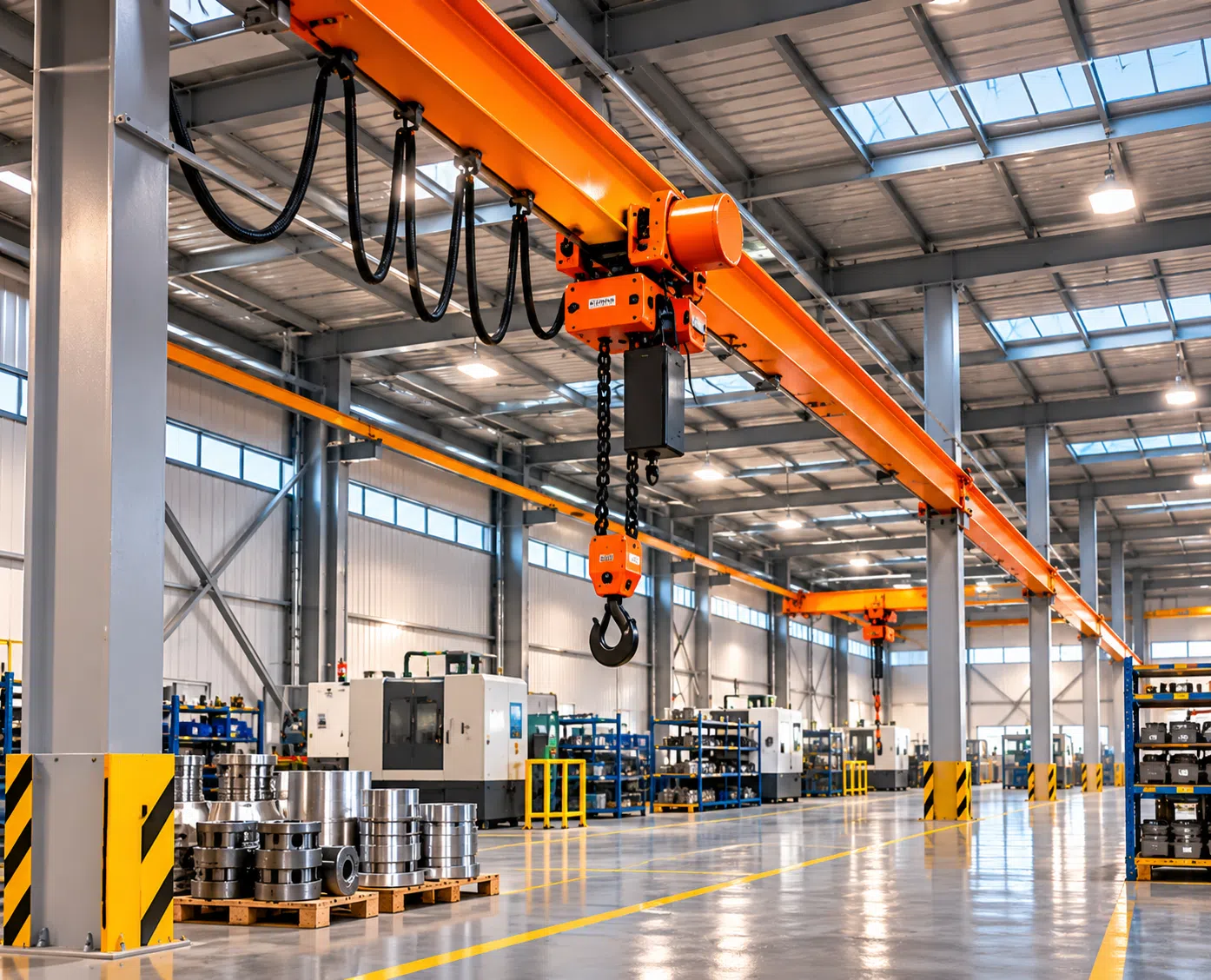
The suspended hoist travels over a single steel track beam fixed to the roof trusses. This elevation lets the system cross halls, pass over rows of shelving and bypass inspection rooms and administrative offices in straight overhead lines, without having to go around barriers or wait at aisle intersections that hold up ground equipment.
2. Smart Track Switches and Multi-Route Routing (Track Switches & Loops)
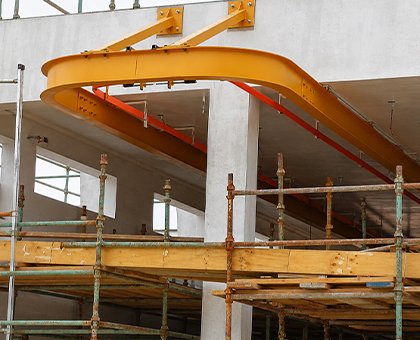
The monorail is not limited to simple back-and-forth motion. It supports building integrated closed loops equipped with automatic track switches (turntables and spur switches). These let shipments be routed automatically to different loading gates or specific inspection platforms at the push of a button, allowing several carriers to run at the same time on the same network without conflict.
3. Frequency Control and Stable High Speeds (VFD Drives)
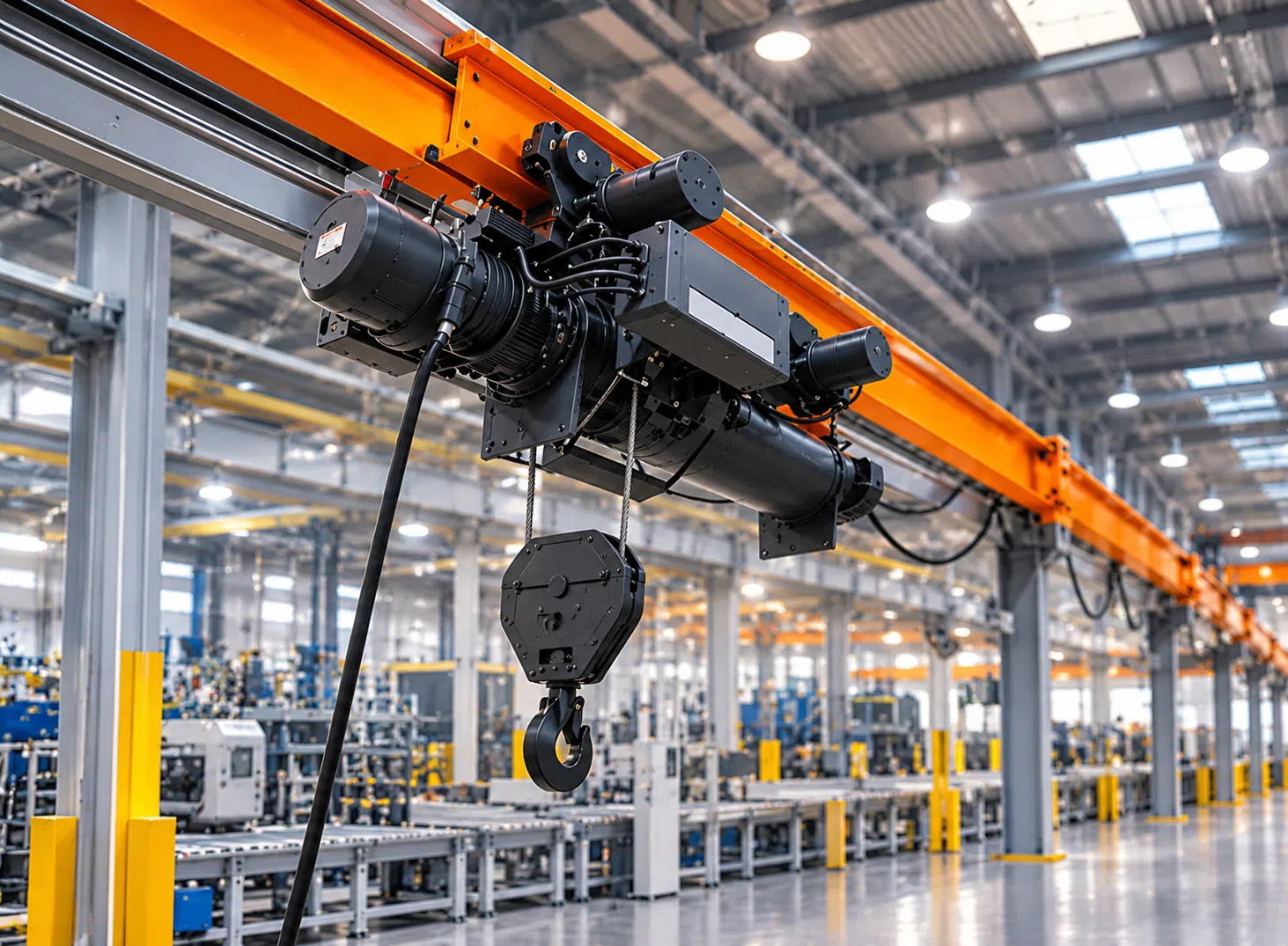
The travel trolleys are fitted with servo electric motors driven by smart frequency inverters that provide ultra-smooth starts and stops. This technology prevents suspended loads and parcels from swinging during acceleration or when turning in curves, making it possible to raise the horizontal travel speed of loads to the maximum with complete safety and absolute stability.
4. Digital Integration and Logistics Automation (Automation & WMS Integration)
The modern suspended monorail integrates with laser sensors, barcode readers and PLC systems. The system picks up pallets or boxes as soon as they reach the receiving area and automatically carries and unloads them at the designated storage line according to the warehouse's digital system commands, reducing human intervention and procedural error to zero.
Comparative Analysis: Suspended Monorail System vs. Forklifts and Floor Conveyors
To determine the engineering and economic feasibility for the facility, a field comparison reveals the fundamental differences between logistics handling methods:
- Use of warehouse floor space: The suspended monorail system leaves the hall floor 100% free and open because its track hangs from the ceiling, whereas forklifts require travel and turning aisles that consume up to 35% of warehouse space, and conveyors create permanent floor barriers that separate parts of the hall from each other.
- Speed and continuity of flow: The monorail provides a steady, programmed flow that is unaffected by worker congestion or floor obstacles, while forklifts suffer from reduced speed at intersections and queues building up in front of loading gates.
- Safety and accident rates: The suspended system removes the risk of striking pedestrians and workers in floor aisles and eliminates the chance of loads tipping over, whereas forklifts remain the leading cause of warehouse accidents and damage to storage racking.
- Ongoing operating and maintenance costs: The monorail relies on enclosed electric motors and energy-saving copper conductor tracks with few faults, whereas forklifts consume fuel or expensive charging batteries and require constant replacement of tires and brake pads and continuous hydraulic maintenance.
Key Logistics Applications of the Suspended Monorail System
This system serves strategic logistics and industrial sectors that require fast, continuous handling:
Distribution Centers and E-Commerce Hubs
Moving consolidated bundles and large mail parcels between electronic sorting platforms and truck loading gates in record time, making it possible to process thousands of shipments an hour during peak periods.
Linking Production Lines to Dry Storage Warehouses
Moving finished products as soon as packing is complete from inside the manufacturing hall, passing through dividing walls via small, air-isolated openings, and delivering them directly to the adjacent warehouse racks without bringing contaminating transport vehicles into the manufacturing environment.
Cold Storage Warehouses and Food Factories (Cold Storage)
The system moves smoothly at low and sub-zero temperatures to carry meat and frozen products inside cold rooms, where forklift batteries are hard to run efficiently and the space available for costly refrigerated storage is tight.
Automotive and Heavy Equipment Logistics
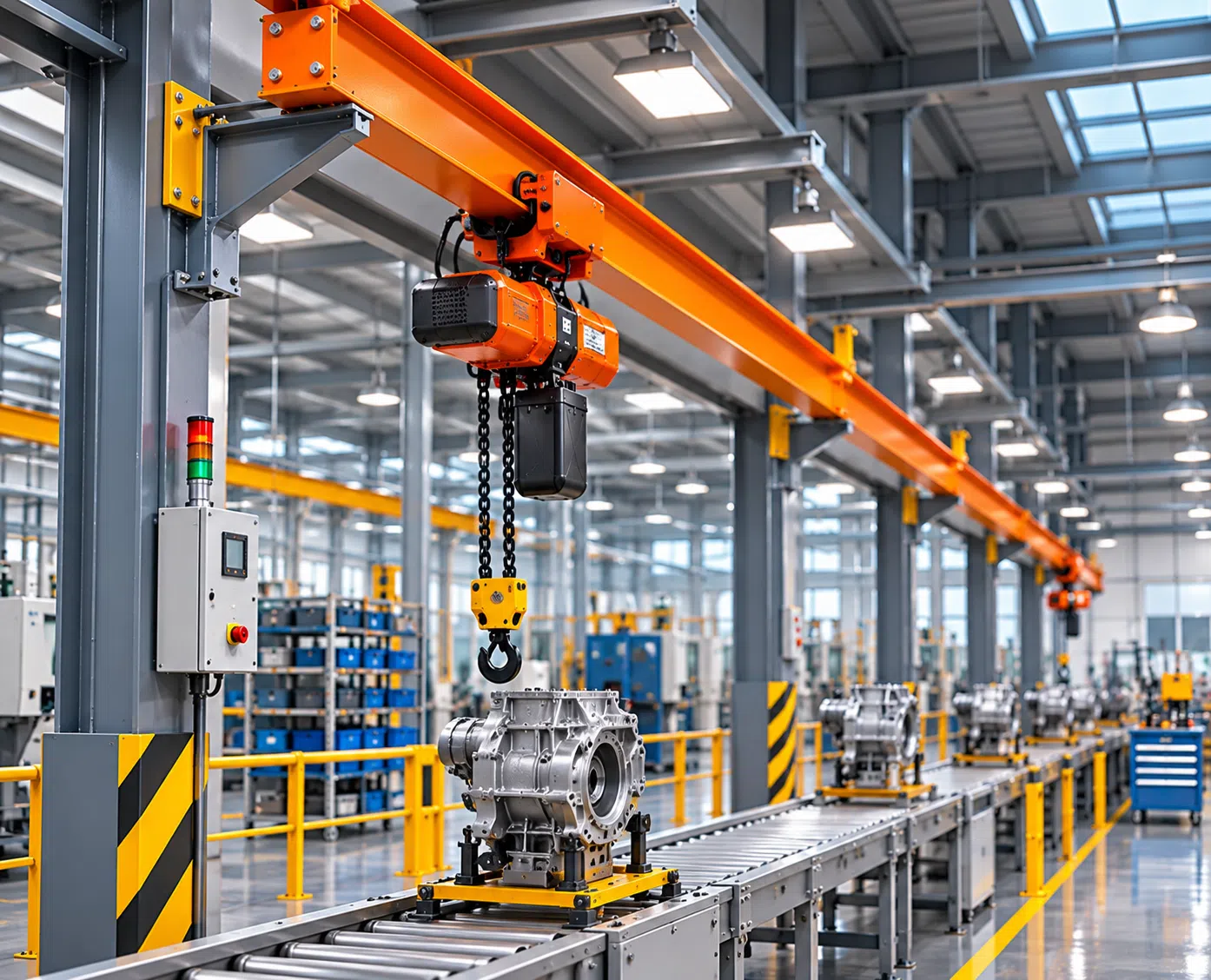
Feeding assembly lines with engines, chassis and heavy spare parts from staging warehouses according to the just-in-time concept, preventing technicians from sitting idle at installation stations.
Approved Safety Specifications in Logistics Monorail Systems
Moving suspended loads above work lines requires strict safety requirements to protect technical staff and property:
- Shock-absorbing mechanical track end stops (End Stops): Rigid barriers fitted with hydraulic polyurethane dampers installed at the ends of the track to prevent the carrier from running off if the electrical cutouts fail.
- Photoelectric and laser anti-collision systems (Laser Anti-Collision): Each carrier is fitted with smart optical scanning sensors that stop the motor automatically and cut motion when another crane approaches on the same track within a set safe distance.
- Interlock gates for track switches (Interlock Gates): Mechanical and electrical locks that automatically close the track while a switch rotates or slides, and prevent the carrier from arriving until the rails are 100% aligned.
- Dual structural safety cables (Secondary Safety Suspensions): Secondary steel cables connecting the monorail track to the roof truss as an additional protection system that prevents the track from falling if the original fixing bolts are subjected to any unexpected stress.
- Self-locking electromagnetic brakes (Fail-Safe Brakes): Instant brakes that close automatically within fractions of a second as soon as power is lost or the emergency stop button (E-Stop) is pressed.
How Does "Al Manarat Al Monerah" Support You in Setting Up a Complete Suspended Monorail System?
Al Manarat Al Monerah (almanratalmonerah.com) leads the engineering and manufacture of industrial lifting and handling equipment in the Kingdom of Saudi Arabia, Egypt and the Middle East, offering integrated solutions to modernize and upgrade internal supply chains:
- Engineering survey and logistics flow simulation: Studying movement paths inside your warehouse, verifying the ability of the hall's beams and roofs to carry dynamic loads, and laying out a monorail route that achieves the fastest material handling cycle with the least travel distance.
- Manufacture and forming of steel tracks to standard specifications (FEM/ISO): Forming closed box girders, curves and automatic track switches from the finest treated steel, ensuring silent, smooth movement that lasts for years.
- Supply and integration of genuine hoists and frequency drives: Equipping the system with the latest European-approved electric chain and wire rope hoists fitted with motors with superior thermal insulation suited to the regional climate, together with smart frequency drives that prevent parcels from swinging.
- On-site installation and precision laser alignment: Specialized engineering crews supervise track installation, adjust joint parallelism by laser, and run insulated electrical conductor bars protected against dust and humidity.
- Load testing and calibration certificates for civil defense: Carrying out static (125%) and dynamic (110%) load tests on site and issuing official certified inspection certificates qualified for acceptance by regulatory and industrial bodies.
- Genuine spare parts readiness and fast technical support: Supplying travel wheels, electrical collector shoes, brake linings and electronic boards in local warehouses to ensure a fast response that protects your logistics operations from any unexpected stoppage.
Al Manarat Al Monerah gives you direct access to its engineering experts for a detailed study and tailored technical proposal that puts a suspended monorail system in your hands, raising the speed and efficiency of your logistics operations to the highest global levels.
Frequently Asked Questions About the Suspended Monorail System
Can a suspended monorail system be installed in an old warehouse without modifying the roof?
Yes, after a structural audit of the load-bearing capacity of the existing roof trusses. If the spacing between beams is wide or the roofs are light, an intermediate steel structure or independent cantilever columns resting on ground foundations are installed to carry the monorail track without putting any extra stress on the warehouse building.
What is the maximum operating speed of suspended monorail carriers in warehouses?
Horizontal travel speeds for manually guided or semi-automated systems range from 10 to 20 meters per minute to ensure the safety of workers nearby, while fully automated systems with closed tracks protected by laser safety sensors reach 40 or 60 meters per minute for moving fast parcels in large logistics centers.
How does the suspended monorail system handle goods of different weights and heights?
Interchangeable mechanical and hydraulic suspension attachments are customized on the crane hook, such as pallet grabs, vacuum lifters and multiple shackles. Programming the frequency drives allows different hoisting speeds to be set in proportion to the weight and size of the shipment being moved, protecting it from bounce.
Read also: Expert Guide to Overhead Crane Installation: Standards and Safety Procedures