
What Is a Gantry Crane and How Does It Differ from Traditional Overhead Cranes?
Some engineering facilities and open warehouses impose a complex architectural reality. Either the hall has no concrete columns able to carry heavy weights, or the work itself takes place in open outdoor storage yards under direct sunlight, where it is impossible to build full roofing trusses just to fix overhead lifting runways. In these difficult spaces, there is a need for lifting equipment with its own independent supporting structure to secure fast, controlled handling without any modification to the building's walls. This is where the gantry crane comes in, as the ideal engineering solution to untangle this logistical complexity at the lowest possible construction cost.
What Is a Gantry Crane?
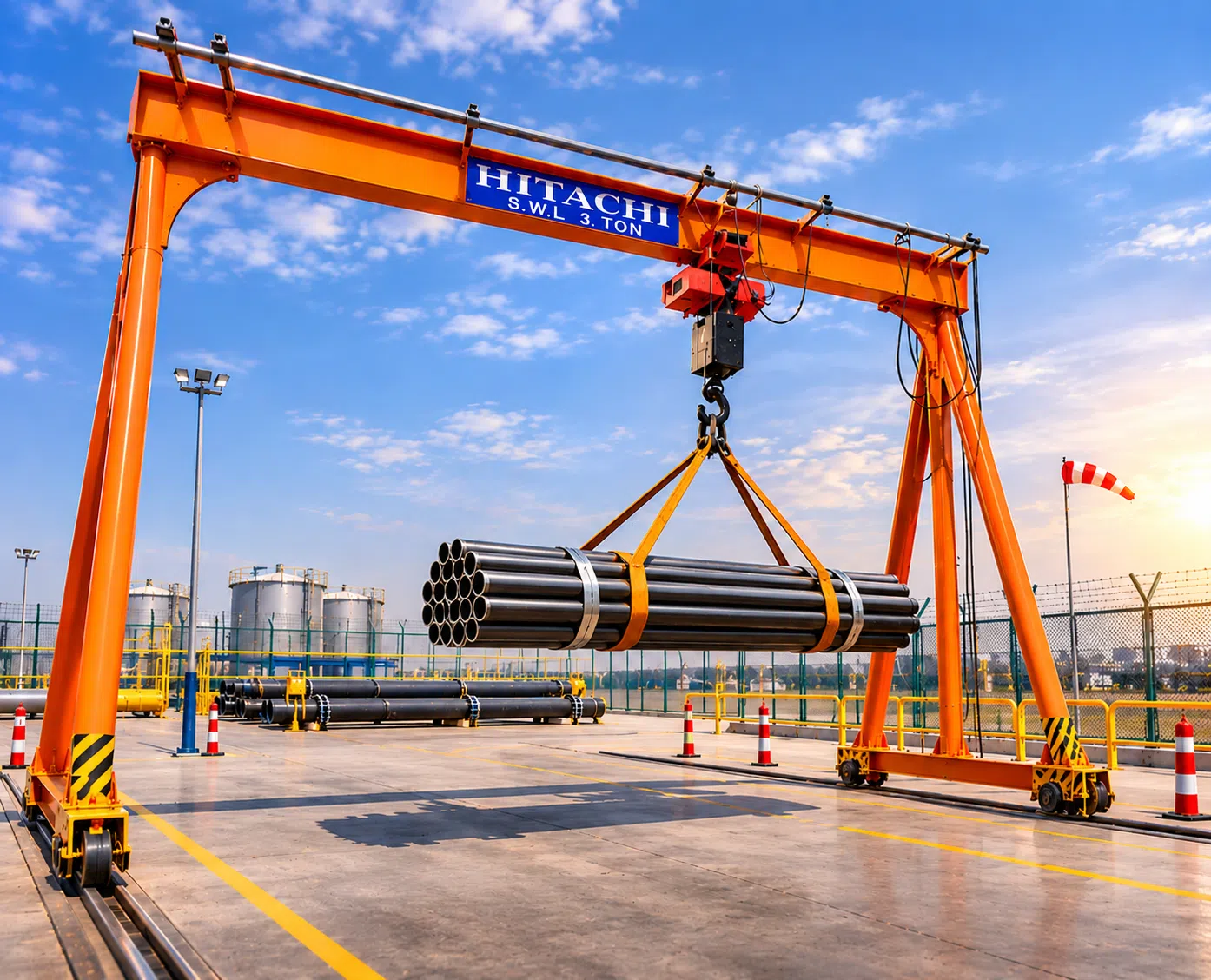
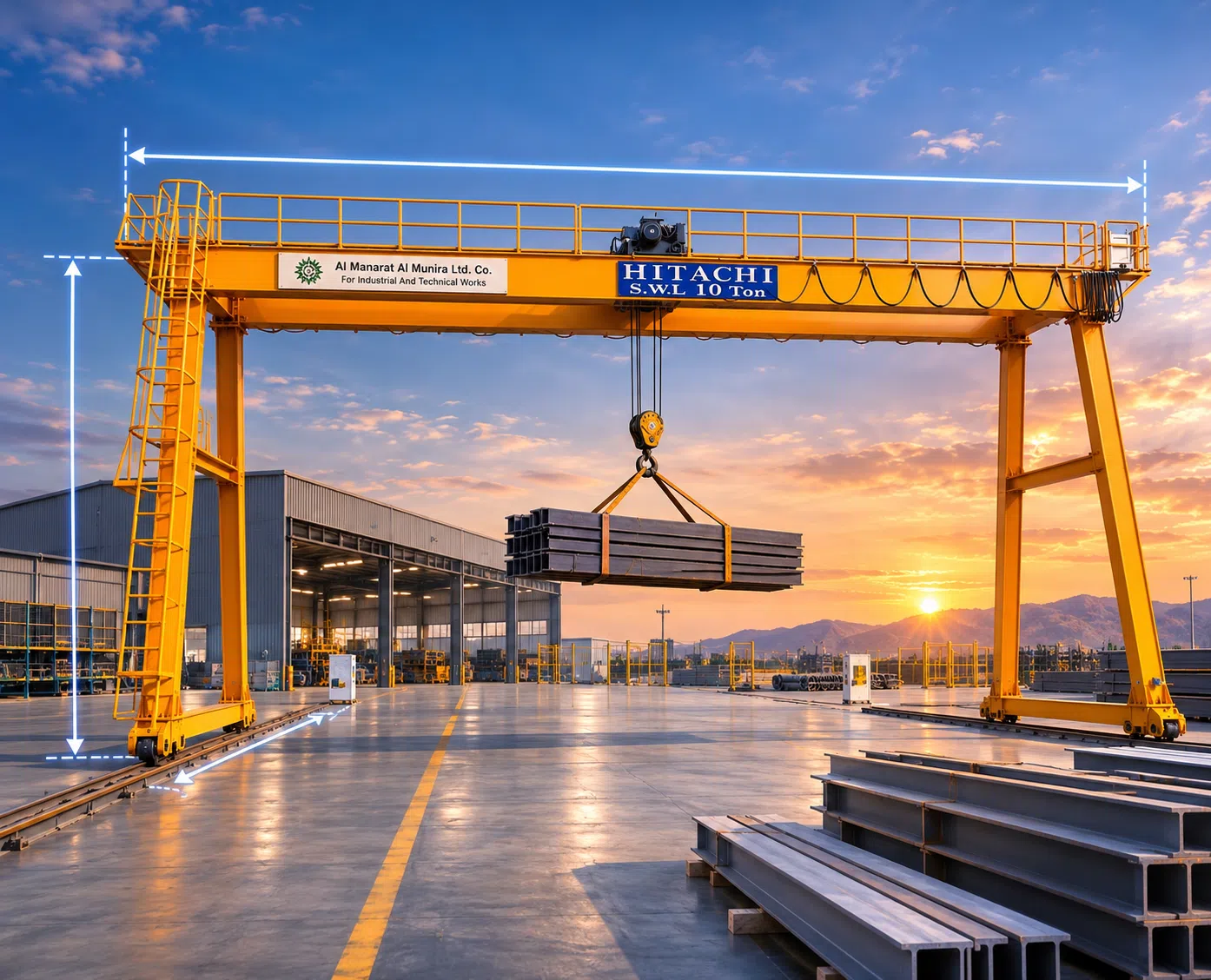
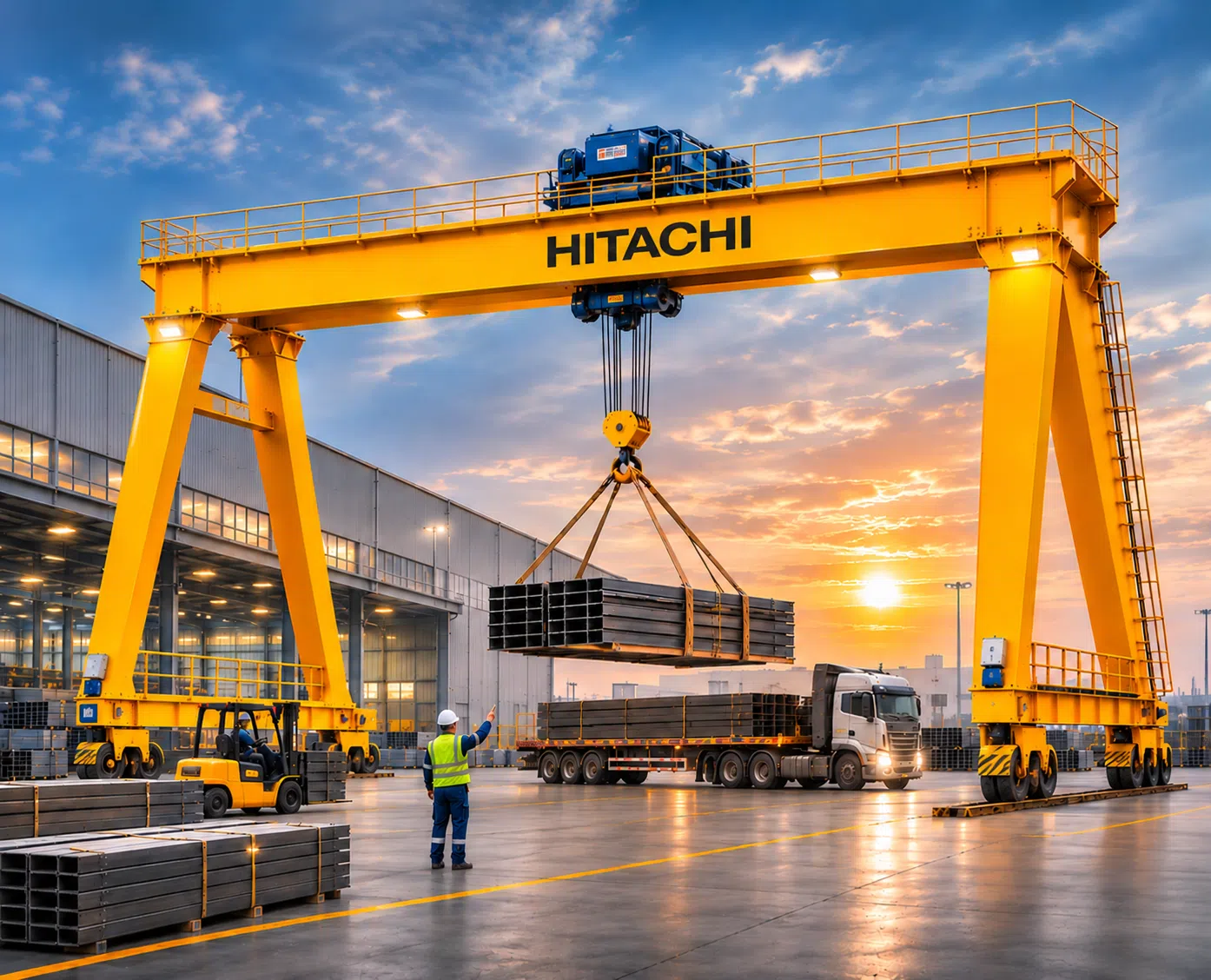
A gantry crane is a self-supporting mechanical lifting system consisting of a horizontal girder supported by rigid steel legs that extend downward and rest on wheels traveling on tracks or rails fixed directly on the workshop or yard floor, while the hoist trolley travels across the length of this girder to move loads vertically and horizontally.
Industrial facilities and supply centers rely on this system in several strategic sectors:
- Precast concrete fabrication and handling yards and the assembly of giant bridge girders.
- Container loading and unloading stations at dry ports and open storage warehouses.
- Heavy maintenance workshops and steel structure fabrication shops that lack equipped concrete walls.
How Does a Gantry Crane Work? (Mechanical Configuration)
The efficiency of the gantry crane is achieved through harmony between the ground travel system and the carried hoist trolley:
1. The Overhead Girder and Supporting Legs (Girders & Rigid Legs)
The girder is the main steel beam that carries the weight of the moved pieces. Attached to its two ends are inclined, triangular steel legs designed precisely to distribute the vertical bending moment onto the floor, and these legs are reinforced with cross bracing (Cross Bracing) that prevents the structure from vibrating when traveling at speed under full load.
2. Ground Travel Mechanisms (Ground End Carriages)
The legs rest on lower end carriages fitted with hardened steel double-flanged wheels (Double-Flanged Wheels) running on rails embedded in or flush with the ground. The electric motors at both ends operate on an electronic synchronization system to ensure the crane travels in a perfectly straight line and to prevent any tilt or deviation that would cause the wheels to rub against the rail edges.
3. Ground Power Supply System (Power Feeding)
Because the crane moves on the ground, the way it is supplied with electricity differs depending on the travel distance. It either relies on a spring-driven or motorized cable reel (Motorized Cable Reel) that automatically winds and unwinds the cable on the ground as it travels, or on an insulated, protected side channel (Trench Conductor) to avoid obstructing truck traffic.
Comparative Analysis: Gantry Crane vs. Traditional Overhead Crane
The choice between the two systems depends on your facility's architectural layout and the size of your initial investment. The following points show the direct technical and operational differences between them:
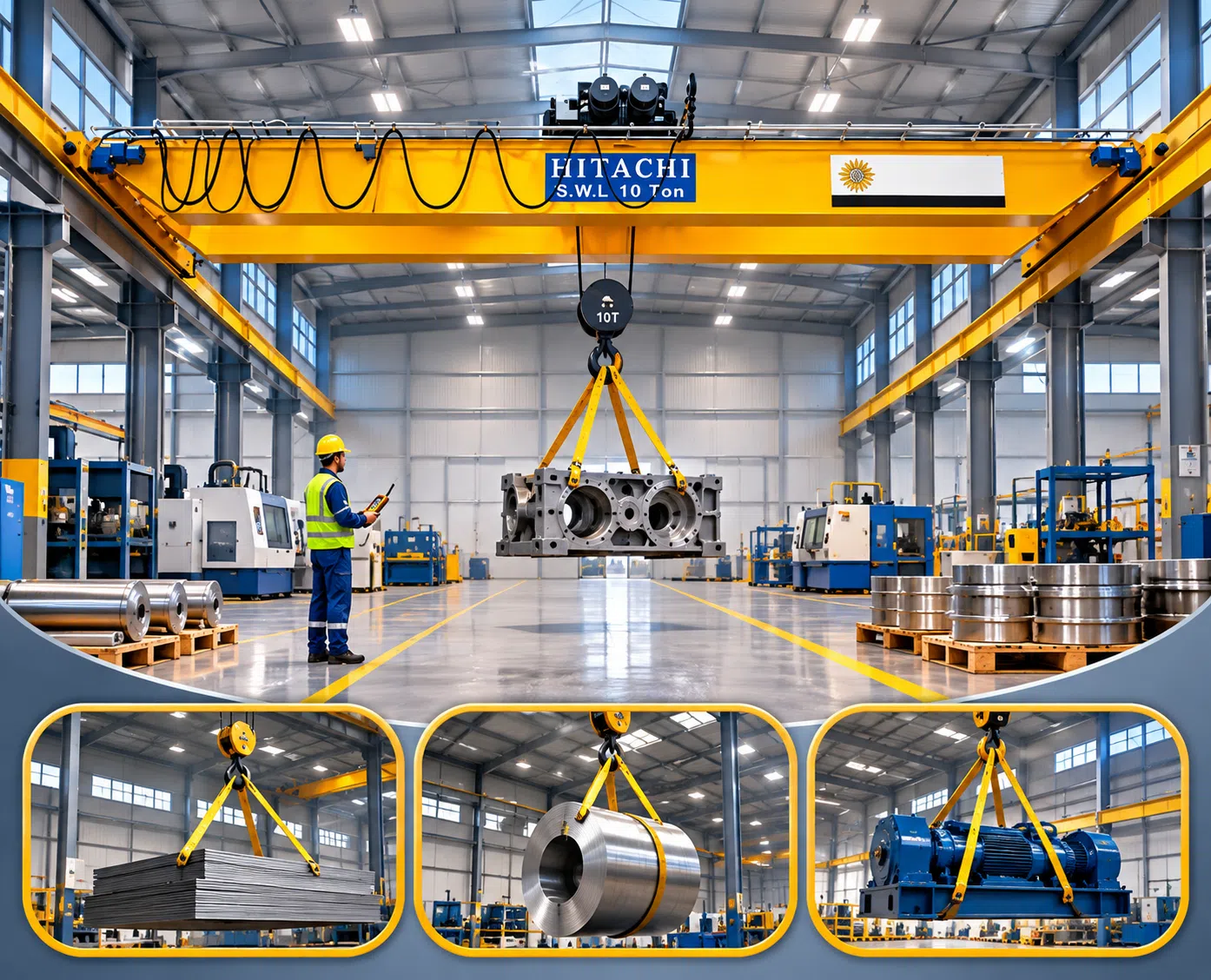
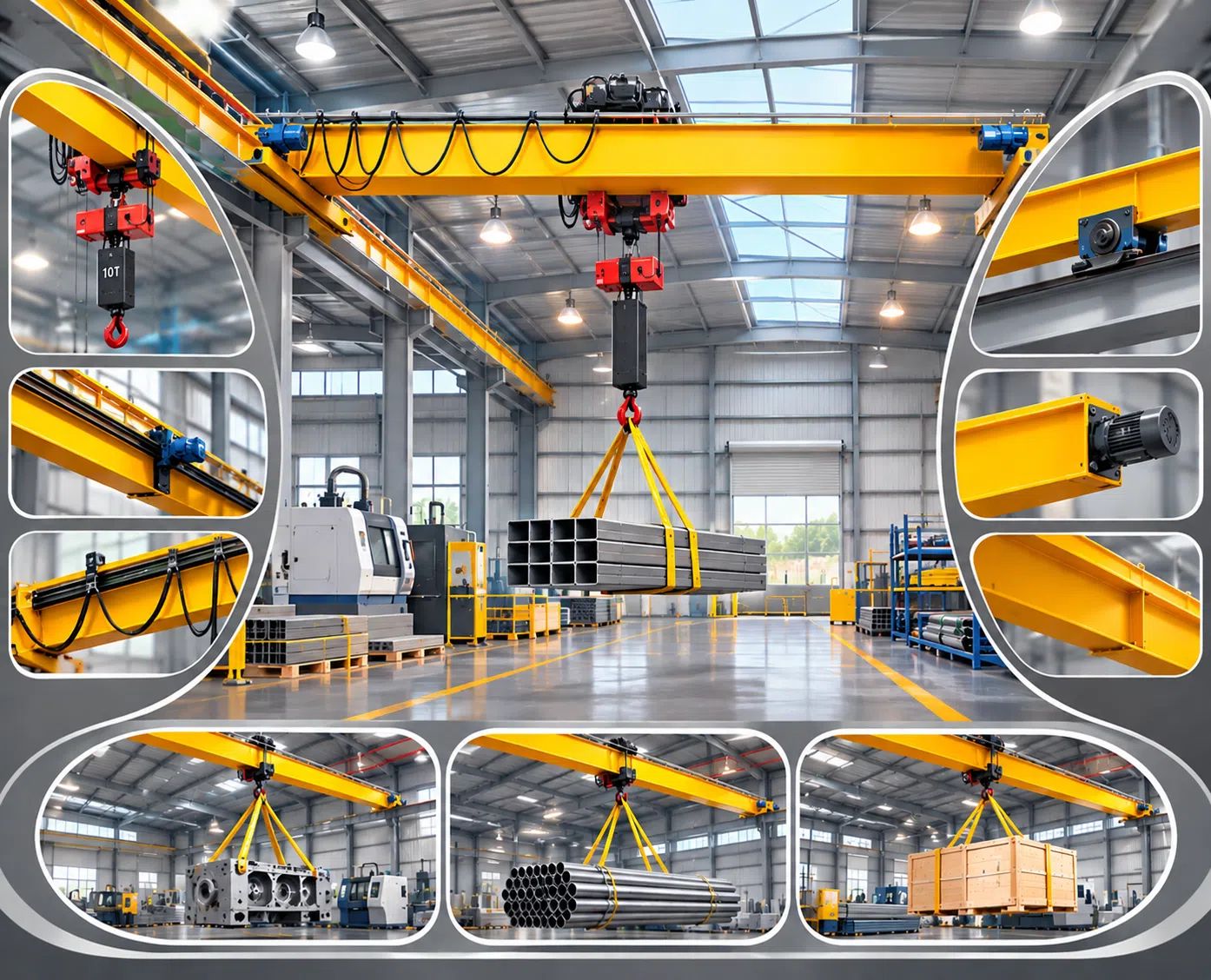
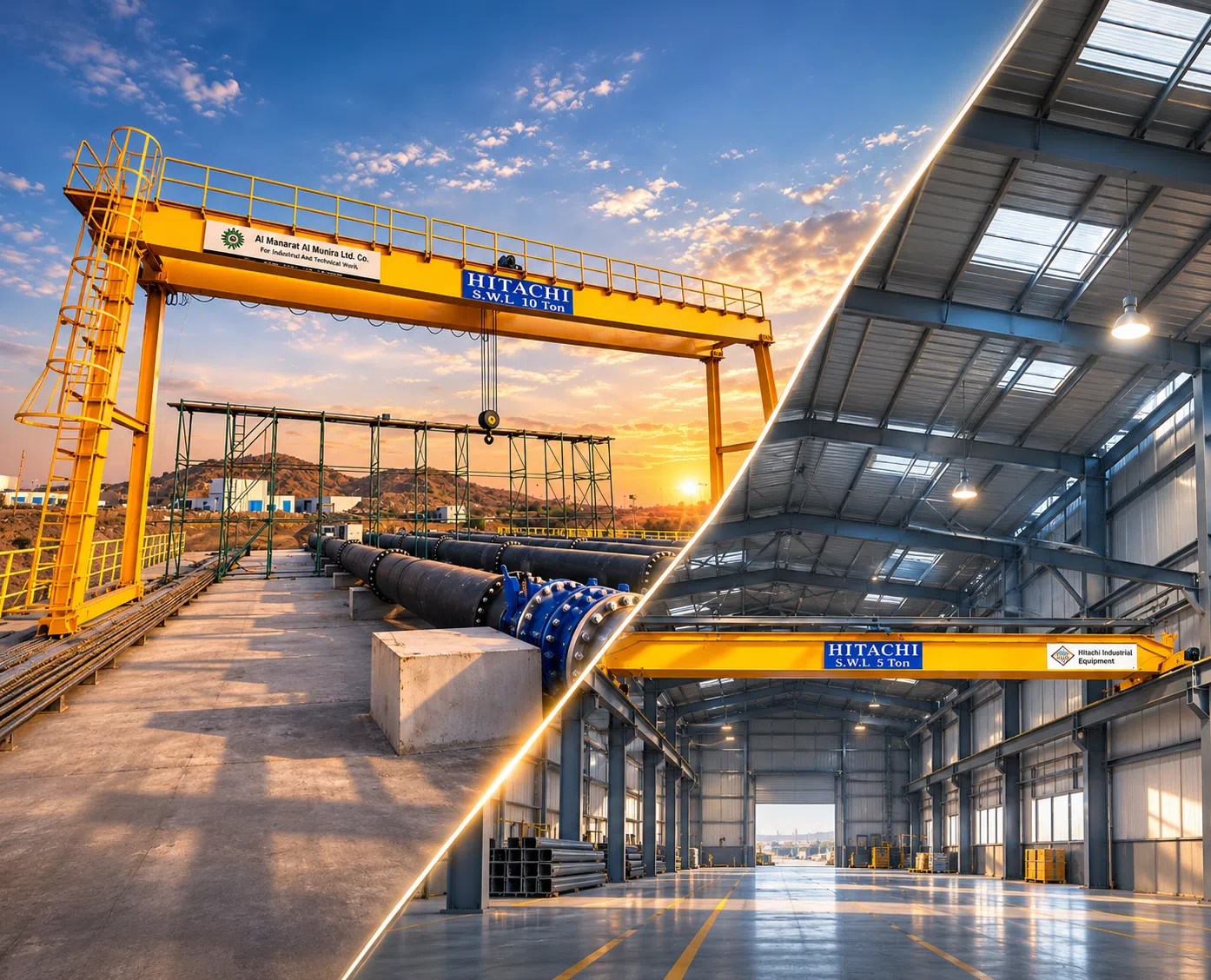
- Nature of support and the carrying structure: The overhead crane relies on the building's columns and walls to carry the suspended travel runways, while the gantry crane relies on its own steel legs, which transfer the entire weight of the machine and the load directly to the floor.
- Spatial flexibility and relocatability: Moving an overhead crane to another site is complex and costly because it is tied to the hall structure, whereas the gantry crane can easily be dismantled, moved entirely and reinstalled in another yard or a new rented factory without wasting your capital assets.
- Operating environment and coverage area: Overhead cranes are confined to enclosed halls and roofed workshops only, while the gantry crane gives you complete freedom to work outdoors and in outdoor yards exposed to the weather, with full efficiency in indoor spaces as well.
- Effect on ground traffic: The overhead crane leaves the hall floor completely free and clear of obstacles, while the gantry crane requires floor rails that call for special attention to the movement of transport trucks and forklifts to avoid hitting the moving legs.
- Building foundation costs: The overhead crane requires concrete buildings or steel trusses with a special and costly structural design to withstand wheel loads at the roof, while the gantry crane saves those architectural costs and only needs concrete strip foundations poured on the ground to fix the rails.
The Main Types of Gantry Cranes by Engineering Need
Gantry crane designs vary to suit different workshop and warehouse conditions:
1. Full Gantry Crane (Full Gantry Crane)
This model has two supporting legs on both sides and travels entirely on two parallel ground tracks. It is the common choice for open storage yards, concrete section plants, and unloading huge containers at shipping hubs.
2. Semi-Gantry Crane (Semi-Gantry Crane)
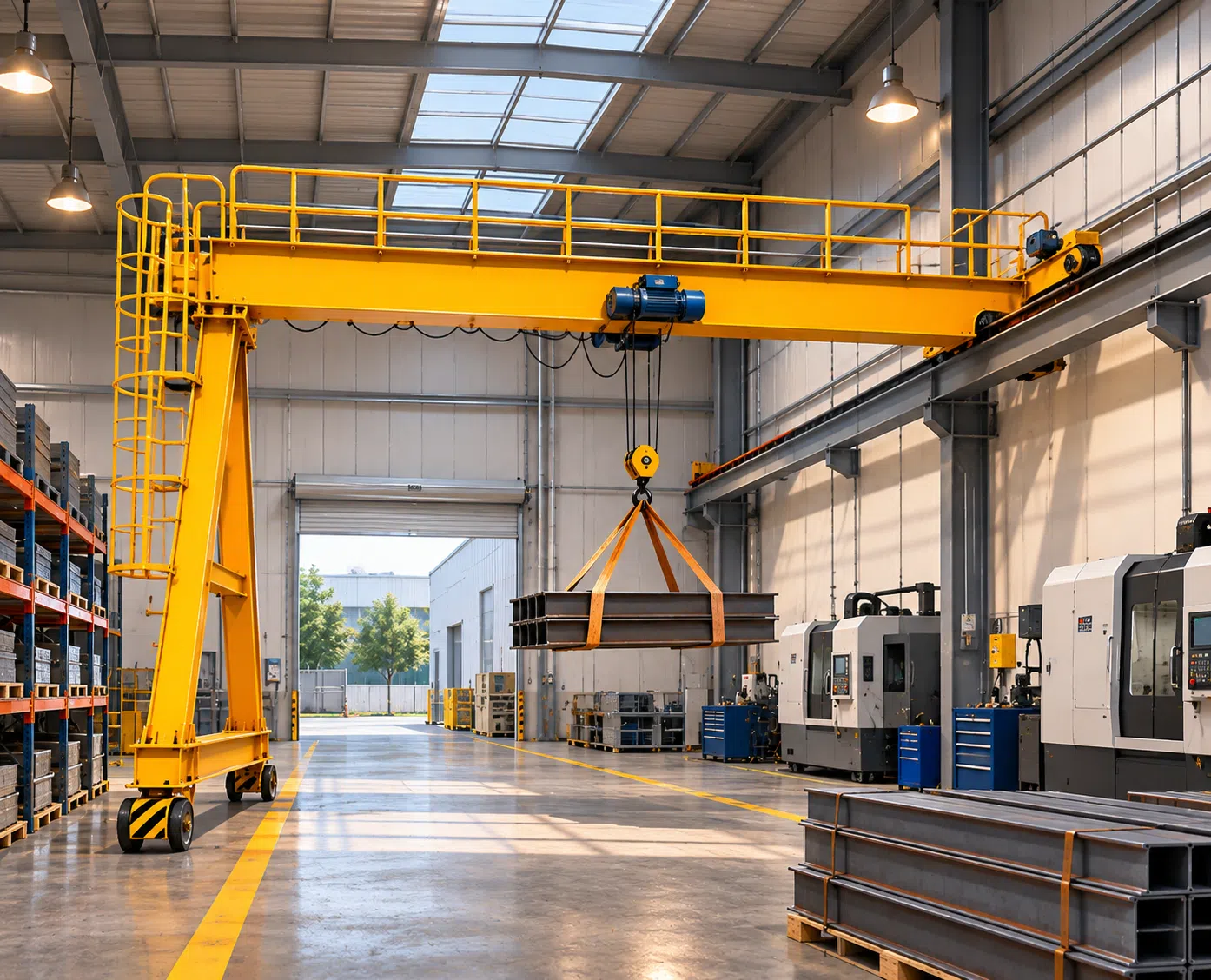
A very smart hybrid mechanical solution. One side of the girder rests on a steel leg traveling on the ground, while the other side rests on an overhead runway beam fixed on the factory wall columns. This combines use of the facility's wall with leaving half of the floor area completely free of obstacles for the side production lines.
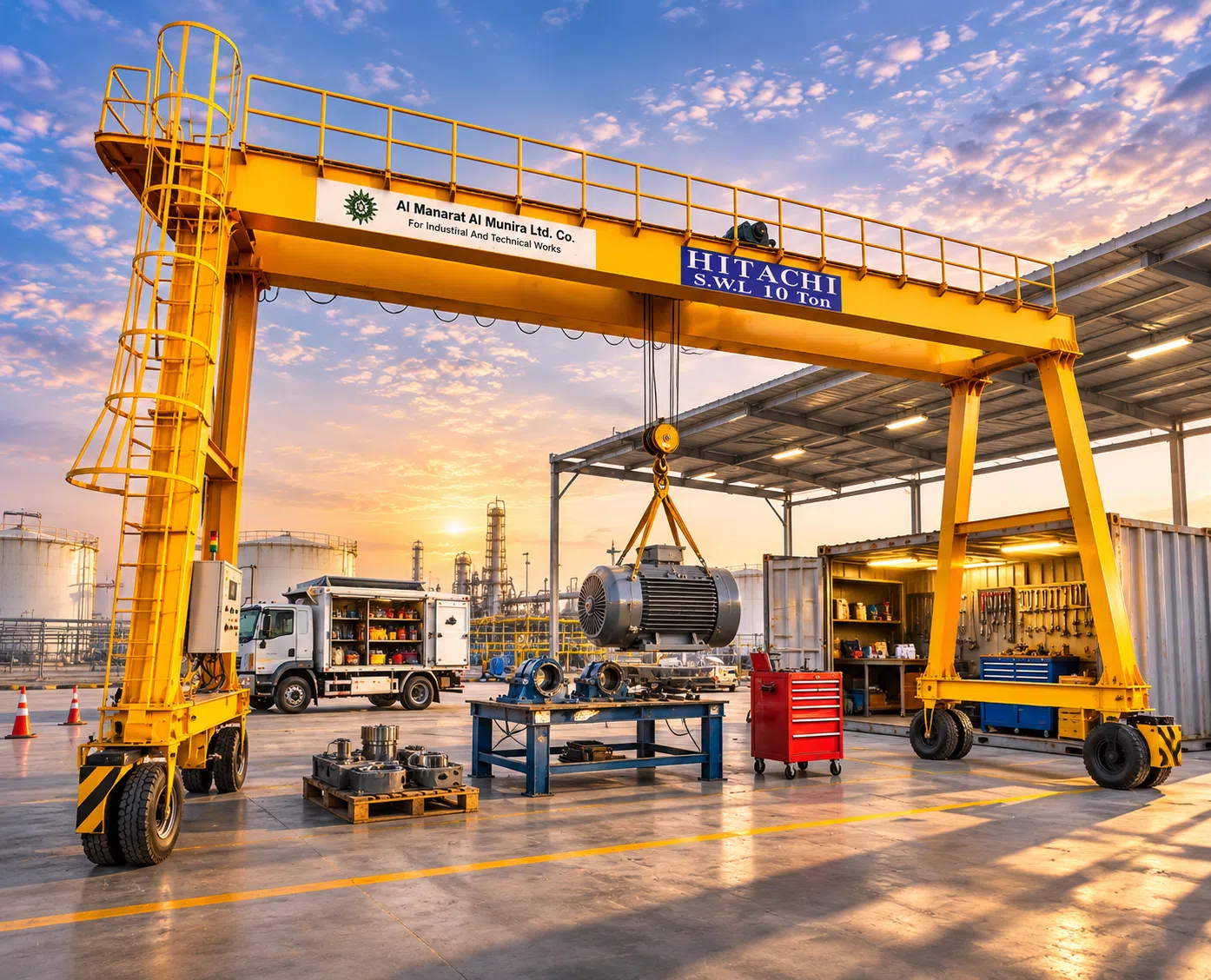
3. Portable Rubber-Tired Gantry Cranes (Portable Rubber-Tired Cranes)
Compact, lightweight cranes usually built with capacities starting at 500 kg and reaching 5 tons, moving on strong rubber tires with no need for any ground rails. They are widely used in maintenance and mechanical workshops to set and lower machines and change spare parts easily, by pushing and moving them manually or with light motors from one workstation to another.
How Do You Choose the Right Gantry Crane for Your Facility from "Al Manarat Al Monerah"?
A successful investment in this category of cranes requires precise criteria that the staff of Al Manarat Al Monerah observe when designing and supplying this equipment to their customers:
- Securing superior weather protection: Cranes made for outdoor yards are equipped with insulated motor housings (Weatherproof Enclosures) with high protection ratings (IP66), and protective canopies for the hoist and traction brakes to prevent rain water from getting in or components being damaged by the scorching sun and dust.
- Fitting wind and storm resistance systems (Storm Brakes & Rail Clamps): An outdoor gantry crane cannot be operated without automatic rail clamps that lock onto the rail as soon as the wind strengthens, to prevent the crane from sliding in storms and to protect the work area from collision disasters.
- Precision laser alignment of ground rails: The engineering team of Al Manarat Al Monerah pours the fixing foundations and levels the tracks with precise optical instruments to avoid leg deviation or wear at the rail ends during continuous operation.
- Audible and visual warning and safety systems: The cranes include photoelectric motion sensors, surveillance cameras and continuous warning horns that operate automatically when the crane starts to travel, to alert workers and truck drivers in the open yard.
Through its official website (almanratalmonerah.com), Al Manarat Al Monerah helps you carry out a comprehensive site survey and study the soil type and floor bearing capacity, to determine whether a full gantry crane or a semi-gantry crane is best suited to serving your operations and saving unnecessary construction costs.
Frequently Asked Questions About Gantry Cranes
Can a gantry crane be installed inside an enclosed workshop instead of an overhead crane?
Yes, absolutely. This solution is very common in rented workshops or light hangars whose columns and roof cannot carry the weights of overhead cranes, where the track is laid on the concrete floor without touching the existing building structure.
What is the operational difference between a semi-gantry crane and a full gantry crane?
The full gantry crane has two legs and travels on two floor tracks and suits independent yards, while the semi-gantry crane uses the existing structural columns on one side for the overhead runway while the single leg travels on a floor rail, which saves the manufacturing cost of an extra leg and leaves one entire side of the hall open for traffic.
How are the gantry crane runway rails fixed in the yard floor?
Reinforced concrete strip foundations designed to carry wheel loads (Wheel Loads) are excavated and prepared, and the steel rails are fixed with countersunk anchor bolts along with rubber pad plates to absorb vibration. The rails are leveled flush with the ground surface to make it easy for cars and trucks to cross when the crane is not operating.
Read also: Uses of Gantry Cranes in Construction Projects and Seaports