
How to Determine Gantry Crane Prices Based on Capacity and Dimensions
Procurement officers and project managers in industrial facilities face real confusion when reviewing the widely varying quotations for gantry lifting systems. Some are surprised by huge price gaps between one offer and another for the same apparently stated load capacity, without realizing that the precise engineering dimensions, motor specifications and steel quality play the decisive role in setting the fair value of the equipment. Studying gantry crane prices requires a technical breakdown of every element of the mechanical build. It does not stop at the weight of the steel and the size of the hoist. It is closely tied to the strength of the supporting columns and legs, the system's resistance to wind forces and climatic corrosion, and the cost of the floor infrastructure and travel rails.
What Are the Direct Factors That Determine Gantry Crane Prices?
Gantry crane prices are determined from an engineering standpoint by the interplay of five main variables: maximum load capacity (Rated Capacity), span (Span between the legs), net lifting height (Lifting Height), structural design (single girder, double girder or semi-gantry), plus the operating environment and the certified electromechanical systems.
Adjusting these variables affects the financial equation as follows:
- Increasing lifting capacity requires thicker steel sections, large hoist drums and reinforced brake systems, which raises manufacturing cost proportionally.
- A wider span and taller legs multiply the quantities of steel and bracing needed to resist bending moment and outdoor wind.
- Choosing a heavy-duty classification and motors of European efficiency raises the initial price slightly but prevents repeated stoppages and lowers operating cost in the long run.
How Do Engineering Dimensions Affect the Manufacturing Cost of a Gantry Crane?
The metal structure represents more than 40% to 55% of the equipment's capital cost, so every additional metre of dimension carries a clear manufacturing weight and added cost:
1. Net Span (Span)
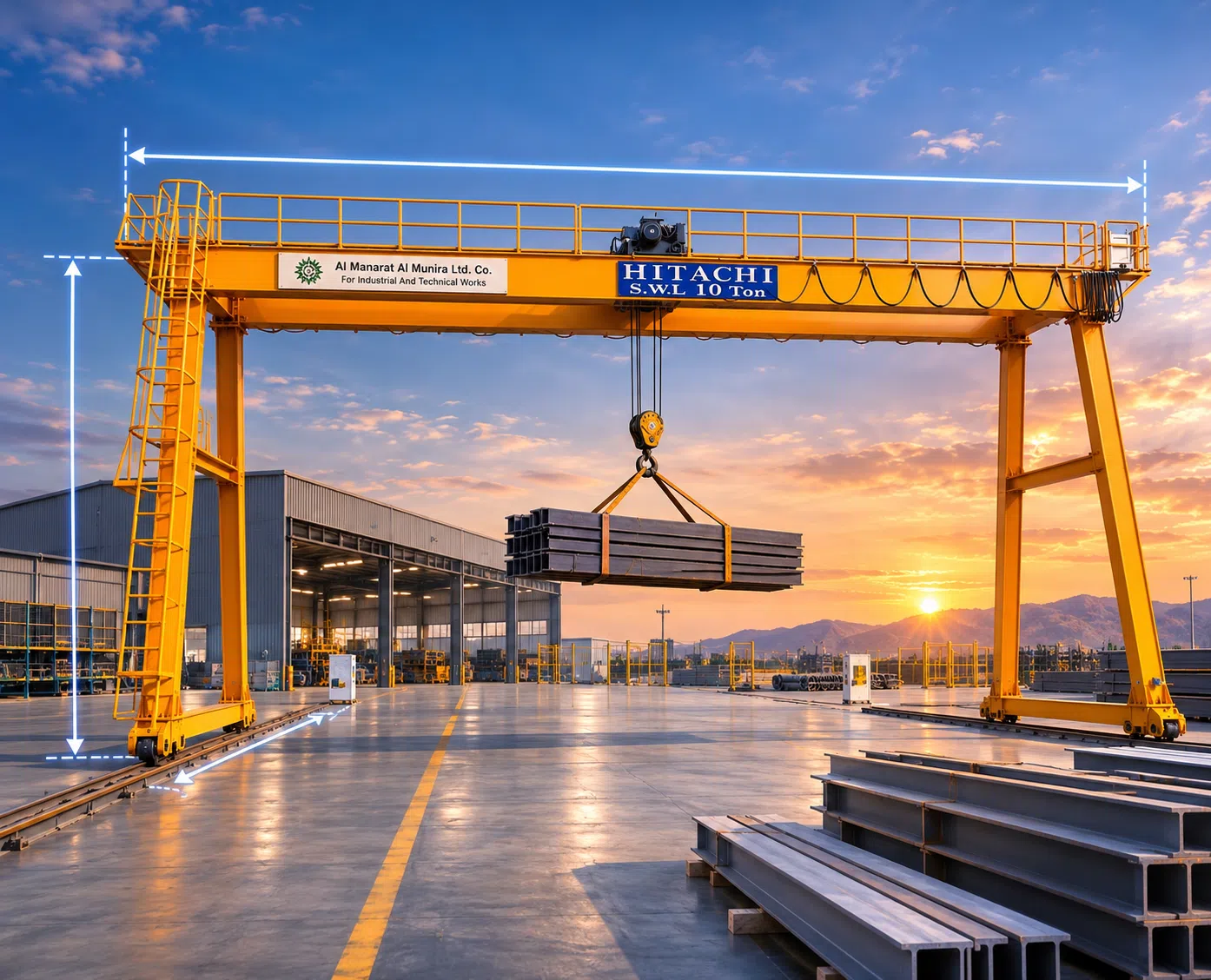
The span is the horizontal distance between the centrelines of the two travel rails on the ground. The larger this distance, the more the horizontal bridge is exposed to a huge bending moment (Bending Moment) under the load. Wide spans exceeding 20 or 25 metres require moving from standard compact steel beams (I-Beam) to fabricating hollow box girders (Box Girders) supported by internal vertical stiffeners, which are costly in cutting, welding and sandblasting, to ensure the bridge does not deflect.
2. Lifting Height and Support Leg Length (Height Under Girder)
The legs of a gantry crane carry a double burden, combining the vertical load with lateral wind forces and the inertia forces from the acceleration and braking of the crane. Increasing leg height beyond 8 or 10 metres requires a larger column section area and added inclined triangular braces (A-Frame Bracing), as well as longer steel cables, larger collecting drums on the hoist and lifting motors with higher horsepower.
3. Extended Cantilevers (Cantilevers)
Many customers ask for the horizontal bridge to extend beyond the leg path on one or both sides so trucks can be unloaded outside the rail. This engineering extension adds complexity to load distribution that raises the structure's cost, but it gives double logistical flexibility that is worth its initial price.
Comparative Analysis: The Effect of Load Capacity and Design on Gantry Crane Price Categories
The financial cost of the equipment varies by engineering design type and required lifting capacity. The following points highlight the fundamental differences between the common categories to help you direct your budget precisely:
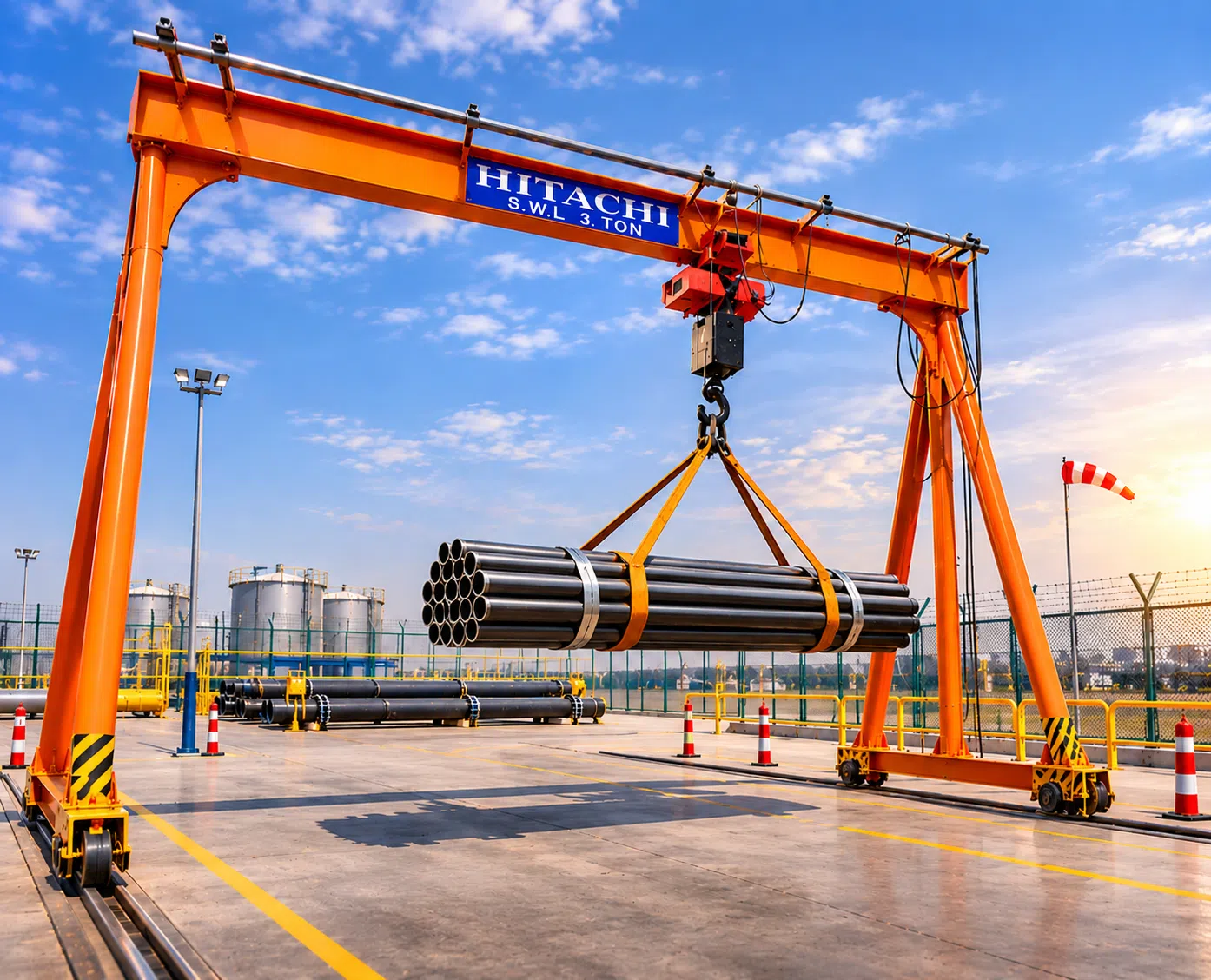
- Wheel-mounted portable gantry cranes (up to 5 tonnes): The lowest-priced option of all. They rely on compact steel sections or aluminium alloys and free polyurethane wheels, and suit maintenance teams and workshops with no civil works expense or laying of travel rails.
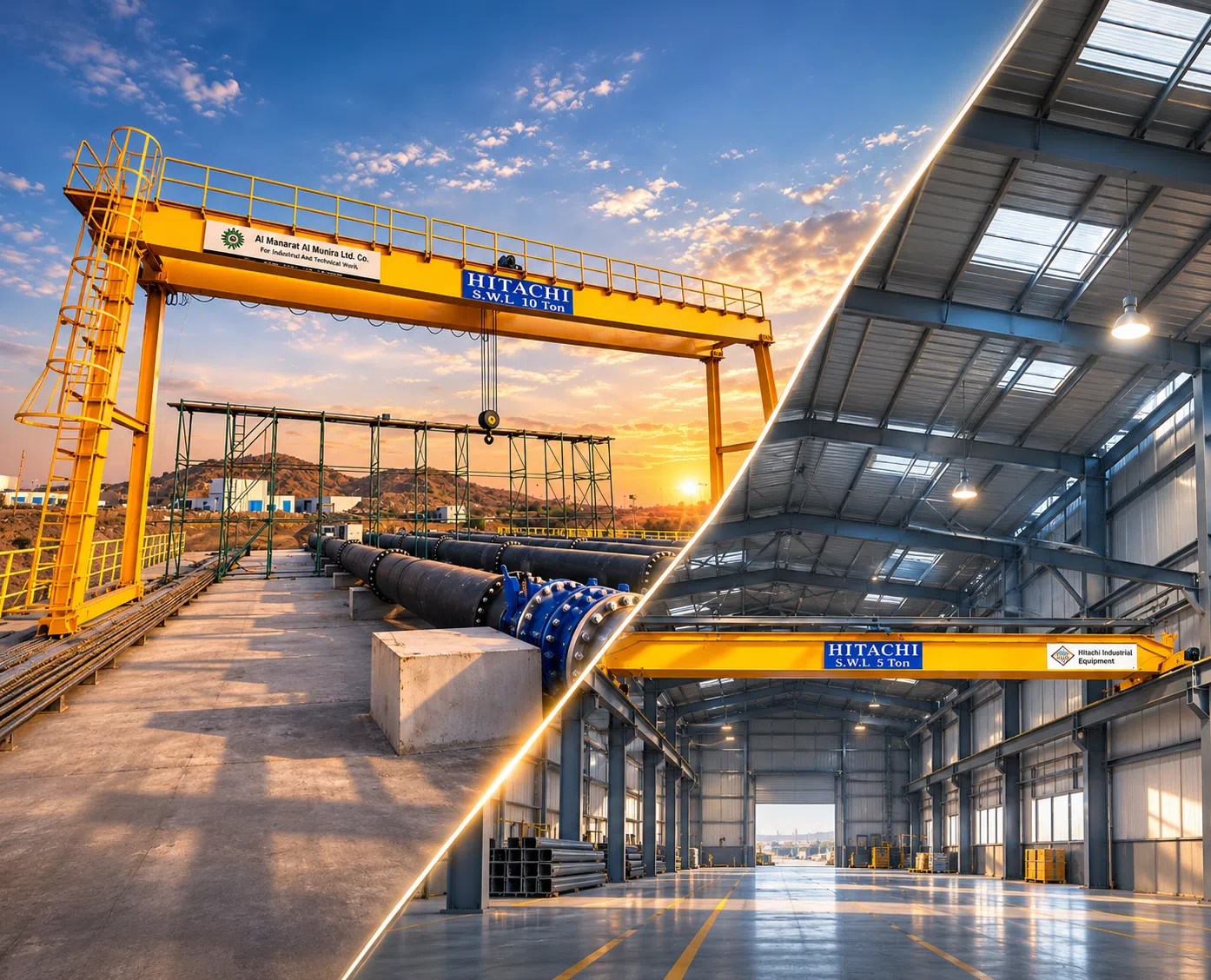
- Single girder gantry on a steel track (up to 15 tonnes): Provides a balanced solution at medium cost for yards and factories. The hoist trolley runs suspended from the lower flange, which reduces the steel's self-weight and lowers the wheel loads on the ground foundations.
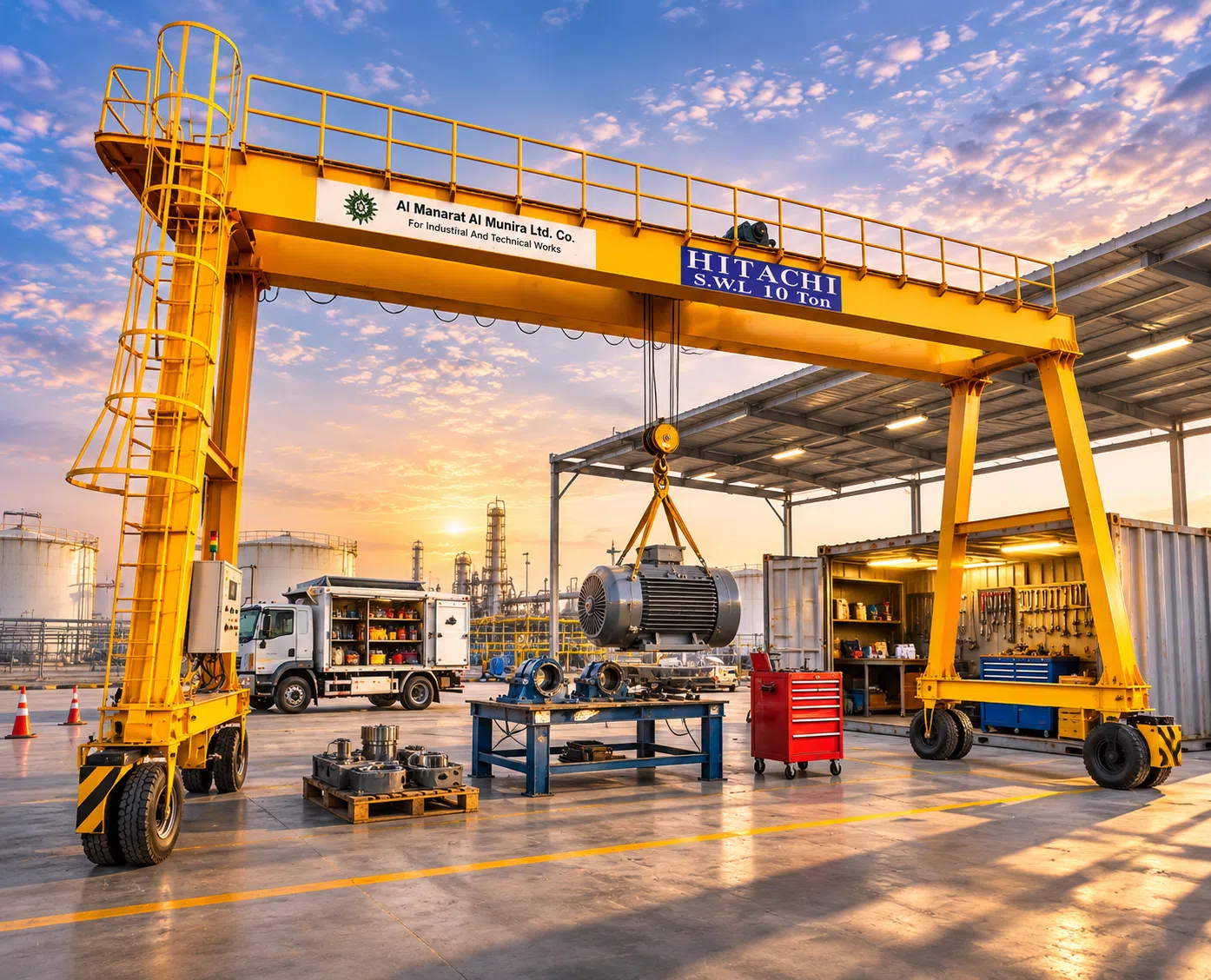
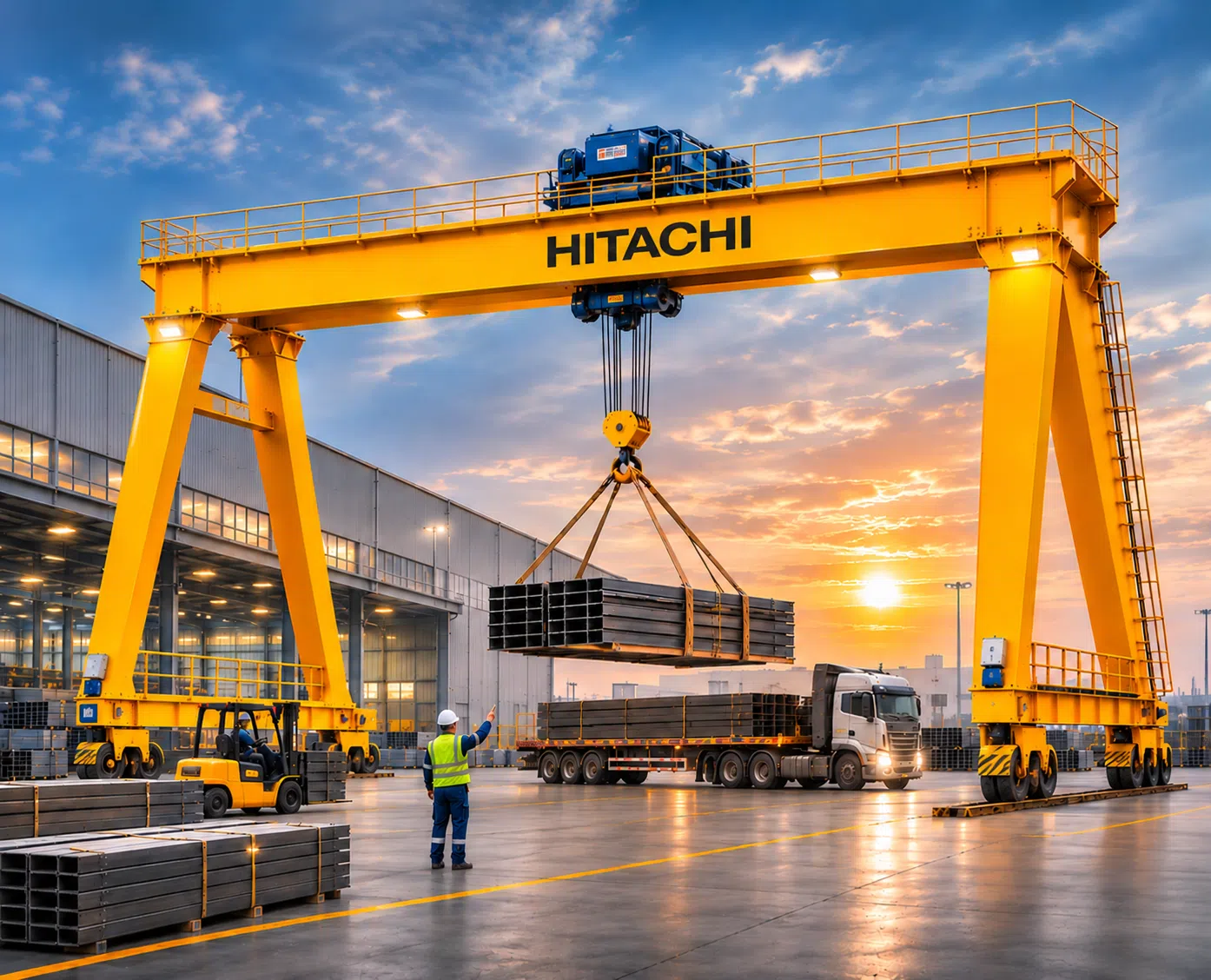
- Heavy-duty double girder gantry (20 tonnes up to hundreds of tonnes): The highest-priced and highest-investment category. It uses two parallel girders with an overhead open winch trolley (Open Winch), side walkways and large motors that suit steel plants and container terminals, and requires solid reinforced concrete foundations.
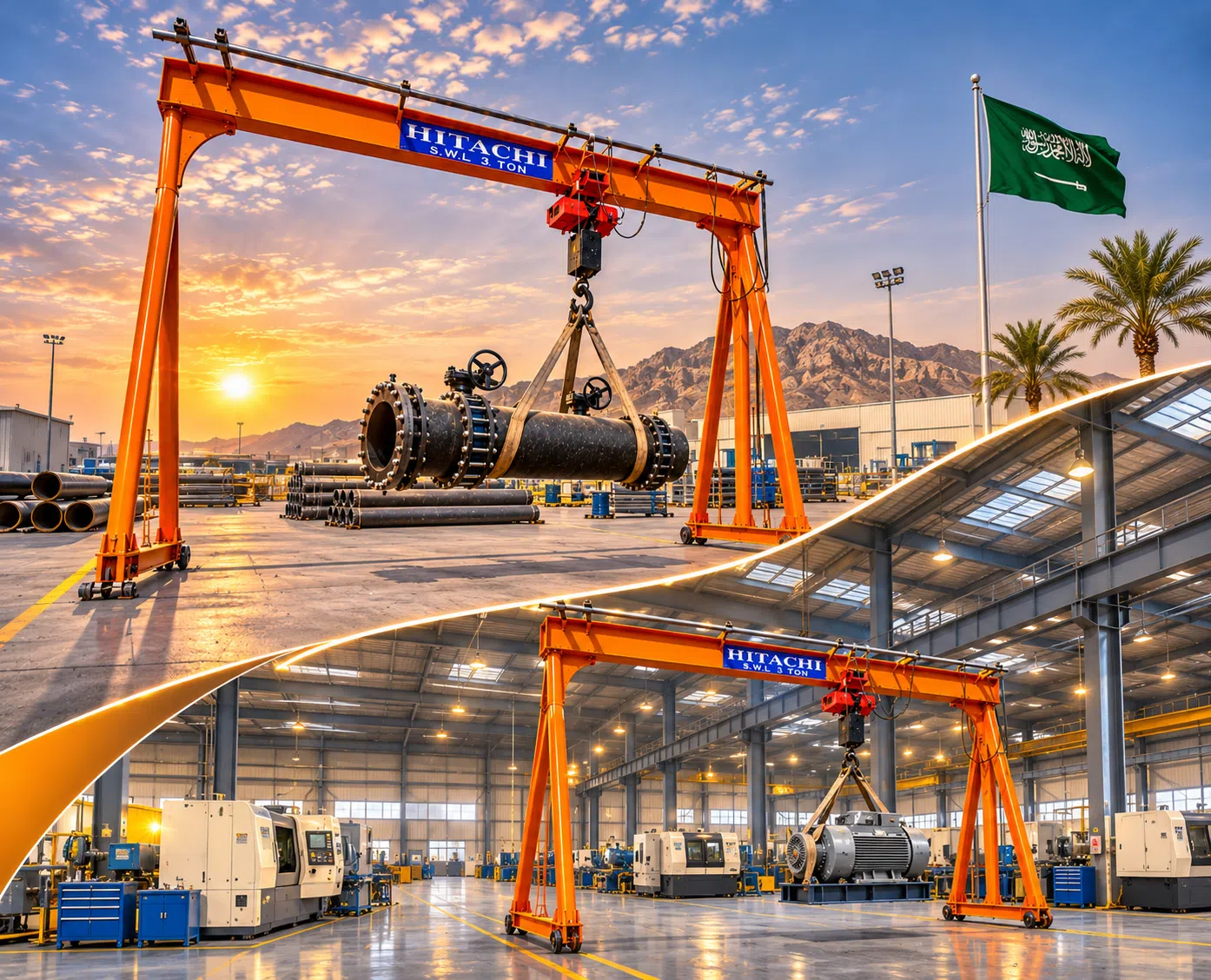
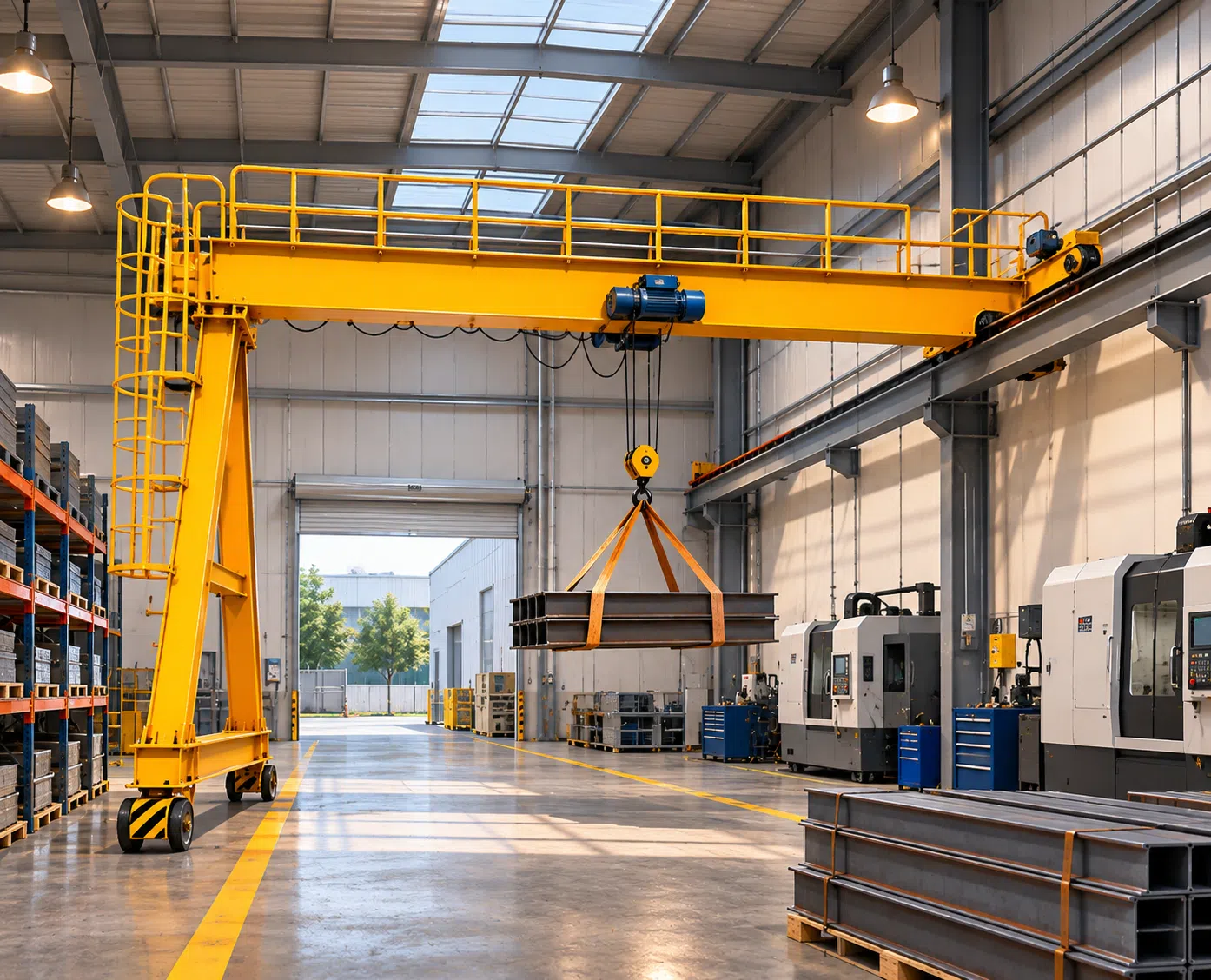
- Semi-gantry (Semi-Gantry): Provides an economical solution that cuts the structure's cost by about 20% compared with a full gantry. It uses an overhead runway carried on the factory wall columns while the single leg rides on a ground rail, leaving half of the work hall completely open for traffic.
The Invisible Costs in a Gantry Crane Project Budget
The final cost is not limited to the value of the crane supplied bare on the work site. Plant management should account for accompanying items that are essential to complete the project:
- Civil works and concrete foundations (Civil Foundations): Gantry cranes need reinforced strip footings poured along the length of the open runway to carry the point loads of the wheels without any differential ground settlement that would cause the crane to skew.
- Rails, tracks and fixing systems (Rails & Clamping): Includes supply of standard steel rails (such as P38 or P43 rails or heavy-duty crane rails), embedded fixing plates, and rubber pads that absorb mechanical vibration.
- Power supply system for open yards: Its cost varies with distance. Long distances require spring-loaded or electric torque motor-driven cable reels (Motorized Cable Reel) or protected ground conductor channels that resist rainwater and truck traffic.
- Desert climate and wind resistance equipment: Open yards require thick marine epoxy coatings and protective canopies for the hoisting motors, plus hydraulic storm rail clamps (Storm Rail Clamps) that lock the crane and prevent it from moving during severe storms.
- Heavy lifting equipment hire to complete installation: Using telescopic hydraulic cranes to lift the girders and legs on site, fit the pre-tensioned bolts and align the structure.
How Do You Ensure the Best Price with "Al Manarat Al Monerah"?
Al Manarat Al Monerah (almanratalmonerah.com) stands out by applying a clear, well-considered engineering pricing methodology that ensures the customer gets maximum efficiency with the least possible financial waste:
- Free on-site structural study of the location: The company's engineers inspect the soil and the yard and measure the required areas with great precision, to avoid ordering exaggerated dimensions that raise cost without any functional justification.
- Optimal engineering design for self-weight: Adopting finite element analysis (FEA) calculations to design girders that achieve maximum stiffness with the least dead weight of steel, which is reflected directly in a lower structure price and lower loads on the rails.
- Transparent itemized quotations: The company provides offers that give a precise breakdown of each component: the price of the steel structure, the hoist, the travel motors, the electrical panels, and the cost of installation and certified load testing, to ease comparison and let you make the investment decision with confidence.
- Equipping components to the highest international standards (FEM/ISO): Using motors and smart frequency inverters from the best European makers to reduce starting currents, save electricity consumption, and extend the life of the gears and safety brakes for many years.
- Genuine spare parts readiness and preventive maintenance contracts: Providing fast local support to secure cables, brakes and limit switches, which prevents your projects from stalling and keeps your capital assets at their highest market value.
You can visit the Al Manarat Al Monerah website and contact its specialist engineers to discuss your drawings and obtain a comprehensive pricing study that meets the highest standards of safety and savings for your next project.
Frequently Asked Questions About Gantry Crane Prices
What is the average price of gantry cranes in the industrial market?
Prices vary greatly depending on the engineering parameters. Manual or light mobile gantry cranes start at very economical price brackets suited to small workshops, while giant rail-mounted gantry cranes with capacities above 20 tonnes and spans exceeding 25 metres require large investment budgets in line with the volume of steel, engineering systems and advanced protection and control equipment.
Is a gantry crane more expensive than an ordinary overhead crane?
As equipment alone, a gantry crane is often higher priced because of its steel legs, additional travel systems and synchronized drive motors. At the level of the whole project, however, it saves huge sums because it removes the need to build covered halls or to reinforce the building's columns with very costly steel trusses, requiring only the pouring of travel tracks on the ground.
How does a cantilever (Cantilever) affect the price of a gantry crane?
A cantilever adds a manufacturing cost of 10% to 20% to the price of the metal structure because of the additional bridge length and the greater steel sections needed to resist the bending moment. It does, however, give the factory an exceptional operating advantage by loading and unloading goods outside the two rails without needing to buy additional handling equipment.
Read also: Best Gantry Crane Solutions for Open Yards and Factories in Saudi Arabia