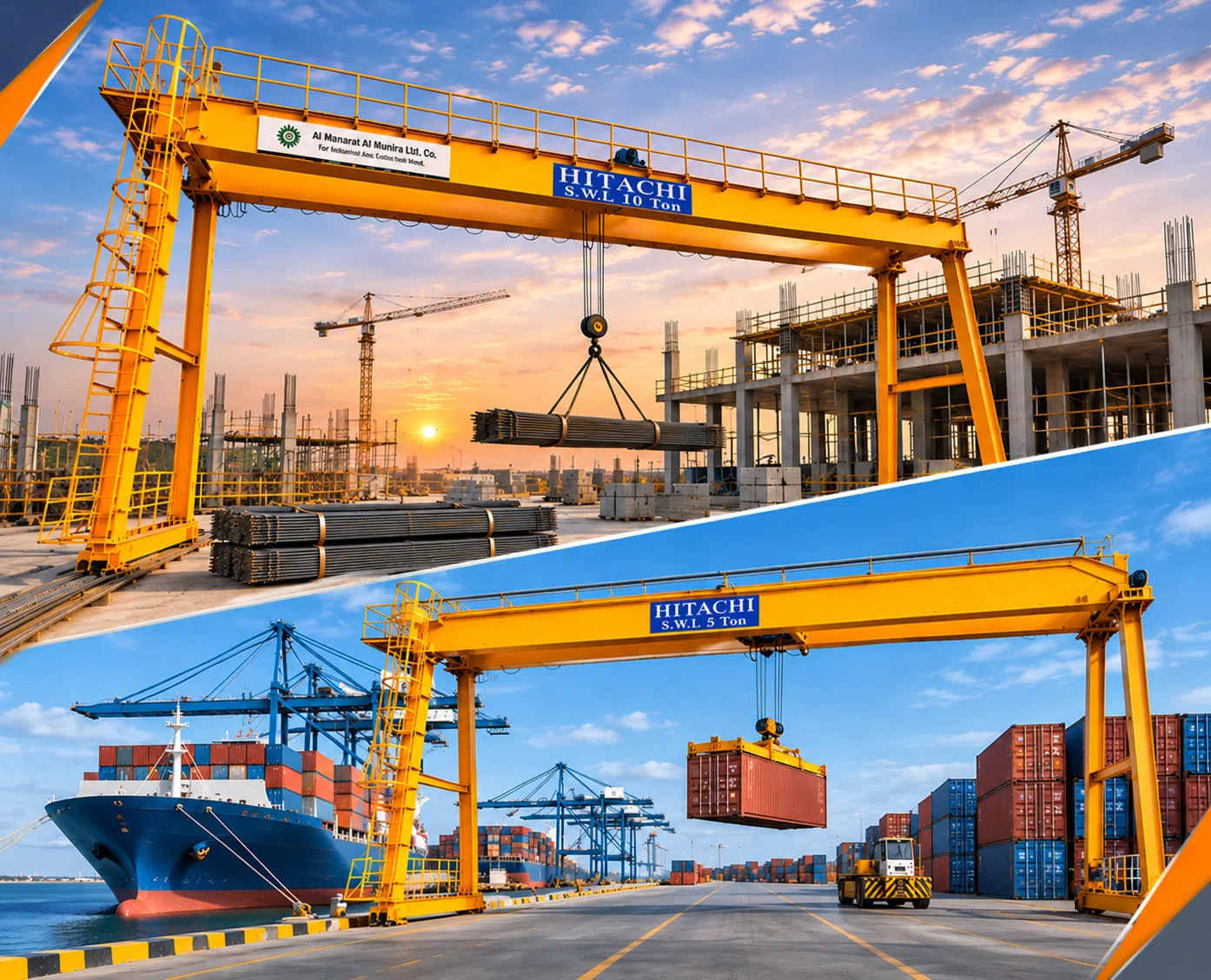

The Semi-Gantry Crane: When Is It the Best Choice for Limited Spaces?
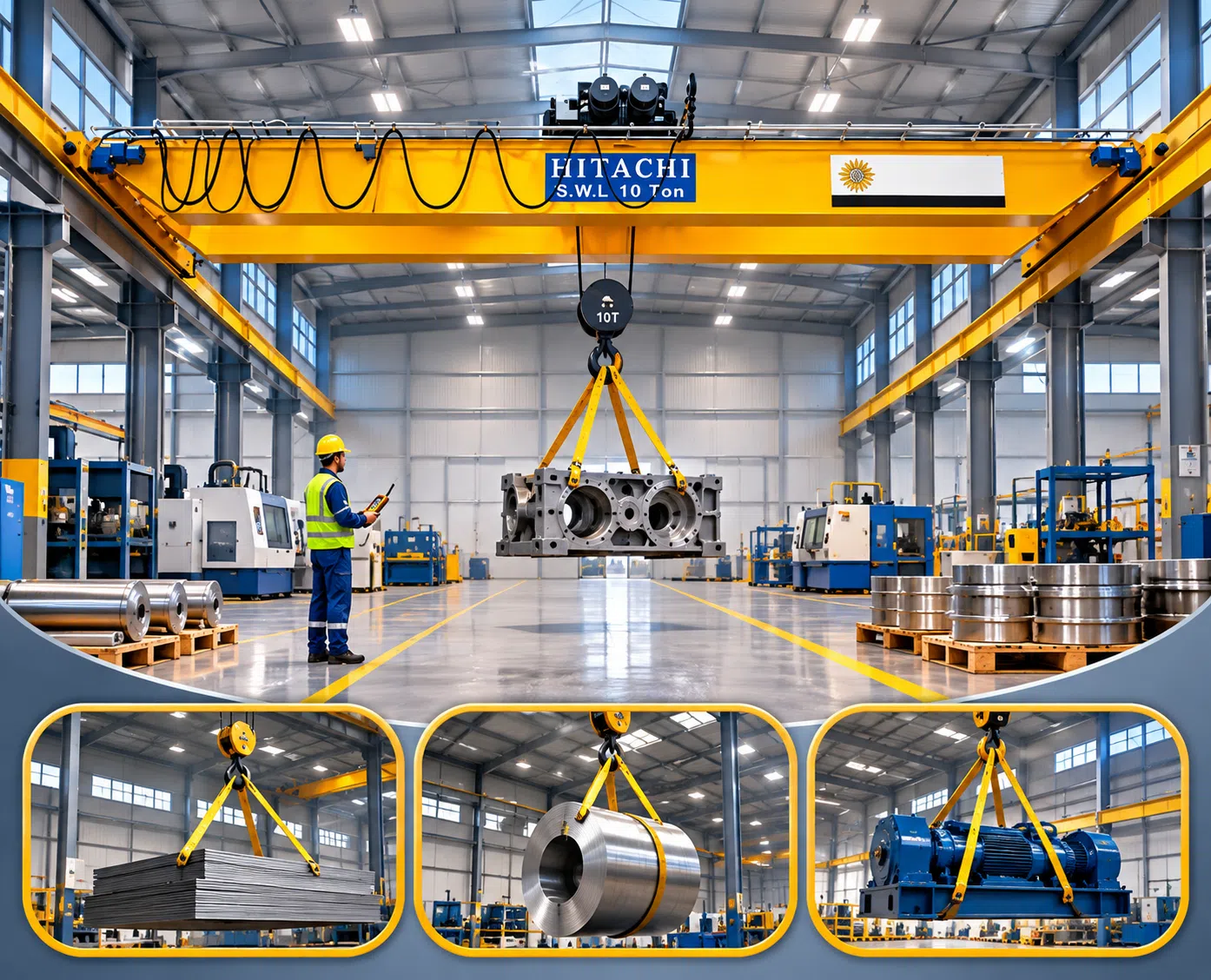
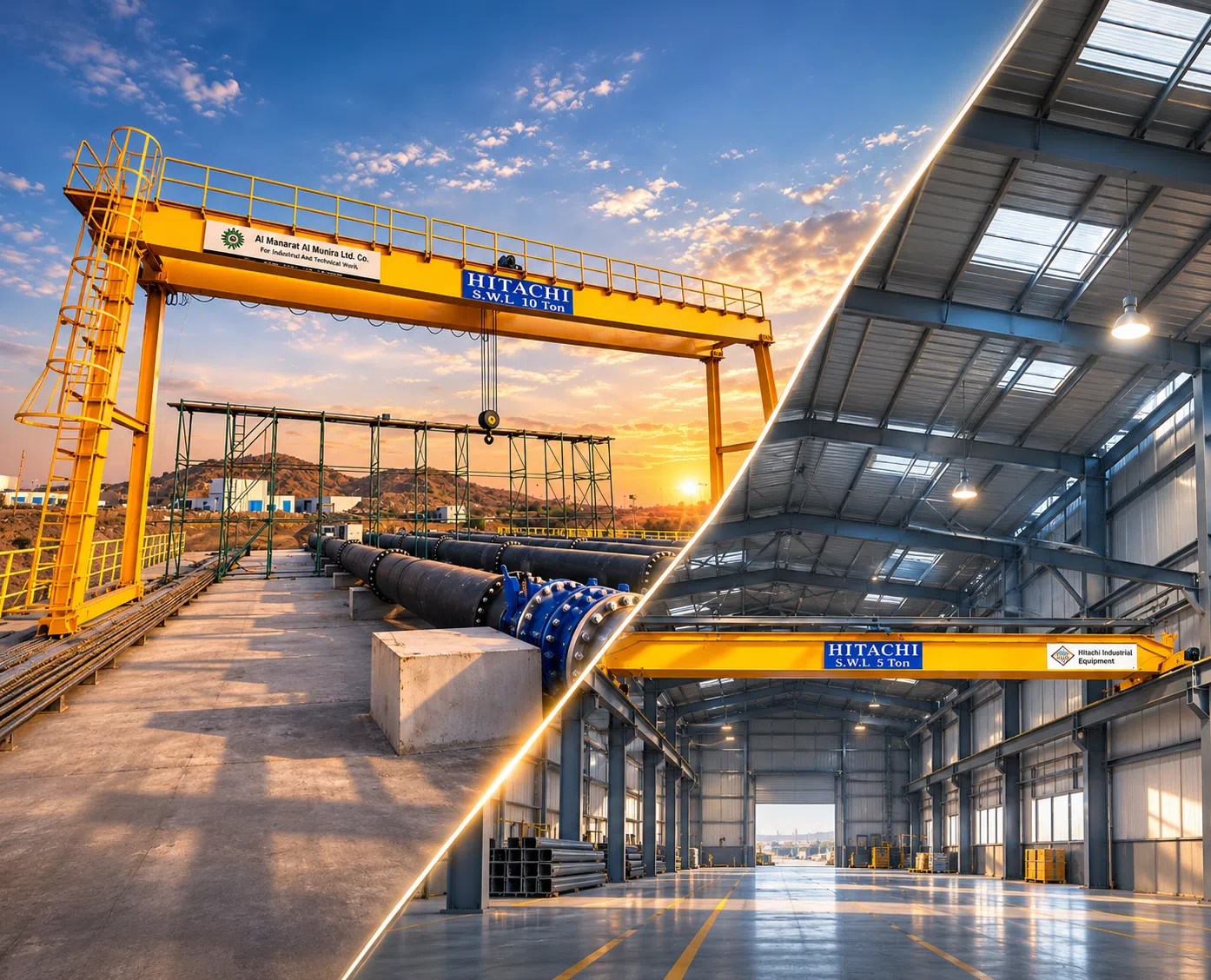
Factory managers and mechanical forming shops often find themselves in a recurring operational bind when they want to extend handling coverage to a side production line without disrupting traffic in the central aisles. Relying on a conventional overhead crane means installing a full runway system on both sides of the hall, which uses up free wall space, while installing a full gantry crane creates a floor obstruction that splits the area with an additional rail track and squeezes trucks and transport equipment. At the heart of this difficult equation, the semi-gantry crane stands out as a clever hybrid mechanical solution that combines the advantages of overhead systems with the flexibility of gantry structures, providing the maximum possible coverage for tight spaces at the lowest civil and foundation cost.
What Is a Semi-Gantry Crane?
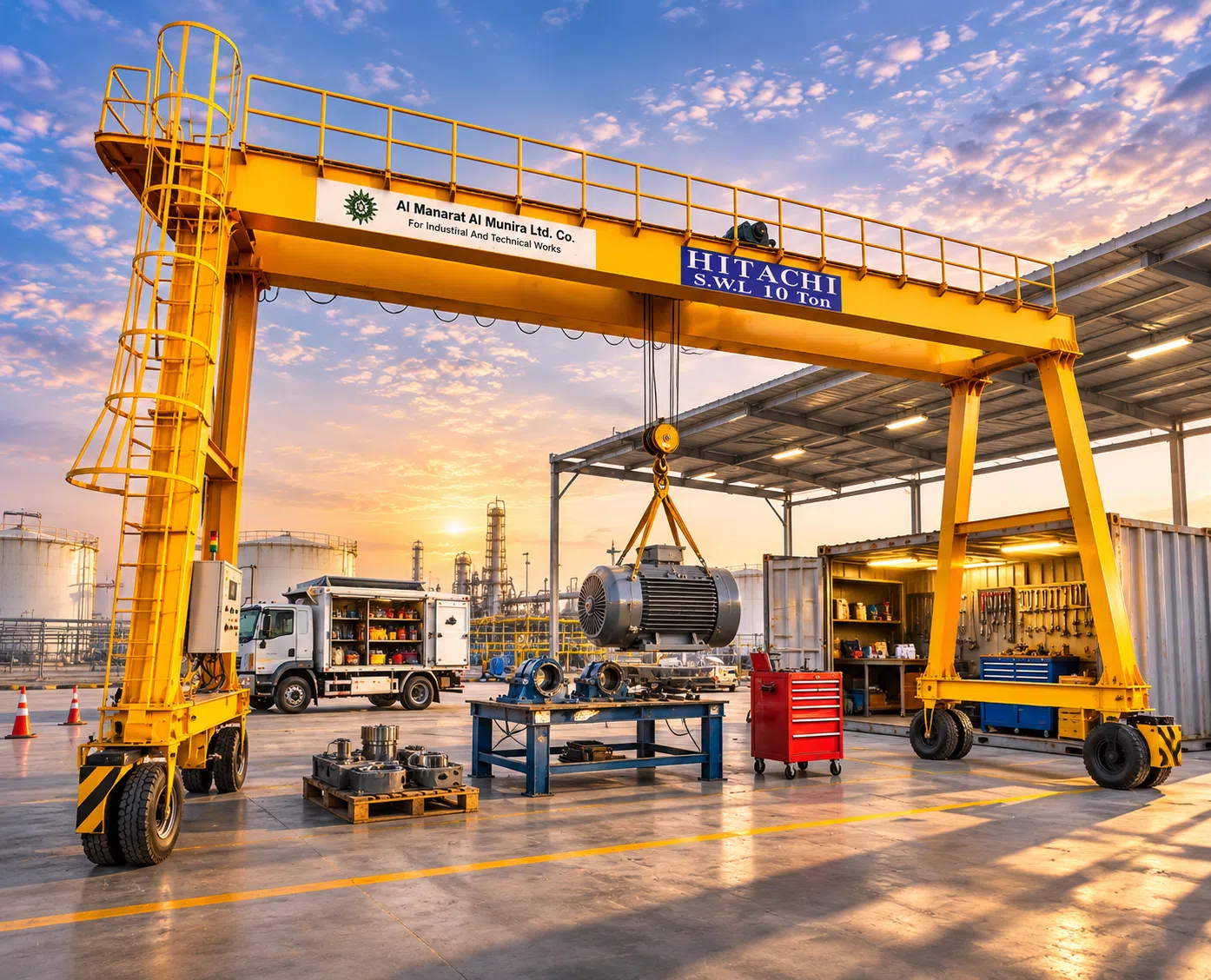
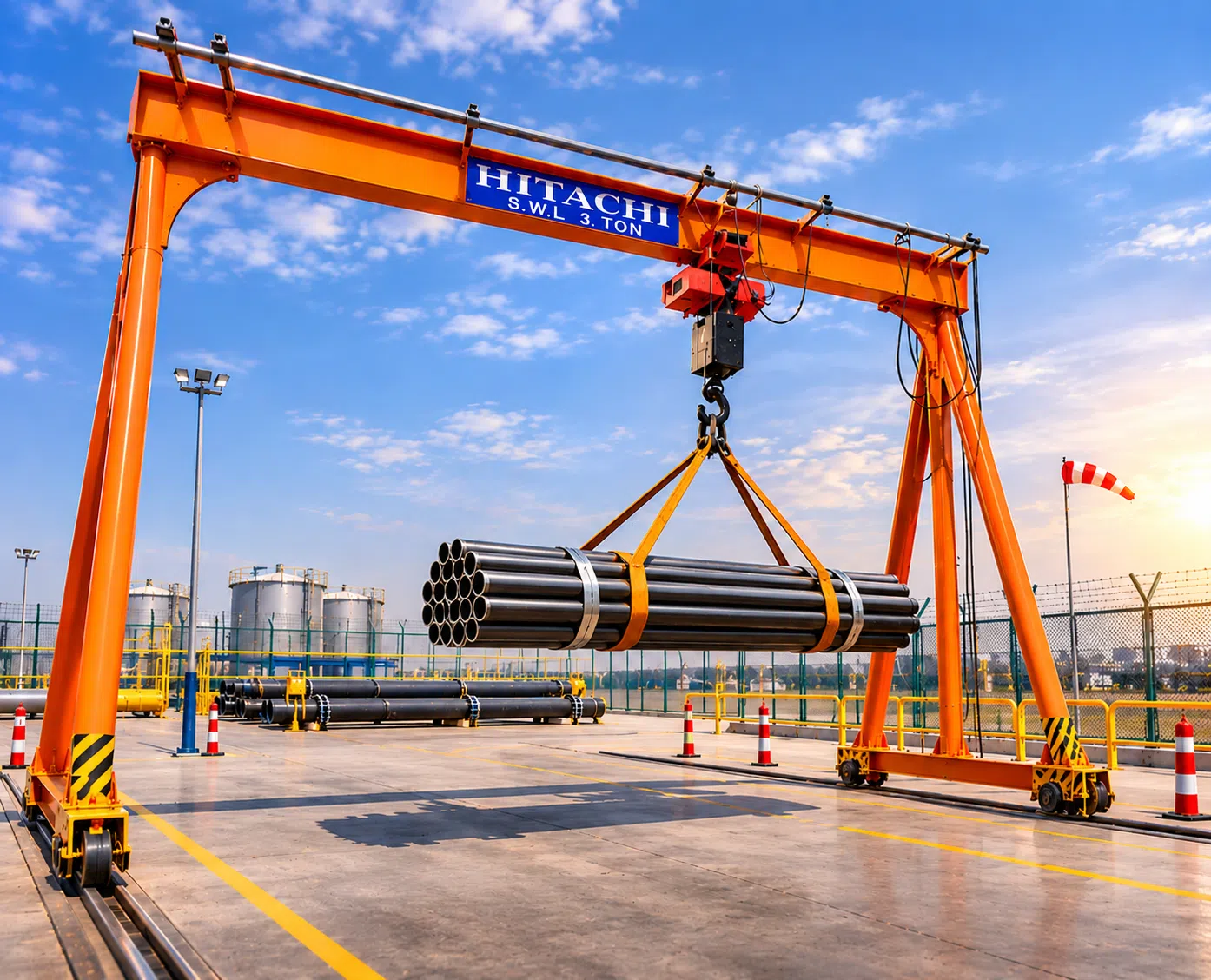
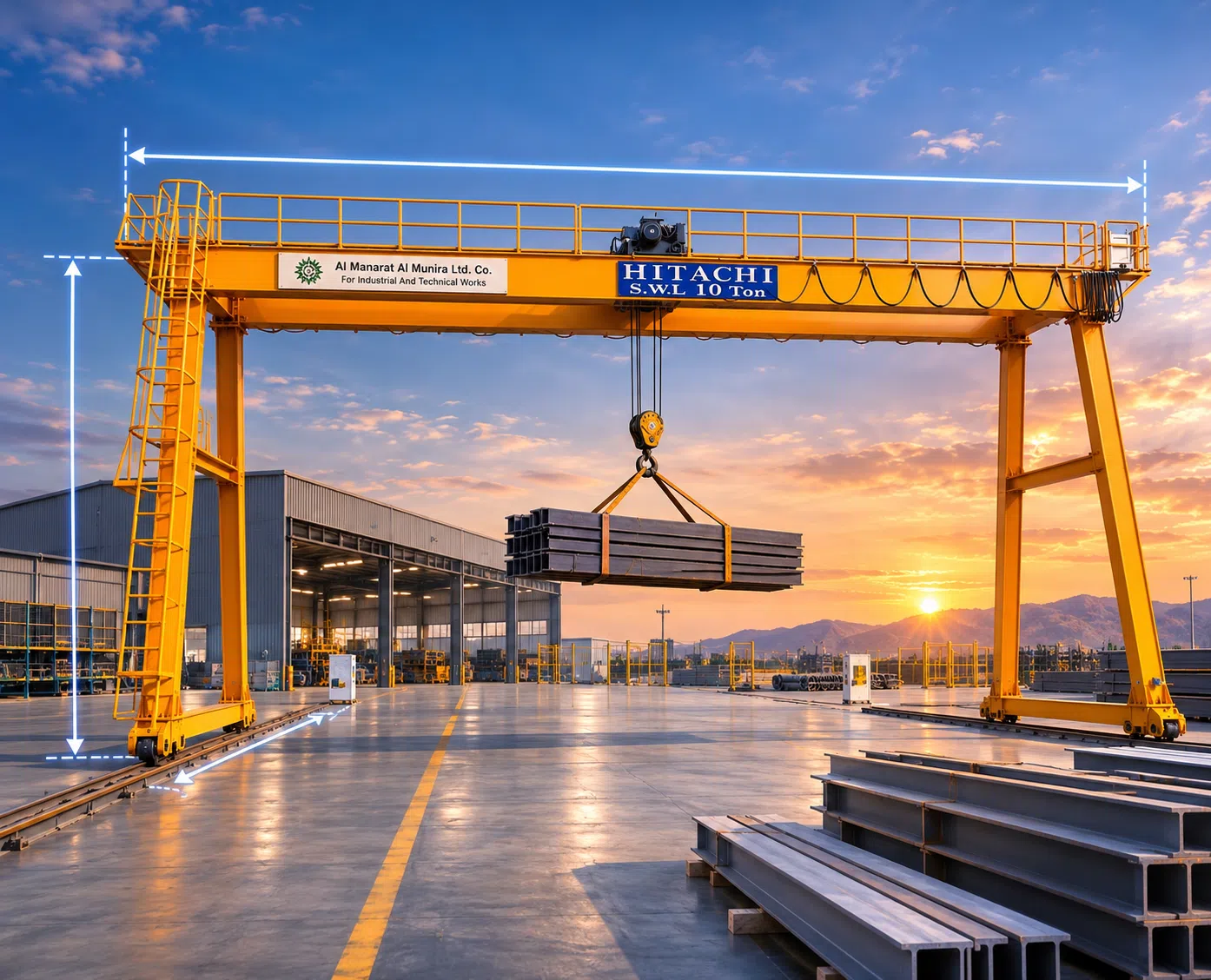
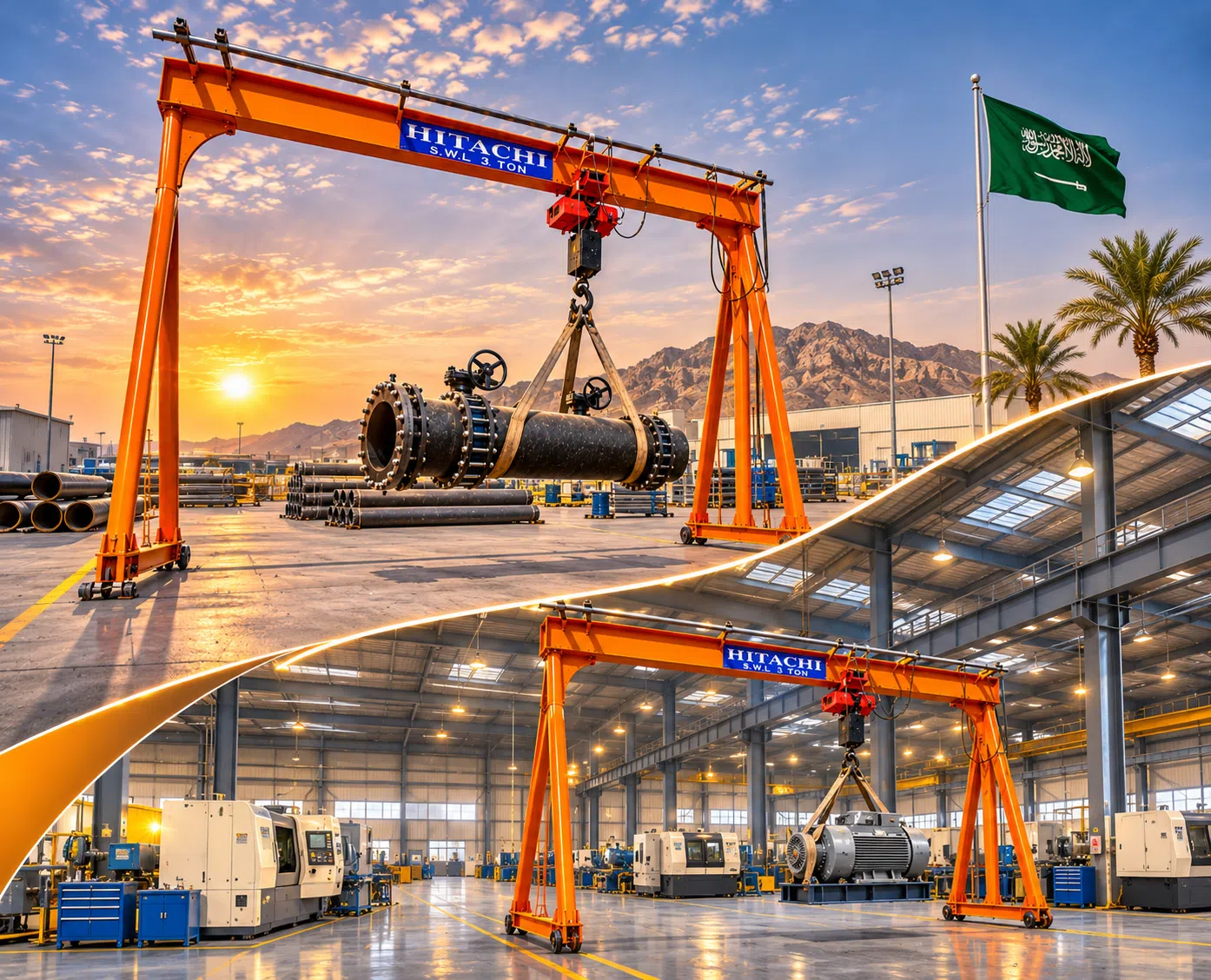
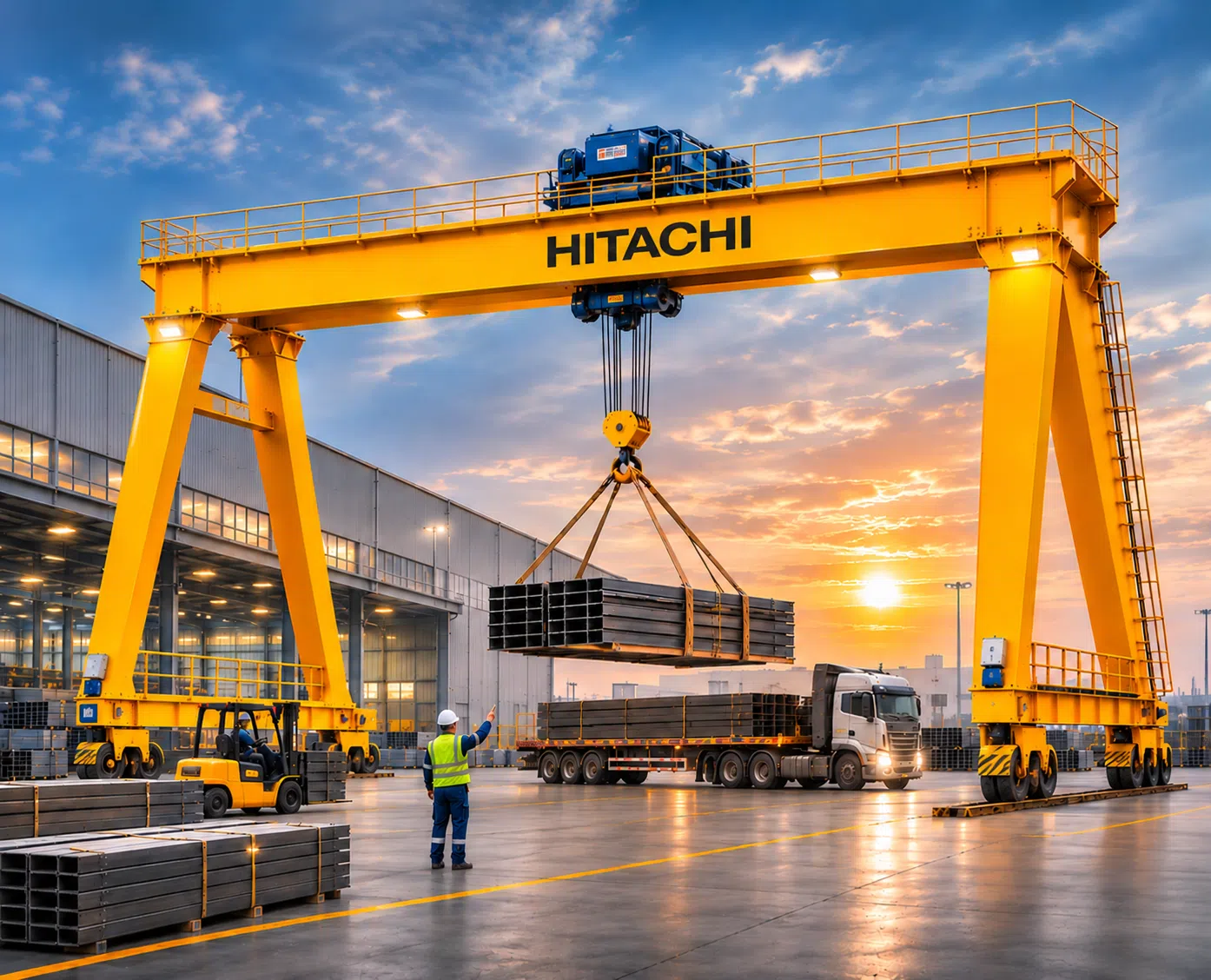
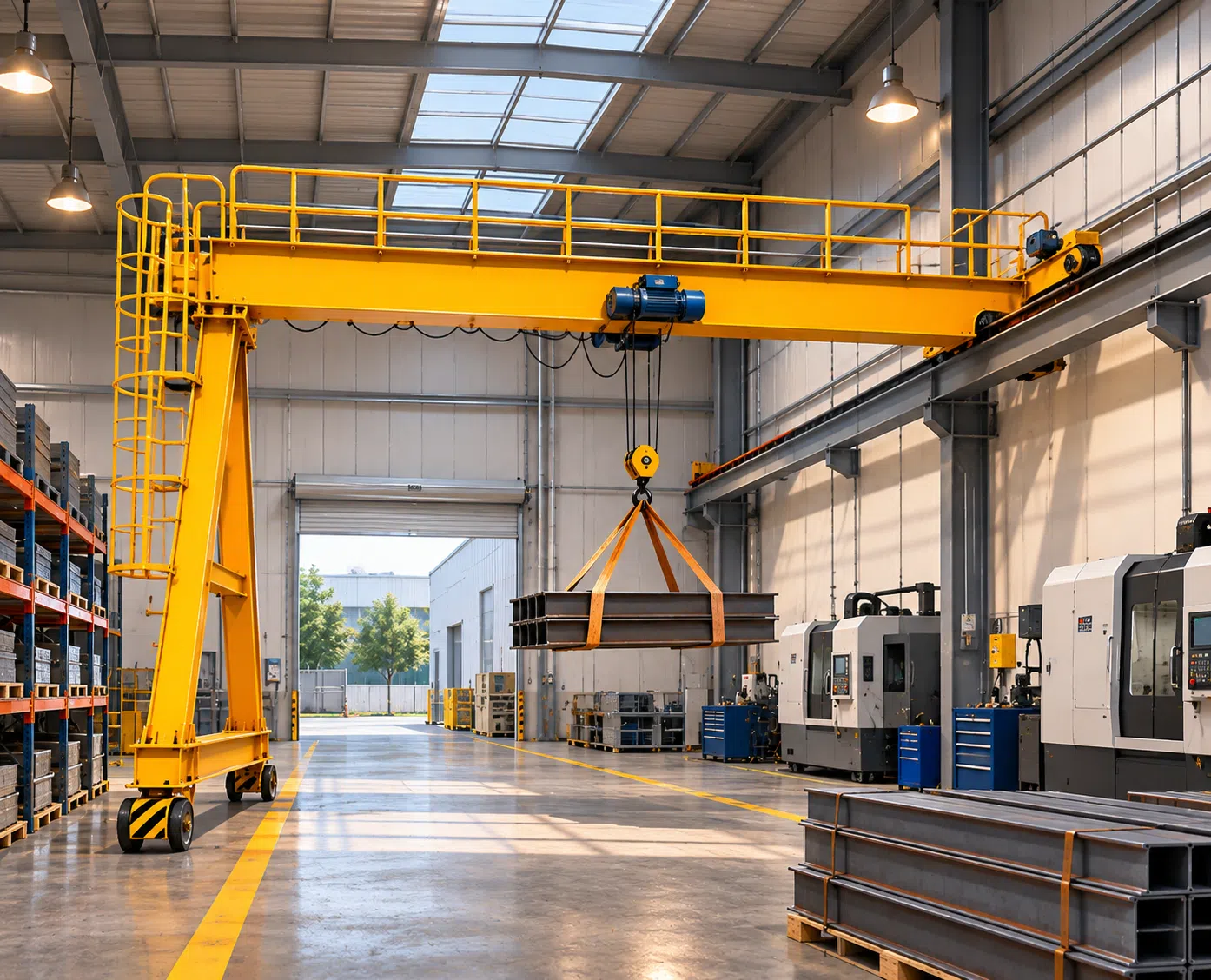
The semi-gantry crane is an industrial crane with an asymmetric engineering design. One end of its overhead bridge rests on a runway beam fixed on the building's wall columns, like any ordinary overhead crane, while the other end extends downward through a rigid steel leg resting on wheels that travel on a steel rail fixed in the hall floor.
This unconventional configuration delivers immediate gains for facilities with limited space:
- Freeing half of the factory floor completely from any tracks or barriers that obstruct traffic and ground handling.
- Reducing manufacturing cost and saving steel by eliminating one of the two legs and its ground rails.
- The ability to work efficiently beneath the runway of the larger overhead cranes to serve specific fabrication stations without interrupting general traffic in the hall.
How Does the Semi-Gantry Crane Work?
The engineering strength of this equipment lies in the synchronized motion compatibility between two different height levels:
1. Top End Carriage
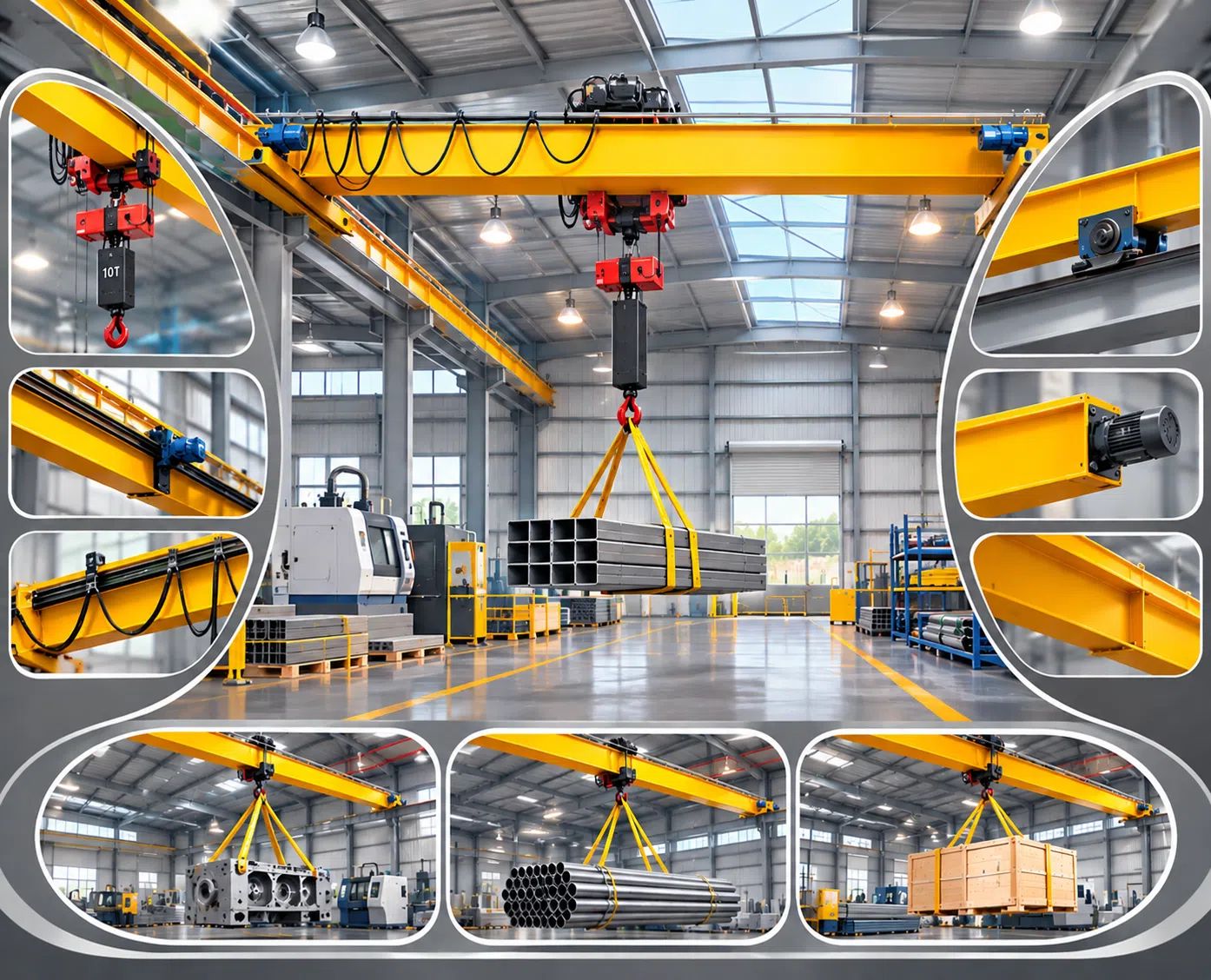
The first end of the bridge rests on wheels that travel on an overhead runway beam (Runway Beam) fixed on the hall's concrete or steel columns. This is a smooth motion similar to the operation of a bridge crane and gives the crane superior stability and resistance to torsional moment, without using any space below.
2. Rigid Leg & Ground Carriage
The other end connects to a vertical leg of triangular or box shape. This leg rests on a travel carriage fitted with hardened steel wheels running on a rail embedded in the floor. The motors on both sides operate with a synchronized electronic system that ensures perfectly equal acceleration, preventing the bridge from skewing or the wheels from rubbing against the rail edges.
3. Hoist & Trolley
The hoist and trolley travel horizontally along the steel bridge between the building wall and the open floor, allowing the operator to pick up materials from the very edge of the wall and move and lower them next to the ground travel aisle with millimeter precision.
When Is the Semi-Gantry Crane the Best Choice for Your Facility?
This system becomes the clear first engineering choice in specific operational and spatial situations, including:
1. A Main Overhead Crane Already Covers the Whole Hall
If your hall has an overhead crane serving the whole hall but the side assembly stations need their own crane to feed machines and assemble parts without waiting, a semi-gantry crane can be installed on the same wall columns, working at a lower level without any collision with the movement of the overhead crane above.
2. Workshops Adjoining Open Storage Yards
When the factory has an outer wall with an open goods unloading yard attached to it, the overhead runway is fixed on the outside face of the factory wall while the ground leg travels in the yard. This provides an ideal platform for unloading trucks in the open air and moving materials smoothly into the production line.
3. The Need for a Wide Traffic Lane for Forklifts
Warehouse management requires free travel aisles that are not cut by rail tracks. The semi-gantry crane allows the ground rail to be confined to a narrow strip next to the storage area, leaving the rest of the hall completely free for trucks to pass with no fear of colliding with the crane legs.
4. Rationalizing Foundation Budgets in Existing Buildings
If the existing building columns can carry part of the crane's weight but cannot carry a full bridge with a heavy load, the semi-gantry crane transfers half of the dead load directly to the floor, sparing you from reinforcing the foundations of the other wall.
Comparative Analysis: Semi-Gantry Crane vs. Bridge Crane and Full Gantry Crane
There are many material handling options inside industrial facilities. The points below reveal the key technical and operational differences to help you make the best decision:
- Floor space use and freedom of movement: The overhead bridge crane leaves the factory floor 100% clear, while the full gantry crane requires two floor rails that consume traffic paths on both sides, whereas the semi-gantry crane offers a middle solution by confining the floor obstruction to a single rail beside the wall and leaving the rest of the hall completely open.
- Structural costs and steel requirements: The full gantry crane requires huge quantities of steel to fabricate two supporting legs and prepare two concrete tracks in the ground, while the semi-gantry crane saves the cost of a full leg and a ground track beam, and uses the existing wall columns to reduce capital cost.
- Operational flexibility and relocatability: The full gantry crane is easy to dismantle and relocate to any open yard, while the overhead bridge crane is permanently tied to the building columns. The semi-gantry crane sits in the middle, as dismantling it requires coordinated relocation that takes into account providing an alternative wall to support its overhead runway.
- Load distribution on the factory structure: The bridge crane puts its entire weight and maximum load on the roof columns and walls, which can strain older buildings, while the semi-gantry crane distributes the loads equally between the hall wall and the concrete floor foundations, protecting the building from excessive structural stress.
Safety Requirements for Operating a Semi-Gantry Crane
The asymmetric nature of this equipment calls for great care with safety standards to control frictional forces and prevent accidents in the field:
- Rail Sweepers and safety buffers: Fitting the ground leg wheels with advanced mechanical sweepers that remove any pieces of wood or metal debris accumulated on the rail before the wheel reaches it, to prevent the crane leaving its track.
- Laser anti-collision sensors (Safety Light Curtains): Installing smart optical sensors at the base of the ground leg that cut the crane's motion and trigger an audible and visual alarm as soon as any person or equipment is detected in the leg's travel path on the ground.
- Precise electronic alignment to prevent skewing (Anti-Skidding System): Setting up the motors with advanced variable frequency drives (VFD) that prevent any difference in speed between the upper end and the lower end, to avoid stressing the bridge axis and ensure the system runs at a perfectly straight right angle.
- Continuous audible and visual warning systems: Enabling warning flash lights and sirens that operate automatically throughout the time the crane travels on the ground, to alert technicians and forklift drivers in the shared work path.
How Does Al Manarat Al Monerah Provide You with the Best Semi-Gantry Crane Systems?
Al Manarat Al Monerah (almanratalmonerah.com) has a distinguished engineering record in innovating and designing lifting solutions for difficult and tight spaces in the region, providing integrated solutions that include:
- Site inspection and study of wall and floor capacities: We visit your facility, measure the dimensions of the existing columns precisely, and verify the foundations' ability to bear the loads of the ground leg, to determine the most suitable design for your project.
- Custom engineered manufacturing to global standards: We build box bridges and supporting legs from high-strength steel plates, applying approved code standards (FEM/ISO/CMAA) that ensure a long operating life without mechanical wear.
- Installation and precision laser alignment: The company's specialized crews supervise the alignment of the overhead track with the ground track to avoid any lateral deviation and secure smooth synchronized motion.
- Technical support readiness and genuine spare parts supply: We stock approved travel motors, hardened steel wheels, cables and limit switches in local warehouses to ensure immediate preventive maintenance that keeps your production running.
Al Manarat Al Monerah helps you study the feasibility of using the vertical and horizontal spaces in your factory by providing detailed technical proposals that help speed up material movement and raise production capacity at the lowest possible cost.
Frequently Asked Questions About the Semi-Gantry Crane
Can a semi-gantry crane be installed on the runway of an existing overhead crane?
Yes. This is done by fixing a new runway beam on the same existing concrete or steel columns but at a lower elevation, which lets the semi-gantry crane travel beneath the larger overhead crane without any interference between their operating movements.
What is the difference between a rigid leg and a pinned (articulated) leg in a semi-gantry crane?
The leg is usually made as a fixed, inclined rigid structure strongly welded to the box bridge to resist vertical and horizontal bending forces, while pinned joints are used in some giant cranes to absorb thermal expansion and contraction in outdoor yards whose span exceeds 30 meters.
How is the ground rail of a semi-gantry crane fixed to avoid obstructing movement?
A recessed channel is cut into the concrete workshop floor to fix the steel rail, so that the rail head sits exactly flush with the floor surface. This allows forklifts and loading carts to cross it smoothly with no bumping or obstruction to handling operations.
Read also: Gantry Crane Maintenance Steps to Keep It Efficient in Outdoor Operations