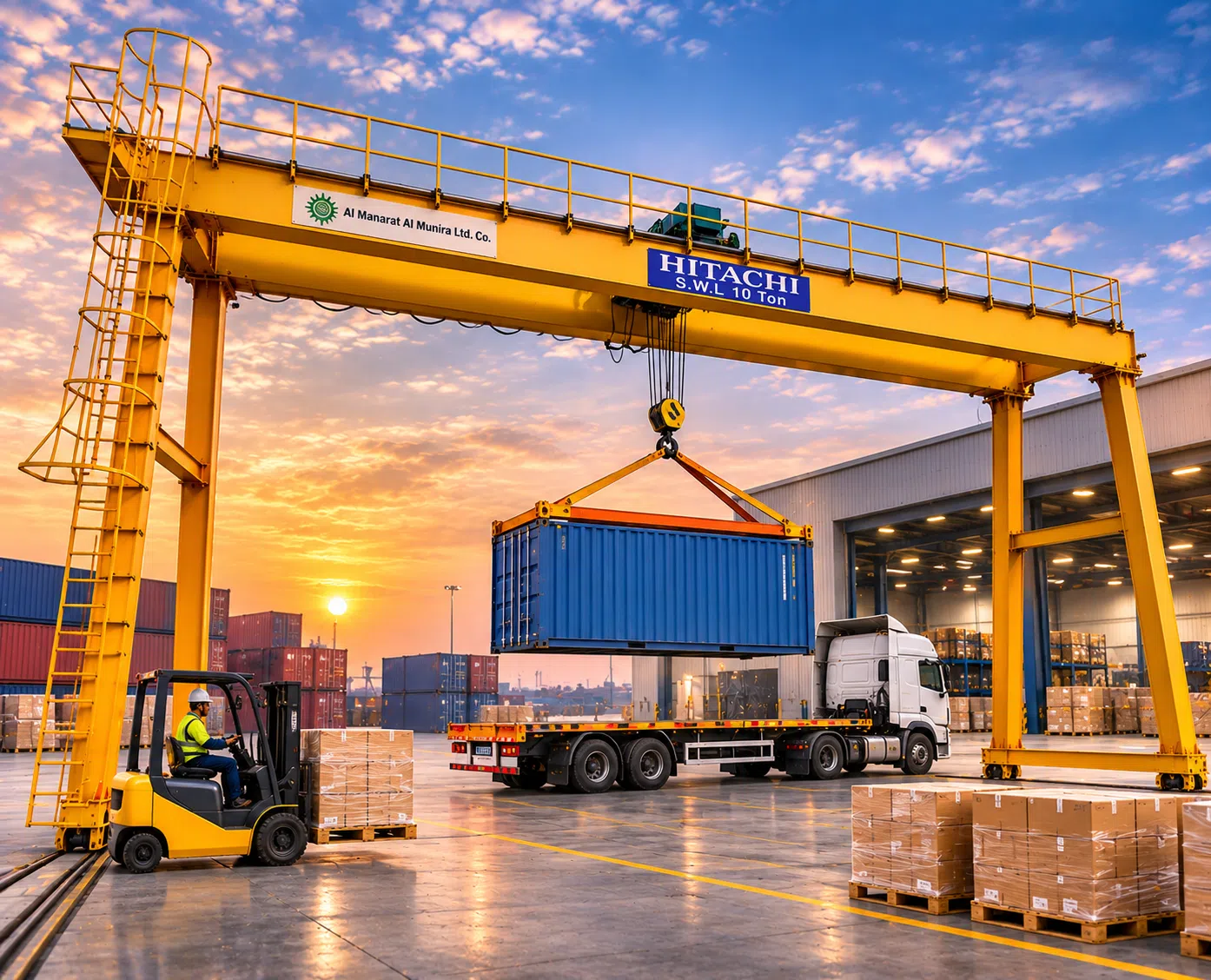

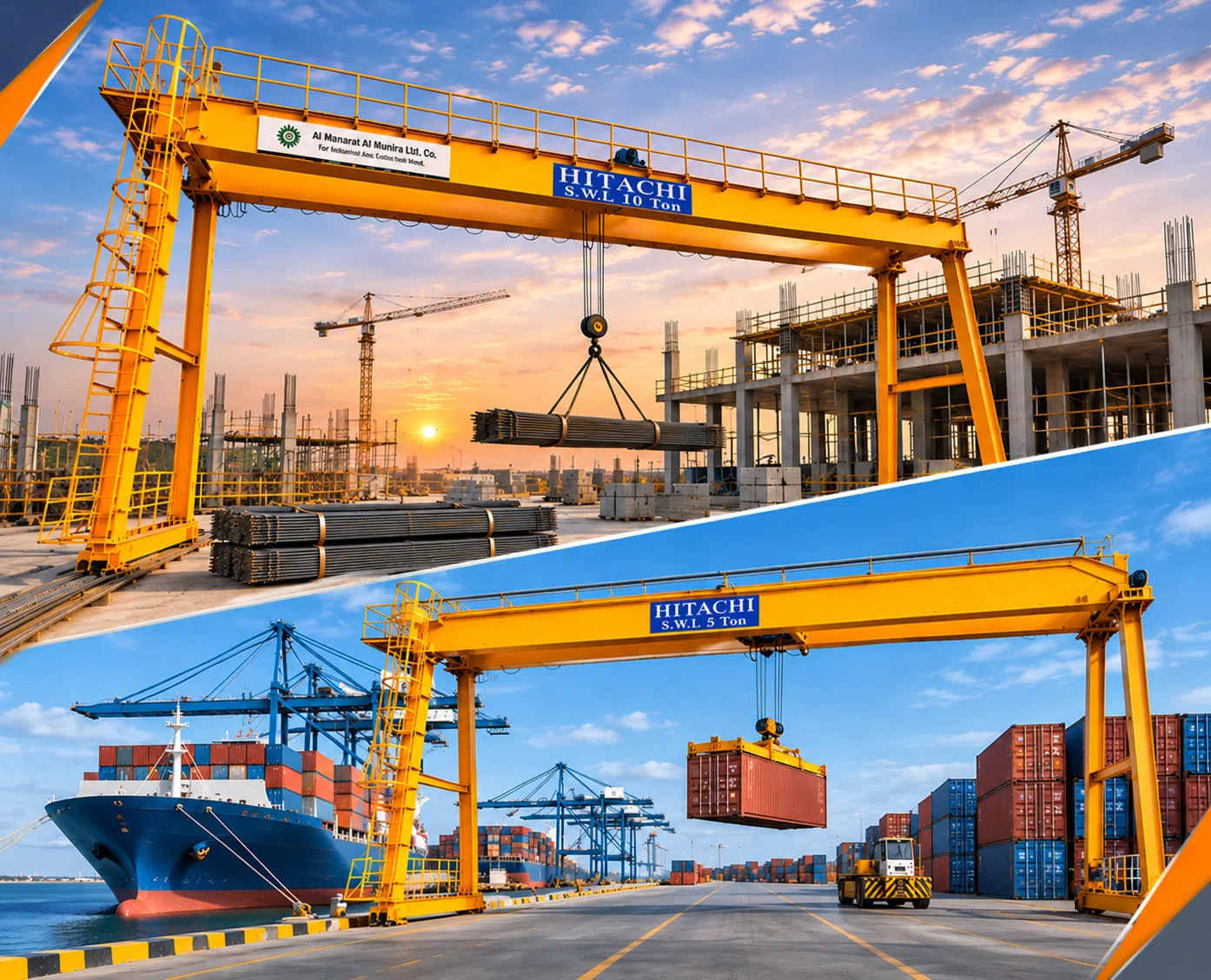
Uses of Gantry Cranes in Construction Projects and Seaports
Giant infrastructure projects and logistics ports demand an exceptional handling pace that allows no interruption and cannot rely on ordinary lifting solutions. These open environments deal with enormous weights, ranging from cast concrete blocks weighing tens of tons to stacked cargo containers that need precise unloading and stacking across vast areas unbounded by roofs or walls. Under these harsh field conditions, the gantry crane stands out as an indispensable backbone for managing heavy logistics operations. It is the engineering system that combines freedom of movement over open yards with the exceptional ability to balance huge loads without any prior structural reinforcement.
What Is a Gantry Crane?
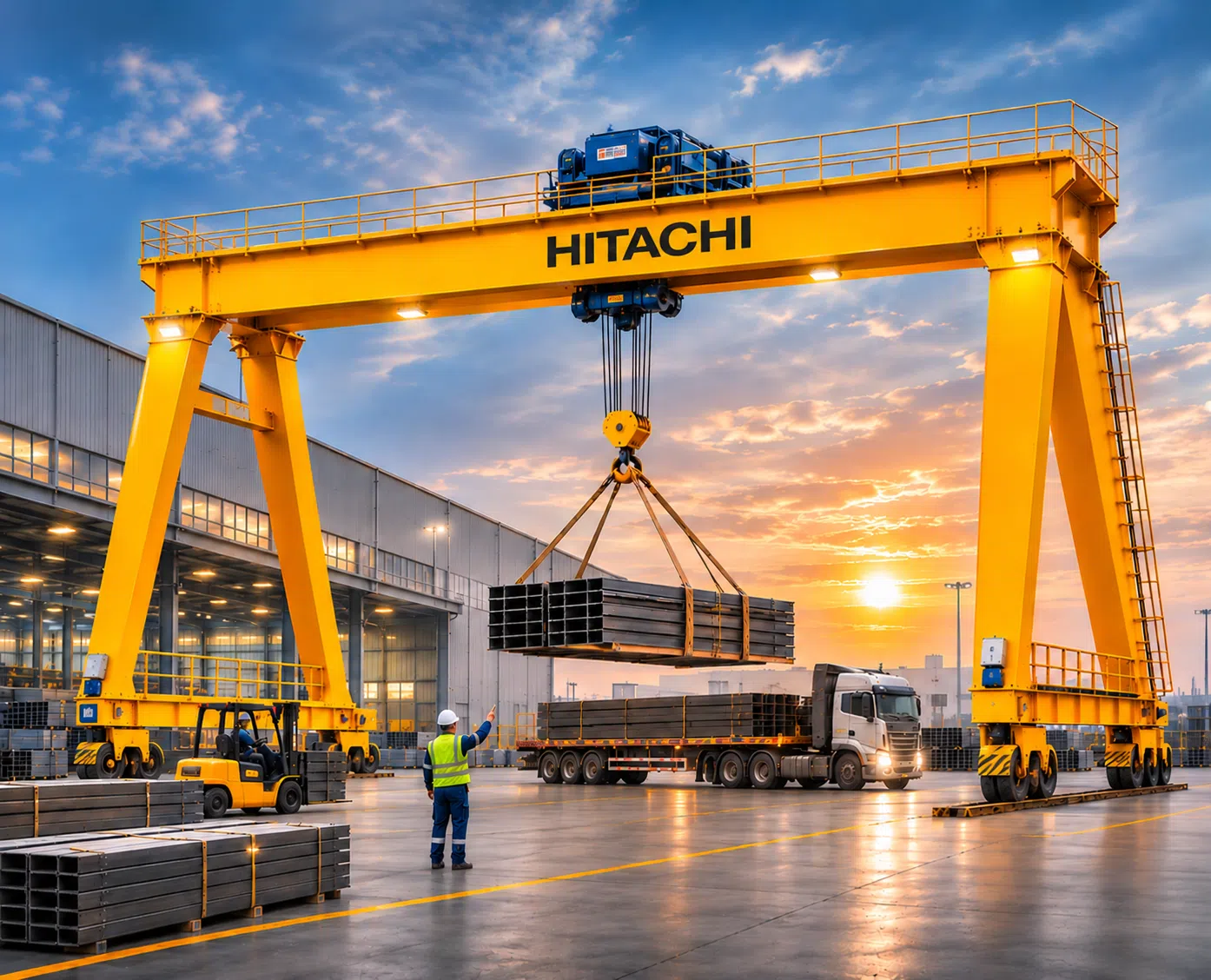
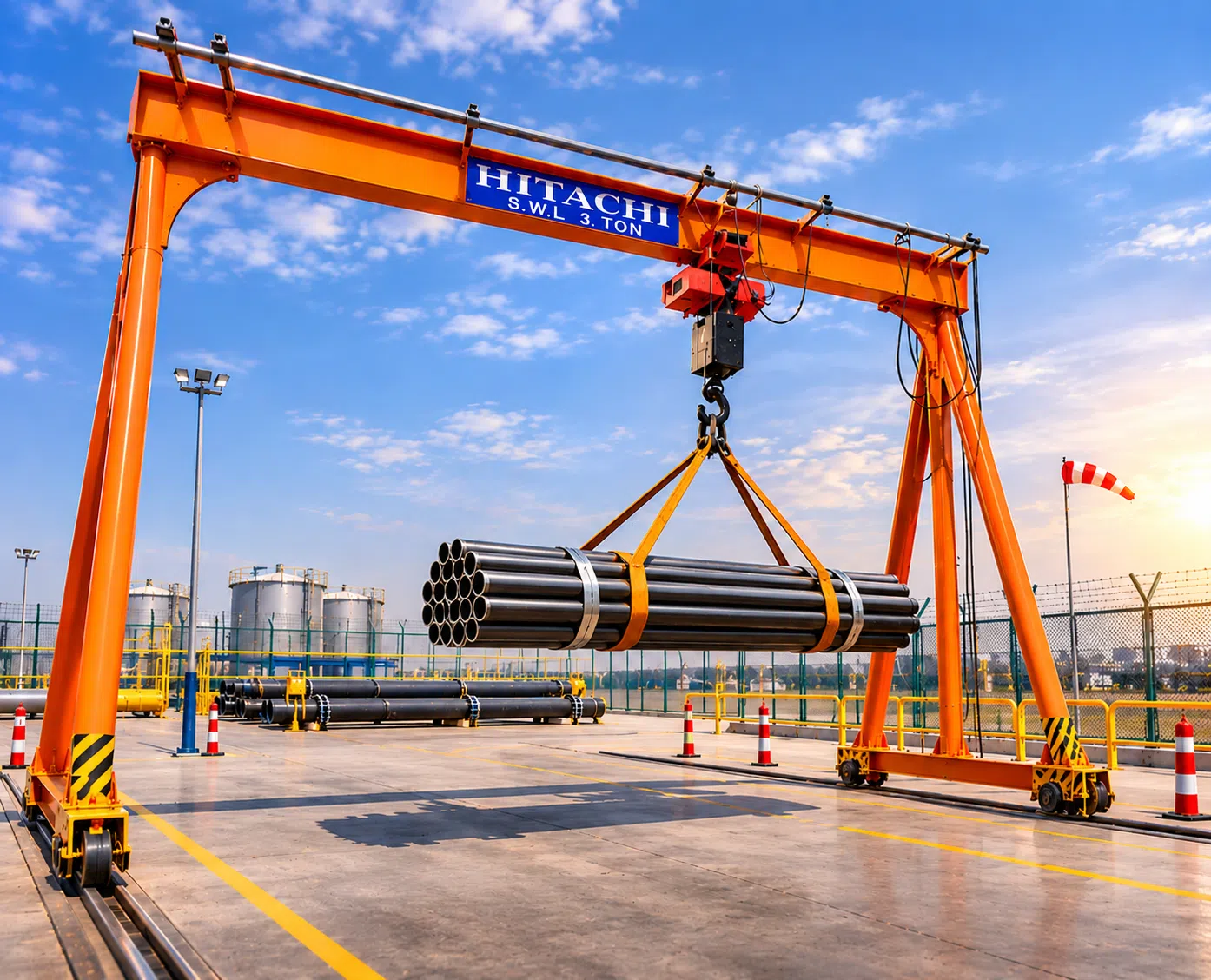
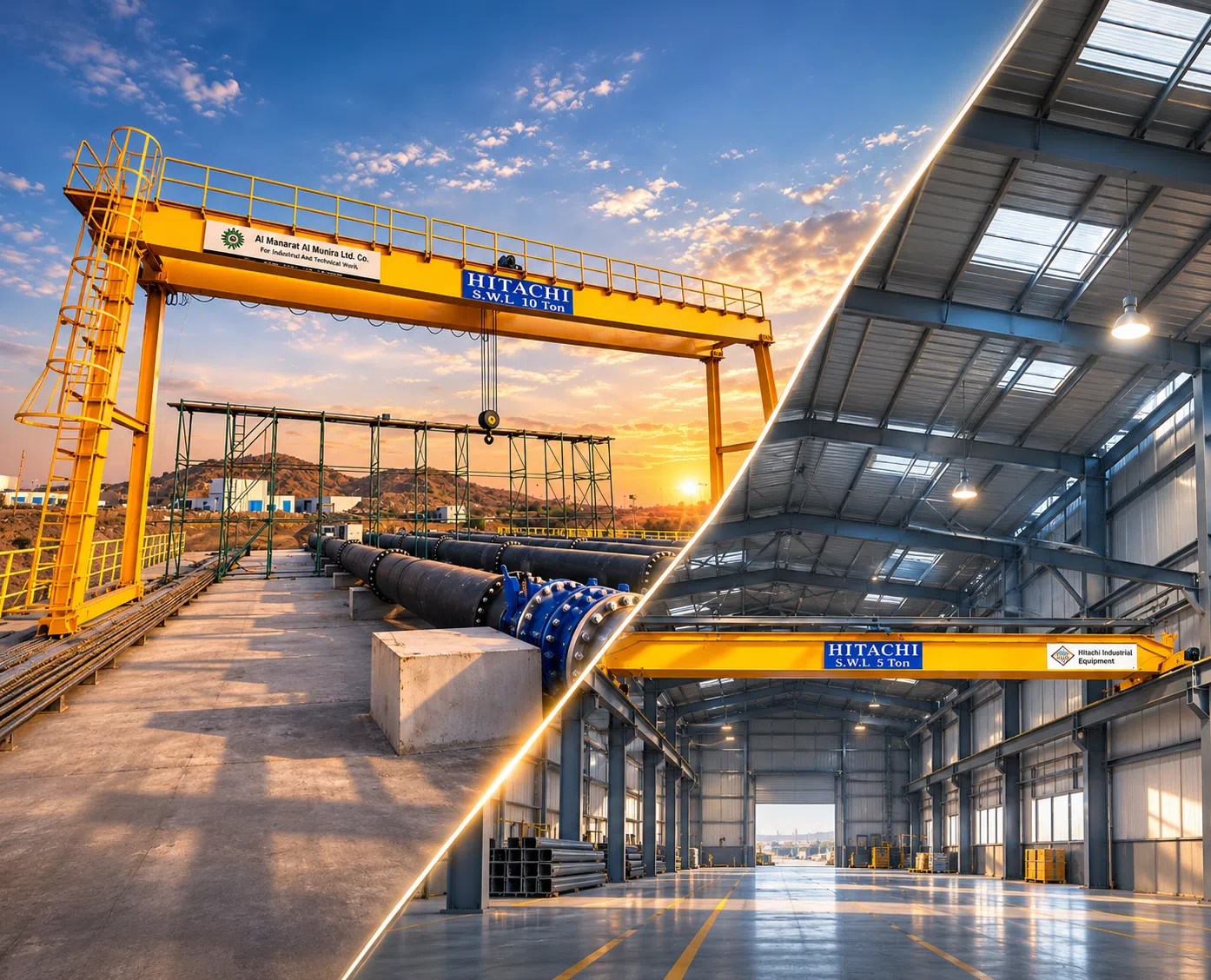
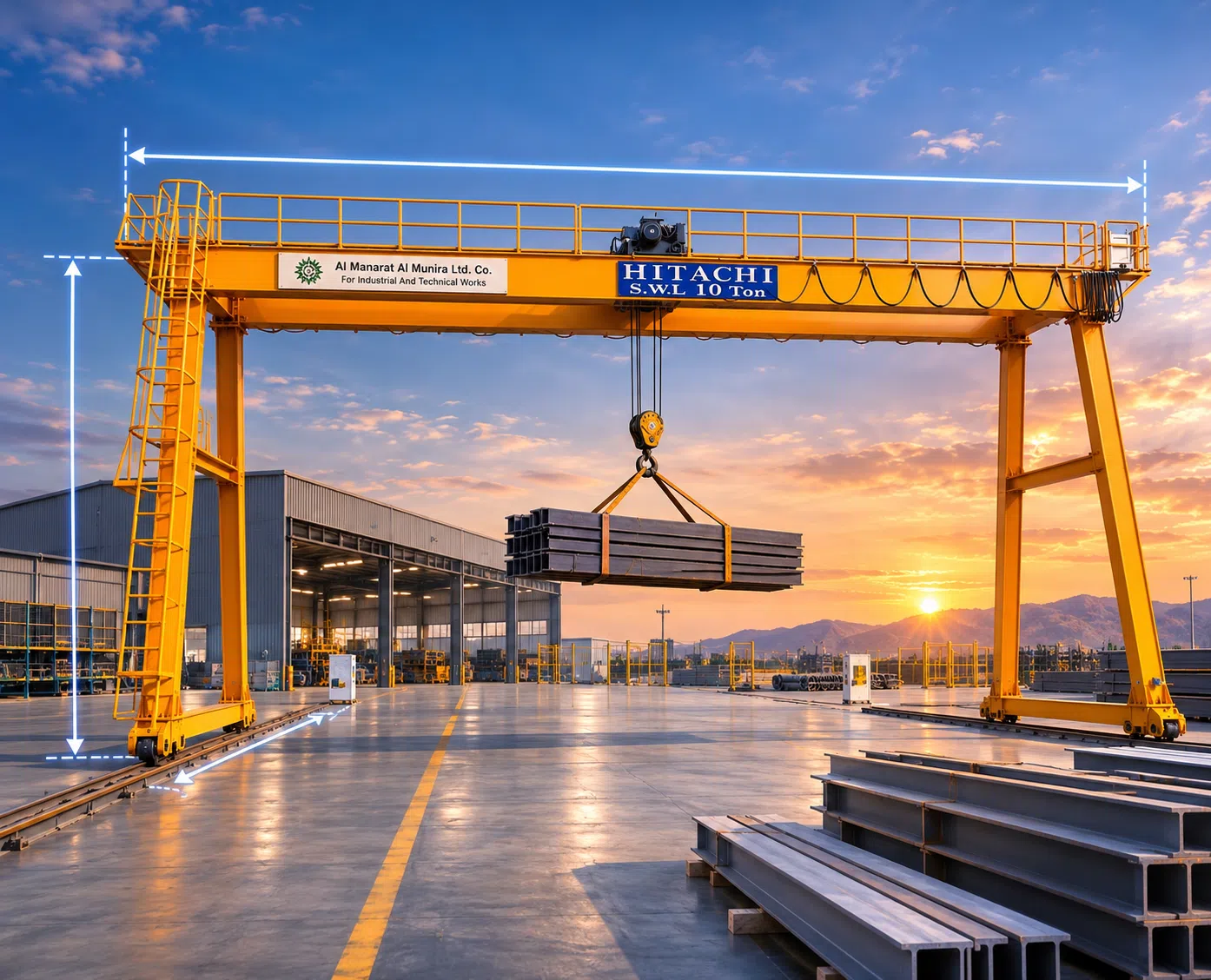
A gantry crane (Portal Crane / Gantry Crane) is a large portal crane based on an overhead bridge carried on rigid steel structural legs and uprights that travel on tracks and rails fixed to the ground, or on giant rubber tires, to cover wide lengthwise and crosswise operating areas in open yards and loading quays.
Vital facilities rely on these cranes to achieve immediate operating efficiency:
- Moving and handling sea containers and bulk goods between ships, quays and dry storage yards.
- Lifting and positioning prestressed bridge girders and concrete blocks at construction sites with high engineering precision.
- Working completely continuously in all open weather conditions thanks to anchoring and wind-resistance systems.
The Pivotal Role of the Gantry Crane in Major Construction Projects
Major contracting sites need exceptional speed in moving materials while ensuring the highest safety standards, and gantry cranes perform key tasks that include:
1. Precast Concrete Plants and Yards (Precast Yards)
Yards that fabricate bridge and tunnel segments are the natural working environment for gantry cranes. They strip the steel molds, lift reinforced concrete girders weighing more than 50 to 100 tons, then move them and stack them in temporary curing areas before loading them onto heavy transport trucks with precision and safety.
2. Building Bridges, Tunnels and Metro Stations
Specialized gantry cranes are used to lower sections of giant tunnel boring machines (TBM) into deep vertical shafts, and bridge projects rely on mobile gantry cranes to set long concrete beams in their final positions above the piers without having to stop traffic below the site.
3. Steel Structure and Tower Fabrication Yards
Truss, refinery and power plant projects require assembling huge steel parts on the ground before lifting them. This crane provides complete flexibility for turning and fixing heavy steel beams and helps welding technicians handle plates with total ease.
Uses of the Gantry Crane in Ports and Marine Terminals
Crane efficiency in ports is the key difference between a fast, competitive port and a slow port clogged with cargo. Gantry cranes perform two extremely important operating roles:
Quayside Container Handling (Ship-to-Shore Cranes)
These giant cranes are positioned right at the edge of the port quay and feature a gantry boom that extends over the sea to unload huge container ships. They pick up the container with an automatic hydraulic spreader and move it in a fast lifting cycle to place it on the internal transport trailers on the quay.
Organizing and Managing Storage Yards (Container Yard Stacking)
Inside storage yards, gantry cranes organize thousands of containers and stack them in parallel rows up to 5 or 6 containers high. They rely on rail-mounted travel (RMG) or free rubber-tired (RTG) technologies to ensure easy access to any container needed for fast customs shipment.
Comparative Analysis: Rail-Mounted Gantry Cranes (RMG) Versus Rubber-Tired Cranes (RTG)
Ports and major construction sites choose between two main types of gantry crane travel. The points below show the key operational differences between them:
- Nature of the travel path and steering freedom: Rail-mounted cranes (RMG) travel on a fixed, precisely predefined path over steel rails laid on the ground, whereas rubber-tired cranes (RTG) offer exceptional steering flexibility and the ability to turn and move between different tracks and storage yards without being tied to a set path.
- Coverage width and storage capacity: Rail-mounted cranes can cover very wide spans that hold more than 14 container rows, with dedicated lanes for trucks and trains to pass beneath the bridge, whereas rubber-tired cranes typically cover 6 to 8 container rows plus one traffic lane.
- Power source and consumption efficiency: Rail-mounted cranes mostly rely on direct electrical power through cable reels or insulated conductor bars, which makes them environmentally friendly with low fuel costs, whereas most rubber-tired cranes run on built-in diesel generators that let them work anywhere in the open but require continuous maintenance and refueling.
- Ground foundation costs: Rail-mounted cranes need civil works and precise reinforced concrete foundations along the track to ensure the rails are level, whereas rubber-tired cranes need only well-compacted asphalt or concrete yards to bear the high tire pressure.
Safety Requirements and Special Equipment for Marine and Exposed Environments
Equipment working on coasts and at construction sites faces serious environmental challenges, which calls for advanced preventive engineering features:
- Rail Clamps and Storm Brakes: Hydraulic and mechanical systems that lock the crane's legs tightly onto the steel track as soon as they receive signals from the wind speed gauges (anemometers), to prevent the crane from moving or sliding in strong winds.
- Multi-layer marine coating systems: Treating the steel surfaces by blast-cleaning and coating them with epoxy and polyurethane layers resistant to high salinity and humidity, to prevent corrosion of the box girders and metal damage.
- Sealed electrical enclosures and motors: Fitting motor rooms and control panels with advanced protection ratings (IP66) with internal air-conditioning and heating units that prevent moisture condensation and protect delicate electronic components and weight sensors.
- Smart electronic anti-sway systems (Electronic Anti-Sway): Programming the frequency control units to adjust trolley movement automatically during strong winds, which prevents containers or suspended blocks from swaying and ensures they are set down on transport trailers with millimeter precision.
How Does "Al Manarat Al Monerah" Support You in Selecting and Equipping Your Gantry Crane?
Implementing such large systems requires broad field experience and full compliance with standard specifications, which is what Al Manarat Al Monerah (almanratalmonerah.com) focuses on when providing gantry crane solutions to the construction and port sectors:
- Custom design for the working dimensions: The engineering team studies the load requirements, the span length needed for the yard and the clear lifting height, and designs the box structures to withstand the harshest operating loads and expected winds.
- Supply of globally certified components: Equipping cranes with European and internationally certified motors, gearboxes and hoisting cables according to FEM, ISO and CMAA standards to ensure years of heavy-duty service without breakdowns.
- Precise field installation and alignment: The company's specialized crews supervise the installation of the ground tracks, adjust their straightness by laser and run safe operating tests before handover.
- Maintenance services and spare parts supply: Continuous operating support, with consumable parts such as track wheels, brakes and cables supplied locally and immediately to make sure vital operations at your facility do not stop.
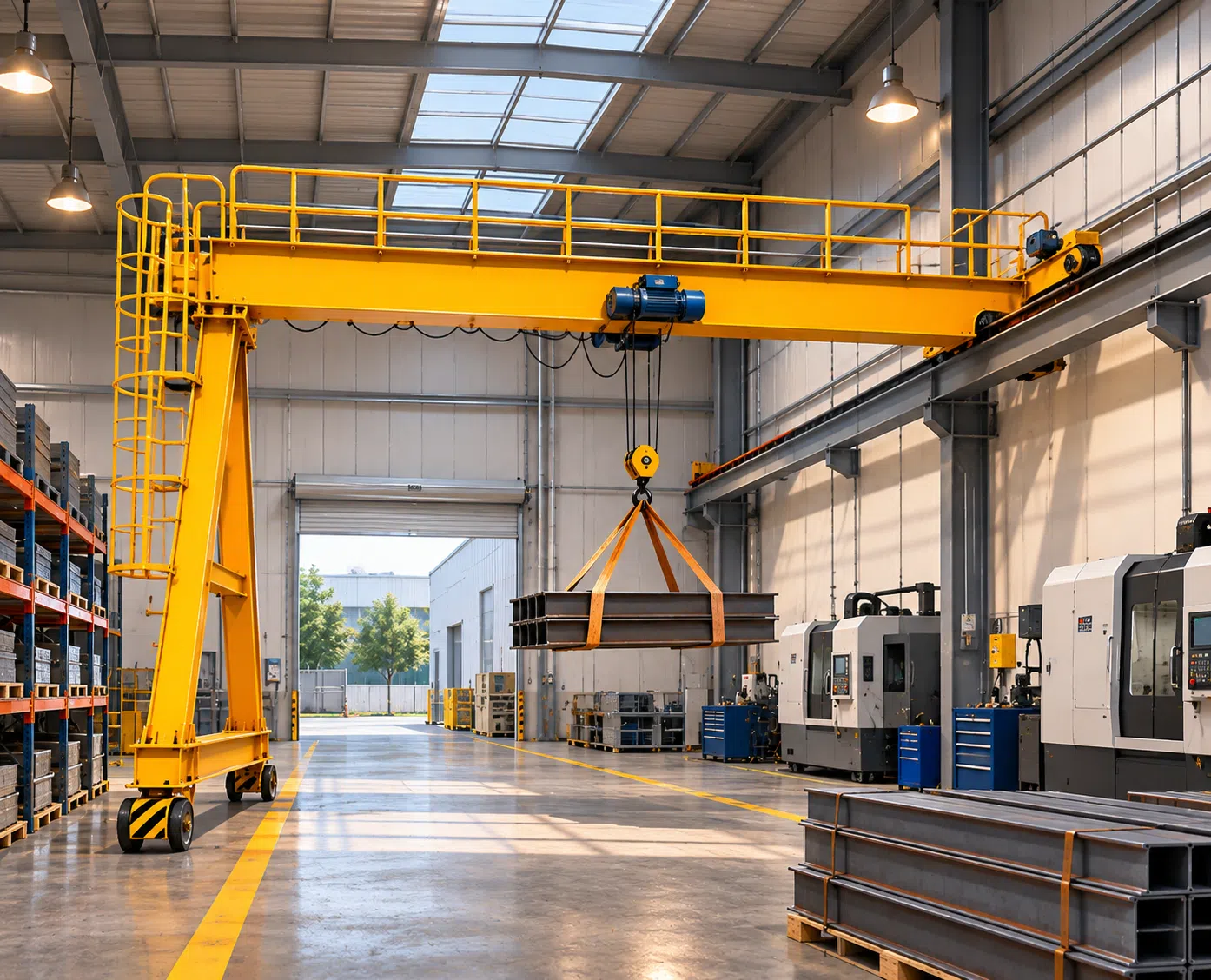
Al Manarat Al Monerah gives you the chance to request a prior technical consultation and a field inspection of your project site to determine the most suitable gantry crane design, whether single girder, double girder or semi-gantry, ensuring operations flow at the highest speed and the lowest investment cost.
Frequently Asked Questions About Gantry Cranes and Their Uses
What Is the Main Difference Between a Gantry Crane and a Tower Crane at Construction Sites?
A gantry crane travels in a straight lengthwise path over a defined area and handles very large weights with fast, stable unloading of huge blocks, whereas a tower crane (Tower Crane) is anchored at a central point and rotates with a horizontal jib to cover the heights of tall buildings, but its maximum loads are usually lower than those of gantry cranes.
How Does a Gantry Crane Deal with the Danger of Strong Winds in Ports?
The crane is fitted with wind speed sensors that send an audible warning to the operator when the wind reaches unsafe levels. When the operationally set speed is exceeded, the crane stops automatically and activates the steel rail clamps and hydraulic brakes to lock the legs to the ground tightly and prevent sliding.
Can a Gantry Crane Be Operated Entirely by Remote Control?
Yes. It can be equipped either with encrypted digital wireless control units that let the operator move freely and safely around the lifting area, or with air-conditioned operator cabins for complex port tasks, all the way up to fully automatic and semi-automatic operating systems linked to modern port management systems (TOS).
Read also: Advantages of a Portable Gantry Crane for Mobile Workshops and Maintenance Work