
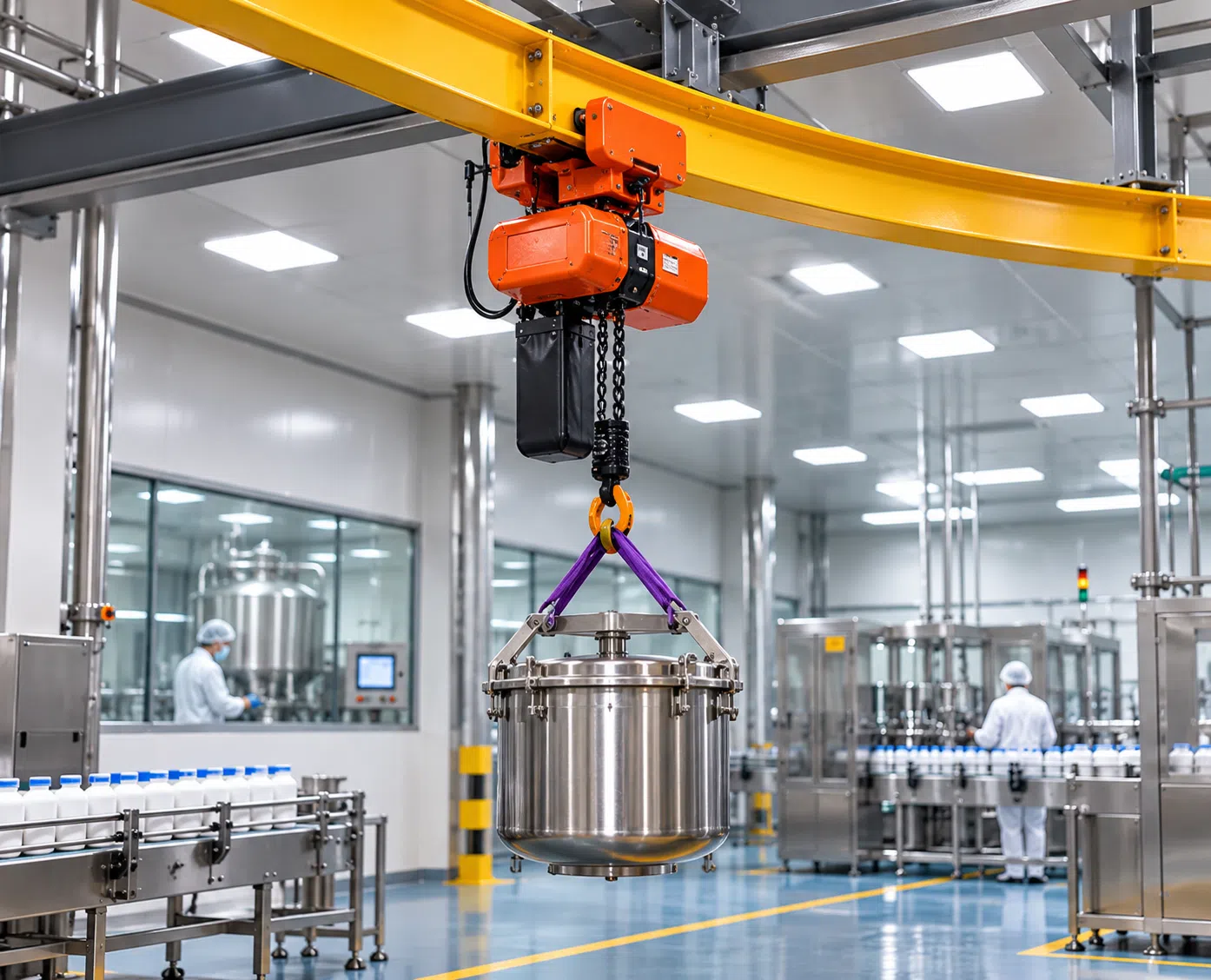
Advantages of Monorail Hoists for Moving Products in Food and Pharmaceutical Plants
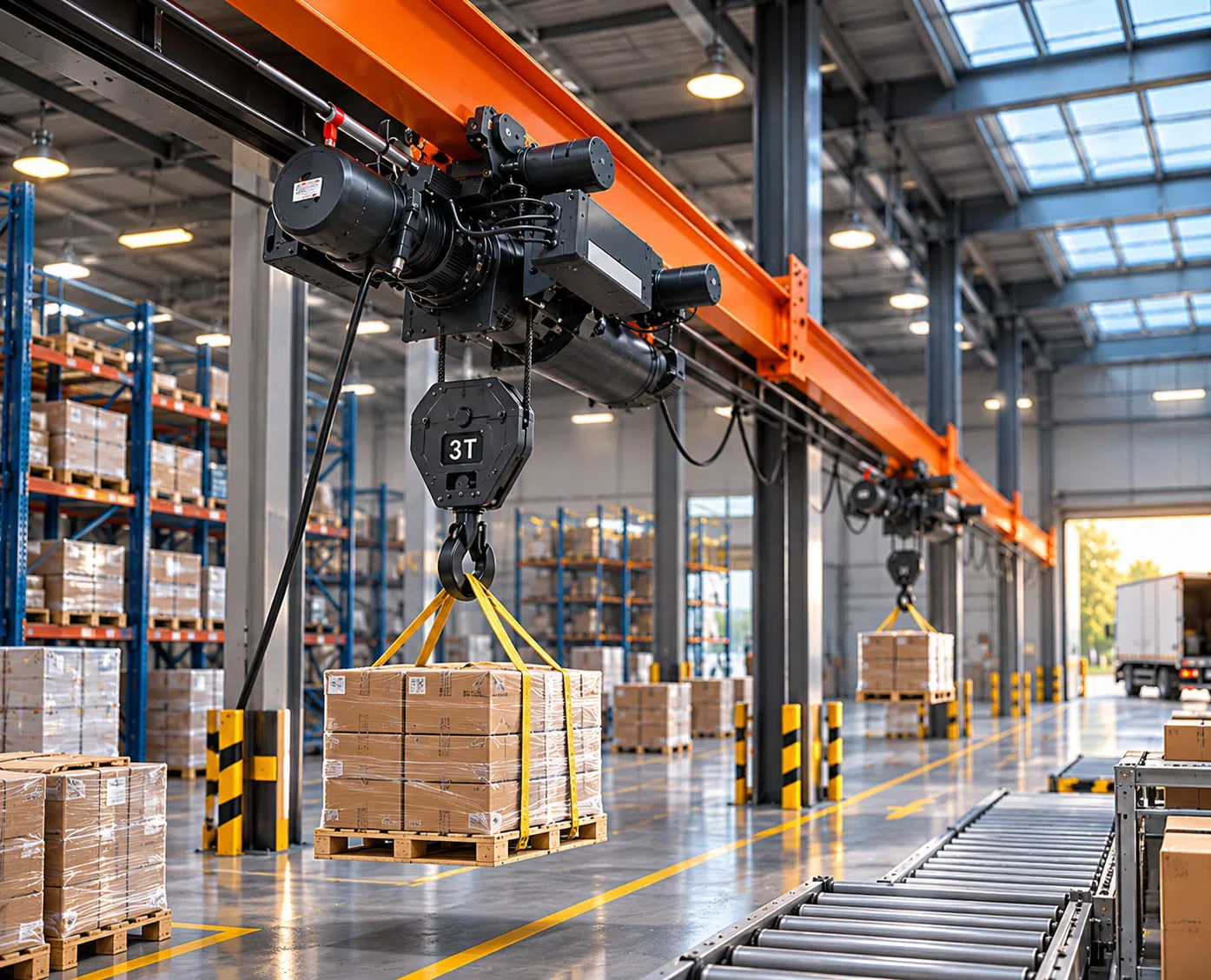
Food and pharmaceutical manufacturing plants impose strict operating protocols directly tied to human health and consumer safety. There is no room for compromise on hygiene standards, for tolerating flakes of rust, or for drops of lubricating oil leaking onto sterile processing and filling lines. The mechanical transport of raw materials and sensitive preparations between mixing, sterilization and filling rooms is a complex logistical challenge. Relying on traditional ground handling equipment such as forklifts and manual pull carts stirs up dust, scratches sterile epoxy floors, and creates cross-contamination points that threaten the facility's compliance with Good Manufacturing Practice (GMP) requirements. In this highly sensitive setting, monorail hoists stand out as an ideal engineering choice for moving loads vertically and horizontally through the overhead space, combining the highest sterility requirements with smooth mechanical movement that safeguards products and speeds their flow.
Why Are Monorail Hoists Ideal for Food and Pharmaceutical Plants?
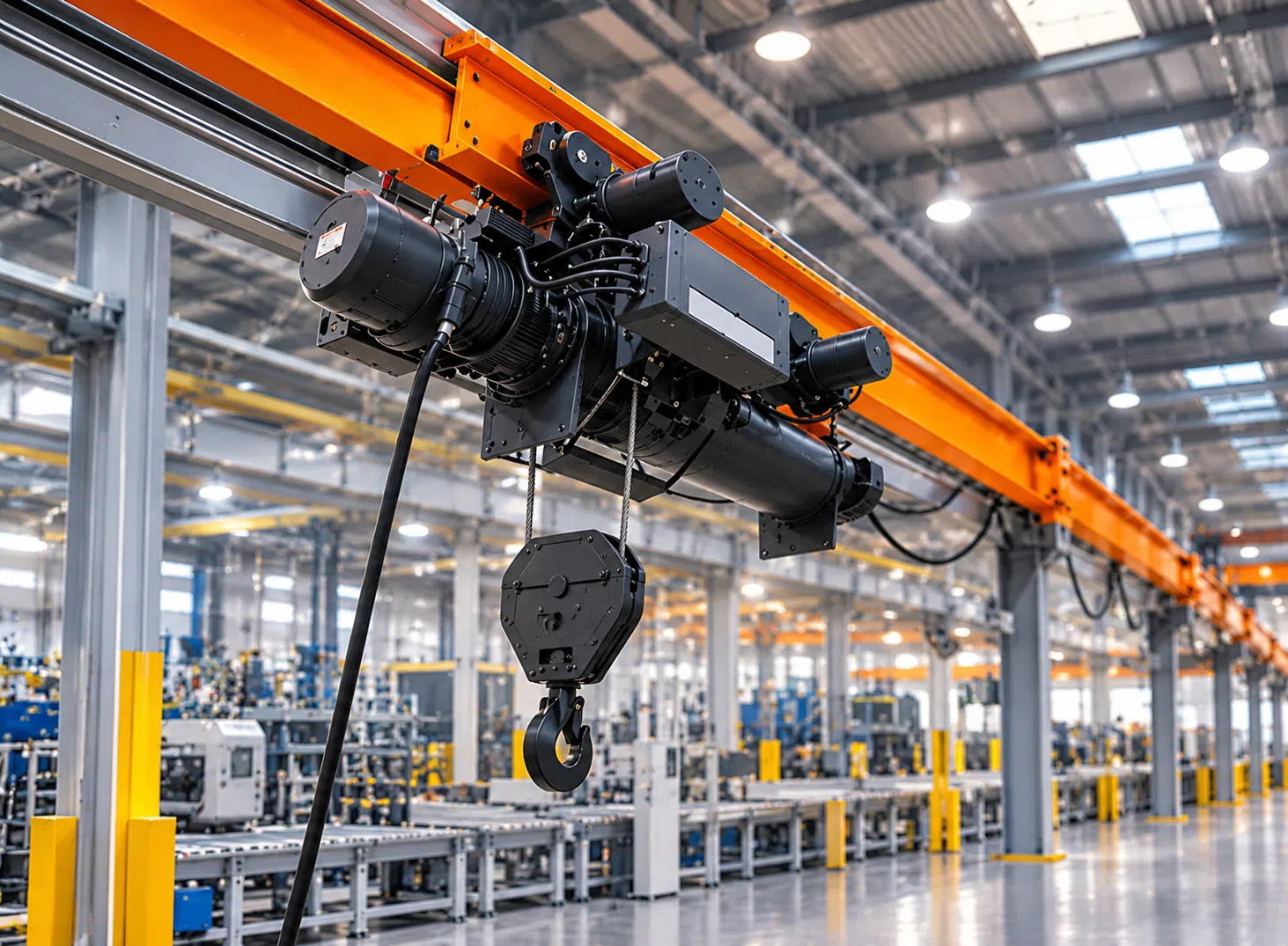
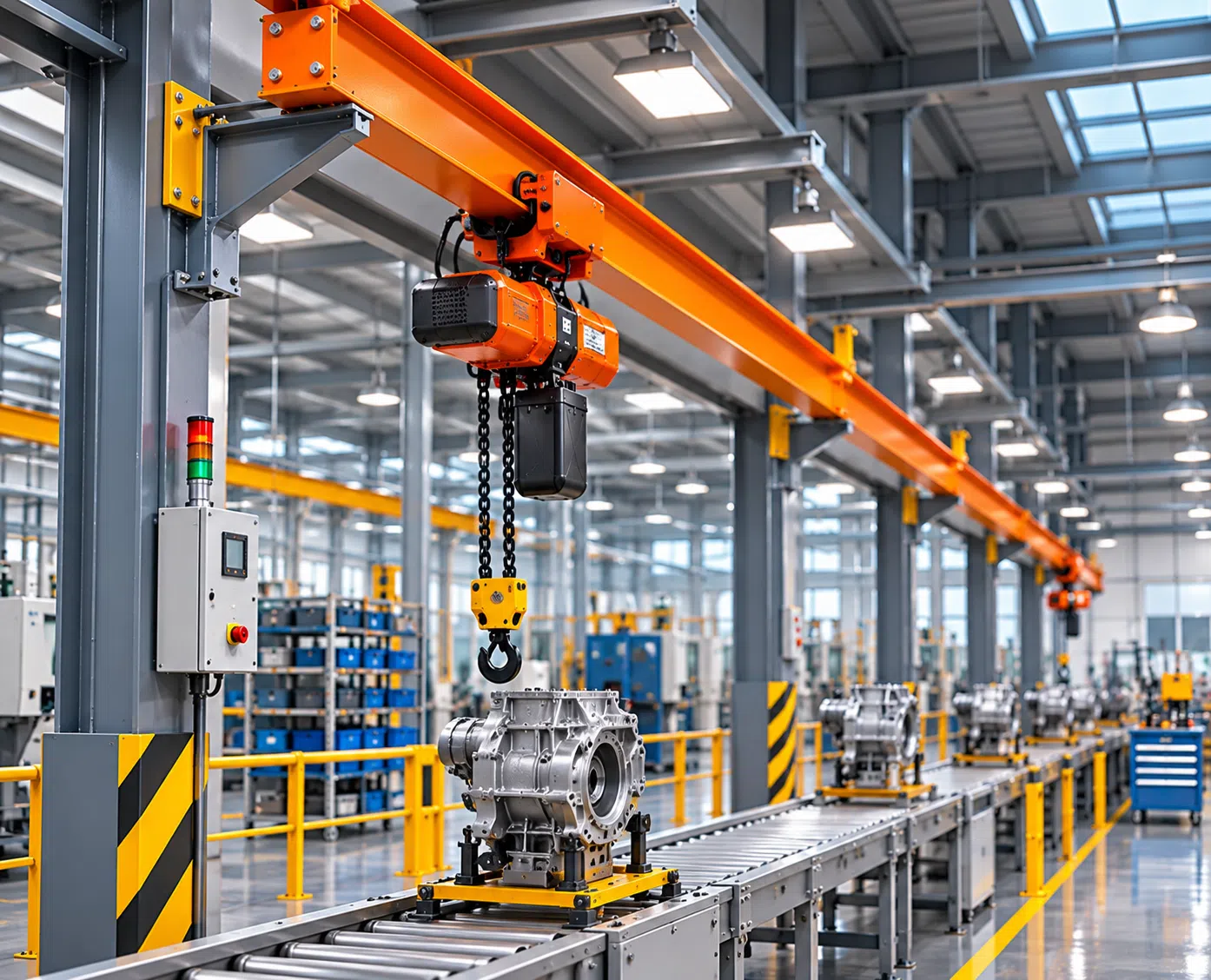
Monorail hoists excel in food and pharmaceutical facilities thanks to their stainless steel construction, surfaces free of crevices that harbor microbes, reliance on synthetic food-grade (H1) greases and oils suitable for incidental food contact, and operation on a suspended overhead track that isolates the transport movement from sterile work areas and prevents contamination of packages.
This suspended system delivers direct health and productivity benefits for plants:
- Full compliance with the standards of regulatory bodies such as the Food and Drug Administration (FDA) and the local food and drug safety authorities in the Middle East.
- Keeping cleanrooms clean without stirring up airborne particles that clog the air filters (HEPA).
- Eliminating cross-contamination caused by contaminated tires passing between different manufacturing sections.
Design Features of Monorail Hoists in Strict Hygienic Environments
The nature of these industries requires radical engineering modifications to the structure of the hoist, making it entirely different from ordinary heavy industrial hoists:
1. Manufacturing the Structures and Tracks from Stainless Steel (Inox / Stainless Steel 304 & 316L)
The track beams, trolleys, hooks and chains are built from stainless steel alloys resistant to acids and alkalis. This metal prevents paint from flaking, is unaffected by daily washing with hot water and chemical disinfectants, and so prevents rust spots or bacterial colonies from forming inside the hall.
2. Using Approved Food-Grade Lubricants (NSF H1 Food-Grade Lubricants)
Conventional petroleum oils inside gearboxes and chain pivots are replaced with odorless, colorless synthetic oils and greases that are globally approved for use on food lines. This ensures the drug or food product is not contaminated even if a rare mechanical leak of a microscopic drop of oil occurs over the preparation areas.
3. Ingress Protection and Resistance to High-Pressure Washing (Washdown Duty - IP66/IP69K)
Pharmaceutical and food lines undergo cleaning with steam and pressurized water every day. For this reason the motors and electrical panels of monorail hoists are designed with smooth, completely solid housings free of complex cooling fins that collect mold, with protection levels that prevent the penetration of high-pressure water and protect the electronic circuits from constant humidity.
4. Sterile Chain Bags and Drip Catching Barriers (Drip Pans & Clean Bags)
The hoist is fitted with special stainless steel trays mounted under the hoist body to catch any spray or grease that might escape, and chain collection bags made of corrosion-resistant polymer materials that are lint-free, preventing any threads or plastic particles from falling into open mixing and cooking tanks.
Comparative Analysis: Hygienic Monorail Hoists Versus Ground Transport (Forklifts and Pallet Trucks)
The following points show the key technical and operational differences to help you assess the effect of adopting an overhead track on product safety and hall cleanliness:
- Hygiene level and contamination control: Monorail hoists leave the floor completely free and move through clean air without touching surfaces, whereas forklifts and ground pallet trucks carry dust and bacteria on their wheels from the raw receiving area to sensitive filling areas.
- Effect on sterile epoxy floors: A monorail system never touches the floors, which protects the costly epoxy layers from scratches and cracks that become a fertile environment for fungal growth, whereas the constant movement of ground equipment causes rapid wear and cracking of the floor coatings.
- Compatibility with cleanrooms: Monorail hoists are designed to be compatible with cleanroom standards (ISO 14644-1) thanks to their smooth motion that generates no violent air turbulence, whereas operating motorized or rubber-tired forklifts inside these rooms is prohibited because of the emissions and fine friction particles they generate.
- Efficient use of vertical and horizontal space: The monorail beam passes through narrow wall openings sealed with air curtains to connect manufacturing halls to warehouses smoothly, whereas ground equipment requires wide doors to be opened, causing rooms to lose the positive air pressure that is meant to prevent unfiltered air from entering.
Key Practical Applications of Monorail Hoists in Food and Pharmaceutical Plants
This system excels at managing sequential preparation stations that cannot tolerate delay or mechanical disruption:
Feeding Cooking Vessels and Large Mixing Tanks (Mixing Tanks & Kettles)
Monorail hoists are used to lift bags and containers of dry raw materials (big bags), herbal extracts and active ingredients, and move them with millimeter precision to discharge them directly into the openings of mixing and cooking vessels, without physical strain on workers and without scattering powders.
Autoclave Sterilization and Heat Treatment Rooms (Autoclave Sterilization)
The hoist carries baskets of glass containers or filled pharmaceutical ampoules and feeds them smoothly into pressurized steam sterilization ovens and units, then unloads them after the sterilization cycle ends to move them toward the cooling and final packaging stations along an orderly linear path.
Cheese and Meat Handling, Salting and Aging Lines
The system operates in humid environments saturated with salts and organic acids to move cheese molds or meat carcasses between brine tanks and the drying and aging rooms, where stainless steel alloys resist harsh chemical corrosion for decades.
Beverage and Juice Plants and Filter Handling
The system makes it easy to lift heavy liquid filtration units (filter presses) and reverse osmosis membranes for cleaning and maintenance and return them to their bases with a precision and speed that keep the automatic filling lines flowing continuously.
Occupational Safety Standards and GMP Compliance in Monorail Systems
Operating this equipment inside sensitive production halls requires a set of provisions that combines structural safety with health safety:
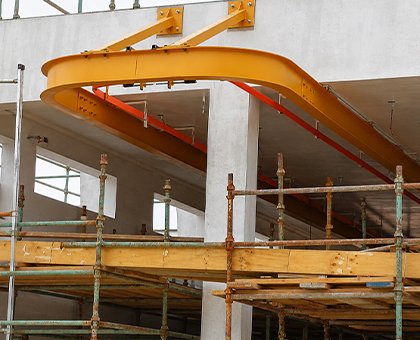
- Smooth designs that prevent dust buildup (Hygienic Geometry): The track beam surfaces are designed with sloped geometry or round, closed sections that prevent powder or dust from settling on them and let washing and disinfecting water run off without forming stagnant pools.
- Fully insulated limit switches and brakes: The hoisting motors are fitted with tightly sealed electromagnetic enclosures that prevent any electrical spark from escaping. This is vitally important in food plants where flour or starch powder that can ignite spontaneously becomes airborne, or in pharmaceutical plants that use alcohol and volatile solvents.
- Smart frequency control systems and smooth motions (VFD): Tuning the hoist's acceleration and deceleration to prevent open vessels from vibrating or hot suspended liquids from sloshing, protecting operators from the risk of burns or from spilling costly materials over production platforms.
- Sterile and protected wireless control units: Providing operators with remote controls made of polymer plastics resistant to disinfectants and easy to sterilize with ultraviolet light and alcohol, allowing precise guidance from a safe distance without touching the equipment by hand.
How Does Al Manarat Al Monerah Provide Monorail Hoists That Meet Hygiene Standards?
Al Manarat Al Monerah (almanratalmonerah.com) has a distinguished engineering record in equipping industrial facilities in Saudi Arabia and the Middle East, putting in your hands advanced solutions that meet the strict requirements of food and pharmaceutical plants:
- Engineering study and clean track designs: Surveying your facility's halls and checking cleanroom requirements, and designing custom monorail tracks that ensure smooth material flow and prevent cross-contamination between sections.
- Supply of stainless steel materials and approved components (FDA/GMP): Providing hoists and track rails manufactured from the finest stainless steel alloys (304 / 316L), fitted with washdown-rated insulated motors and food-grade lubricants certified internationally.
- Installation and precision laser alignment: Specialized engineers supervise fixing the tracks without leaving open gaps or unpolished welds, and align the parallelism and straightness of trolley movement to ensure completely silent and clean operation.
- Preparing sterile electrical supply lines: Equipping the system with protected current tracks that are tightly insulated against steam and hot water to prevent any short circuit during the daily cleaning and disinfection cycles.
- Load testing and issuing hygienic and technical calibration certificates: Carrying out approved static and dynamic load tests and providing inspection and conformity reports that qualify the plant to pass food and drug authority and civil defense inspections successfully.
- Genuine spare parts readiness and fast technical support: Fully stocked local warehouses supply treated chains, gears, insulating gaskets and approved brakes for an immediate response that protects your production lines from sudden downtime.
Al Manarat Al Monerah gives you direct access to its engineering consultants for an on-site inspection and a tailored technical proposal that puts in your hands the latest monorail hoist systems, to strengthen hygiene and safety standards and raise the efficiency of your production lines to the highest global levels.
Frequently Asked Questions About Monorail Hoists for Food and Pharmaceutical Plants
What is the difference between 304 stainless steel and 316L stainless steel in manufacturing monorail hoists?
304 stainless steel is used in general food lines and dry environments for its excellent resistance to water and moderate corrosion, whereas 316L stainless steel is the mandatory choice in pharmaceutical lines, marine industries, and dairy and pickle plants because it contains molybdenum, which gives it exceptional resistance to corrosion caused by chlorides, concentrated acids and strong chemical disinfectants.
How are monorail hoists cleaned and disinfected inside daily production halls?
These hoists are designed with protection ratings (IP66 and above), which allows them to be washed directly with hot water hoses and antibacterial foaming disinfectants, with the exterior surfaces wiped with isopropyl alcohol in pharmaceutical rooms, without any fear of water leaking into the motor or the electrical control panels.
Does using food-grade oils affect the efficiency and torque strength of the hoist gears?
Not at all. Modern food-grade oils and greases approved under the NSF H1 classification are made from advanced synthetic polymer compounds that give them a superior ability to withstand severe mechanical pressure and resist high temperatures, and they provide the same performance and protection as heavy petroleum oils, with the added benefit of complete hygienic safety.
Read also: The Jib Crane: Uses and Types in Maintenance Workshops