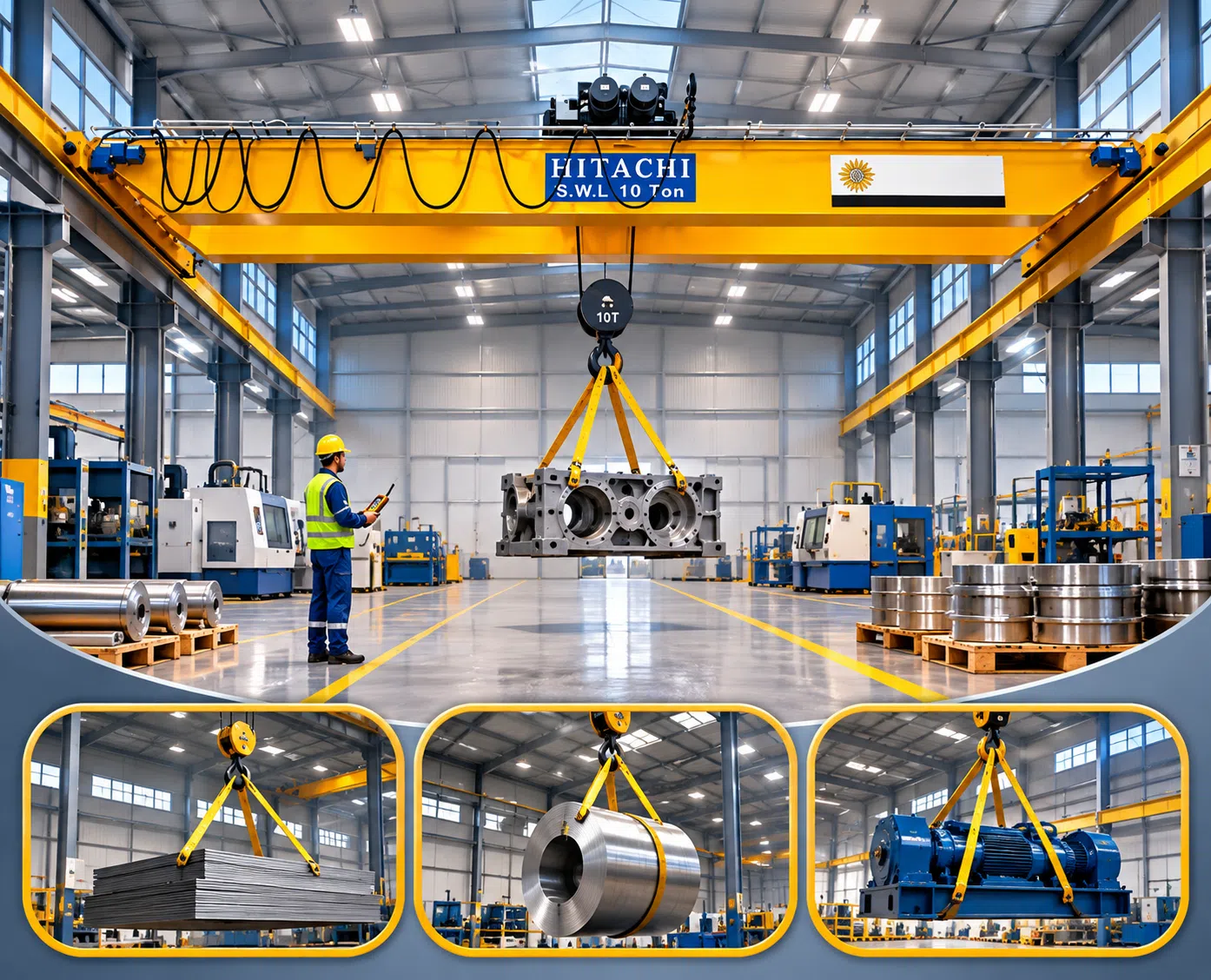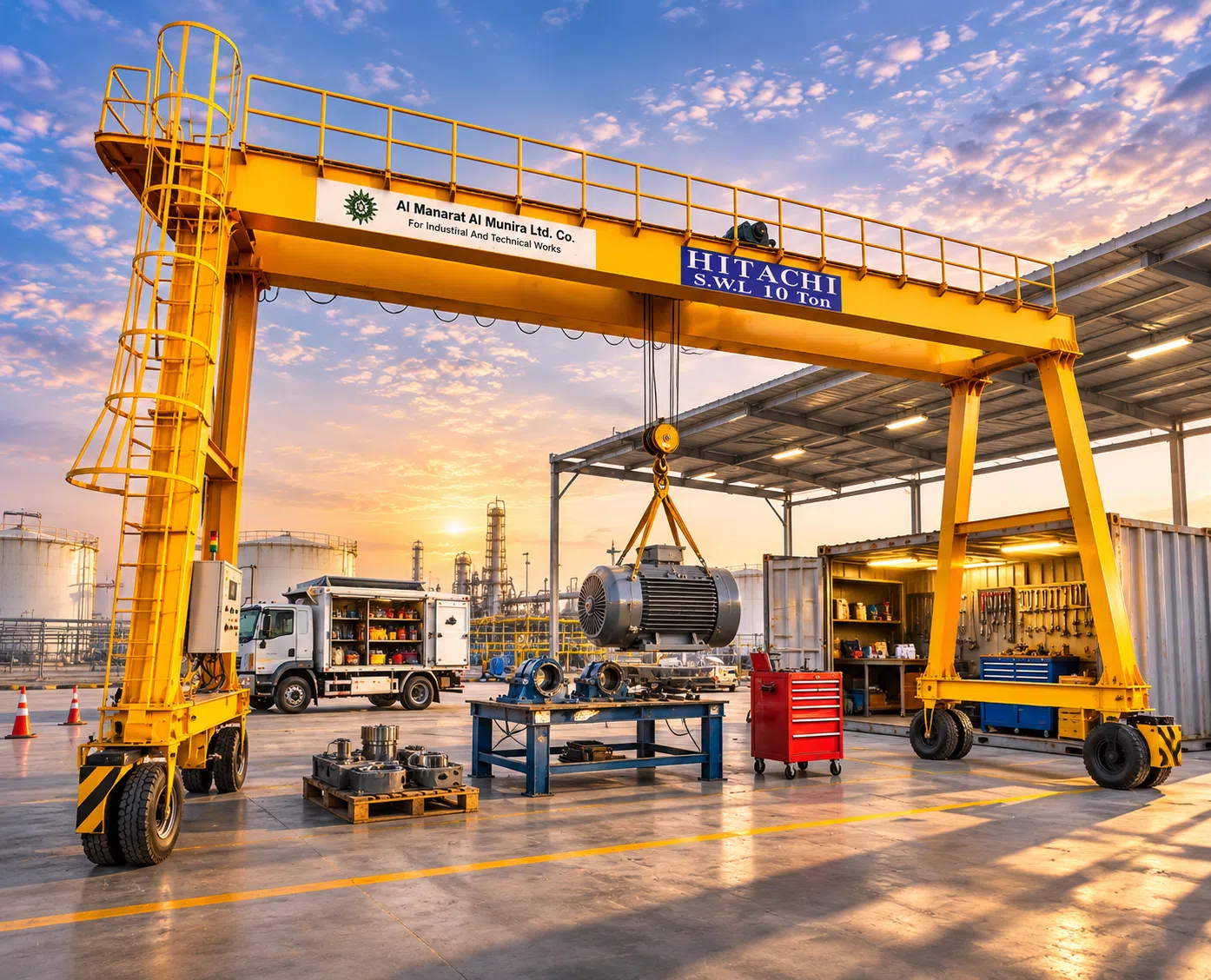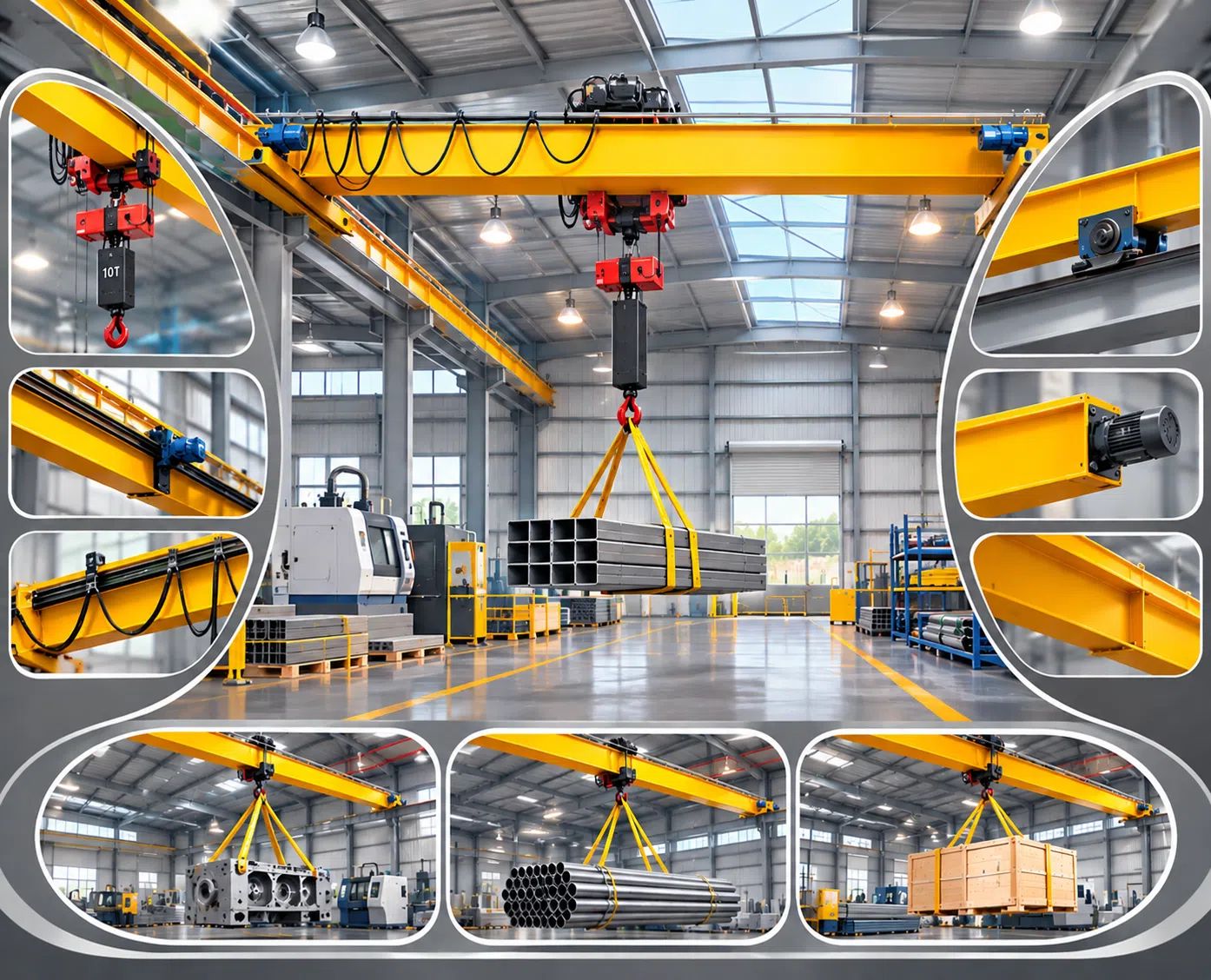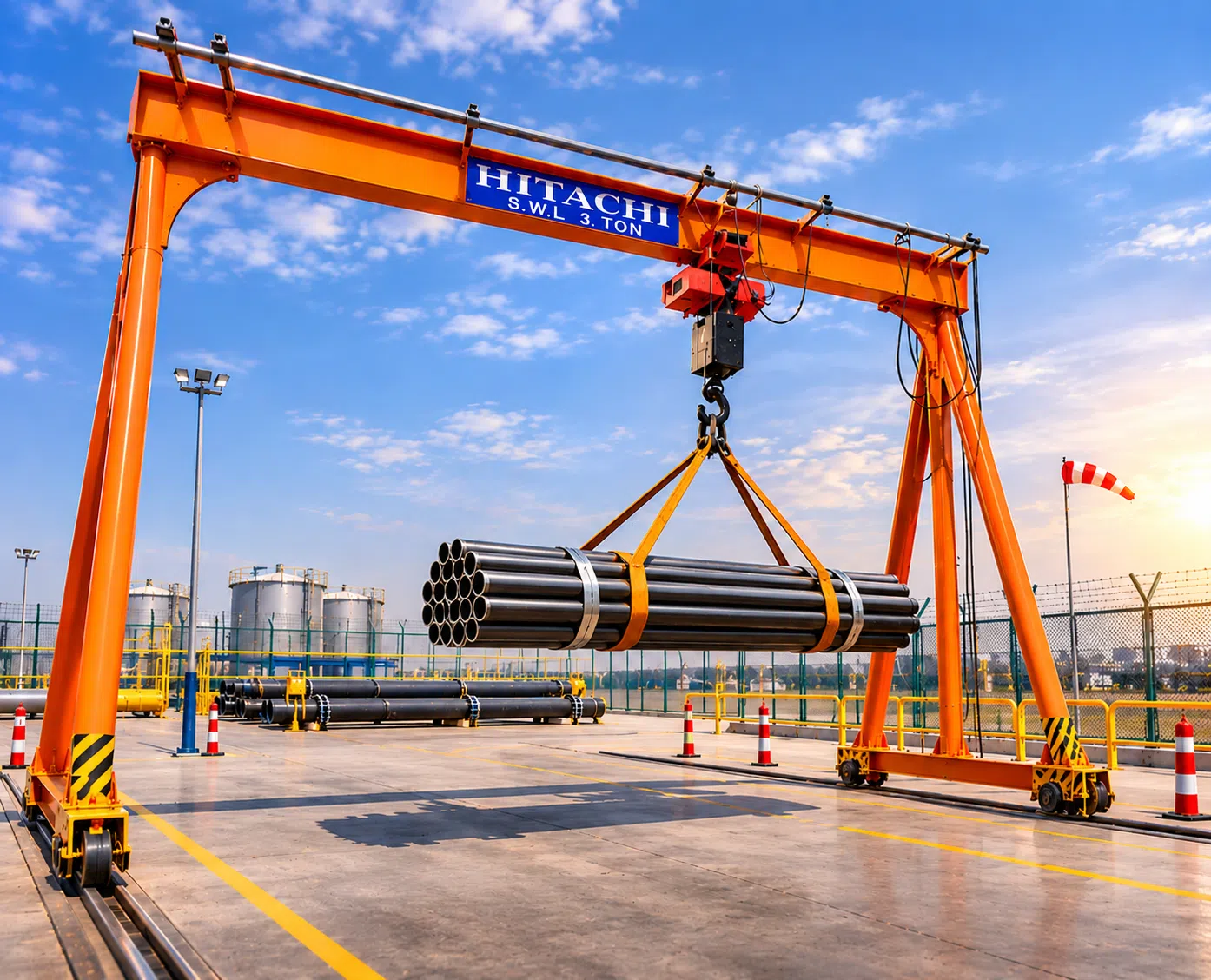

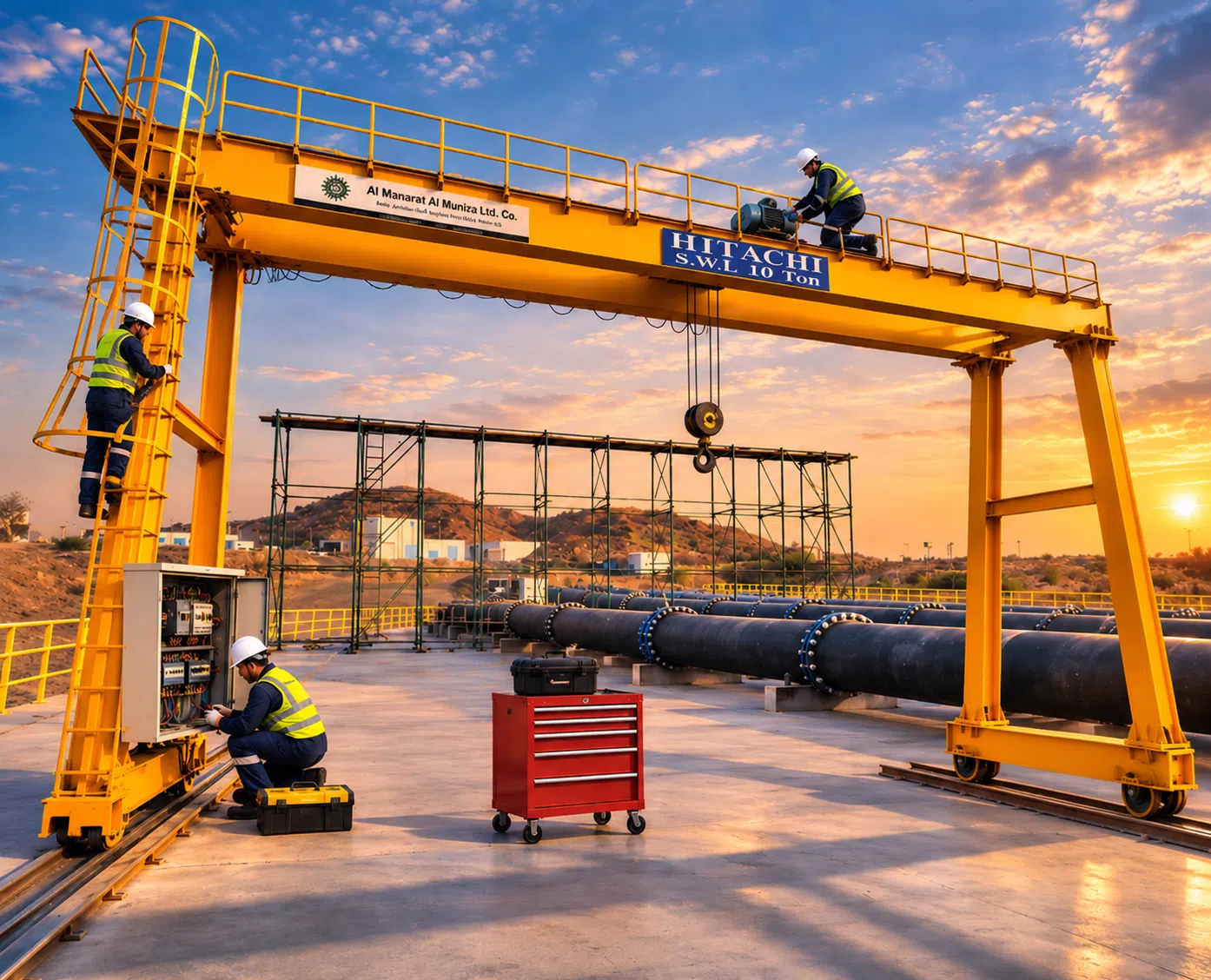
Gantry Crane Maintenance Steps to Preserve Efficiency in Outdoor Operations
Open environments and uncovered storage yards place harsh operating pressures on lifting equipment. Fluctuating temperatures, accumulated dust and humidity combine into a silent threat that wears down gears, electric motors and steel ropes over time, without operators noticing at first. Neglecting the gantry crane maintenance schedule in outdoor yards does not only cause sudden breakdowns that paralyze shipping and the unloading of raw materials. It leads directly to catastrophic risks to the safety of technical staff on the ground, and costs the facility emergency repair expenses far above the cost of regular preventive inspection.
How Do You Keep an Outdoor Gantry Crane Efficient?
The efficiency and durability of a gantry crane in outdoor yards is achieved by applying a three-tier preventive maintenance program that combines daily visual and operational checks before shifts begin, monthly axle lubrication and inspection of brakes and ropes, and a comprehensive technical inspection and load tests to approved engineering standards every six months or annually.
Strict adherence to this operating schedule delivers direct returns:
- Avoiding frictional wear of gears and track rails caused by accumulated dust and fine sand.
- Ensuring immediate response of safety systems and storm brakes when sudden winds blow.
- Doubling the service life of the steel structure and electrical components and reducing unplanned downtime.
Quick Daily Maintenance Steps
These procedures take no more than 15 minutes, but they are the first line of defense against sudden mechanical accidents:
- Inspecting the ground rail track (Runway Rails): Remove any obstructions, stones or hard debris accumulated on the rails, to make sure the wheels do not deviate or the steel flanges break during travel.
- Visual inspection of the hoist ropes (Wire Ropes): Make sure the rope is seated properly in the hoist drum grooves and free of any sharp kinks, broken wires or dryness in the lubrication layer.
- Testing the emergency stop button (Emergency Stop): Press the emergency stop on the wireless control to confirm instant power cut-off to all of the crane's motors.
- Testing the limit switches (Limit Switches): Raise the hook gently to test the automatic cut-off before it reaches the hoisting drum, and repeat this with the long-travel and cross-travel movements.
Periodic Maintenance Protocol for Vital Mechanical Parts
Mechanical components are subject to continuous dynamic stresses, which calls for detailed inspection following specific engineering steps:
1. Adjusting and Testing the Braking Systems
The safety of outdoor lifting depends on the efficiency of the hydraulic and electromagnetic brakes. The thickness of the brake linings (Brake Pads) must be checked and the linings replaced as soon as they have worn by more than 40% of their original thickness, along with checking brake clearance and lubricating the mechanical linkages to ensure instant, tight closing when the motor is switched off.
2. Cleaning and Lubricating Gearboxes & Bearings
Open yards draw dust into the lubrication areas. Oil levels inside the travel and hoisting gearboxes must therefore be checked monthly, with magnetic inspection to confirm there are no metal particles in the oil, and the oil replaced according to approved recommendations for operation at high temperatures.
3. Reviewing Ground Wheels & Bogies
The steel wheels are exposed to huge pressures. Wheel straightness and flange (Flanges) alignment must be measured regularly, since wear on only one side of a wheel indicates a deviation or tilt in the ground track that calls for immediate readjustment to prevent wear of the rail head.
4. Inspecting the Steel Structure and Joints (Structural Inspection)
Wind and vibration stress the fixing points. The tightness of the high-tensile bolts (High-Tensile Bolts) at the leg and bridge joints should therefore be checked with a certified torque wrench, and critical weld lines visually inspected to confirm they are free of any hairline cracks caused by mechanical fatigue.
Comparative Analysis: Regular Preventive Maintenance vs. Emergency Corrective Maintenance
The points below set out the key direct operational differences between applying a periodic maintenance schedule and intervening only after a breakdown occurs:
- Total financial cost: Preventive maintenance saves large sums by replacing simple consumable parts such as oils and linings at low cost, whereas corrective maintenance forces the full replacement cost of gearboxes or burnt motors, which costs huge amounts.
- Work line downtime: Periodic maintenance allows inspection appointments to be scheduled outside shift times or on days off with no effect on shipping schedules, whereas a sudden breakdown strikes at the peak of operations and halts yard movement entirely for several days.
- Occupational safety level: Proactive inspections keep load sensors and emergency brakes ready and prevent accidents, whereas corrective maintenance opens the door to the risk of load collapse or mechanical parts falling onto equipment and workers.
- Market value and asset sustainability: Continuous maintenance keeps the crane in excellent operating condition and extends its life by decades, whereas ignoring maintenance leads to rapid deterioration of the mechanical structure and metal corrosion, wasting the equipment's investment value within a few years.
Protecting the Gantry Crane from External Climatic and Environmental Effects
Cranes that work in the open air require additional protective measures to counter harsh weather:
- Maintaining protective canopies and motor housings (Weatherproof Covers): Check the covers of the hoist motors and travel units to make sure they are sealed tight and that rainwater does not collect or sand leak into the electrical boxes.
- Fighting corrosion and renewing epoxy coating layers: Treat any scratches or rust spots that appear on the legs or bridge by sanding immediately and applying zinc-rich primer coats followed by UV-resistant polyurethane paint, to stop rust spreading inside the metal.
- Testing rail clamps and wind brakes (Storm Brakes): Inspect the clamps' hydraulic circuits and confirm they grip the sides of the steel rails firmly as soon as the wind speed meter issues the automatic anchoring command, to protect the crane from sliding.
- Inspecting cable reels and electrical feed systems: Clean the ground cable channels and check the condition of the flexible trailing cable (Trailing Cable) to make sure there are no cracks in the outer insulation caused by intense sun heat.
How Does Al Manarat Al Monerah Support You in Maintaining and Upgrading Gantry Cranes?
Al Manarat Al Monerah (almanratalmonerah.com) puts in your hands an integrated technical support system led by engineers and technicians specialized in heavy lifting equipment in the Kingdom and the Middle East:
- Custom Preventive Maintenance Contracts: Flexible maintenance programs matched to your facility's operating hours, covering monthly and semi-annual inspections to ensure your equipment works at maximum efficiency.
- Precision alignment of ground tracks with the latest laser instruments: We check rail levelness and set rail parallelism to avoid friction and wear on the crane wheels and ensure smooth, quiet travel.
- Immediate supply of genuine certified spare parts: Local warehouses equipped with gear sets, steel wire ropes, brake linings and variable frequency drives cut waiting times to zero.
- Upgrading and modernizing existing cranes (Retrofitting): We upgrade old control systems to variable frequency drive (VFD) technology and install modern digital load sensors and protection, to raise the crane's efficiency and bring it into line with safety and civil defense requirements.
- Load testing and issuing calibration certificates: We carry out static and dynamic load tests and provide official engineering inspection reports that prove the hoist's operational readiness.
You can visit the Al Manarat Al Monerah website and request a field visit from the specialized maintenance team to assess the technical condition of the gantry cranes at your facility and draw up a preventive maintenance plan that protects your investments and supports the continuity of your business without stoppage.
Frequently Asked Questions About Gantry Crane Maintenance
How often should the steel hoist ropes on a gantry crane be inspected and replaced?
A daily visual inspection of the rope should be carried out, with its diameter measured precisely with a vernier caliper every month. The rope is replaced immediately if its diameter falls by more than 7% below the nominal diameter, or when breakage of a specified number of wires is detected in accordance with ISO 4309, or if any signs of kinking or deep rust appear.
How is the problem of a gantry crane deviating from its path on the rails handled?
Deviation is usually caused by a difference in motor speed between the two sides or by uneven rails. It is treated first by adjusting and calibrating the variable frequency drives (VFD) to ensure complete synchronization, then checking the straightness of the rails by laser and setting the distance between them (Span), to avoid the wheel flanges rubbing against the steel.
What type of grease is most suitable for the axles and wheels of cranes in outdoor yards?
Complex lithium greases that resist high heat and water, and contain molybdenum disulfide (MoS2) compounds to withstand extreme pressure (EP Greases), are recommended. These greases keep their viscous consistency and prevent wear even at temperatures above 150 degrees Celsius and during sandstorms.
Read also: Modern Gantry Crane Technology and Its Impact on Loading and Unloading Speed