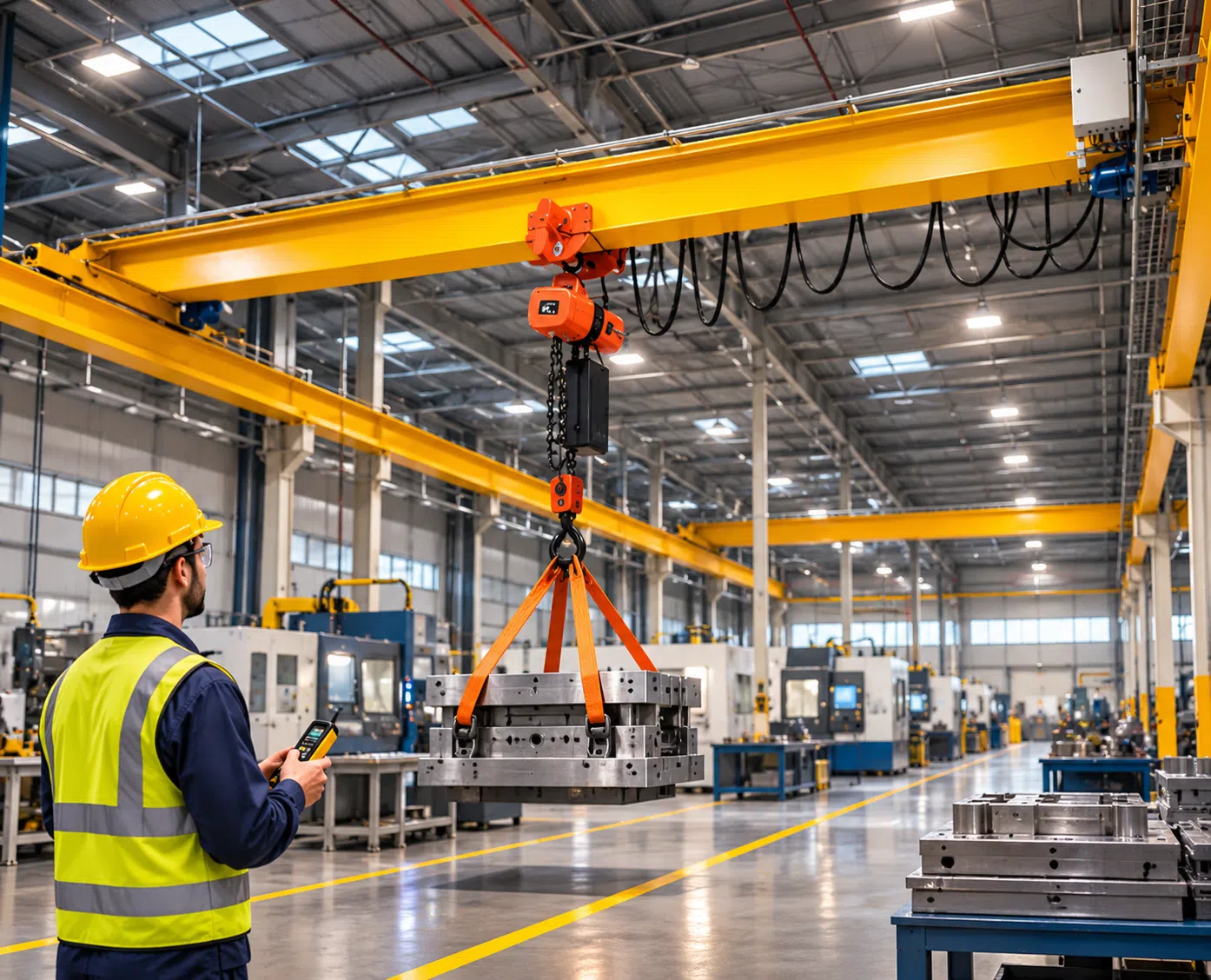

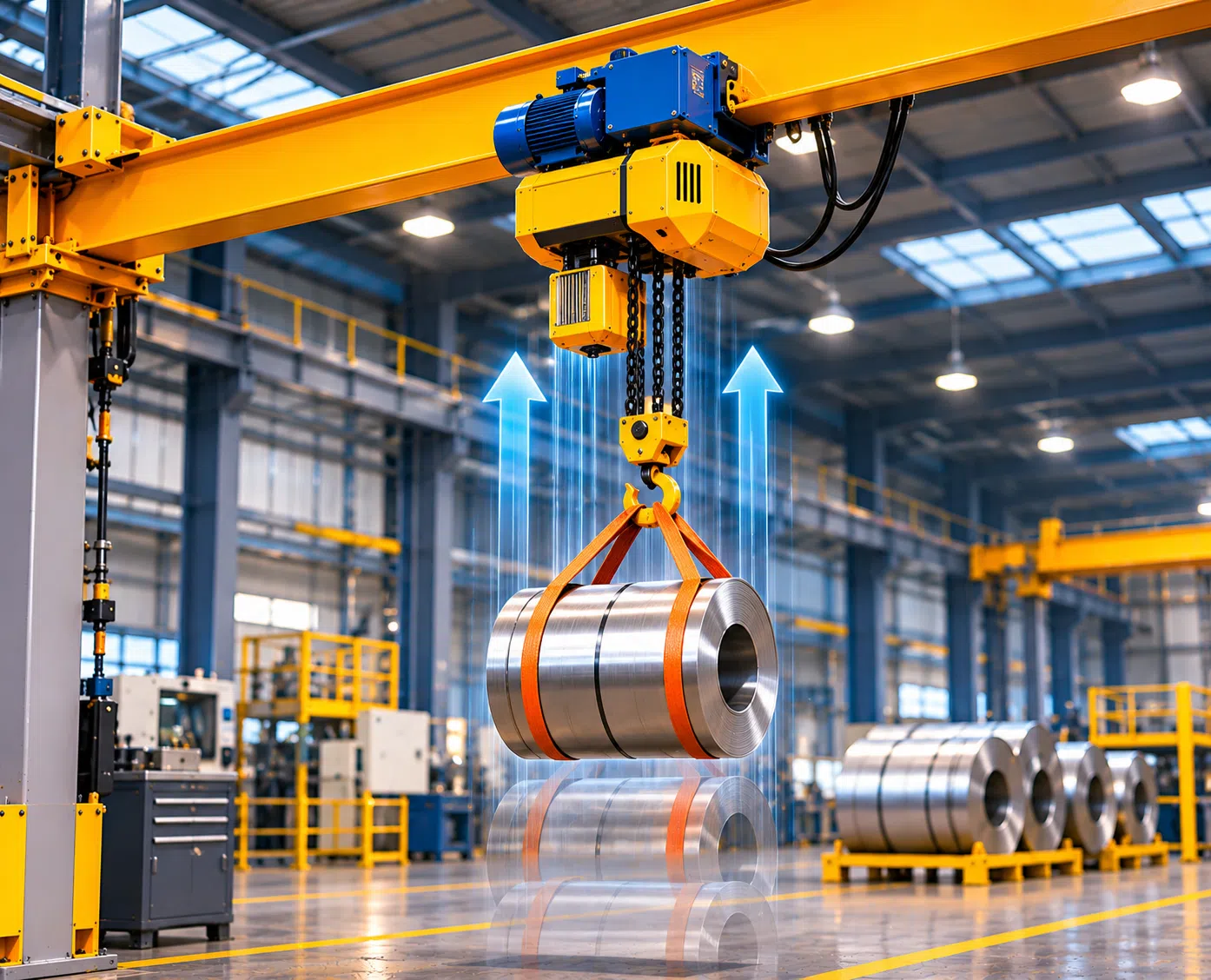
Advantages of an Electric Chain Hoist for Fast Vertical Lifting
The pace of work on modern production lines and rapid inspection stations demands a continuous flow of loads that cannot tolerate any slowness in ascent or hesitation in the vertical positioning of mechanical parts. Spending extra minutes lifting every part or metal crate onto assembly platforms is a cumulative waste that eats away valuable hours of the plant's daily capacity. The drive to shorten operating cycle time has pushed industrial facilities toward specialized lifting systems that combine agile movement with immediate response to the controls. Here the electric chain hoist leads the most efficient engineering options for fast vertical lifting, thanks to its advanced motor torque and its quiet mechanical construction, which provide the maximum safe and stable lifting speed for light and medium weights.
How Does an Electric Chain Hoist Achieve High Speed in Vertical Lifting?
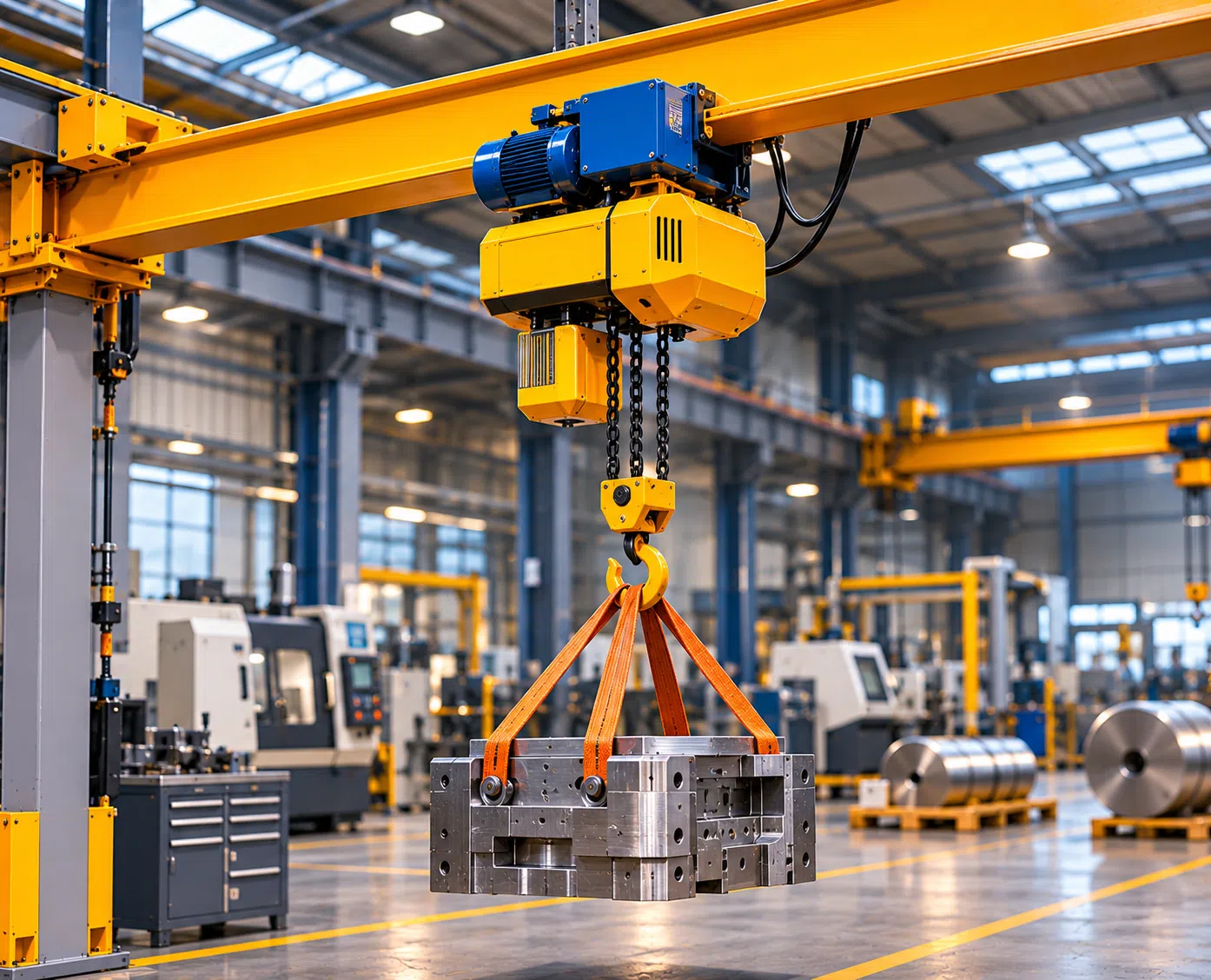
The electric chain hoist achieves a high vertical lifting speed through fast-responding high-torque motors, precision gearboxes with balanced reduction ratios, and a toothed pulling wheel (sprocket) that provides direct, controlled upward movement without any delay or horizontal deviation in the load angle.
This technology gives your facility direct productivity returns:
- Cutting the time to unload and load parts and raw materials by up to 40% compared with conventional hoists.
- Absolute vertical stability and a straight hook path that prevents any contact between parts and the jaws of forming machines.
- Reliable continuous operation over several shifts without motor overheating, thanks to improved self-cooling systems.
Operational Advantages of the Electric Chain Hoist in Fast Lifting Tasks
This class of hoists has several engineering characteristics that make it an indispensable tool for repetitive, high-intensity tasks:
1. A True Vertical Path Free of Deviation (True Vertical Lift)
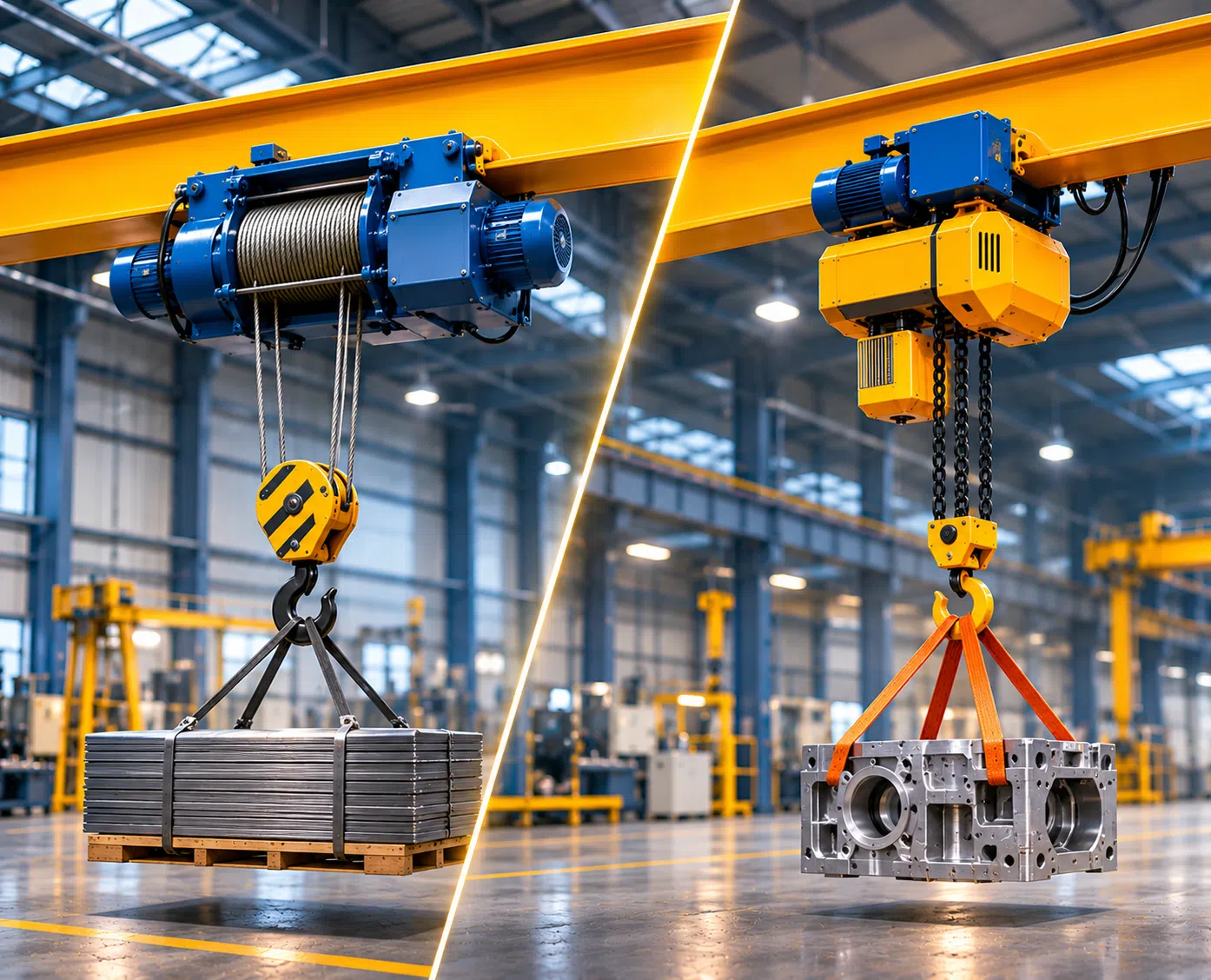
In ordinary wire rope hoists, the hook moves slightly to the right or left as the rope winds along the length of the hoist drum, which wastes time rebalancing the piece over the work station. In contrast, the chain links in a chain hoist flow straight down from a fixed central opening, ensuring a perfectly straight vertical movement at 90 degrees that lets loads be lowered extremely quickly into turning machines and injection molds without any manual adjustment.
2. Dual-Speed Motors and Inverter Technology (Dual Speed & Inverters)
Modern hoists combine two defined mechanical speeds: a very fast speed for moving loads vertically and covering long distances in seconds, and a slow micro creep speed that engages in the final moments before touching the work platform to keep the load stable without the slightest mechanical shock, which protects delicate assembly surfaces and prevents product edges from chipping.
3. Light Structural Weight and Instant Maneuvering on the Tracks (Agile Mobility)
Thanks to its compact mass and a design that integrates the motor and gearbox in a single aluminum alloy housing, the hoist has very low inertia. This lets the hoist start and stop instantly without generating vibration or sway forces on single monorail beams or slewing jib arms, which raises the number of lifting cycles per hour.
4. Chain Wear Resistance in Harsh Work Environments
The chain links are treated with special surface hardening through carburizing and a nickel or oxidation-resistant zinc plating. This construction prevents grease and impurities from building up and resists the thermal friction produced by rapid up and down cycles, which keeps the links straight and their geometric dimensions stable for long periods.
Comparative Analysis: A Fast Electric Chain Hoist Versus Manual and Wire Rope Hoists
The technical comparison between handling systems reveals the fundamental reasons for the chain hoist's superiority in fast work environments:
- Vertical lifting and lowering cycle time: Manual hoists consume a great deal of time and human effort, whereas the electric chain hoist covers the same vertical distance in a fraction of a minute at the push of a button, multiplying productivity tenfold without tiring workers.
- Engineering path of the hook movement: Fast lifting requires stability that eliminates sway. The chain hoist provides a fixed axial vertical path, whereas wire rope hoists require special and complex designs (with double drums) to achieve the same central straightness, which increases their size and initial cost.
- Size and available vertical clearance: The chain hoist has a compact design that makes full use of the space below low roofs and gives a clear hook height, whereas wire rope hoists need a wide installation envelope to accommodate the rope drum, which limits the available lifting distance in small workshops.
- Upkeep and consumable replacement costs: Wear on a steel rope requires replacing complete sheaves and rope guides, whereas a lifting chain is easy to inspect and its damaged links, or the whole chain, can be replaced very quickly and at very low cost.
Where Does Fast Vertical Lifting with a Chain Hoist Matter in Factories?
This equipment efficiently serves operations with a rapid pace on production lines:
Filling Stations and Pallet Unloading in Warehouses
Fast chain hoists are used to move drums, raw material crates and product bundles and place them on shipping platforms or into automatic packaging lines, which prevents goods from piling up at the ends of production lines.
Engine and Auto Parts Assembly Lines
The system lets technicians pick up engine heads and turbochargers and guide them quickly and smoothly onto the engine mounts on the assembly line, and ensures an immediate stop at millimeter-precision fastening points without any swinging.
Painting Shops and Chemical Surface Treatment
Dipping metals in galvanizing or phosphating baths requires lifting parts out and lowering them in periods timed to the second to ensure uniform chemical treatment. The chain hoist provides precise timing response that supports consistent surface treatment specifications.
Maintenance of Forming Machines and Die Changes
The hoist helps remove injection molds and mechanical knives and lift in and fix the replacements within minutes, which shortens the technical downtime of expensive machines and increases actual operating hours.
Smart Safety Systems in Fast Electric Chain Hoists
Safety cannot be sacrificed for speed, so modern hoists are fitted with a set of advanced preventive safety devices:
- Dual-Disk Magnetic Brakes: Instant brakes that engage mechanically within a fraction of a second as soon as the operating button is released or when power is suddenly lost, holding the load in the air with zero slip.
- Friction Clutch against overload: A protection system that slips by itself as soon as an attempt is made to lift an object above the equipment's specified maximum capacity, protecting the motor, gears and chain from breaking or severe stress.
- Upper & Lower Limit Switches: Sensitive cut-outs that automatically cut the current before the hook hits the hoist body on the way up, and that prevent the last end of the chain from running out at maximum lowering.
- Heavy-Duty Chain Collector: A durable plastic or fabric container that collects the rising chain links and prevents them from tangling or hanging in the operator's path during fast work.
How Does Al Manarat Al Monerah Provide an Electric Chain Hoist That Suits Your Lines?
Al Manarat Al Monerah (almanratalmonerah.com) puts at your disposal wide engineering experience in selecting, supplying and installing high-performance industrial lifting equipment in the Kingdom and the Middle East:
- Precise determination of speed specifications and lifting capacity: The company's engineers analyze the pace of work in your facility to determine the right lifting capacity (from 250 kg up to 5 tons) and the most suitable motor speeds to achieve the highest productivity at the lowest operating cost.
- Supply of products compliant with international specifications (FEM/ISO): Providing electric chain hoists fitted with high thermal insulation motors and smart frequency inverters that deliver quiet, smooth movement free of annoying vibration.
- Preparing and integrating travel tracks: Installing hoists on wall-mounted or freestanding jib arms, or integrating them on suspended steel monorail beam tracks with insulated electrical supply lines prepared.
- Genuine spare parts readiness and immediate technical support: Local warehouses well stocked with solid steel chains, collector bags, brake linings and wireless control switches for a rapid response that protects your lines from sudden breakdown.
- Calibration services and approved safety tests: Field load checks and approved operational safety test certificates for submission to civil defense and industrial regulatory bodies.
You can visit the Al Manarat Al Monerah website and contact its specialist engineers for a full survey and technical consultation that ensures your factory is equipped with the best fast lifting solutions, raising the efficiency of your production lines and protecting your workforce.
Frequently Asked Questions About the Electric Chain Hoist in Fast Lifting
What is the maximum lifting speed an electric chain hoist provides in daily operations?
Standard lifting speeds in this class typically range from 4 to 12 meters per minute for light and medium weights, and advanced models fitted with smart frequency inverters can automatically double the speed when the hook is empty to shorten the time it takes the hook to return to its starting point.
Does fast lifting affect the service life of the chain links?
Fast lifting does not harm the chain as long as the chain is lubricated at the recommended intervals with oils designed for extreme pressure (EP chain lubricants). These oils absorb friction and prevent the links from overheating as they pass quickly over the sprocket.
How is an electric chain hoist controlled during fast work?
Control is either by a one-handed wired pendant with variable-speed push buttons built in (pendant control), or through encrypted digital wireless controllers (radio remotes), which give the operator freedom of movement and let them follow the speed of the load's arrival with precision and complete safety.
Read also: Electric Wire Rope Hoist vs. Chain Hoist: Which Should You Choose?