
Electric Wire Rope Hoist vs. Chain Hoist: Which Should You Choose?
Factory managements and mechanical manufacturing shops reach a pivotal point when equipping production lines with vertical lifting equipment. The technical discussion between maintenance engineers and purchasing officers centers on choosing between two mechanisms that differ radically in how they pull and distribute loads: braided steel wire rope or a reinforced metal chain. Choosing an electric wire rope hoist or going for an electric chain hoist is not a matter of personal preference for a type of equipment. It is an engineering and investment decision governed by the capacity of the loads handled, the net lifting heights, and the nature of the daily duty cycles, which impose specific safety and reliability requirements to keep industrial operations stable without unplanned downtime.
What Is an Electric Wire Rope Hoist?
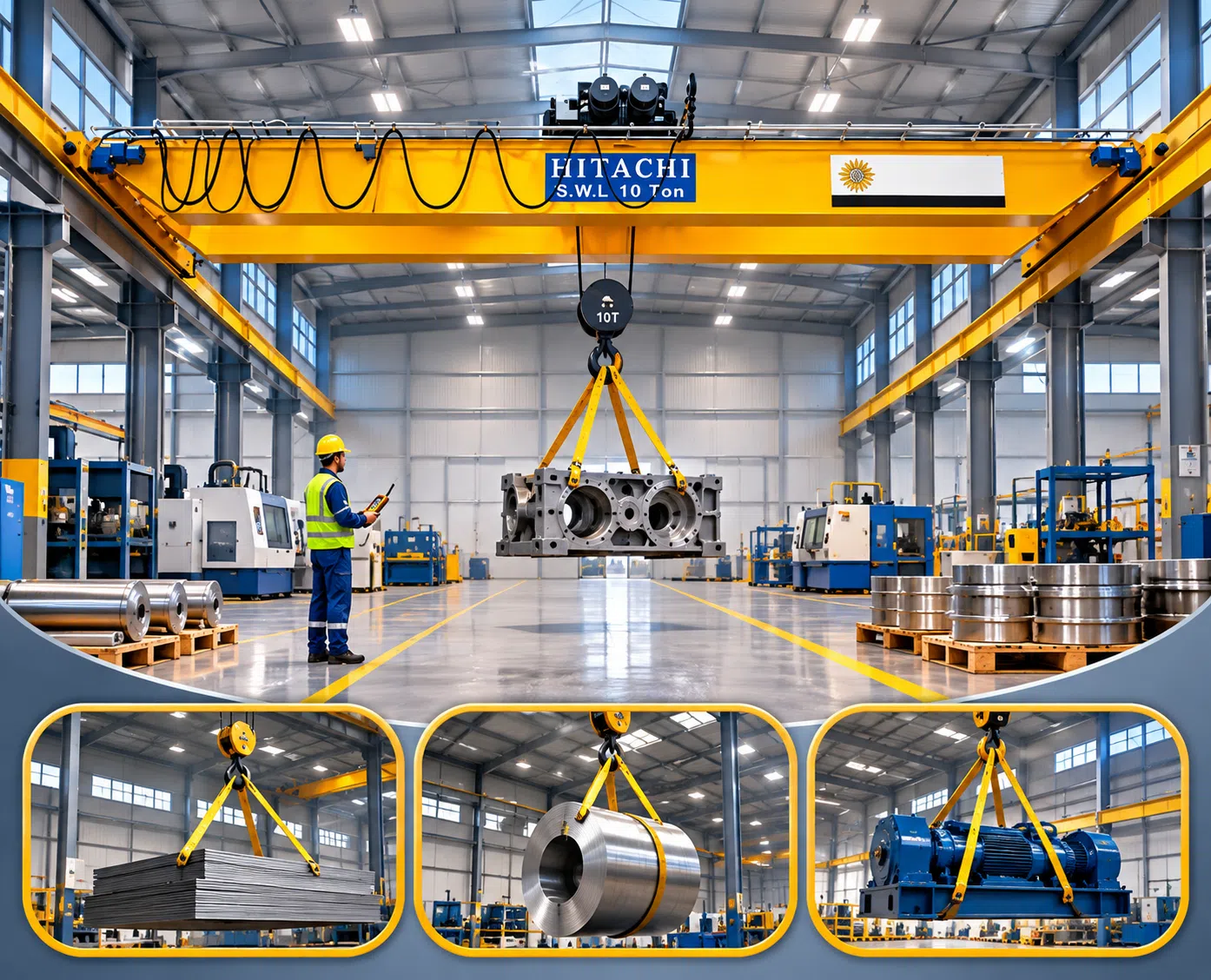
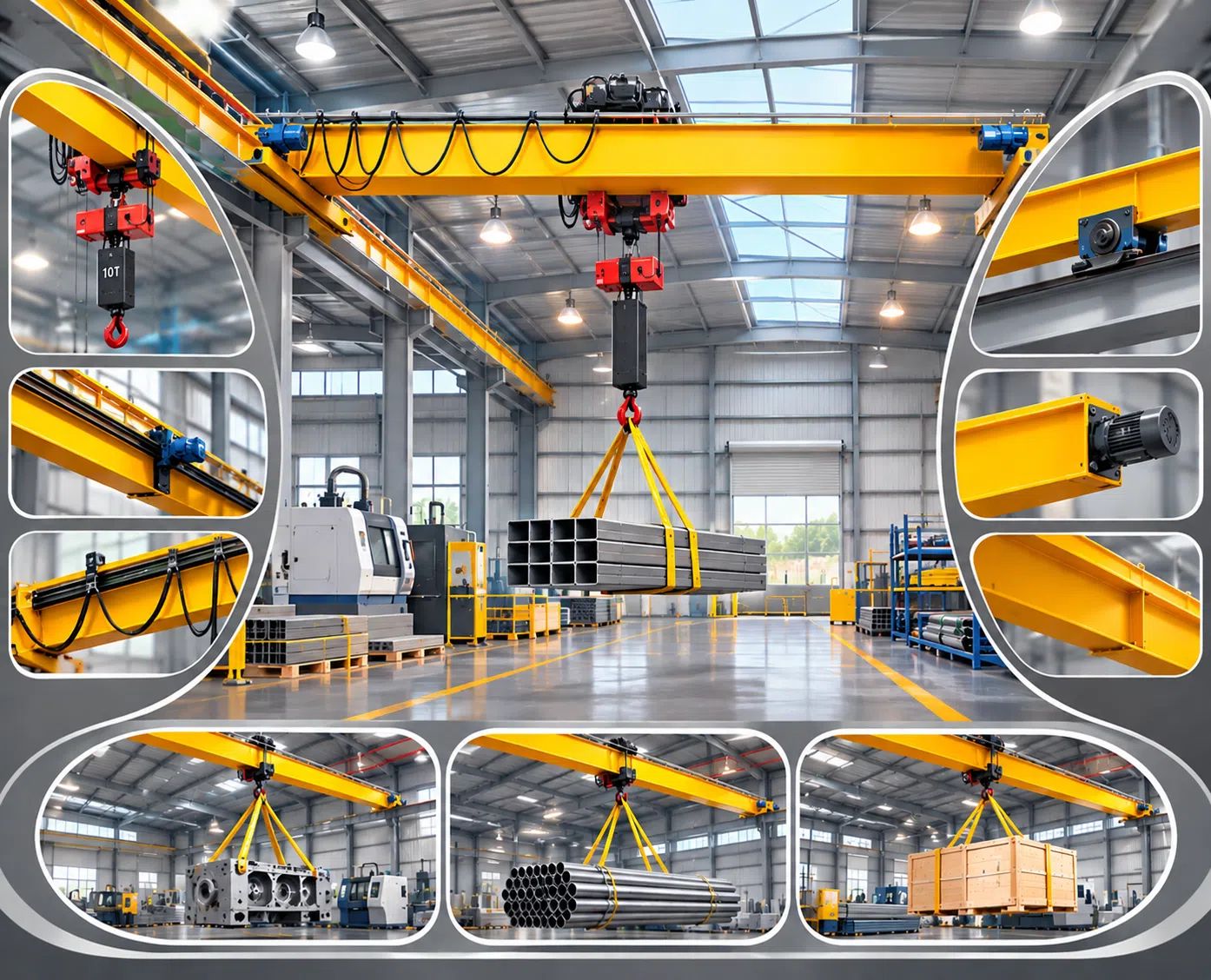
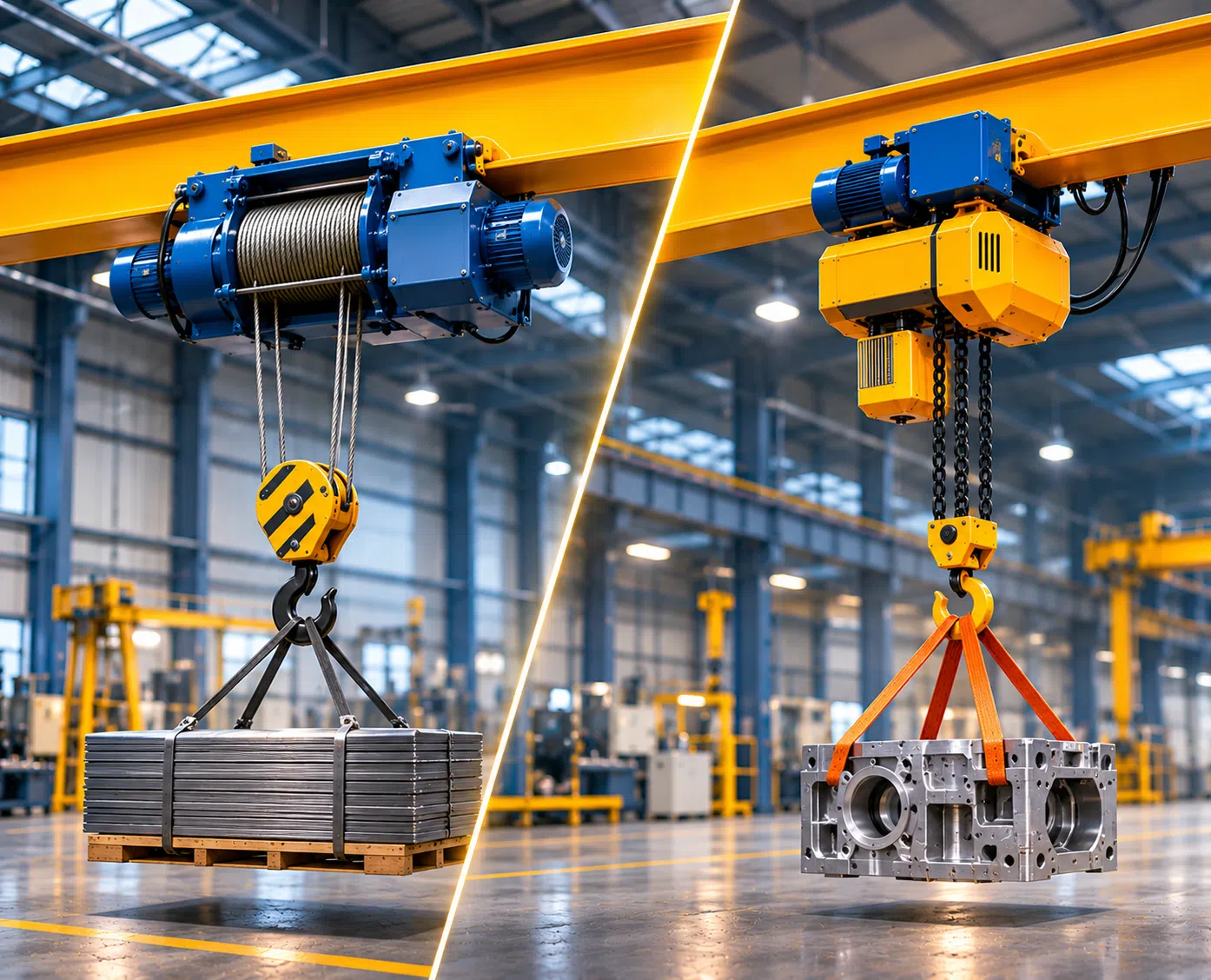
An electric wire rope hoist is a mechanical lifting system designed for heavy-duty work and for medium to very large loads. It relies on an electric motor driving a gearbox connected to a grooved drum around which a high-tensile multi-strand steel rope is wound, and the load moves up and down through a set of sheaves and a solid lifting hook.
This class serves major industrial work environments through immediate advantages:
- Lifting capacities starting from two tons and easily exceeding 100 to 200 tons in complete safety.
- High lifting heights and fast vertical handling speeds suited to warehouses and large production stations.
- Exceptional mechanical durability to resist the stresses of continuous heavy-duty service over several consecutive shifts.
The Mechanical Anatomy of an Electric Wire Rope Hoist
The superiority of the wire rope hoist lies in the engineering of its parts and the distribution of mechanical tensile forces:
1. Grooved Lifting Drum and Rope Guide (Drum & Rope Guide)
The drum is made of hardened steel with precise helical grooves machined into its surface to keep the steel rope stable as it winds. The rope guide acts as a smart mechanical ring that moves in parallel with the drum's rotation to hold the cable in its groove and prevent it from overlapping or jumping off its path, which prevents the rope from jamming and lets it pay out and wind in smoothly.
2. High-Tensile Steel Wire Rope (High-Tensile Wire Rope)
The wire rope is made of dozens of fine wires stranded around a central steel or synthetic fiber core. This construction gives the rope exceptional flexibility and an outstanding ability to absorb sudden mechanical shocks when starting to lift weights without breaking, in addition to its resistance to external abrasion thanks to heat treatments and galvanized layers.
3. Hook Sheave Blocks and Force Multiplication (Sheave Blocks)
The hoist passes the rope through multiple sheaves (2/1, 4/1 or 4/2 reeving systems). This arrangement multiplies the mechanical lifting force and reduces the load placed on the motor, while ensuring ideal hook balance during raising and lowering.
Comprehensive Comparative Analysis: Electric Wire Rope Hoist Versus Chain Hoist
To determine the most suitable engineering choice for your facility, the following points show the key direct operational differences between the two systems:
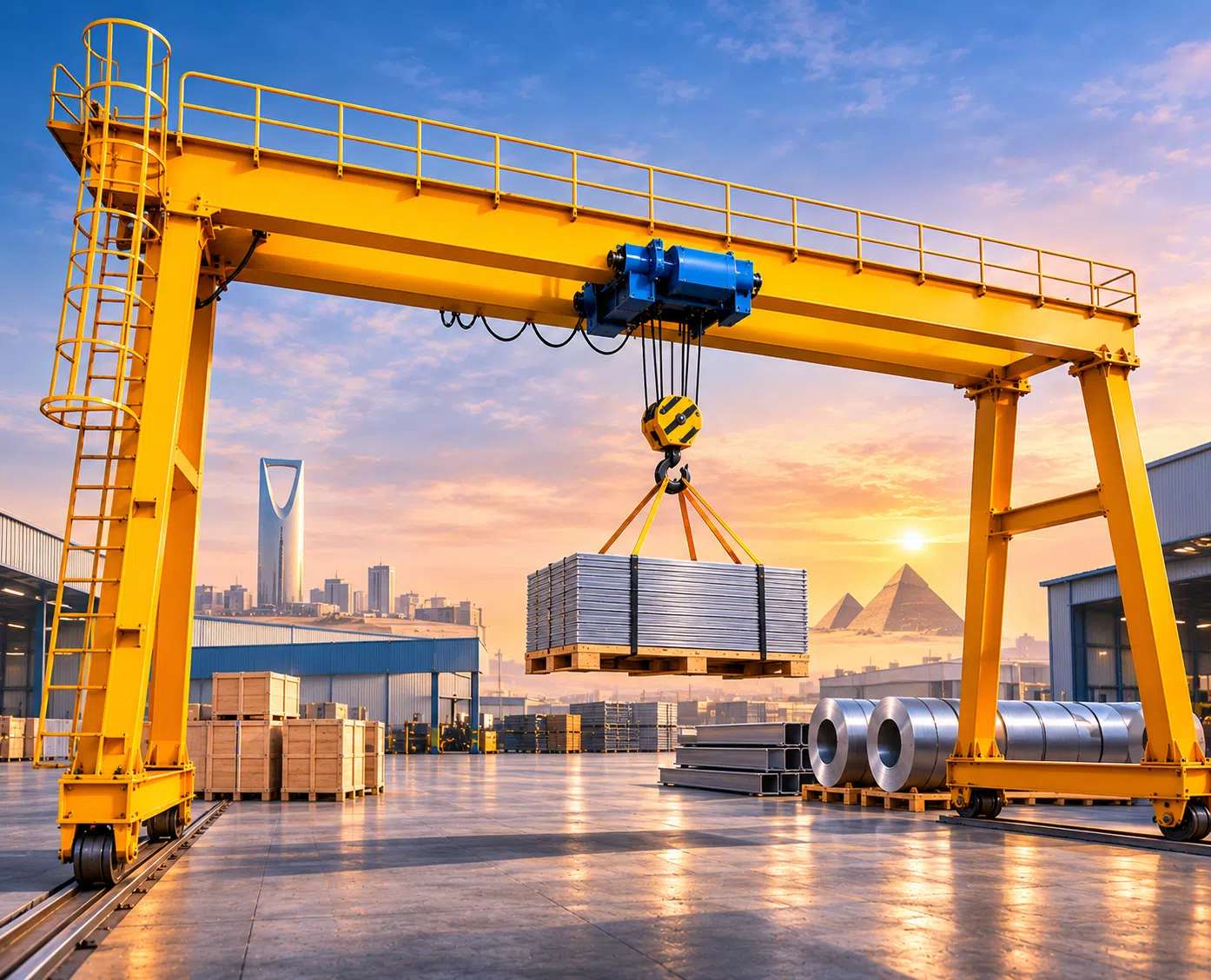
- Maximum lifting capacity and weights: Chain hoists excel in the light and medium load range from 250 kg up to 5 tons, whereas the real strength of the electric wire rope hoist starts at 3 to 5 tons and rises to serve weights above 100 tons, making it the standard choice for foundries, steel mills and power generation plants.
- Lifting heights and storage space: The wire rope hoist excels at large heights exceeding 15 or 30 meters and up to 60 meters, as the ropes wind smoothly around the drum and stay stored inside the hoist body, whereas a chain hoist forces a large, heavy chain container to hang below the hoist when working at towering heights, obstructing material movement in the workshop.
- Handling speeds and duty cycle classification: The wire rope hoist can achieve high lifting speeds thanks to the rotating drum design, and it is rated for heavy continuous work environments (FEM 2m/3m/4m or CMAA Class D/E) to run consecutive shifts without interruption, whereas chain hoists tend to run at quieter speeds and for intermittent or medium duty cycles.
- Engineering path of the hook movement (Hook Drift): The chain hoist provides a perfectly straight vertical lift, whereas the hook of a wire rope hoist may move horizontally by a few millimeters as the rope shifts between the drum grooves, unless a double grooved drum is used to secure a precisely centered lift.
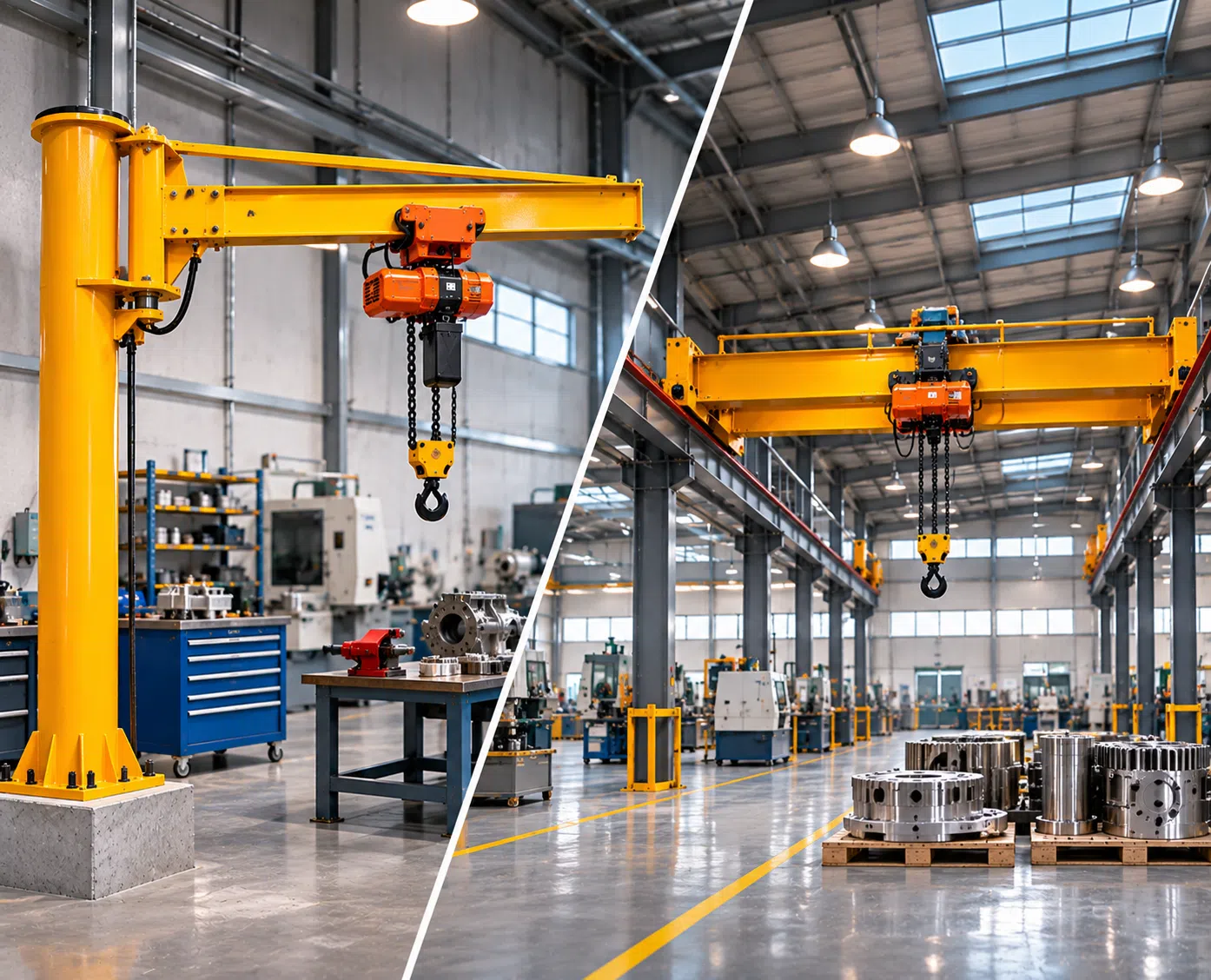
- Overall size and self-weight of the equipment: The chain hoist is compact and light, making it easy to transport and install on single girders and slewing jib cranes in confined spaces, whereas the wire rope hoist needs more size and weight to accommodate the rope drum, the motor and the parallel gearbox, which calls for sturdier runways and girders.
- Investment cost and upkeep expenses: The chain hoist comes with a low initial purchase cost suited to small workshops, whereas the wire rope hoist requires a higher initial investment. That investment, however, pays for itself quickly over the long term thanks to lower maintenance expenses and the long service life of steel ropes under continuous working pressure.
How Do You Choose the System That Best Suits Your Factory?
The operational decision can be settled by following clear guiding criteria based on the reality of your production lines:
When should you choose an electric wire rope hoist?
- If the usual weights in your hall regularly exceed 5 tons.
- When you need to lift goods to heights above 10 or 15 meters in tall warehouses and factories.
- If the duty cycle requires fast, continuous handling over more than two shifts a day.
- In steel mills, ready-mix concrete plants and heavy structural assembly bays.
When is an electric chain hoist the most suitable?
- For light and medium loads not exceeding 3 to 5 tons.
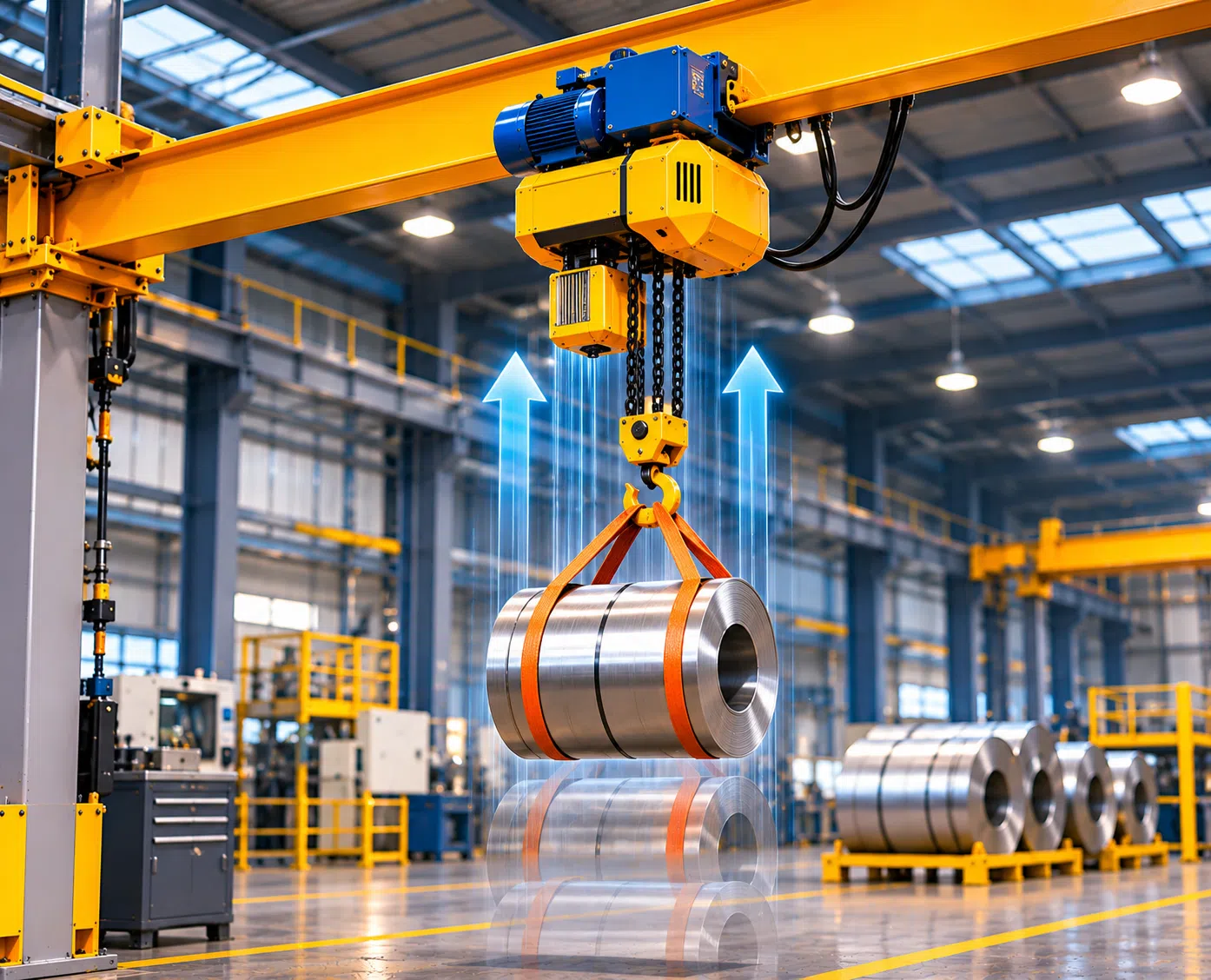
- Inside tight assembly stations, turning shops, and for feeding CNC machines.
- When very tight vertical clearance is needed below low roofs.
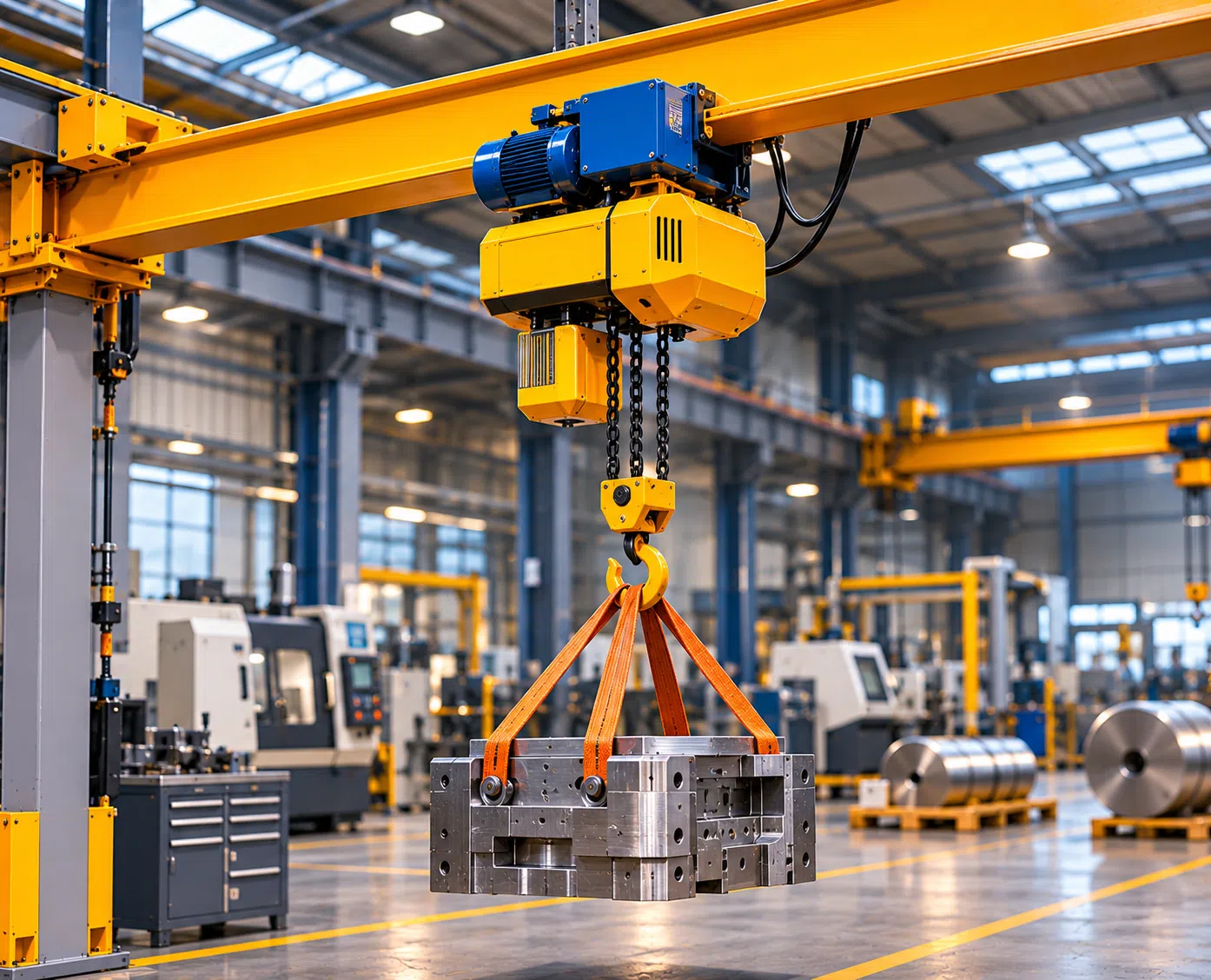
- In operations that require absolute millimeter accuracy in the vertical path for positioning sensitive molds.
Safety Systems in Modern Electric Wire Rope Hoists
Managing massive loads with steel ropes requires strict preventive safety provisions:
- Digital Overload Limiter: An electronic measuring chip that reads rope tension in real time and automatically cuts off hoisting when an attempt is made to lift a weight above the rated capacity, while giving warning signals.
- Rotary Limit Switches: Mechanical cut-outs that count the drum's revolutions and cut off the motor before the hook reaches the hoist drum at the top, and that prevent the rope from being fully paid out at the lowest point of descent, to ensure at least two wraps always remain on the drum for safety.
- Self-locking electromagnetic brakes: They apply an immediate mechanical brake on the motor shaft as soon as power is lost, to keep the load suspended without slipping.
- Smart frequency inverter system (Inverter / VFD): It prevents violent acceleration and provides smooth starts and stops that limit rebound in the steel rope and prevent the suspended load from swinging in the air.
How Does Al Manarat Al Monerah Support You in Choosing Your Electric Hoist?
Al Manarat Al Monerah (almanratalmonerah.com) has a prominent engineering presence in supplying and installing the latest lifting equipment in the Kingdom and the Middle East, providing integrated solutions that focus on the sustainability of your facility:
- Engineering survey and determining the most suitable specification: Studying material movement and load flow on site to determine whether the wire rope hoist or the chain hoist is the more technically and economically worthwhile choice for your work environment.
- Supply of certified products to global specifications (FEM/ISO): Providing electric wire rope hoists fitted with high thermal insulation motors and frequency speed inverters that ensure load stability and extend the life of gears and brakes.
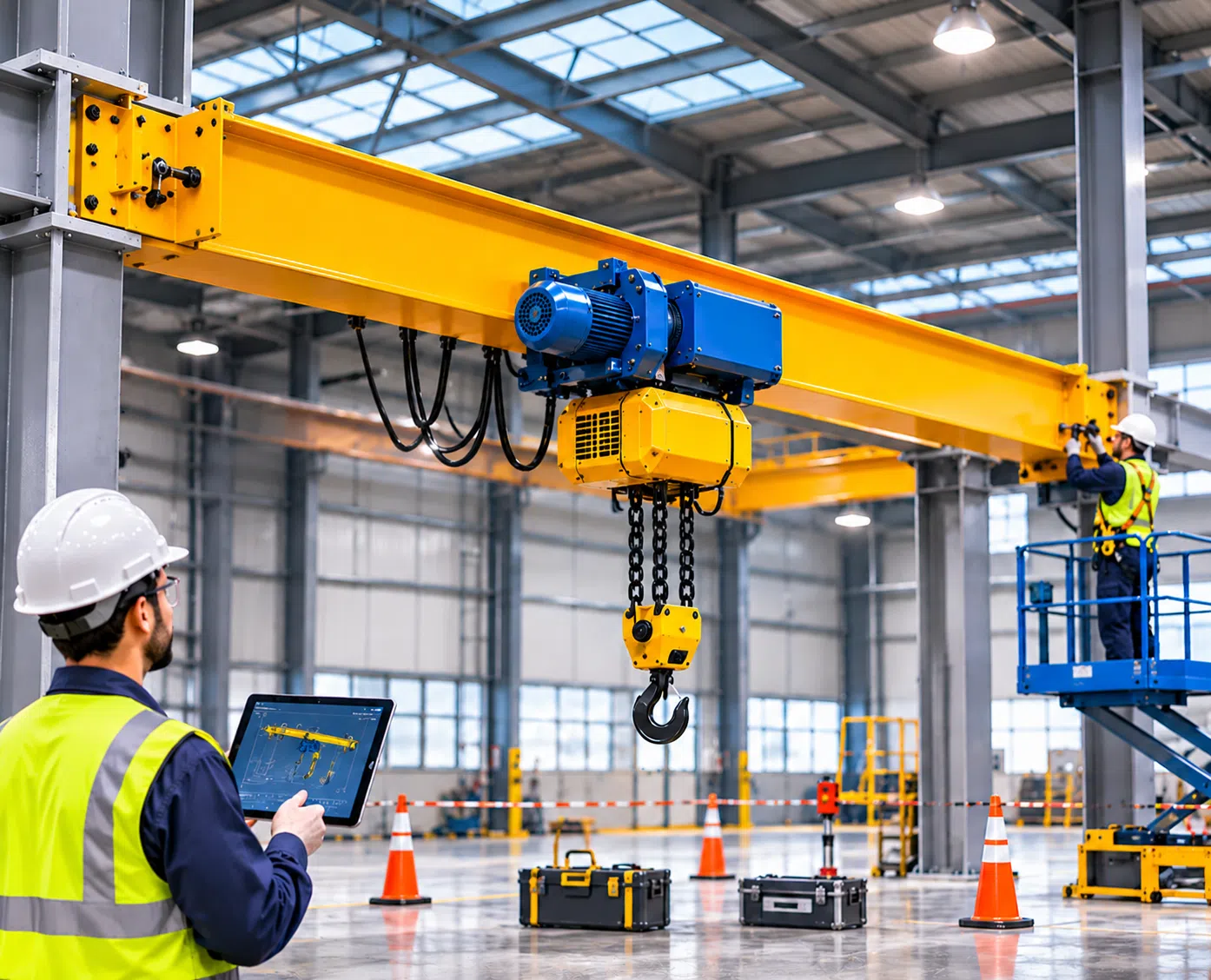
- Preparing and integrating travel tracks: Installing hoists on single and double overhead girders, or integrating them on electric travel trolleys with insulated and protected power supply lines.
- Genuine spare parts readiness and fast technical support: Providing solid wire ropes, rope guides, brake linings and control panels in local warehouses for a rapid response that protects your operations from sudden downtime.
- Load testing and issuing calibration certificates: Carrying out static and dynamic load tests, aligning the ropes, and providing approved inspection reports that ensure compliance with the requirements of civil defense and industrial safety bodies.
Al Manarat Al Monerah gives you the opportunity to request a prior technical consultation and a survey of your factory by contacting its experts directly, to obtain an electric wire rope hoist that meets your project requirements with the highest efficiency and lowest possible operating cost.
Frequently Asked Questions About Electric Wire Rope Hoists and Chain Hoists
What is the difference between a steel core and a fiber core wire rope in a wire rope hoist?
A steel core rope (IWRC) offers higher tensile strength and superior resistance to crushing and wear at high temperatures and under heavy loads, whereas a fiber core rope offers greater flexibility and better retention of lubricating oil but is not suited to hot environments or hoists with very large capacities.
Can an old chain hoist be replaced with an electric wire rope hoist on the same girder?
Yes, provided the load-bearing capacity of the steel girder and the runway beams is reviewed. The wire rope hoist has a greater self-weight and imposes different wheel loads on the supporting structure, which calls for a structural check before approving the replacement.
When should the steel rope in an electric wire rope hoist be replaced?
The rope must be replaced immediately under the ISO 4309 standard if its diameter has decreased by 7% or more from the nominal diameter, or when a specified number of surface wires in a single strand have broken, or as soon as any sharp kinks that cannot be straightened or signs of internal rust and corrosion appear.
Read also: What Are Electric Hoist Prices in the Egyptian and Saudi Markets?