
Benefits of Using Electric Chain Hoists in Daily Operations
The pace of production in industrial workshops and mechanical assembly stations depends on speed and accuracy in handling parts and equipment, without holding up labor or subjecting workers to constant physical strain. Handling forming dies, machine motors and repetitive metal parts is a daily logistical challenge that does not always call for giant, complex lifting systems that consume wide vertical space and demand heavy capital investment. In this vital operating range, the electric chain hoist (Electric Chain Hoist) proves its worth as one of the most efficient and flexible handling machines, providing a compact engineering solution that combines mechanical durability with smooth control of the precise vertical movements that are indispensable in daily industrial tasks.
What Is an Electric Chain Hoist?
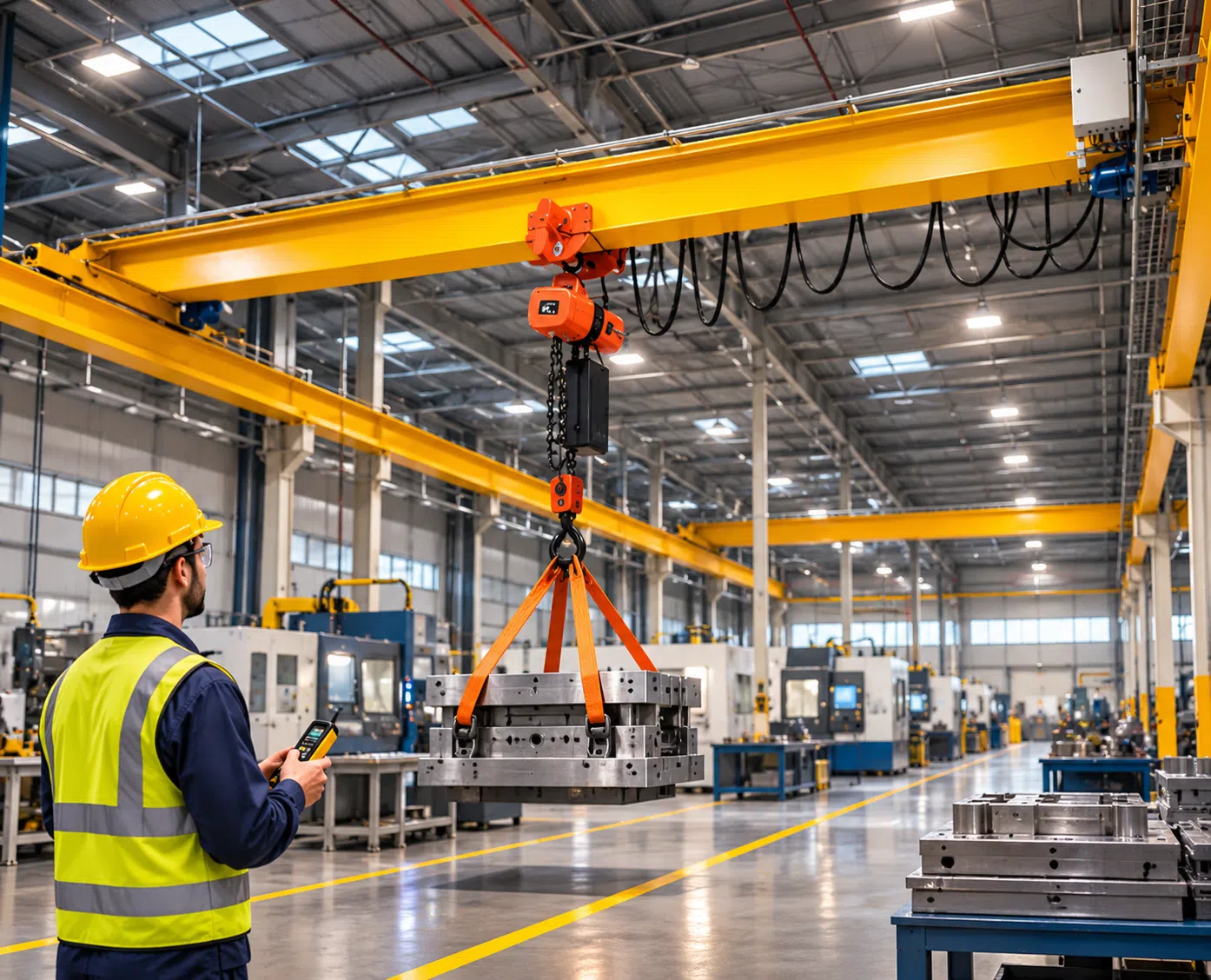
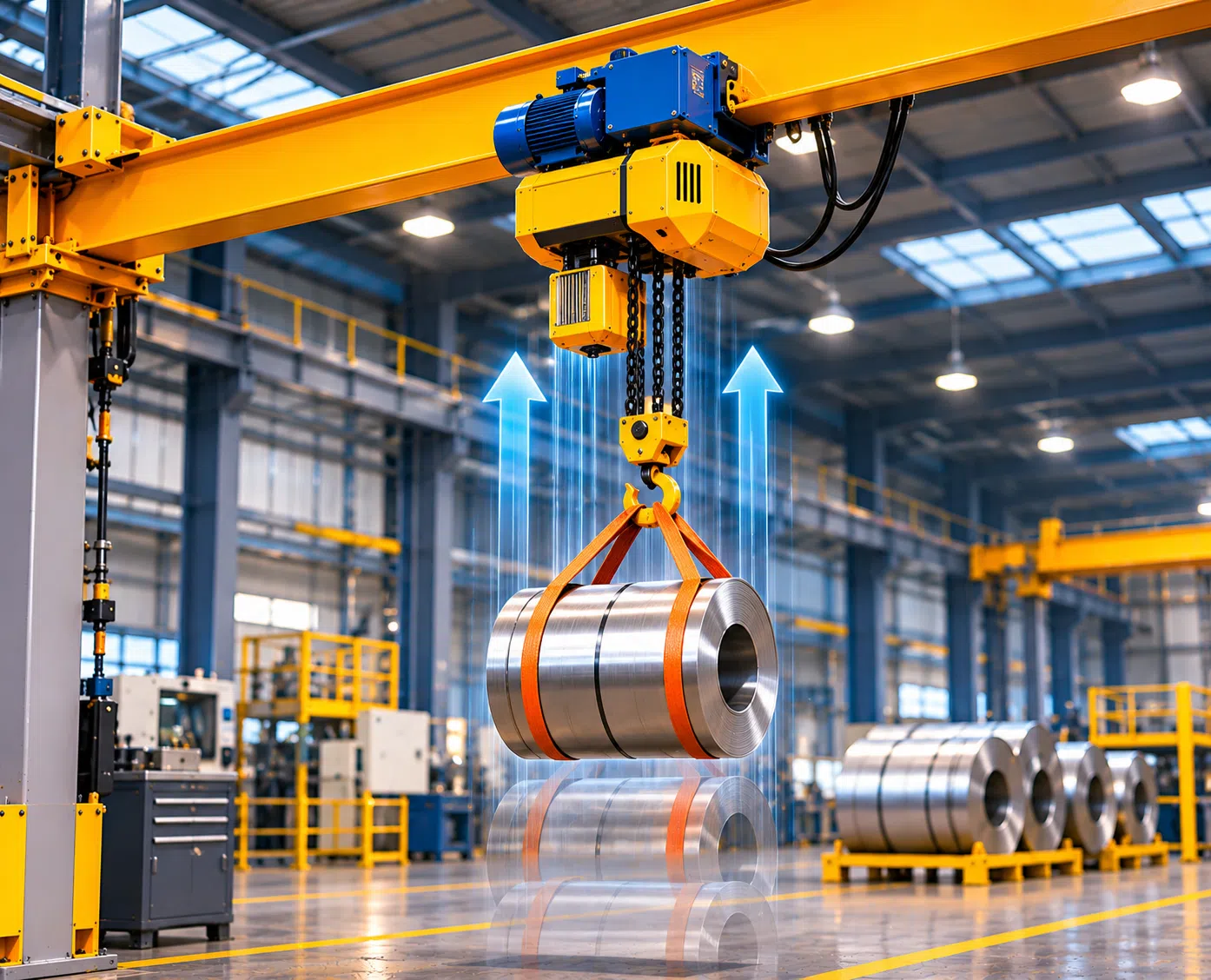
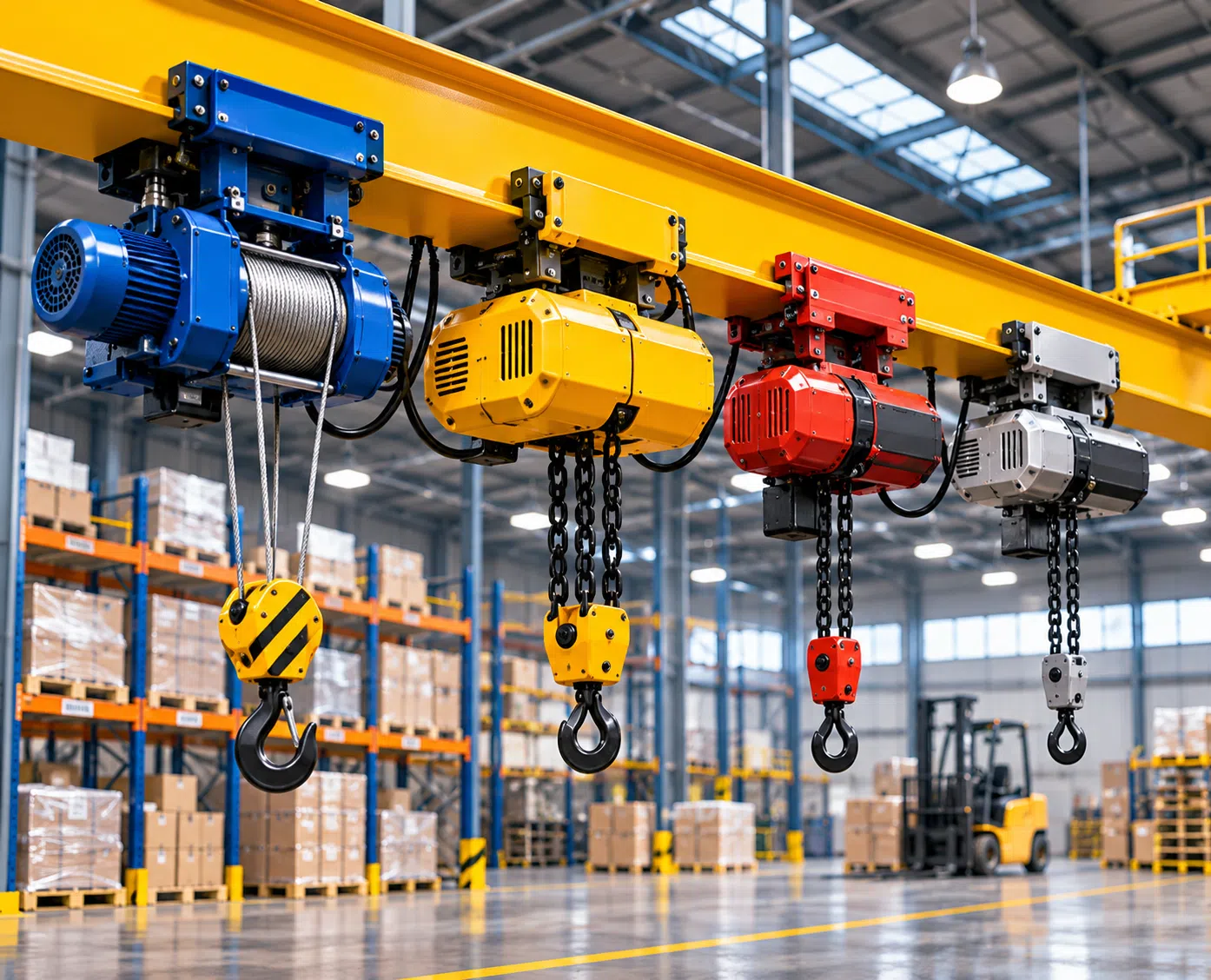
An electric chain hoist is a compact mechanical lifting device built around an electric motor connected to a speed-reducing gearbox and a toothed wheel (Load Sheave) that pulls and guides a rigid, heat-treated, hardened steel chain. It is used to lift, lower and move light and medium loads with great precision within work stations and workshops.
This system delivers immediate operating returns to facilities and factories:
- Millimetre-level control in positioning and holding mechanical parts inside machines without any lateral vibration.
- Very little vertical space consumed thanks to the compact design, compared with wire rope hoists.
- Easy dismantling, installation and relocation between different work lines at minimal effort and set-up cost.
The Main Benefits of Electric Chain Hoists in Daily Work Environments
Many advantages make electric chain hoists the first choice of workshop and warehouse managers:
1. Extremely Precise Lifting and Complete Vertical Stability (True Vertical Lift)
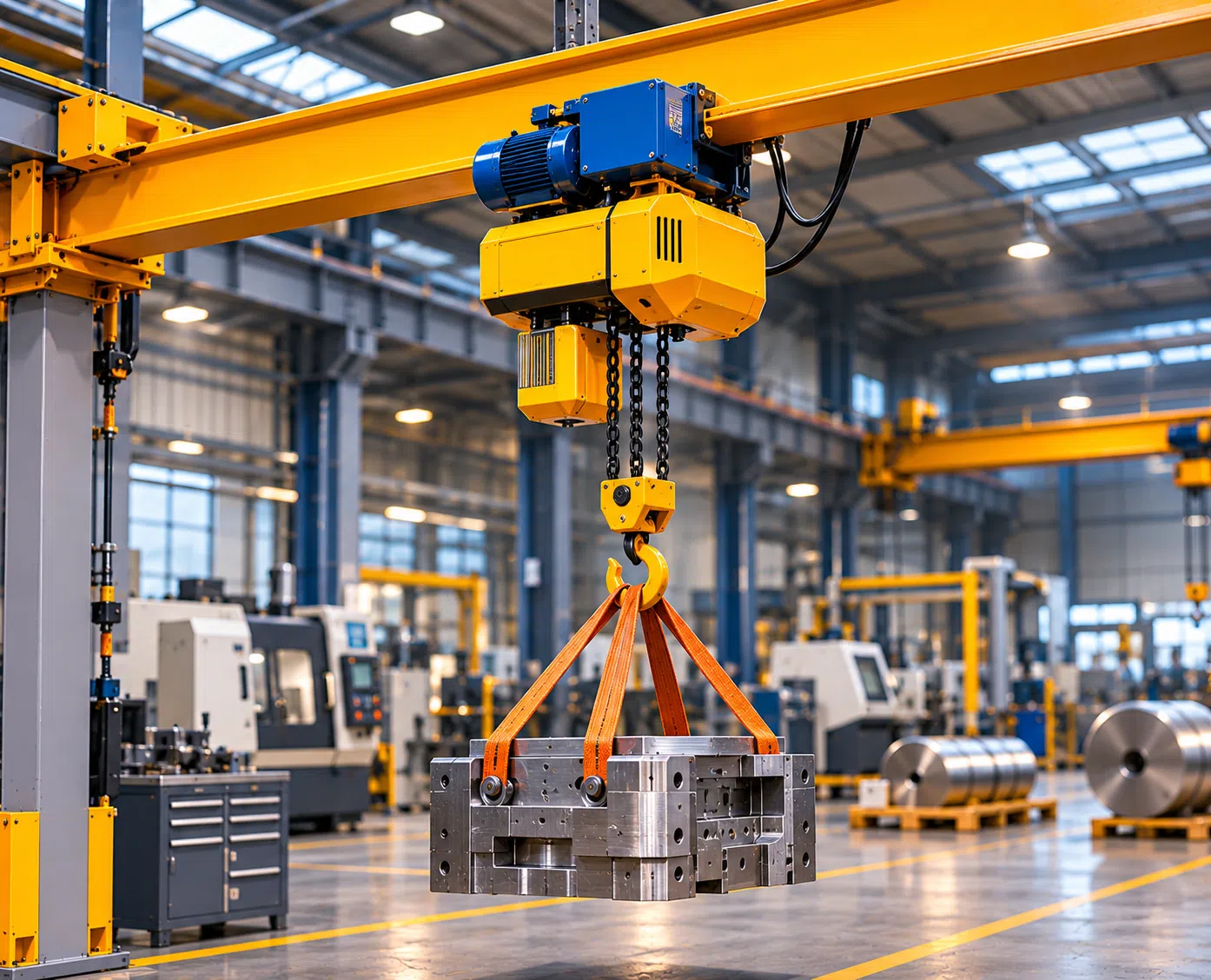
Unlike wire rope hoists, whose hook may move slightly sideways as the cable winds around the lifting drum, the steel chain moves through the toothed wheel on a perfectly straight vertical path. This characteristic gives the technician the ability to lower steel dies and mechanical shafts with extreme accuracy onto turning and CNC machines without scratching or damaging the machined surfaces.
2. Compact Design and Full Use of Low Headroom
The system is light in overall weight and compact in engineering dimensions, allowing it to be installed on monorails (Monorails) or jib cranes (Jib Cranes) in workshops with low ceilings, which provides the maximum possible clearance below the hook for assembly and packing operations to proceed freely.
3. Mechanical Durability and Excellent Resistance to Harsh Environments
The chain links are made from wear-resistant steel alloys coated with layers that resist rust and corrosion. The chain is not affected by the dust or airborne oils of workshop environments and does not suffer the complex kinking or crushing that sometimes happens in stranded wire ropes, giving it a long service life and stable performance.
4. Easy Inspection and Periodic Maintenance with Low Cost
Chain hoist maintenance is clear and straightforward. Technicians can visually inspect the chain links and measure their elongation and wear with a vernier caliper in a matter of minutes, and the whole chain or the chain bag (Chain Bag) can be replaced at low cost and very quickly without dismantling the main motor parts.
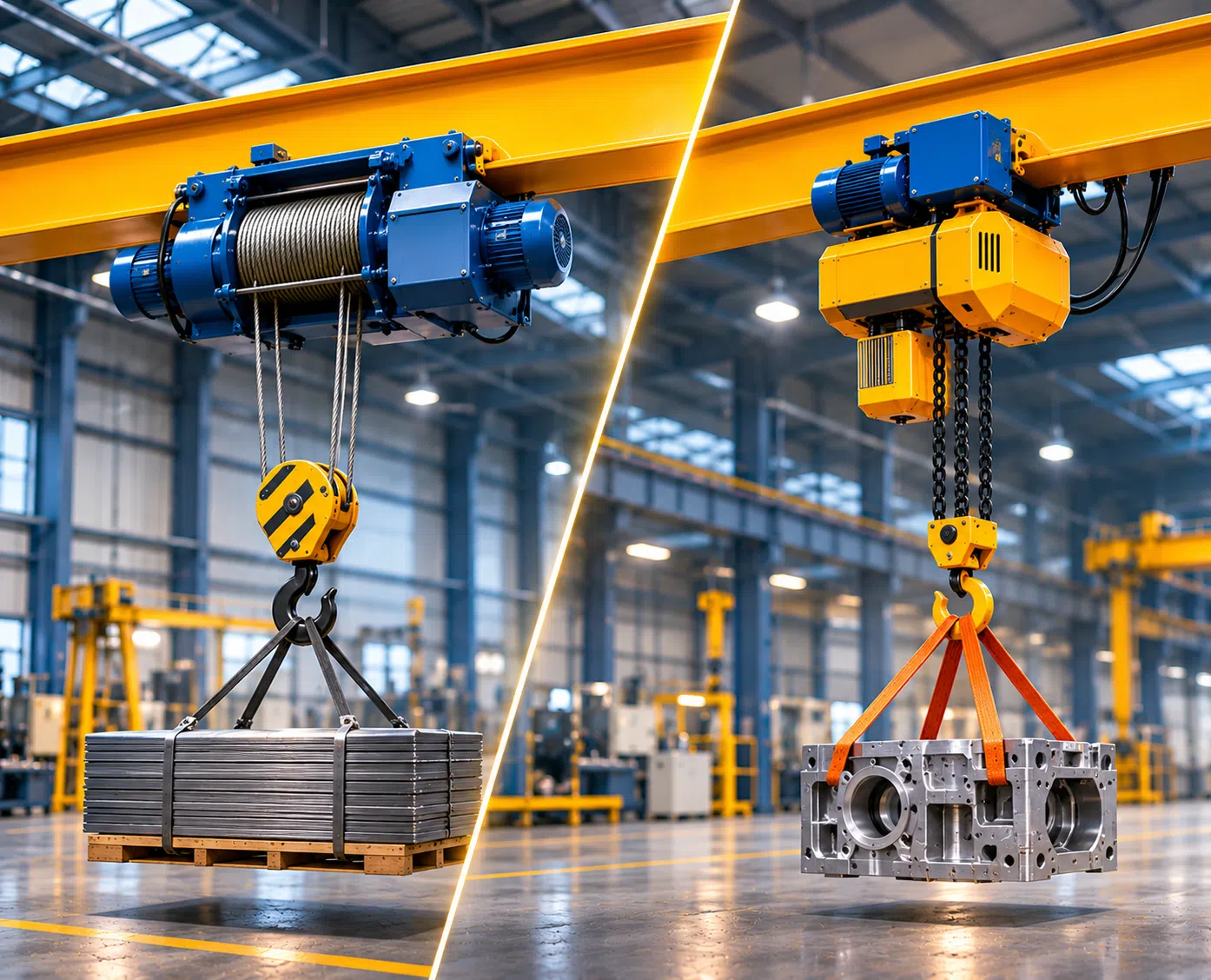
Comparative Analysis: Electric Chain Hoist vs. Wire Rope Hoist (Wire Rope Hoist)
The engineering choice between the two systems depends on the nature of daily use and the loads to be handled. The following points show the fundamental, direct operational differences between them:
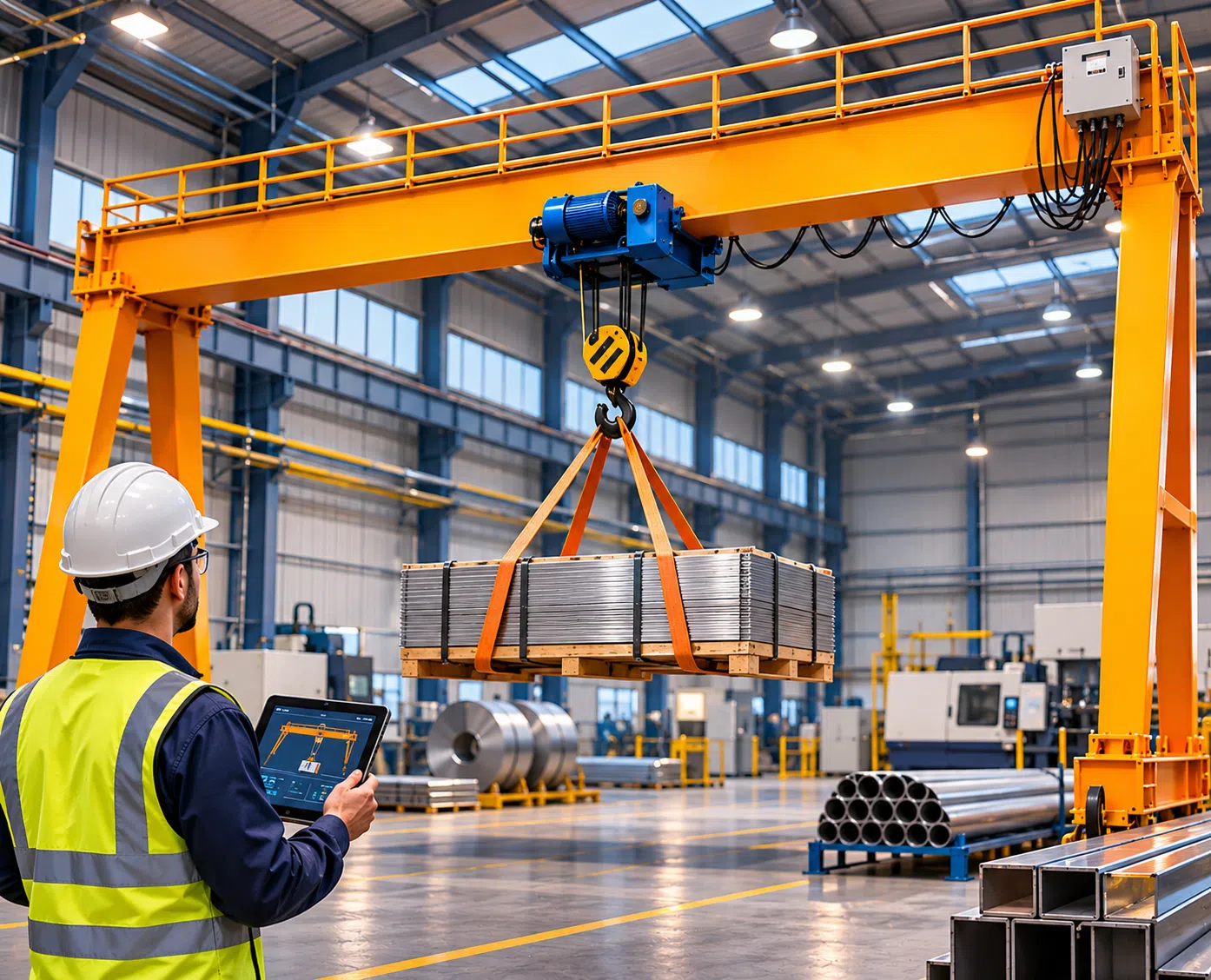
- Load capacity and operating range: The electric chain hoist excels in the light and medium lifting ranges that start at 250 kg and reach up to 5 tonnes, whereas wire rope hoists excel at heavy and giant loads exceeding 10 tonnes and reaching hundreds of tonnes in steel plants and large foundries.
- Size and structural weight of the equipment: A chain hoist has small dimensions and low weight that allow it to be moved and mounted easily on various structures, whereas a wire rope hoist needs a wider installation space and more weight to accommodate the wide cable drum and the parallel drive motor.
- Hook travel path during raising and lowering: A chain hoist provides straight, controlled vertical motion with no lateral deviation, thanks to the chain passing through a specific central channel, whereas the hook of a wire rope hoist may deviate slightly in its path as the cable moves between the drum grooves, unless it is designed with a double-reeving system.
- Lift heights and storage space: In a chain hoist the chain is gathered in a fabric or plastic bag hanging beneath the unit, which makes it ideal for short and medium heights up to 10 or 15 metres, whereas the wire rope hoist excels at very high lifts exceeding 30 metres, where the cables wind around organized drums with no excess parts hanging down.
Applications and Uses of Electric Chain Hoists in Industrial Sectors
This equipment serves a wide range of daily production operations thanks to its high operational flexibility:
Automotive and Engine Assembly and Manufacturing Lines
Chain hoists are used to move and position chassis parts, engines and gearboxes with complete accuracy over the assembly platforms, helping technicians align holes and bolts without muscular effort that disrupts concentration.
Turning Workshops and CNC Machine Feeding
The system makes it easier to lift metal blocks and heavy casting molds and position them inside machine jaws with millimetre precision, and reduces machine idle time between mechanical machining stages.
Food, Pharmaceutical and Clean Laboratory Facilities
Certain models of chain hoists made of stainless steel (Stainless Steel), with treated chains free of toxic oils, are designated for work inside strict hygienic environments, where they prevent any contaminants from falling onto food and pharmaceutical production lines.
Maintenance Stations and Pump and Valve Dismantling
It is the ideal tool for maintenance teams in water treatment facilities and power plants to lift and lower heavy pumps and valves from their bases and inspect them in complete safety.
Essential Safety Equipment in Modern Electric Chain Hoists
The mechanical strength of the chain is combined with electronic safety systems that ensure safe operation:
- Overload safety clutch (Friction Clutch / Slipping Clutch): A smart mechanical mechanism that slips automatically and cuts the lifting motion as soon as an attempt is made to lift a weight beyond the specified maximum capacity, protecting the gears and chain from breakage or excess stress.
- Upper and lower limit switches (Limit Switches): Sensitive cut-outs that automatically cut power to the motor when the hook reaches the highest permitted point or descends to the lowest limit, preventing the chain from jamming or the hoist body from being damaged.
- Instant electromagnetic brake system (DC Electromagnetic Brakes): Brakes that apply automatically (fail-safe) when power is suddenly lost, and keep the load suspended in the air without any mechanical slip.
- Reinforced chain container (Chain Container): A flexible integrated bag that collects the chain links flowing out during lifting, to prevent them tangling, hanging in the operator's path or striking the materials being moved.
How Does "Al Manarat Al Monerah" Support You in Equipping Your Factory with Electric Chain Hoists?
Al Manarat Al Monerah (almanratalmonerah.com) puts its long experience at the service of the industrial sector in the Kingdom and the Middle East by providing integrated solutions in the supply and maintenance of mechanical hoists:
- Engineering survey and selecting the most suitable specification: Studying your facility's daily duty cycles and lifting rates to determine the right load capacity, chain length and motor speed for the nature of your operations.
- Supplying products that comply with international specifications (FEM/ISO): Providing European- and internationally-certified electric chain hoists equipped with high-efficiency motors, superior thermal insulation and speed drives that ensure smooth, quiet operation.
- Integrating the hoist with different travel systems: Installing and fitting hoists on manual push trolleys (Push Trolleys) or geared electric trolleys, or integrating them onto jib cranes and suspended bridges with high engineering precision.
- Genuine spare parts readiness and fast technical support: Providing rigid chains, chain bags, brake linings and radio controls in local warehouses to secure a fast response that protects your facility from any sudden breakdown.
- Periodic inspection and certified calibration programs: Carrying out static and dynamic load tests, checking chain straightness and issuing calibration and safety certificates to present to inspection bodies and the civil defense.
You can visit the Al Manarat Al Monerah website and contact its specialist engineers directly to get full engineering consultation and a detailed technical and financial offer that puts in your hands the best electric chain hoist solutions to boost your workshop's productivity to the highest safety standards.
Frequently Asked Questions About Electric Chain Hoists
When should the lifting chain in an electric chain hoist be replaced?
The chain must be replaced immediately if periodic inspection shows link elongation exceeding 2% to 3% of the original length, or if the link wire diameter has worn by more than 10% from friction, or if any visible cracks or mechanical deformations are found, in accordance with international safety standards.
Can an electric chain hoist be fitted with a wireless remote control system?
Yes, absolutely. Many modern workshops prefer to install encrypted digital radio controls (Radio Remotes) instead of wired pendant controls (Pendants), allowing the operator to stand at a safe distance and watch the load move from a clear and comfortable viewing angle.
What type of lubrication is suitable for electric hoist chains?
Hoist chains require penetrating lubricating oils designed for high loads and extreme pressures (EP Chain Oils), rather than heavy greases that may attract dust and sand particles and turn into a frictional paste that quickly wears down the chain links and the toothed wheel.
Read also: Advantages of an Electric Chain Hoist for Fast Vertical Lifting