
Procurement officers and industrial facility owners face marked variation when they examine price quotes from different suppliers. The figure written on the invoice differs by country of origin, motor classification, electrical insulation capability and the type of mechanical hoisting mechanism approved. This makes a bare numerical comparison, without checking the engineering specifications, a trap that can lead a facility to buy poor equipment whose repeated failures stop production lines suddenly and at great cost. Tracking and understanding average electric hoist prices in both the Egyptian and Saudi markets requires familiarity with the requirements of each operating environment, import costs and currency fluctuations, as well as the readiness of after-sales services and the local availability of genuine spare parts.
How Much Do Electric Hoists Cost in Egypt and Saudi Arabia?
Industrial electric hoist prices fall into flexible ranges that start from compact light hoists (up to 1 ton) at values between 15,000 and 45,000 EGP in Egypt, equivalent to 1,800 to 5,500 SAR in Saudi Arabia, and rise gradually for medium chain and wire rope hoists (2 to 5 tons) to range between 90,000 and 280,000 Egyptian pounds, against 10,000 to 35,000 Saudi riyals, while ultra heavy-duty hoists (10 tons and above with European motors and speed drives) exceed the 500,000 EGP mark in Egypt and 70,000 SAR in Saudi Arabia.
These figures are determined by decisive engineering and market factors:
- Net load capacity and the length of the vertical lift path (the length of chain or wound steel cable).
- Country of origin of the motors and gearboxes (European and Japanese components versus Asian models).
- Inclusion of smart control systems such as variable frequency drives (VFD), encrypted wireless controllers and digital load sensors.
Factors Affecting the Variation in Electric Hoist Prices Between the Two Markets
Pricing patterns and cost factors differ between the Egyptian and Saudi markets according to direct economic and environmental determinants:
1. Import Costs, Currency Movements and Supply Chains
In the Egyptian market, the price of a hoist is directly affected by exchange rate fluctuations, customs duties and letter of credit costs, which pushes companies to request quotes that are sometimes tied to live global supply prices. The Saudi market, by contrast, is marked by monetary stability and fast clearance procedures through the major logistics ports, with prices tied to the scale of huge construction projects and the specifications approved by the Saudi Building Code.
2. Mandatory Environmental Specifications for Motors
The high temperatures and active dust in Saudi Arabia call for special engineering equipment on hoists, such as high thermal insulation motors (Class H), enclosed protection ratings (IP65/IP66) and dual cooling canopies. These engineering additions raise the machine's initial price to ensure it operates without interruption, while workshops in Egypt focus on hoists with balanced standard ratings that meet ordinary shifts at the lowest possible initial cost.
3. Type of Hoisting Mechanism (Wire Rope or Chain)
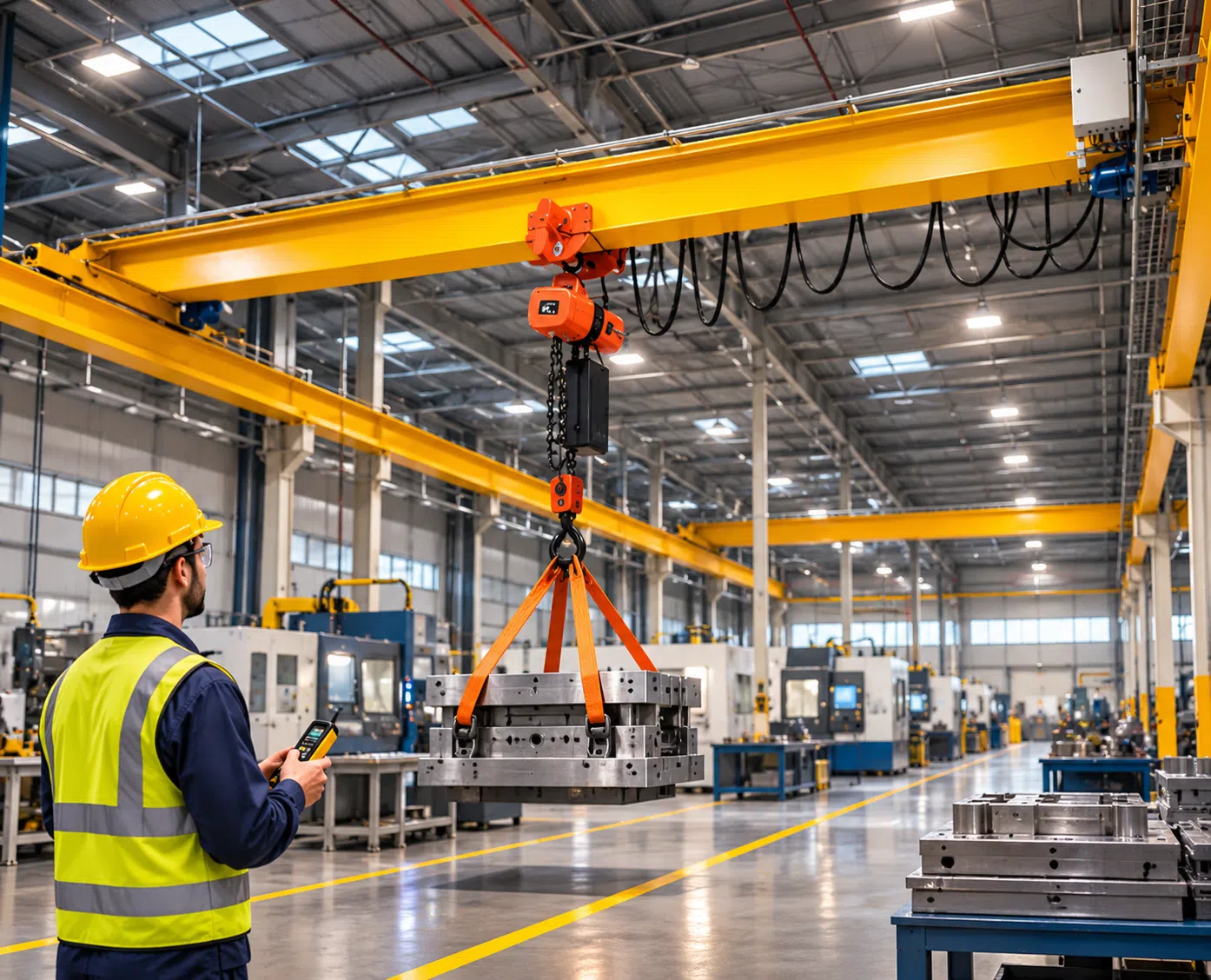
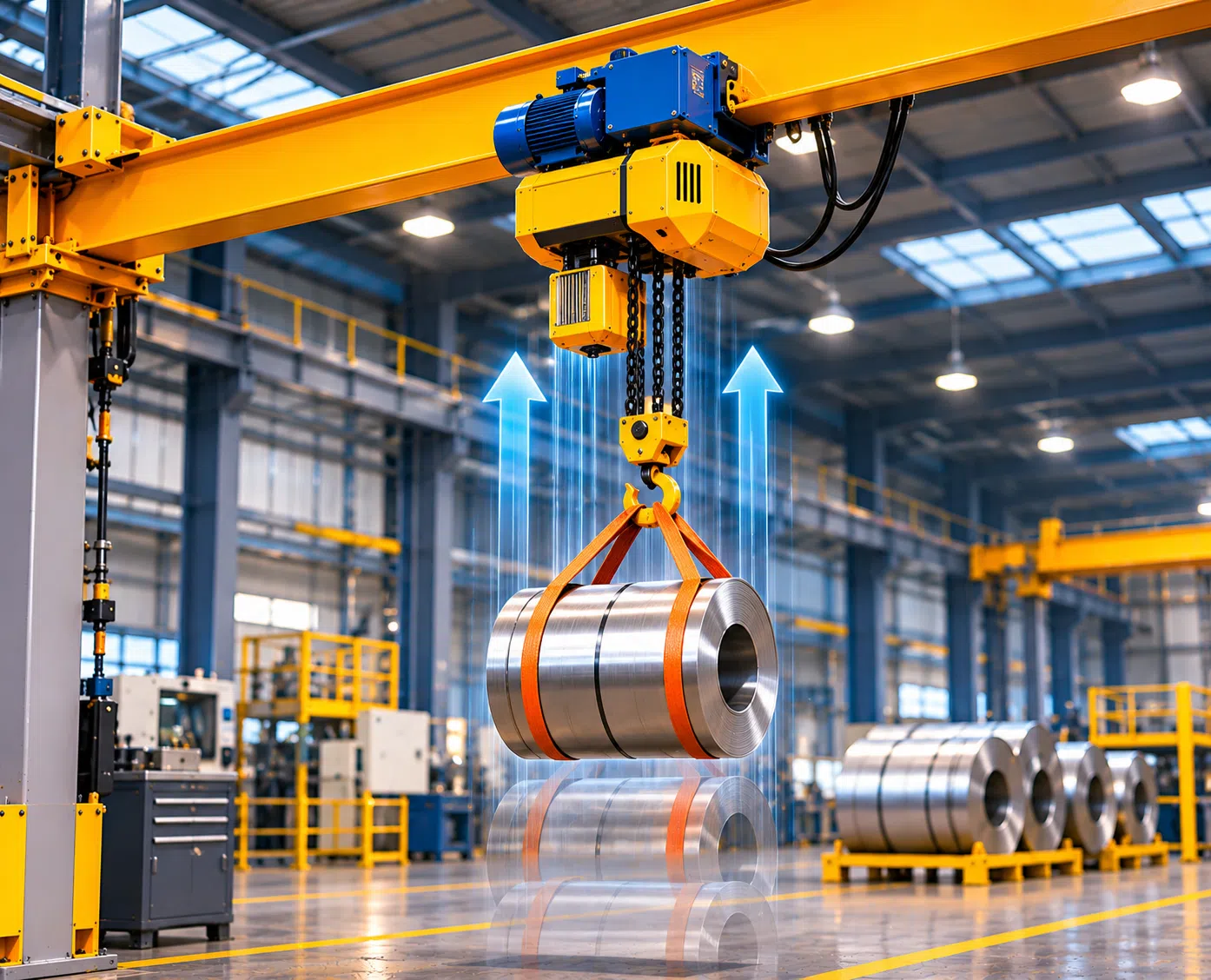
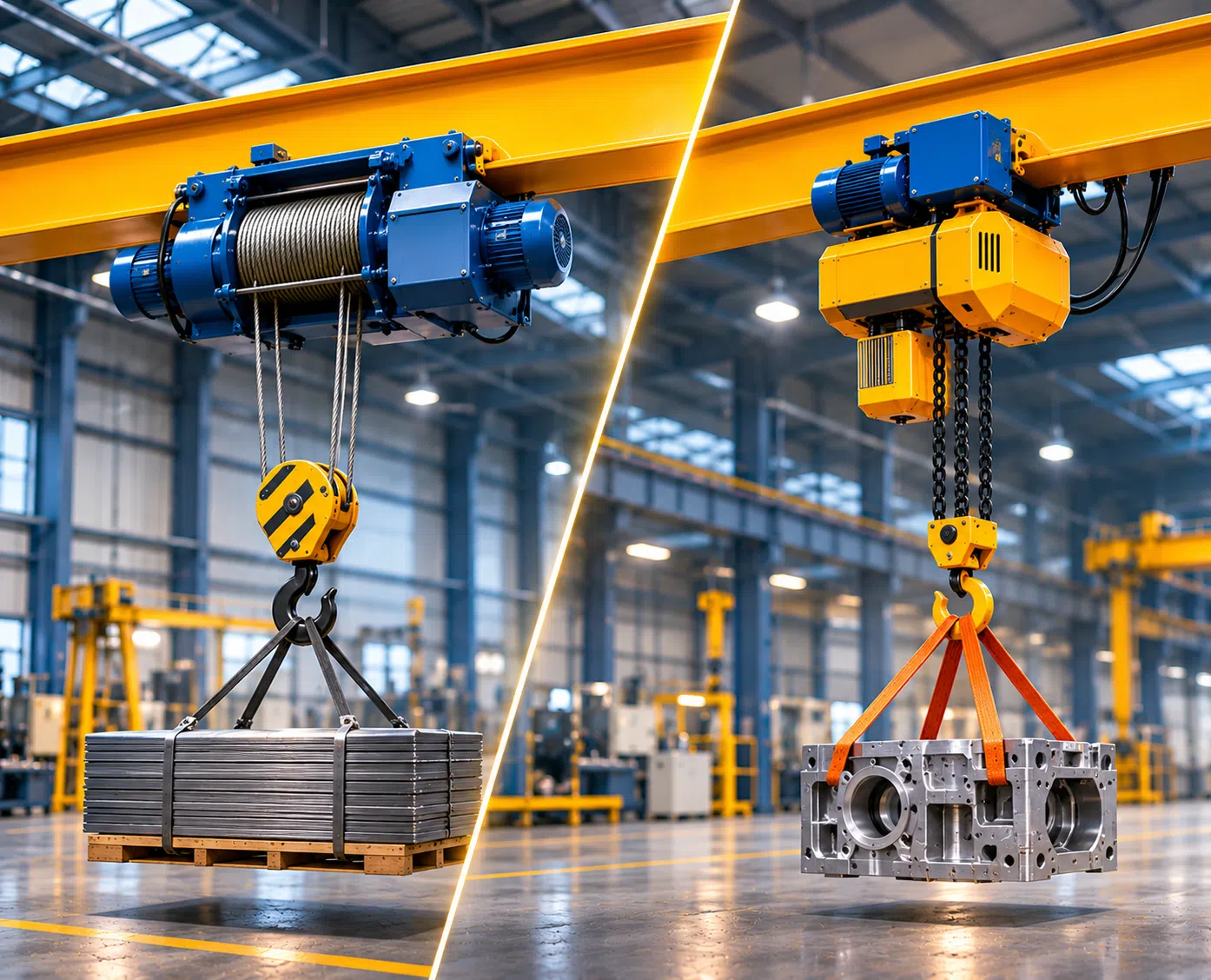
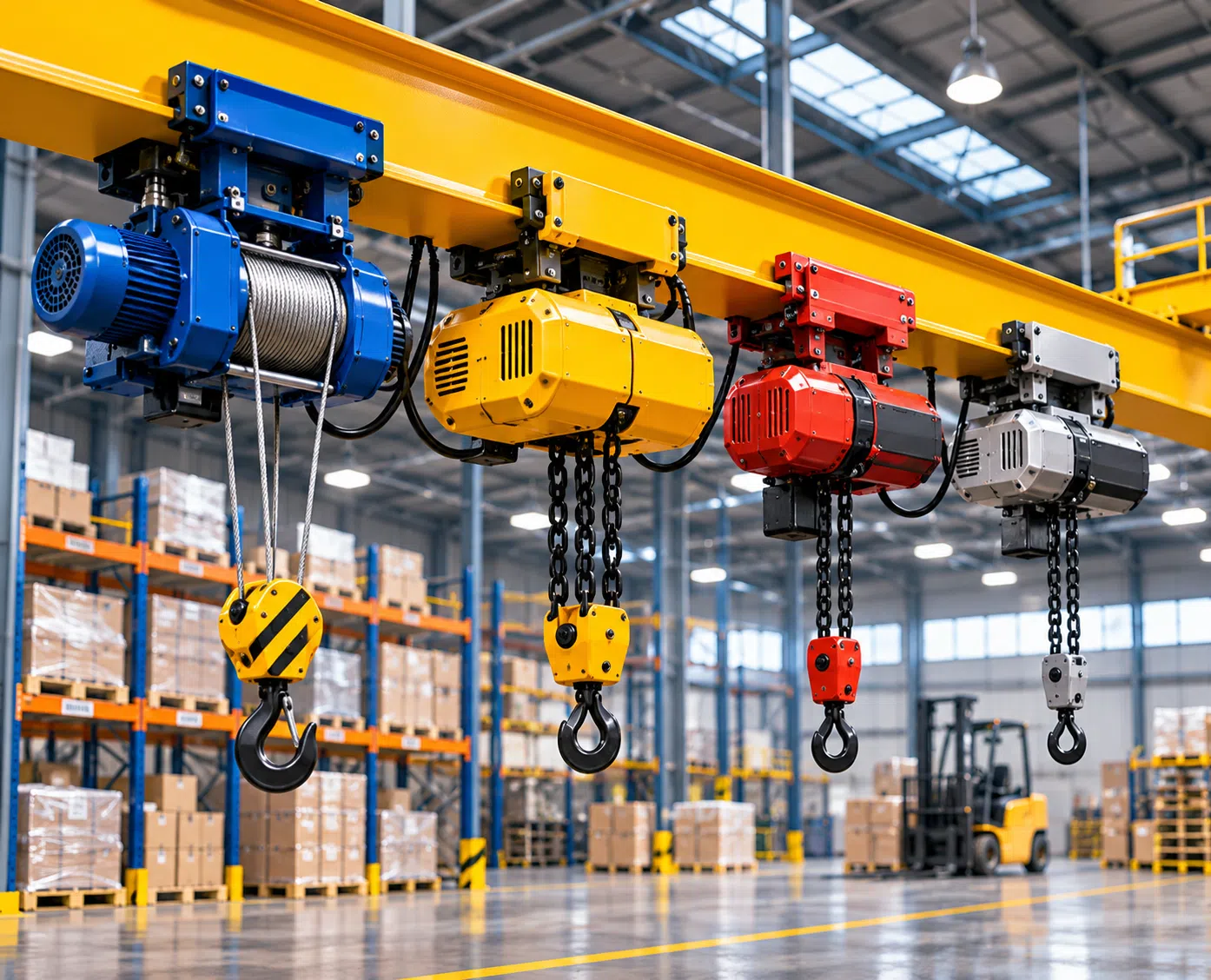
Electric chain hoists (Electric Chain Hoists) come at relatively lower prices in loads up to 3 tons and suit economical budgets and tight spaces, while the cost of electric wire rope hoists (Electric Wire Rope Hoists) is higher because of the complexity of manufacturing grooved rope drums and the parallel motors dedicated to heavy-duty tasks and large heights.
Comparative Analysis: Electric Hoist Price Categories by Load Capacity in Egypt and Saudi Arabia
The following points help you form a clear financial picture for allocating your budget before starting negotiations and purchasing:
- Light hoists and individual workstations (250 kg to 1 ton): The leading economical option for assembly and maintenance workshops and for feeding CNC machines. In the Egyptian market they range between 15,000 and 45,000 Egyptian pounds, while in the Saudi market they run between 1,800 and 5,500 Saudi riyals depending on the type of motor and control mechanism.
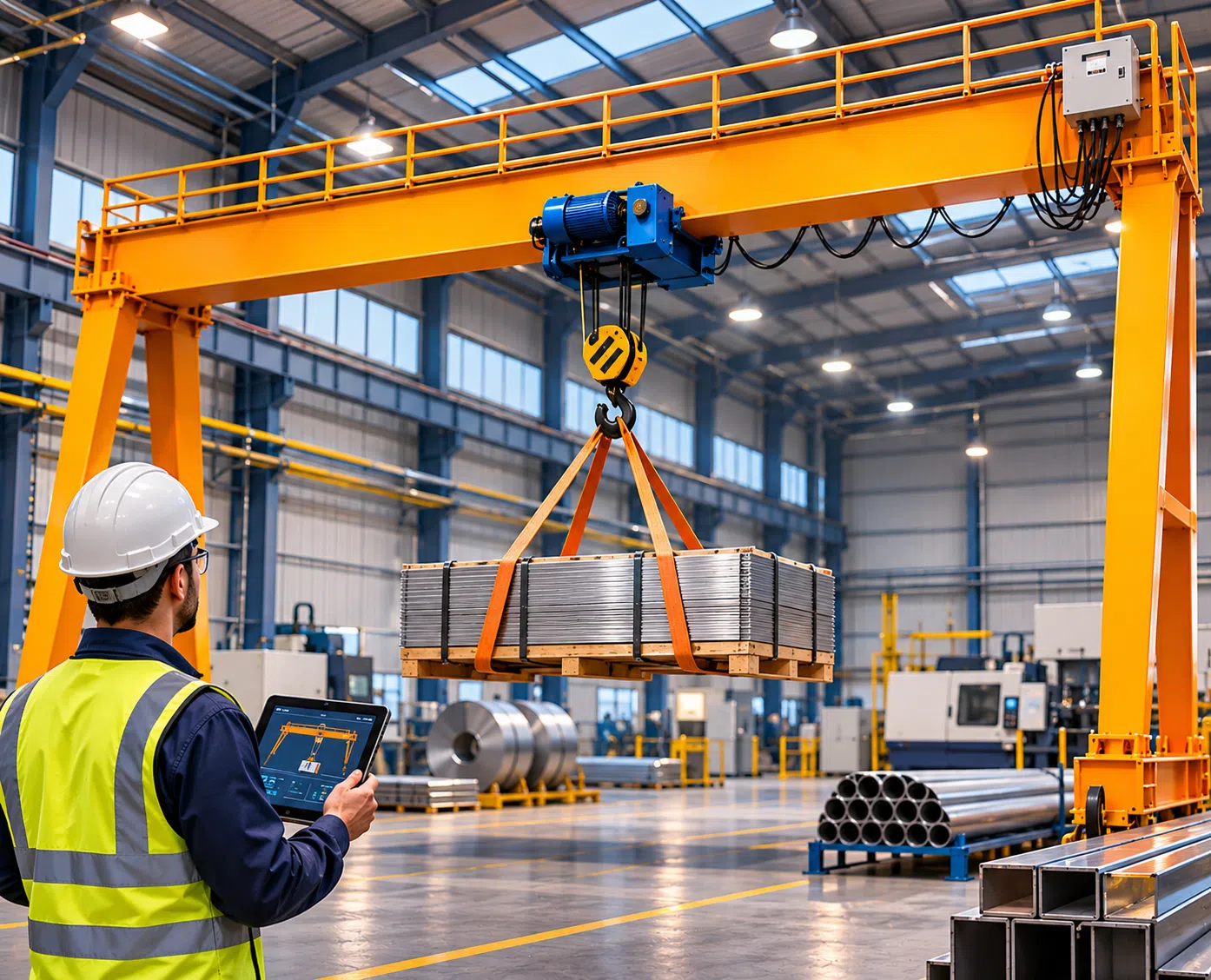
- Medium hoists for workshops and warehouses (2 tons to 5 tons): The most widespread category for handling raw materials and unloading trucks. Their prices in Egypt start at 90,000 and reach 280,000 Egyptian pounds for certified brands, while in Saudi Arabia they range between 10,000 and 35,000 Saudi riyals and depend on single-speed or two-speed options.
- Heavy-duty hoists for large factories (10 tons to 20 tons): Intended for steel sectors, heavy forming plants and foundries. In the Egyptian market they start at 350,000 and exceed 750,000 Egyptian pounds for high-reliability models, while in the Saudi market they range between 45,000 and 120,000 Saudi riyals according to the electrical equipment, insulation level and travel paths.
- Giant hoists and purpose-built systems (over 30 tons): Subject to special contractual engineering pricing (Custom Engineered Solutions), where prices exceed hundreds of thousands depending on the requirements of the track, open winch trolleys (Open Winch) and complex dual safety systems.
Indirect Costs: Beware of the Cheapest-Purchase Trap
A hoist's expenses do not end with paying the purchase price. Operating experience reveals that cheaper equipment brings hidden costs that far exceed the initial saving:
- Downtime and production line losses: When an uncertified hoist stops inside a factory whose operating cost is thousands of pounds or riyals per hour, investing in a hoist with genuine components becomes a profitable long-term investment decision.
- Cost of replacing rare spare parts: Hoists of unknown origin force you to wait weeks to import a cable or brake pads at exorbitant shipping prices, whereas systems with certified supply ensure parts are available locally and immediately at stable prices.
- Electricity consumption rates: Old motors that are not energy-saving draw very high starting currents that raise electricity bills and damage distribution panels, while motors fitted with frequency drives help save up to 25% of energy consumption.
- Installation and calibration test costs: These include supplying insulated conductor tracks (Busbars), travel trolleys and the official field load tests certified by civil defense authorities in Egypt and Saudi Arabia.
How Do You Get the Best Value for Money with "Al Manarat Al Monerah"?
Al Manarat Al Monerah (almanratalmonerah.com) stands out with its trusted technical presence and extended experience serving industrial sectors in Saudi Arabia, Egypt and the Middle East, offering a fair pricing system that guarantees the customer the maximum investment return:
- Detailed and transparent technical price quotes: Providing clear engineering pricing that separates the value of the hoist from the travel trolley accessories, power feed tracks, and installation and testing fees, to make comparison easy and the investment decision confident.
- Supply of components compliant with global specifications (FEM/ISO): Providing electric hoists (wire rope and chain) fitted with motors with superior thermal insulation and reliable European components suited to heavy-duty operating requirements and the region's climate.
- Free site survey and advance engineering study: Reviewing your workshop's loads and dimensions to choose the lifting capacity that exactly fits your need, without wasting your money on oversized capacities your lines do not use.
- Immediate readiness of genuine spare parts and maintenance contracts: Local warehouses stocked with chains, cables, brake linings and controllers to ensure the shortest possible response time and protect your factory from sudden breakdown.
- Certified load test certificates: Carrying out static and dynamic load tests on site and issuing the certified calibration certificates required by regulatory bodies and civil defense.
You can visit the Al Manarat Al Monerah website and contact the specialist engineers directly to present your facility's drawings and get technical consultation and accurate pricing that gives you the best engineering specifications at the lowest operating cost over the long term.
Frequently Asked Questions About Electric Hoist Prices
Is buying a used electric hoist an economically worthwhile deal?
Buying used may save initial cash, but it carries the risks of metal fatigue, invisible gear wear and damaged electric motor insulation, in addition to the absence of a warranty and difficulty in sourcing spare parts. This makes the cost of repairing and inspecting it very close to the cost of buying a new certified hoist that guarantees the safety of workers and property.
What makes the price of one electric hoist much higher than another with the same capacity?
The main price difference comes down to the quality and country of manufacture of the motor and gearbox, the inclusion of variable frequency inverters (Inverters) instead of single speeds, the level of thermal and moisture insulation (IP Rating), in addition to whether the offer includes certified test certificates, a genuine warranty and local technical support services.
How does the length of the lift path (lifting height) affect the price of an electric hoist?
Increasing the lifting height requires additional length of hardened chains or multi-strand steel cables, and for wire rope hoists it requires enlarging the winding drum and the hoisting motors to accommodate the longer cable, which is reflected proportionally in the hoist's total weight and its final price.
Read also: Electric Hoists and Their Role in Reducing Injuries on Production Lines