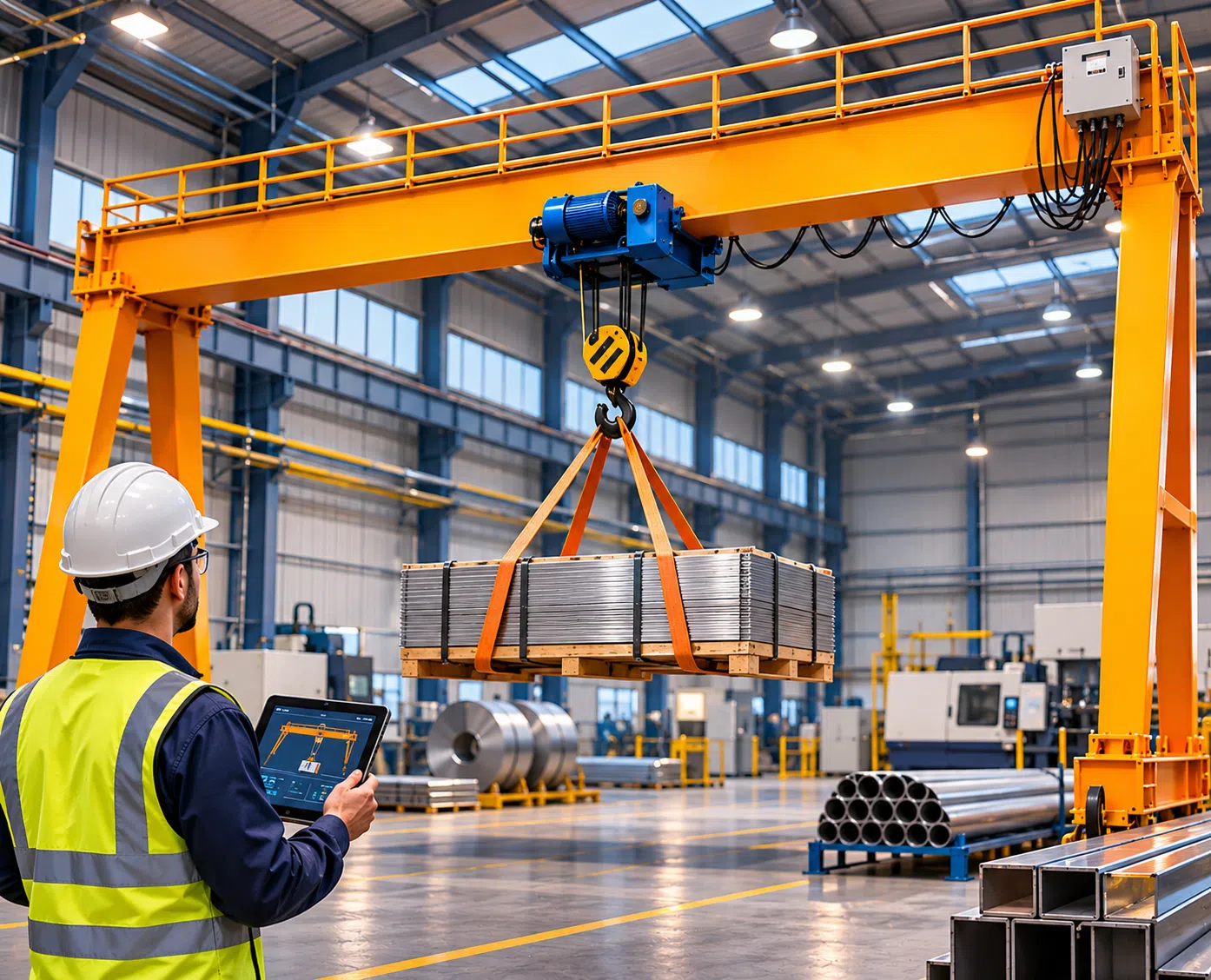

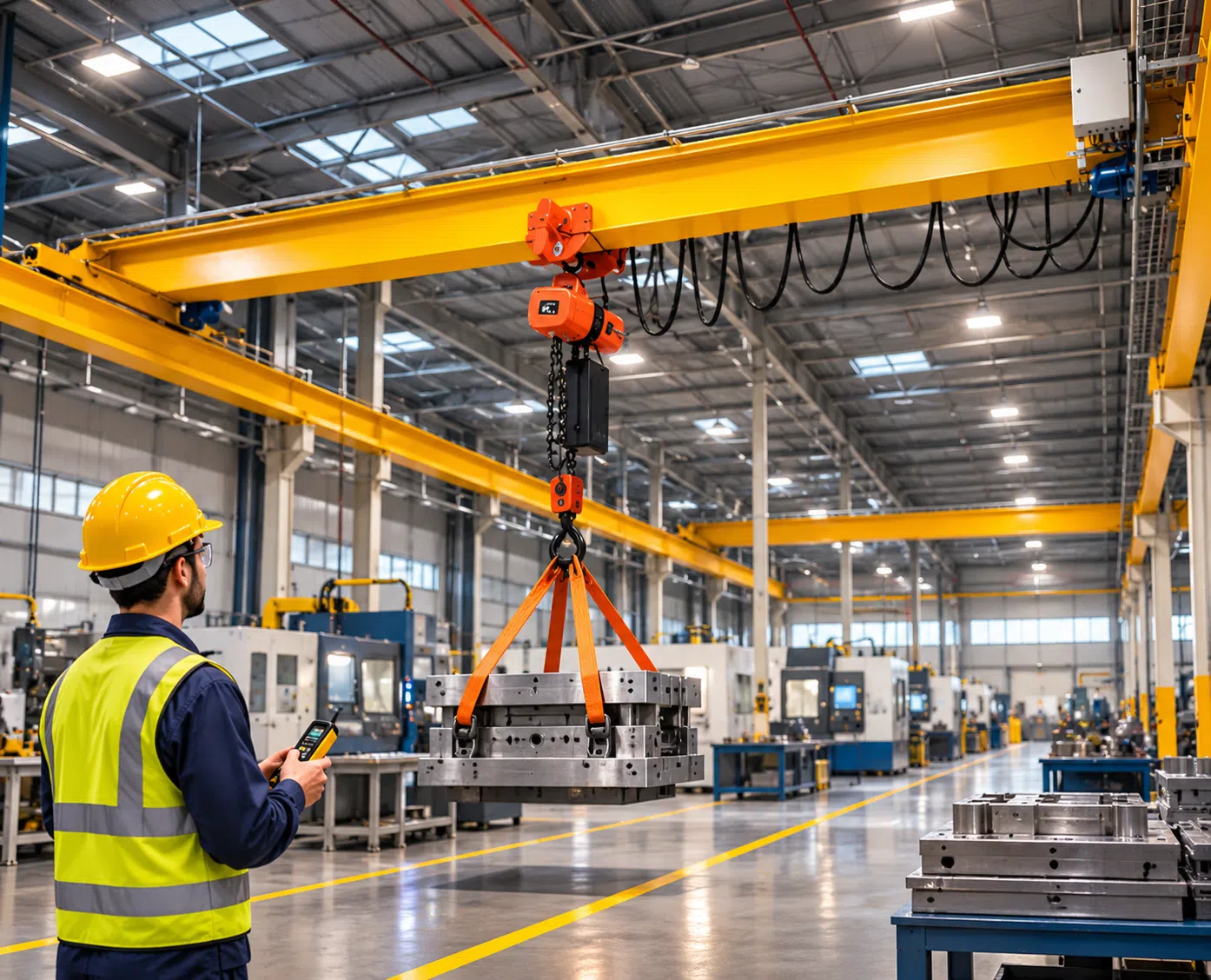
Electric Hoists and Their Role in Reducing Workplace Injuries on Production Lines
Workers in industrial facilities and warehouses bear an enormous physical burden when they rely on muscle power or primitive hand tools to handle materials and move heavy forming dies between different work stations. Repeated bending, lifting and uncontrolled pulling gradually drain workers' energy and cause chronic muscular and skeletal disorders that cost the plant its productivity and raise absenteeism and costly sick leave. Integrating modern electric hoists into the heart of production lines is not just a logistical upgrade to speed up work; it is a proactive engineering and investment shield that removes direct mechanical hazards from people, turning the workplace into a safe, controlled space that meets the highest internationally recognized occupational health and safety standards.
How Do Electric Hoists Help Reduce Workplace Injuries?
Electric hoists reduce workplace injuries by eliminating direct muscular effort in lifting and maneuvering, moving loads vertically and horizontally along controlled paths that prevent objects from falling or swinging, allowing remote control through encrypted wireless devices that keep the operator out of the danger zone, and using safety sensors that automatically cut off motion when the rated load capacity is exceeded.
This technical shift in an industrial facility delivers direct preventive results:
- Complete elimination of slipped-disc injuries, torn ligaments and cumulative muscle strain among assembly workers.
- Prevention of limb-crushing and run-over accidents caused by metal blocks slipping or unsafe manual hoists kicking back.
- Lower medical compensation costs and workplace injury insurance premiums, along with higher morale and greater stability of the technical workforce.
Common Patterns of Injuries from Manual Handling
Traditional, non-automated lifting methods cause a series of serious physical hazards that affect workers every day:
1. Chronic Musculoskeletal Disorders (MSDs)
Lower back pain and torn shoulder tendons are the leading cause of occupational disability in factories. They occur when a worker has to lift loads beyond human limits, or twists the torso while repeatedly carrying medium weights over the long hours of a shift.
2. Pinch Points & Crush Hazards
When steel blocks or machine motors are moved by hand to be fixed inside machines such as lathes and CNC presses, any slight loss of balance can trap workers' fingers or feet under sharp edges, resulting in severe fractures and amputations.
3. Impacts from the Kickback of Primitive Lifting Tools
Some workshops depend on hand-operated supports or uninsulated pulleys. When these tools are suddenly stressed, the turning lever can slip or the chain can snap and kick back with tremendous force toward the operator's face or body, causing critical injuries.
Protective Advantages of Electric Hoists in Safeguarding the Production Environment
The mechanical engineering of modern electric hoists is combined with a package of smart technologies designed specifically to neutralize hazards:
Safe Remote Radio Control
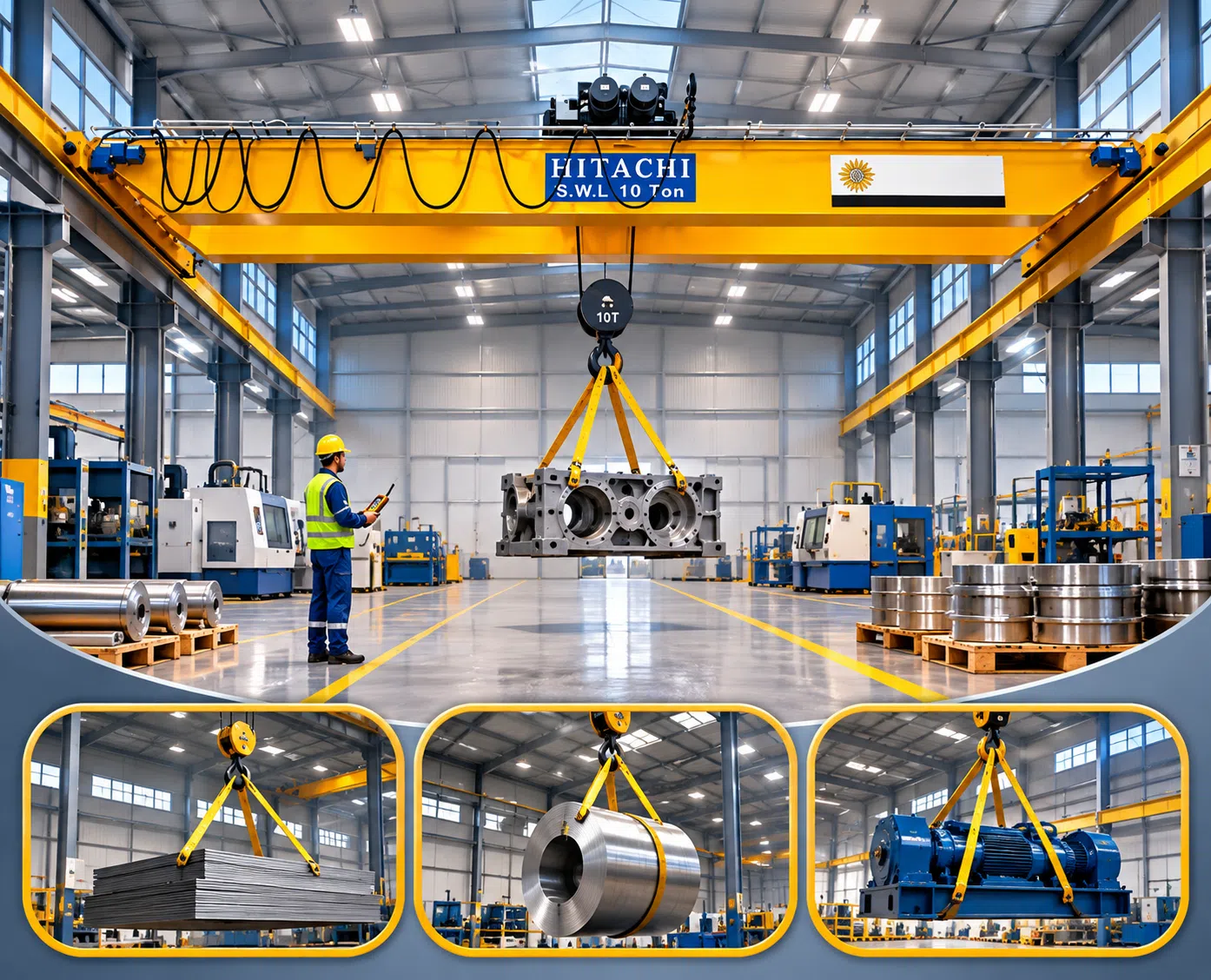
Modern radio control systems remove the need for the operator to stand directly under the suspended load or next to it to guide it. The technician can stand at a sufficient safe distance with a clear panoramic view of the entire work area, and can stop the equipment instantly, within fractions of a second, just by pressing the emergency stop (E-Stop) button.
Smooth Motion and No Sudden Jerks Thanks to Variable Frequency Drives (VFD)
The sudden start of older motors makes goods swing in the air like a pendulum, threatening to strike workers in the aisles. Variable frequency drive technology in modern hoists provides very smooth, gradual acceleration and deceleration, which keeps the load steady on a straight vertical path and prevents sudden jolts.
Eliminating Overload Errors (Overload Protection)
Work pressure pushes some workers to try to lift weights beyond the equipment's capacity. This is where the digital load cells built into the electric hoist step in, automatically cutting the lifting circuit and stopping the motor from turning if the weight exceeds the permitted limits, which protects the cables and load chains from catastrophic failure.
Stable Vertical Lifting and Avoiding Side Impacts
Electric hoists provide a precise vertical lifting path that prevents the hook from tilting, and give technicians millimeter-level control to lower heavy parts into clamping jaws without the violent manual pushing that can make parts slip off work platforms.
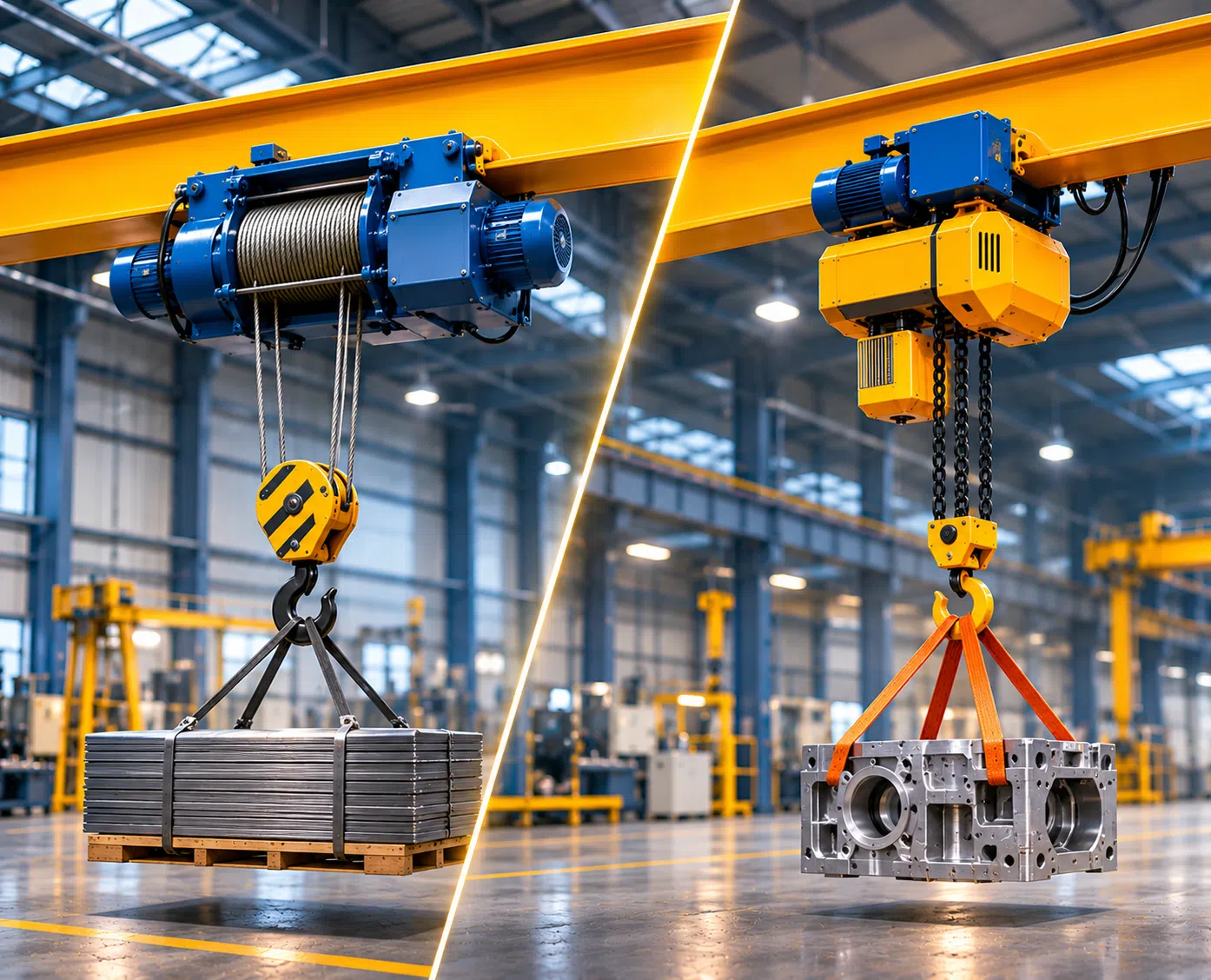
Comparative Analysis: Safety Levels of Electric Hoists vs. Manual Hoists
The points below set out the key differences in occupational safety and operating risk between the two systems, to help you assess the working environment in your hall:
- Level of physical effort: Manual hoists require continuous pulling and strenuous muscular effort that raises the heart rate and quickly tires the operator, while the electric hoist works at the smooth press of a button with no physical effort, keeping the worker alert and focused throughout the day.
- Control of lowering and lifting speed: In manual systems the speed of lowering the load depends on the worker's skill and momentary strength, which opens the door to uncontrolled, accelerating descent, whereas the electric hoist keeps to fixed standard speeds that are mechanically regulated and prevent sudden dropping of loads.
- Safe distance for the operator during work: The operator of a manual hoist is forced to stand beside the hanging chain, right next to the fall path of the weight, while electric hoist controls allow the operator to move 10 to 20 meters or more away, completely outside the danger zone.
- Braking system and failure protection (Fail-Safe): Manual hoists rely on mechanical friction pads that can wear out or suddenly slip under pressure, whereas electric hoists are fitted with self-locking electromagnetic brakes that close automatically and tightly as soon as power is cut or the operating button is released, so the load stays suspended in place without the slightest slip.
How Reducing Injuries Affects Productivity and the Facility's Profits
The benefits of safety do not stop at protecting the health of the workforce; they extend to a tangible financial difference in the company's overall budget:
Reducing Direct Costs and Compensation
Facilities that record high injury rates bear heavy expenses, including medical care and end-of-service payments for partial disability, as well as the strict fines imposed by labor offices and industrial regulatory bodies for failing to provide a compliant working environment.
Maintaining Production Line Continuity
A single accident in the workshop can stop work for hours or days while technical investigations are carried out and the injured are treated, disrupting delivery commitments and losing the facility its customers. Safe lifting systems keep the flow of materials continuous without any operational disruption.
Reducing Employee Turnover
A work environment equipped with modern, comfortable lifting equipment helps retain skilled technicians and people with rare expertise, and limits the drain of talent to competing factories that provide working conditions that respect human comfort and safety.
How Does Al Manarat Al Monerah Help You Create a Safe Manufacturing Environment?
Al Manarat Al Monerah (almanratalmonerah.com) puts the safety of people at the top of its engineering priorities when designing and supplying lifting solutions in the Kingdom and the Middle East, offering comprehensive services to reduce workplace risks:
- On-site inspection and occupational risk analysis: We visit production lines and workshops to study manual movement paths and identify the critical points that strain workers, so we can propose the electric lifting systems best suited to the size and dimensions of the space.
- Supply of equipment compliant with the highest global standards (FEM/ISO/CMAA): We provide certified electric hoists (wire rope and chain) fitted with motors with superior thermal insulation, overload protection systems, and dual limit switches that prevent collisions.
- Advanced wireless control solutions: We equip work lines with industrially encrypted remote controls that let operators move freely and with complete safety, without being restricted by cables dangling in the path of machines.
- Installation and precision laser alignment: The company's engineering crews supervise the installation of runway beams and insulated electrical feed tracks and level them perfectly to prevent any unexpected mechanical vibration during travel.
- Technical training programs and periodic safety tests: We train plant operators in safe handling methods, carry out load tests and issue certified calibration certificates for civil defense and industrial inspection bodies.
You can visit the Al Manarat Al Monerah website and contact its experts and engineers directly to arrange a site inspection of your facility and learn about the electric hoist options designed to raise occupational safety standards and multiply your production rates with the highest return on investment.
Frequently Asked Questions About Electric Hoists and Workplace Safety
What is the mandatory daily inspection of an electric hoist before starting work to ensure worker safety?
The operator must carry out a quick visual inspection of no more than 5 minutes covering: checking that the steel wire rope or chain links are intact and free of tears or wear, testing the emergency stop (E-Stop) button, testing the upper and lower limit switches, and confirming that the brakes respond instantly when a light test load is lifted.
How do electric hoists protect the operator from the risk of electric shock?
Handheld control units and wireless devices are made from electrically insulating materials that are resistant to impacts and oils. The internal control circuits also operate at a safe low voltage (usually 24 or 48 volts DC) rather than the motor's main operating voltage (380 volts), which prevents any electric current from reaching the operator even in the event of an internal short circuit or humidity in the area.
Does an electric hoist completely replace human training on assembly lines?
The equipment does not replace training; it requires a clear qualification protocol. Using an electric hoist requires training the technician to choose suitable attachment points, use certified lifting slings, make sure the hook's safety latch is engaged, and avoid standing in the dead path of goods during horizontal movement.
Read also: Best Electric Hoist Brands for Modern Warehouse Equipment