
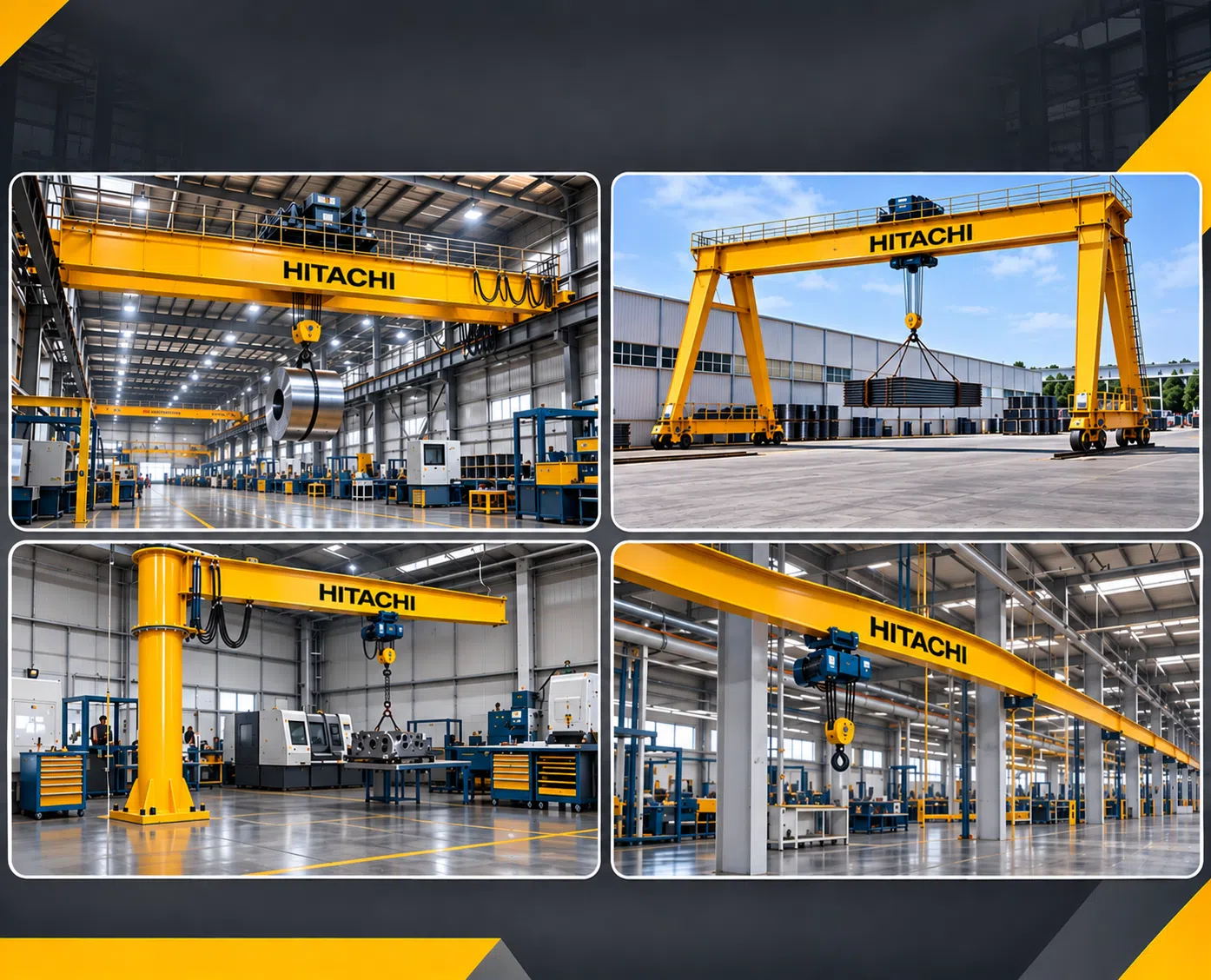
Your Complete Guide to Crane Types and Their Uses in Factories
Cranes, in all their engineering forms, are the backbone of material handling systems and heavy manufacturing centers. Facilities rely on them to lift and position equipment and raw materials that human effort cannot move accurately and safely. Choosing the right industrial crane is not just a matter of buying an ordinary lifting machine. It is directly tied to productivity rates, ongoing maintenance costs and the safety of the technical staff on the production lines.
What Are Industrial Cranes?
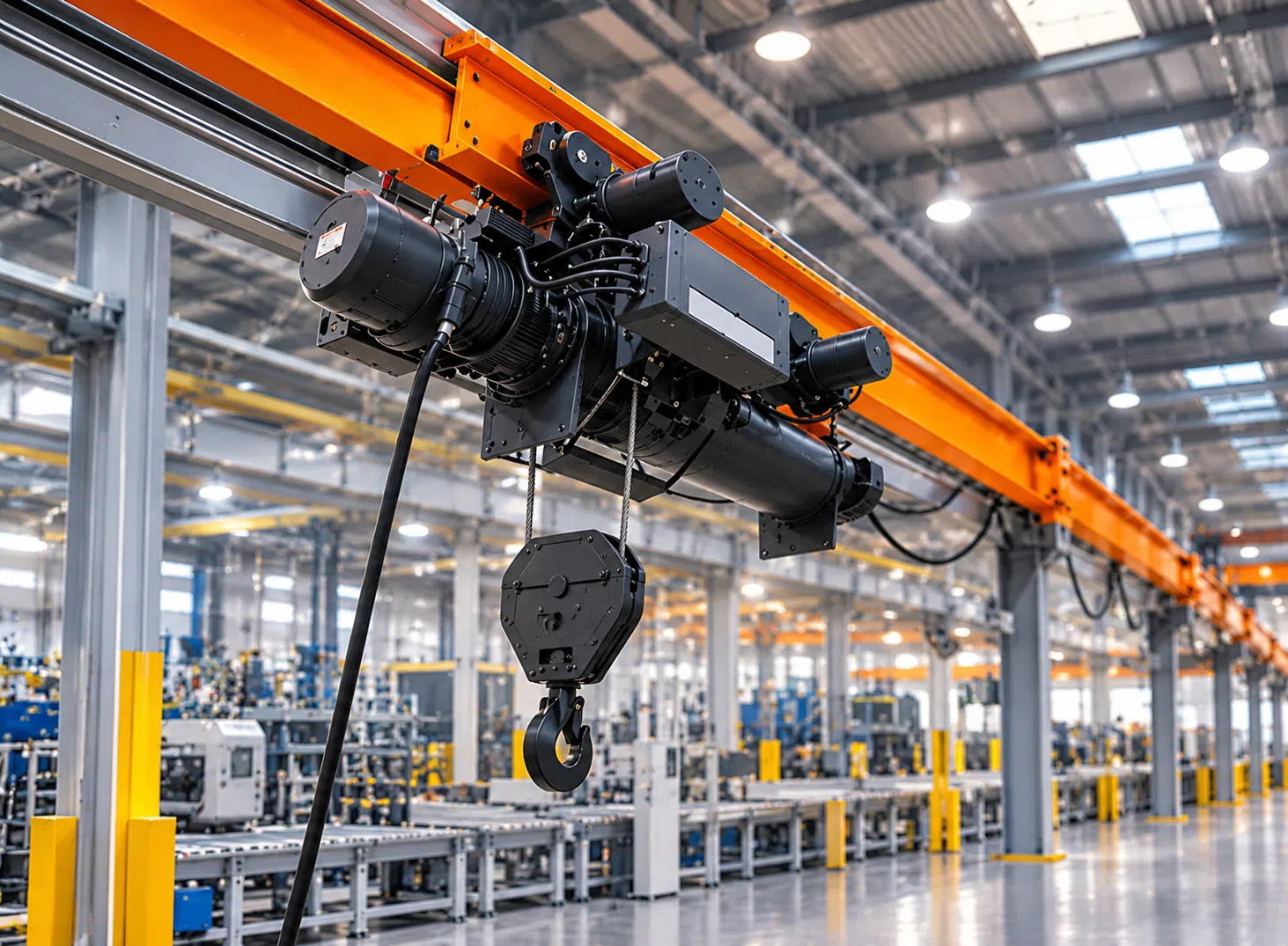
Cranes, or industrial lifting machines, are mechanical and electrical systems equipped with hooks, cables and pulleys, designed to lift, lower and move heavy loads horizontally or vertically within a defined work area.
Modern factories rely on these systems to carry out the following tasks:
- Loading and unloading raw materials and metals from trucks to the forming workshops.
- Moving dies and large motors between different assembly stations with millimetre precision.
- Facilitating maintenance work and installing new production lines without disrupting daily shifts.
The Most Prominent Types of Cranes Used in Facilities and Warehouses
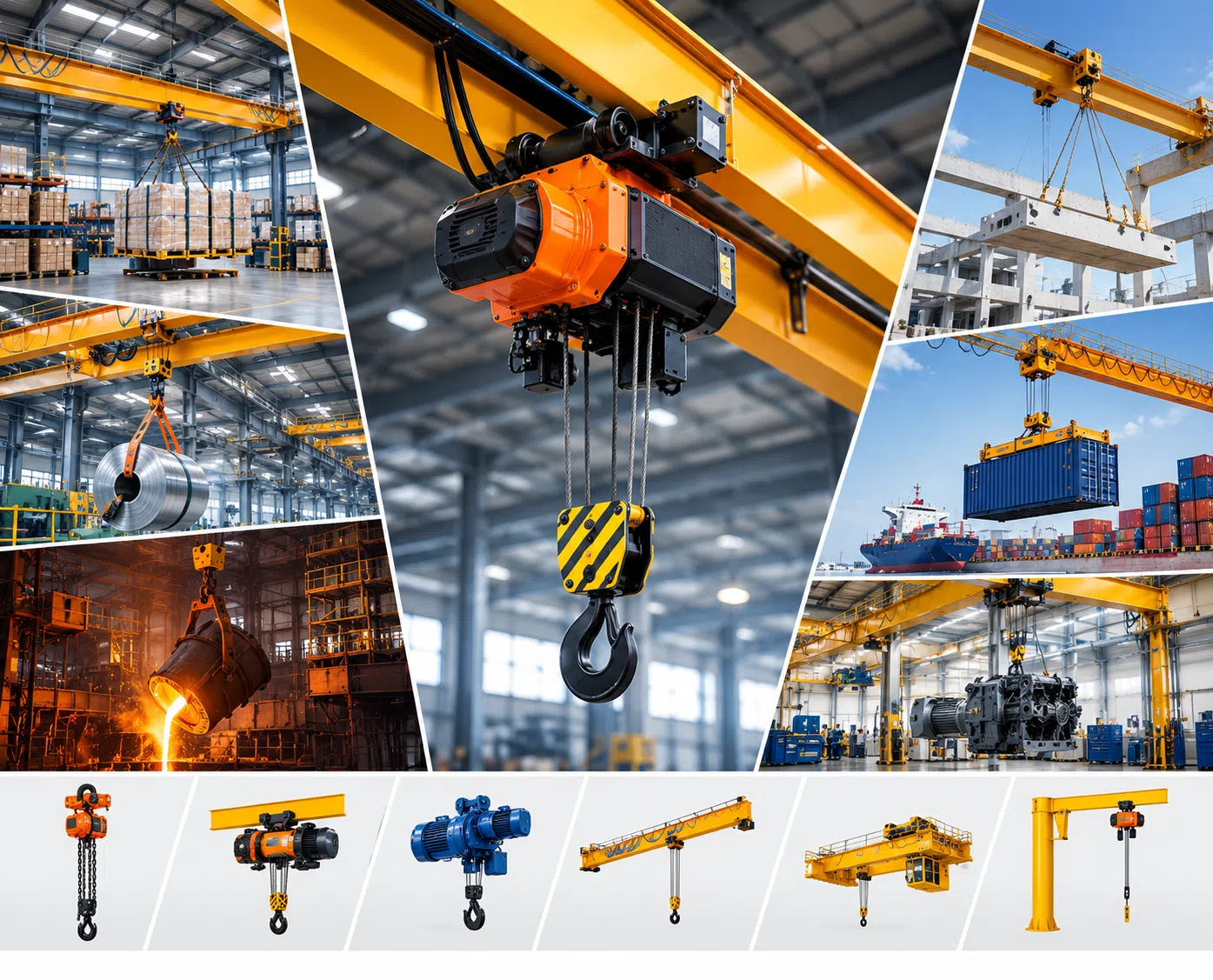
Crane designs vary to suit facility floor areas, available heights and the nature of the loads being moved.
1. Overhead Bridge Cranes
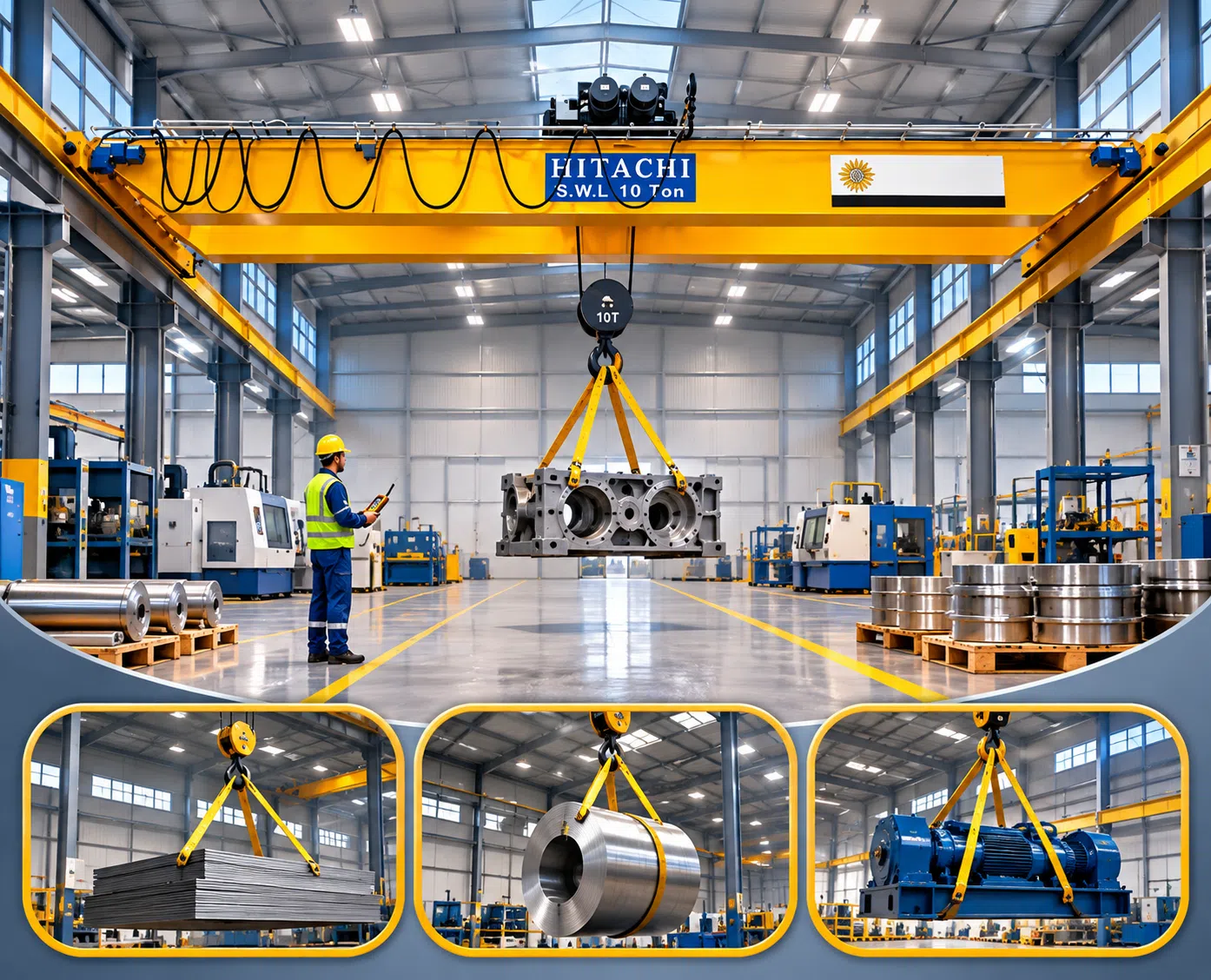
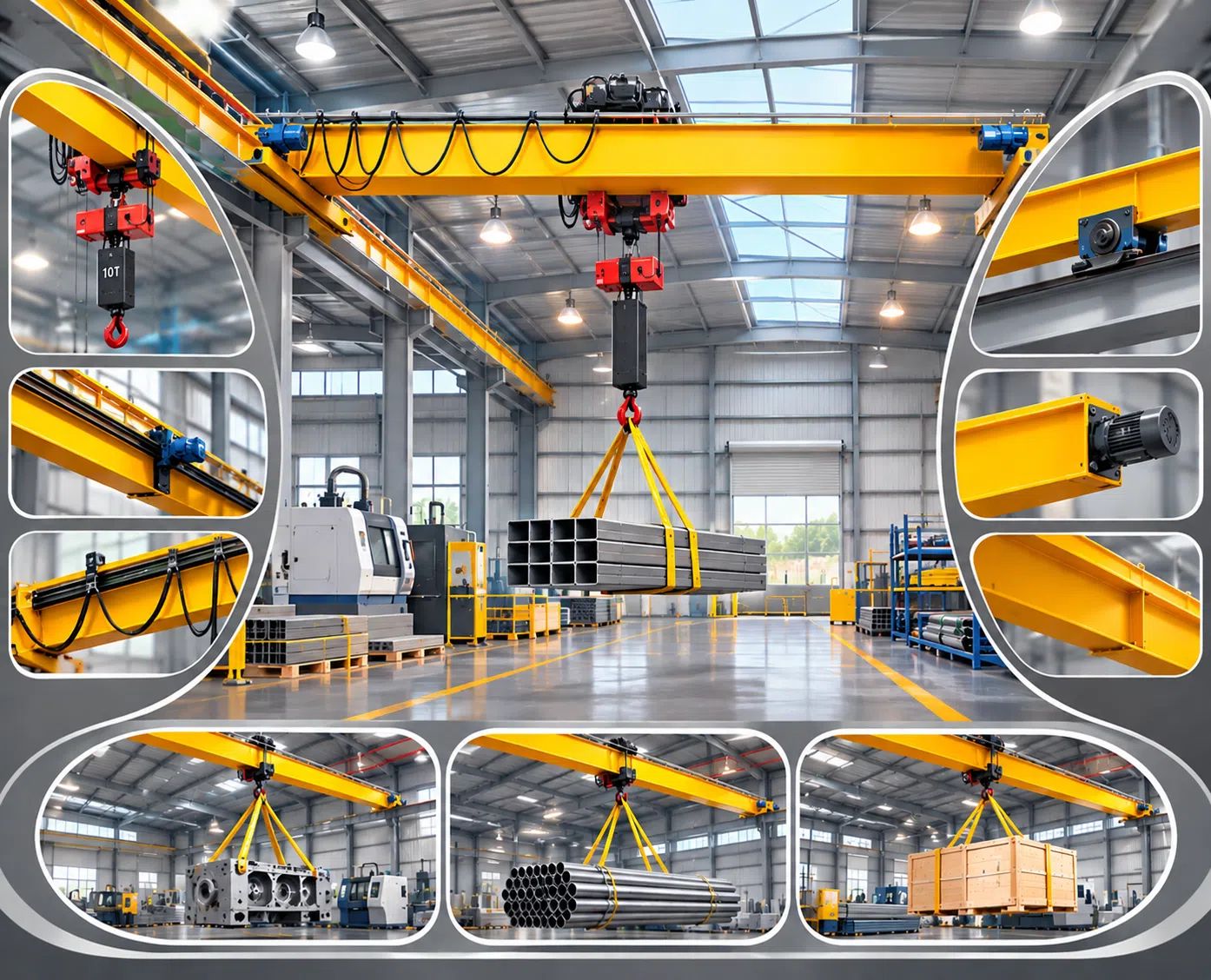
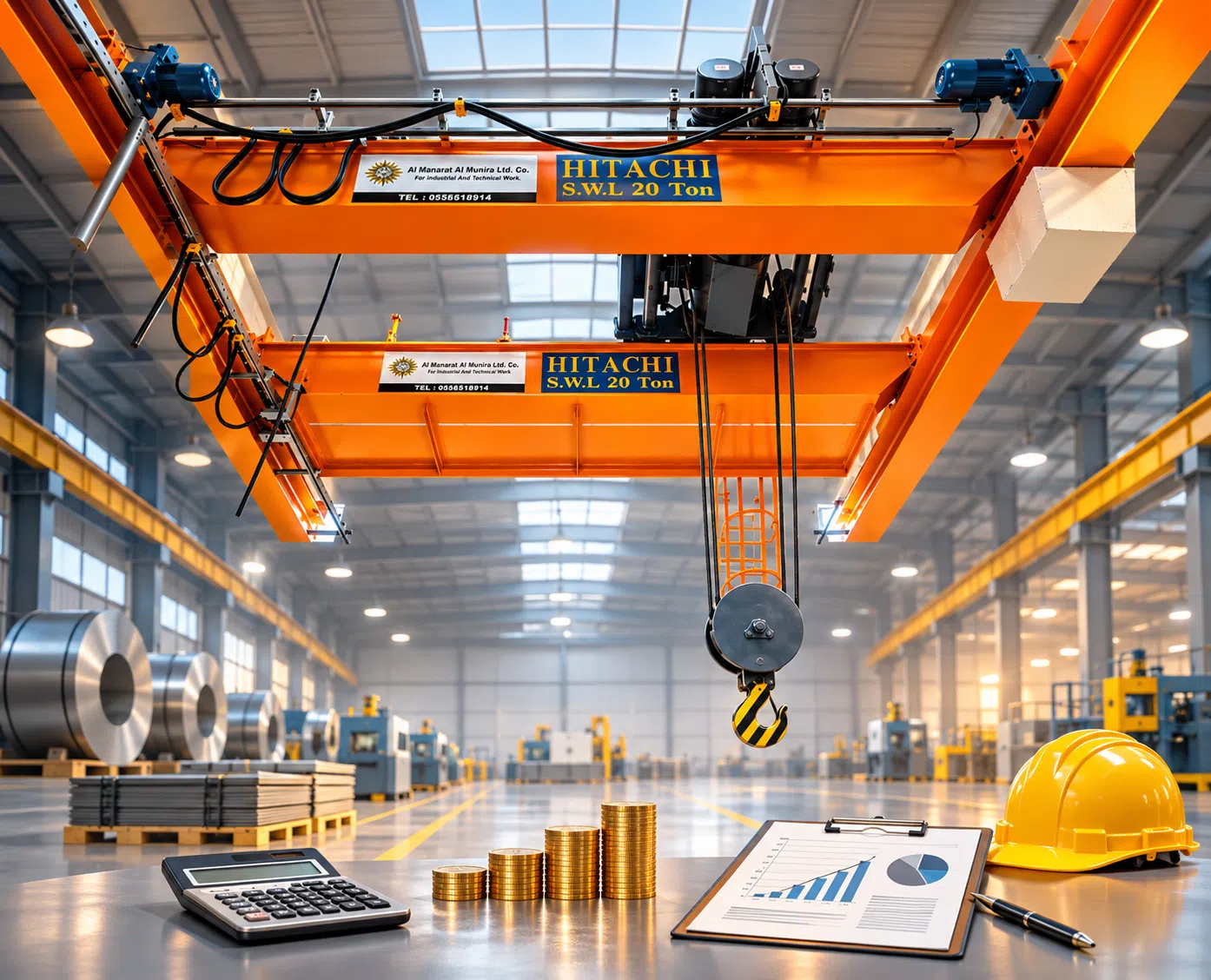
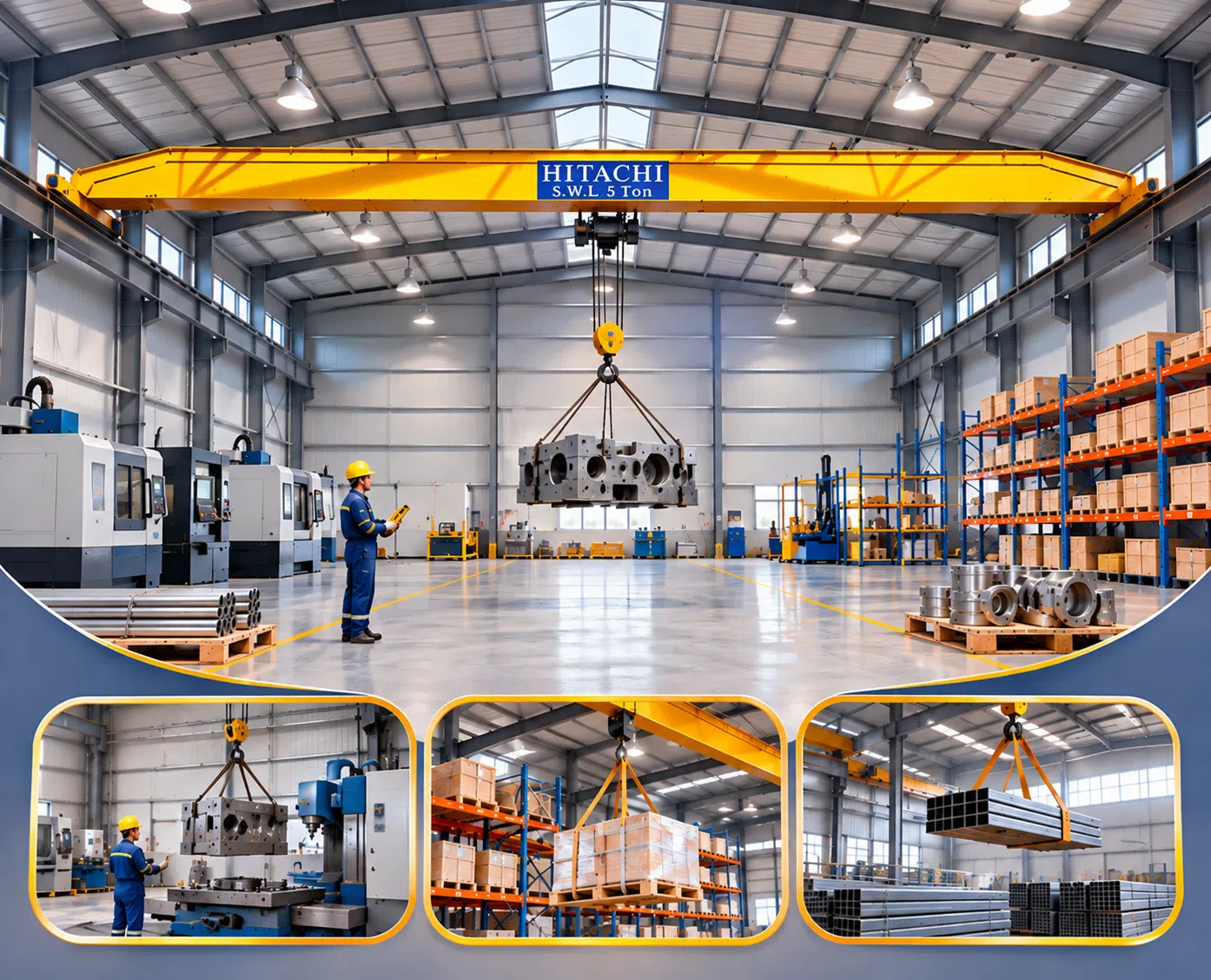
Bridge cranes are the standard choice for warehouses and steel plants. They rely on a horizontal bridge that travels on two rails fixed to the concrete columns or steel structure of the building itself, which leaves the factory floor completely free of obstructions. This category can handle loads ranging from several tonnes to hundreds of tonnes.
Overhead cranes are divided into two main types:
- Single Girder: Suitable for light and medium loads, with economical installation and maintenance costs.
- Double Girder: Designed for heavy and continuous operations, and provides higher hook height for handling very large loads.
2. Gantry Cranes
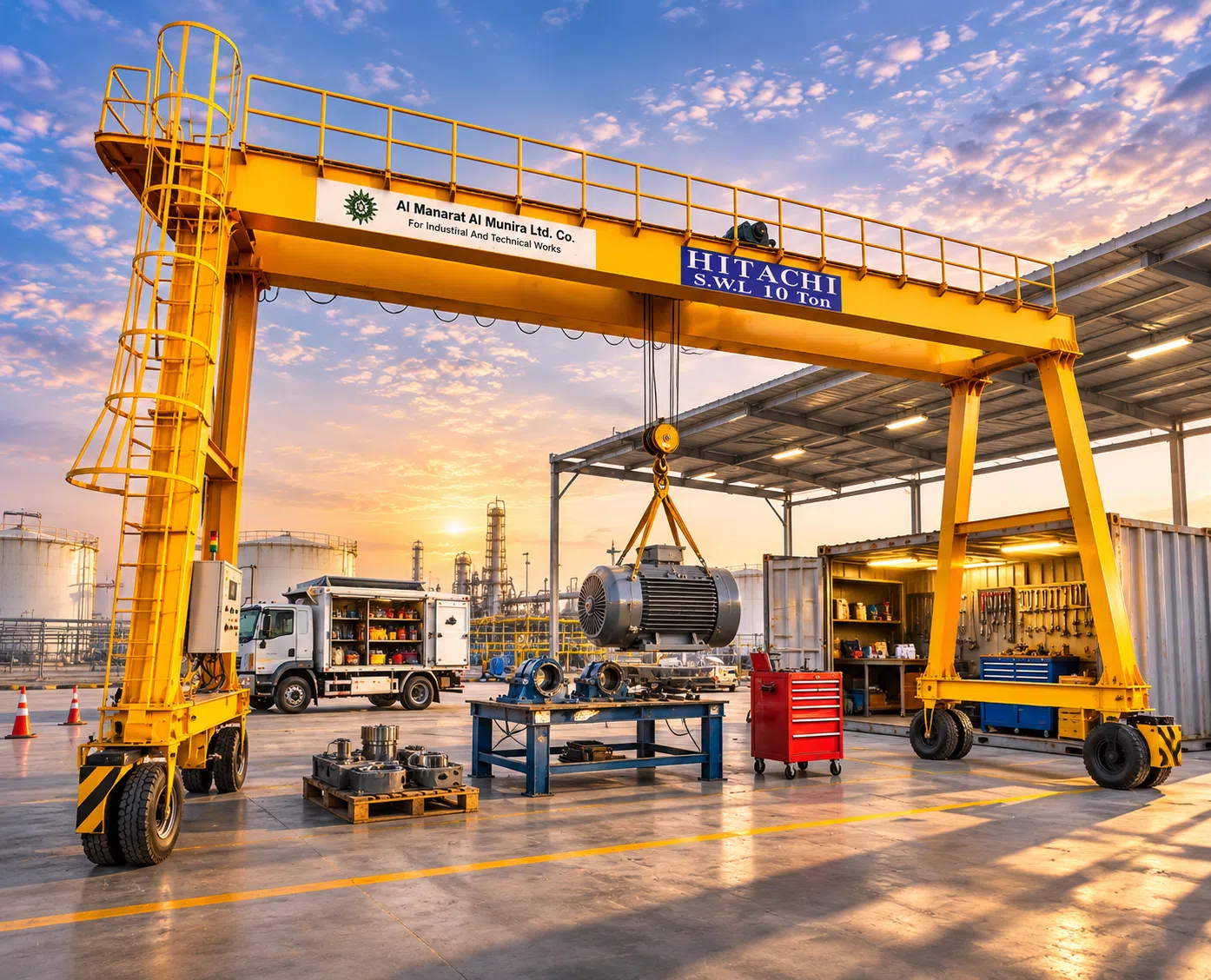
If the work environment lacks reinforced roof structures or requires work in open outdoor storage yards, the gantry crane is the ideal solution. The bridge carrying the hoist rests on rigid legs, which in turn travel on rails embedded in the ground.
These cranes serve vital sectors:
- Yards for assembling structural steelwork and precast concrete blocks.
- Outdoor maintenance facilities and workshops for building and outfitting marine components.
- Container loading and unloading terminals and ports.
3. Jib Cranes
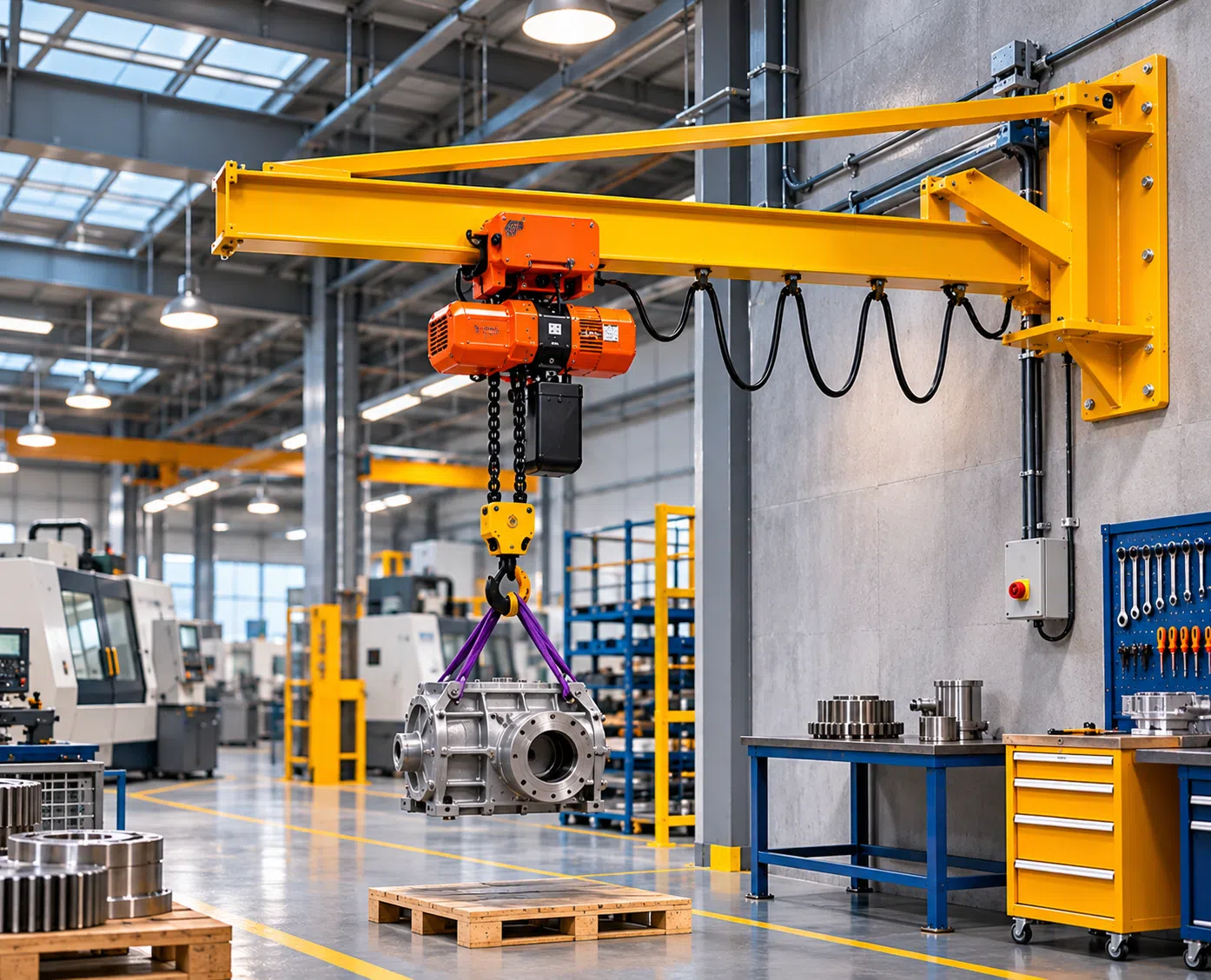
Not every production step needs a large bridge crane covering the entire building ceiling. This is where jib cranes come in. They consist of a freestanding column or a horizontal arm fixed to a wall, rotating through 180 to 360 degrees to cover a single work station.
These units provide fast handling and machine loading, relieve operational pressure on the large central cranes, and are easy to integrate into narrow assembly lines.
Comparison Table: How Do You Choose the Right Crane for Your Work Environment?
Crane Type | Common Capacity Range | Travel Path | Best Operating Environment |
|---|---|---|---|
Overhead Bridge | From 1 tonne up to 200+ tonnes | Three-axis (entire hall) | Enclosed factories and heavy assembly workshops |
Gantry | From 5 tonnes up to 100+ tonnes | Longitudinal and lateral on the ground | Open yards and outdoor storage |
Jib | From 0.5 tonnes up to 10 tonnes | Circular and limited semi-circular | Individual welding and machining stations |
Criteria for Choosing the Most Suitable Crane for Your Industrial Facility
Determining the right crane requires a careful evaluation of your facility's engineering variables by studying the following elements:
- Maximum load capacity (Rated Load Capacity): Determine the actual weight and add a 20% safety margin to avoid overstressing the mechanical motors.
- Lift height and span (Span & Lift Height): The dimensions of the structure and the distance between the columns directly affect the required engineering design.
- Duty cycle classification (Duty Cycle Classification): Running the crane for long, continuous hours calls for electrical components and brakes with an advanced industrial rating (such as the FEM or CMAA standards).
- Nature of the indoor environment: Workshops with high humidity, heavy dust or flammable materials require insulation specifications and explosion-proof motors.
Safety Guidelines and Periodic Maintenance for Cranes
The reliability of lifting equipment depends on strict adherence to periodic maintenance protocols and operator training. Steel wire ropes, pulleys and hydraulic brakes must be inspected before every work shift, with periodic tests of the load limiters (Load Limiters) and limit switches to ensure automatic stopping at danger limits and avoid any sudden mechanical accidents.
Frequently Asked Questions About Industrial Cranes
What is the basic difference between a bridge crane and a gantry crane?
A bridge crane rides on runway rails fixed directly to the building's columns and roof, whereas a gantry crane has its own structural legs that travel on tracks fixed to the floor, making it suitable for open spaces that lack columns.
How is the right crane capacity determined for a workshop?
Capacity is calculated by adding the weight of the heaviest piece expected to be lifted to the weight of the lifting accessories (such as cables, hooks and magnets), and applying an engineering safety factor that prevents the motors from running at their full maximum capacity for long periods.
How often should periodic technical inspection of cranes be carried out?
A daily visual and operational check of the brake elements and lifting ropes is recommended, followed by a comprehensive technical inspection every 3 to 6 months by specialist engineers, in addition to a certified annual inspection to test load capacity and the integrity of the metal structure.
Read also: What Is an Overhead Crane and How Does It Increase Your Productivity?