
What Is an Overhead Crane and How Does It Increase Your Productivity?
Modern manufacturing demands an accelerating work pace that cannot tolerate wasted floor space or exposing technical staff to the risks of random manual handling. This is where overhead lifting systems stand out as a fundamental engineering solution that reshapes the flow of materials inside the industrial facility. Investing in a modern overhead crane is not just an equipment upgrade for the factory. It is a well-considered step to turn unused vertical space into vital logistics routes that multiply the speed of the production cycle.
What Is an Overhead Crane?
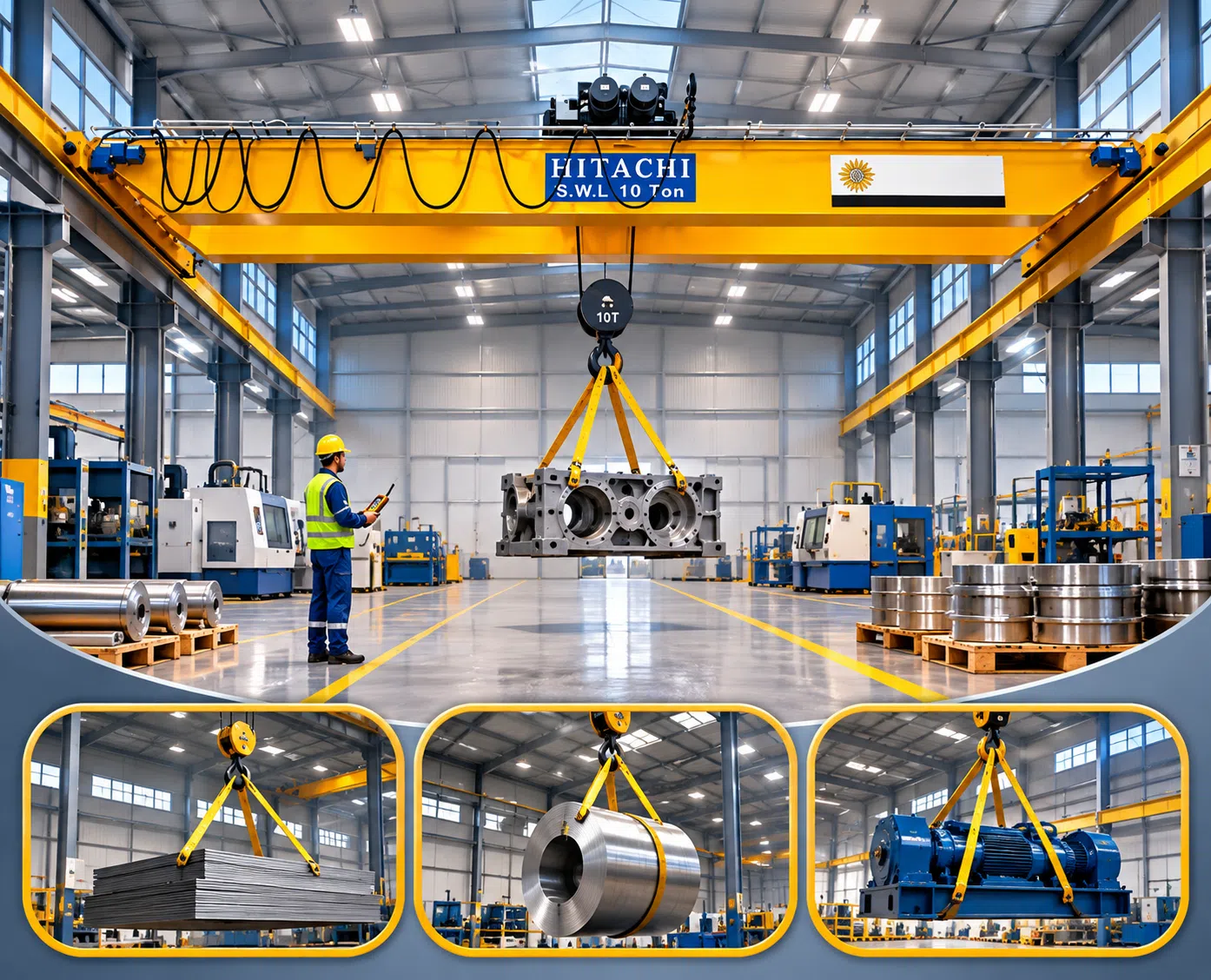
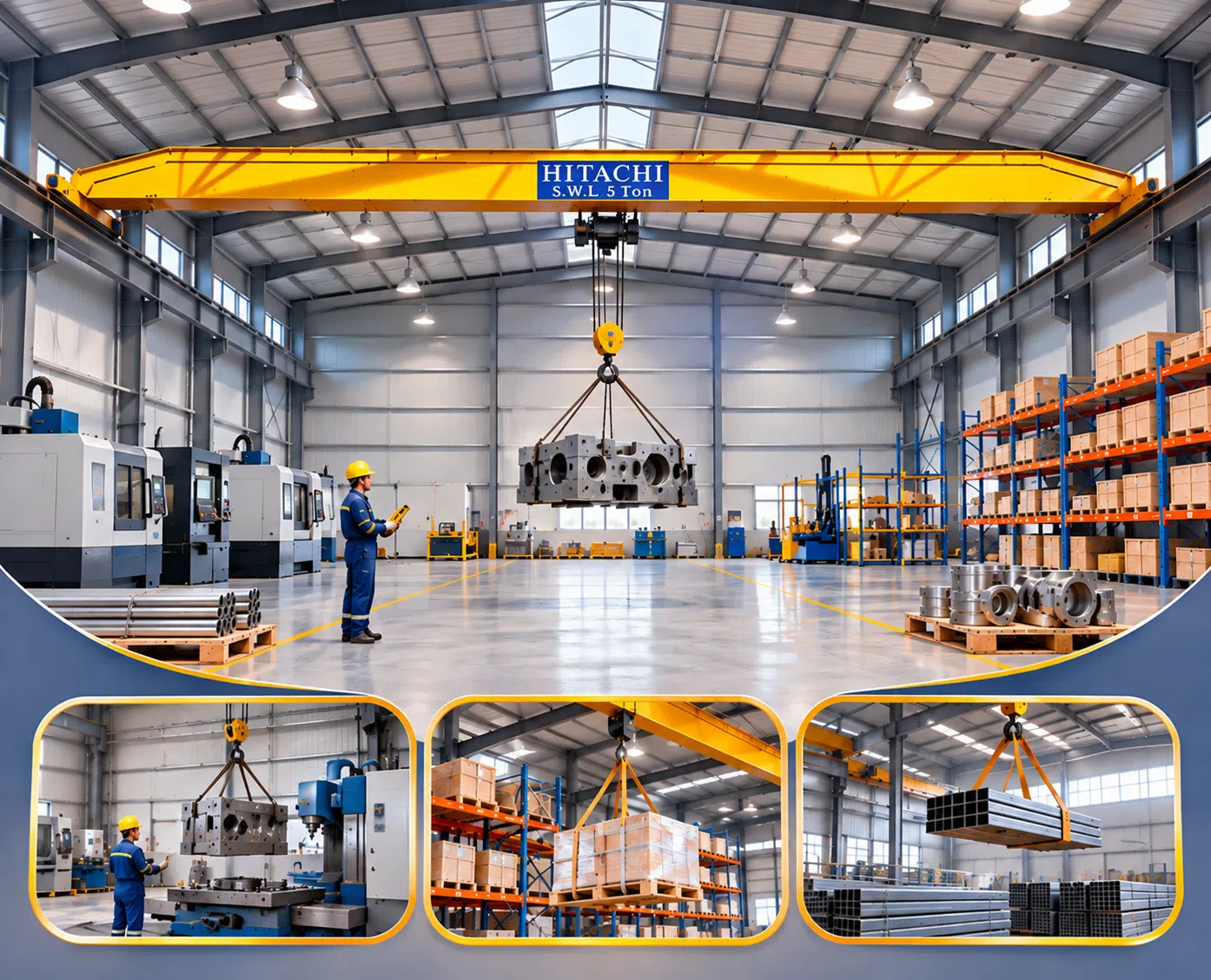
An overhead crane, also known as a bridge crane, is an integrated mechanical system for moving and transporting heavy materials. It relies on a horizontal bridge that travels lengthwise over two parallel runways fixed to the building's structure or to dedicated support columns, while the hoist trolley and hoist travel across the length of this bridge to provide full coverage of the entire work area.
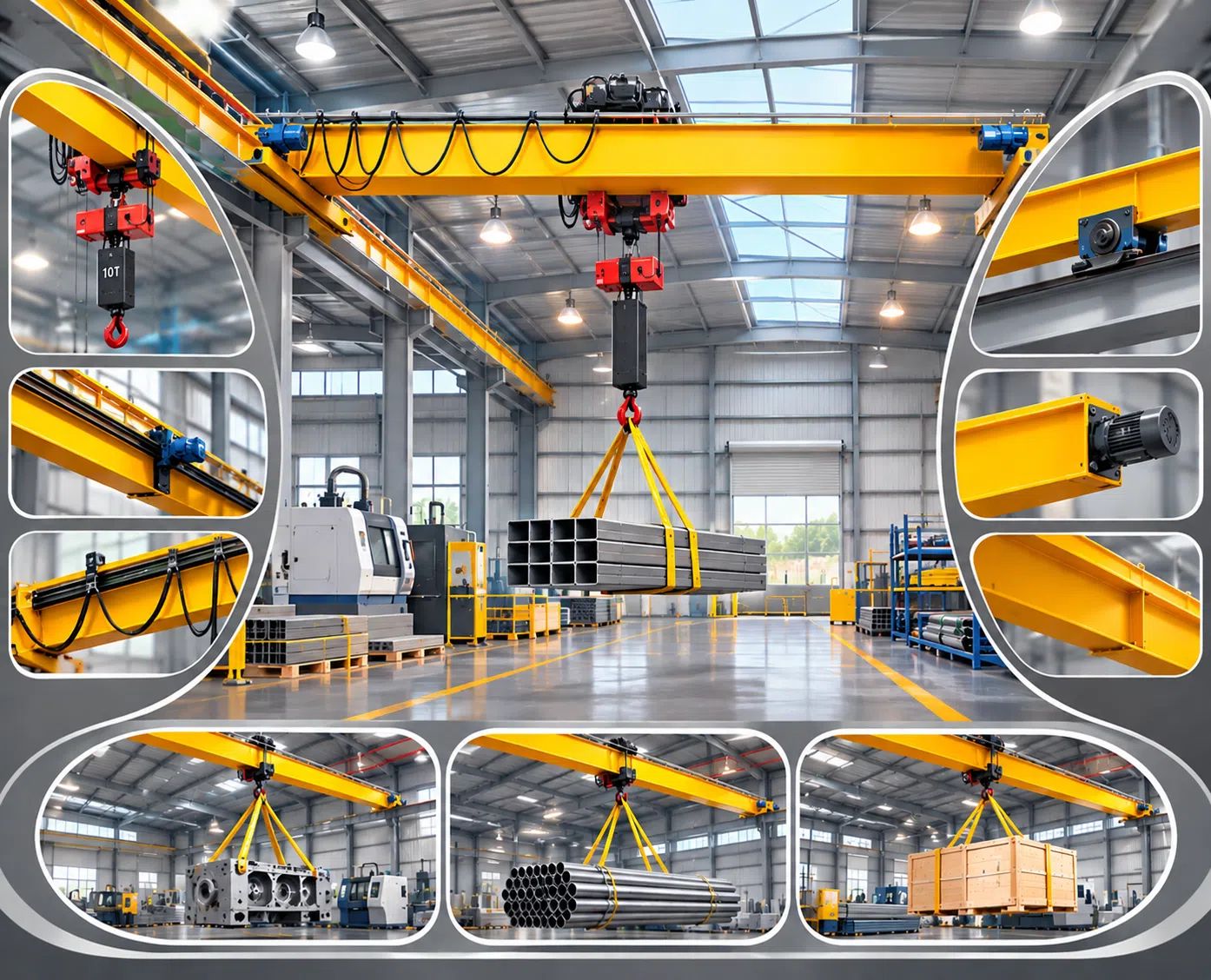
Engineering-wise, this system consists of four main parts:
- The carrying bridge (Bridge): The main steel beam that connects the two travel runways and carries the center of gravity.
- Longitudinal travel runways (Runways): The steel rails fixed on the hall columns on which the bridge travels back and forth.
- The trolley and hoist (Hoist & Trolley): The lifting mechanism responsible for raising and lowering the load and for cross travel.
- The electrical control system (Control System): Operator cabins, or wireless and pendant control units (Pendants & Radio Remotes).
Comparing the Engineering Types of Overhead Cranes
The type of bridge and the way it is mounted determine the level of efficiency and the amount of production capacity that can be extracted from the available factory area. Here are the fundamental differences between the two most common options:
Single Girder Overhead Crane (Single Girder)
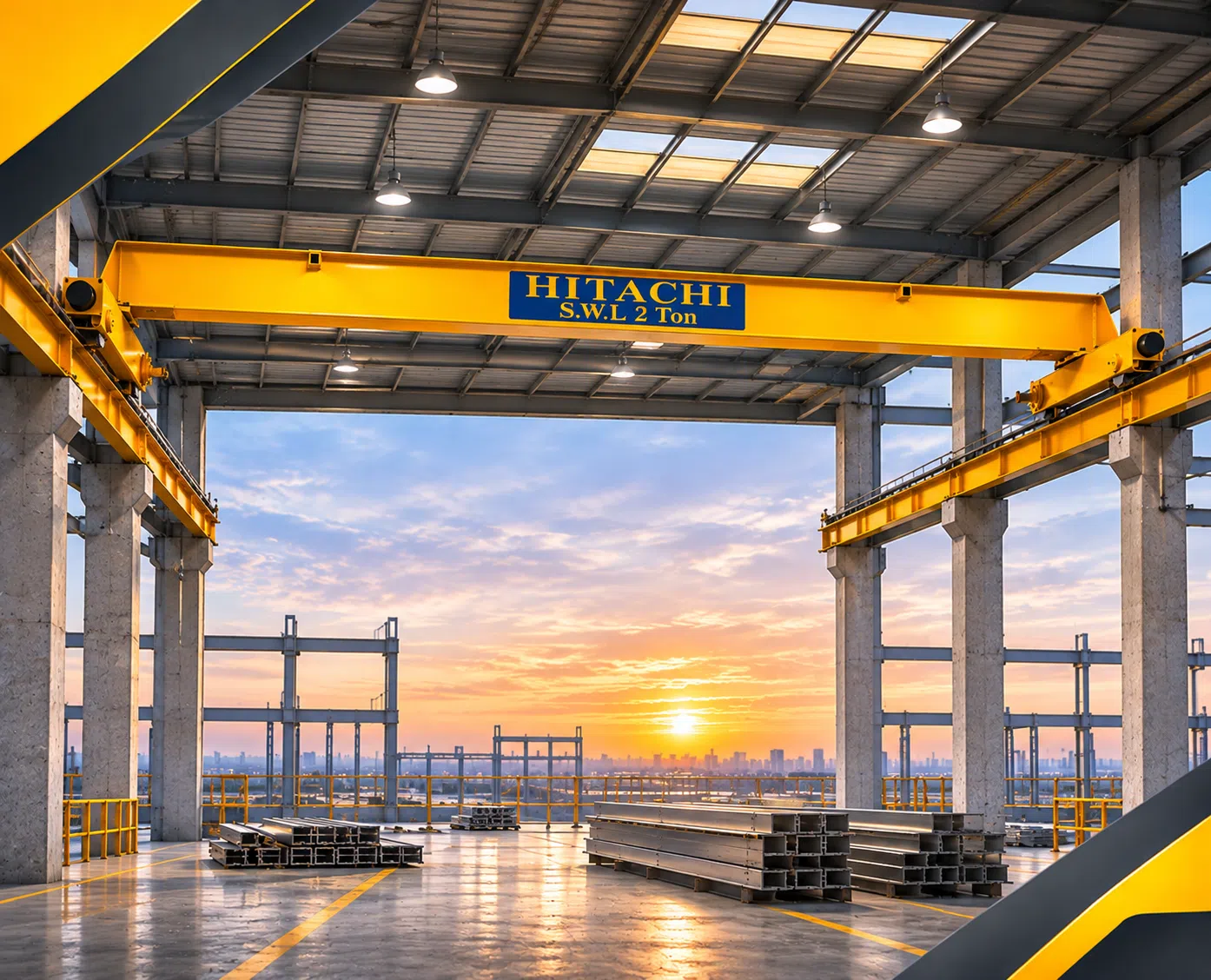
This category relies on a single metal girder from which the hoist trolley hangs and travels on its lower flange, which makes it an ideal design for facilities with low ceilings or light work requirements.
- Suited to loads that usually range between 1 and 20 tons.
- Features a light overall weight that reduces the structural loads on the building's columns and walls.
- Provides an economical investment and operating cost and easy, fast installation and maintenance.
Double Girder Overhead Crane (Double Girder)
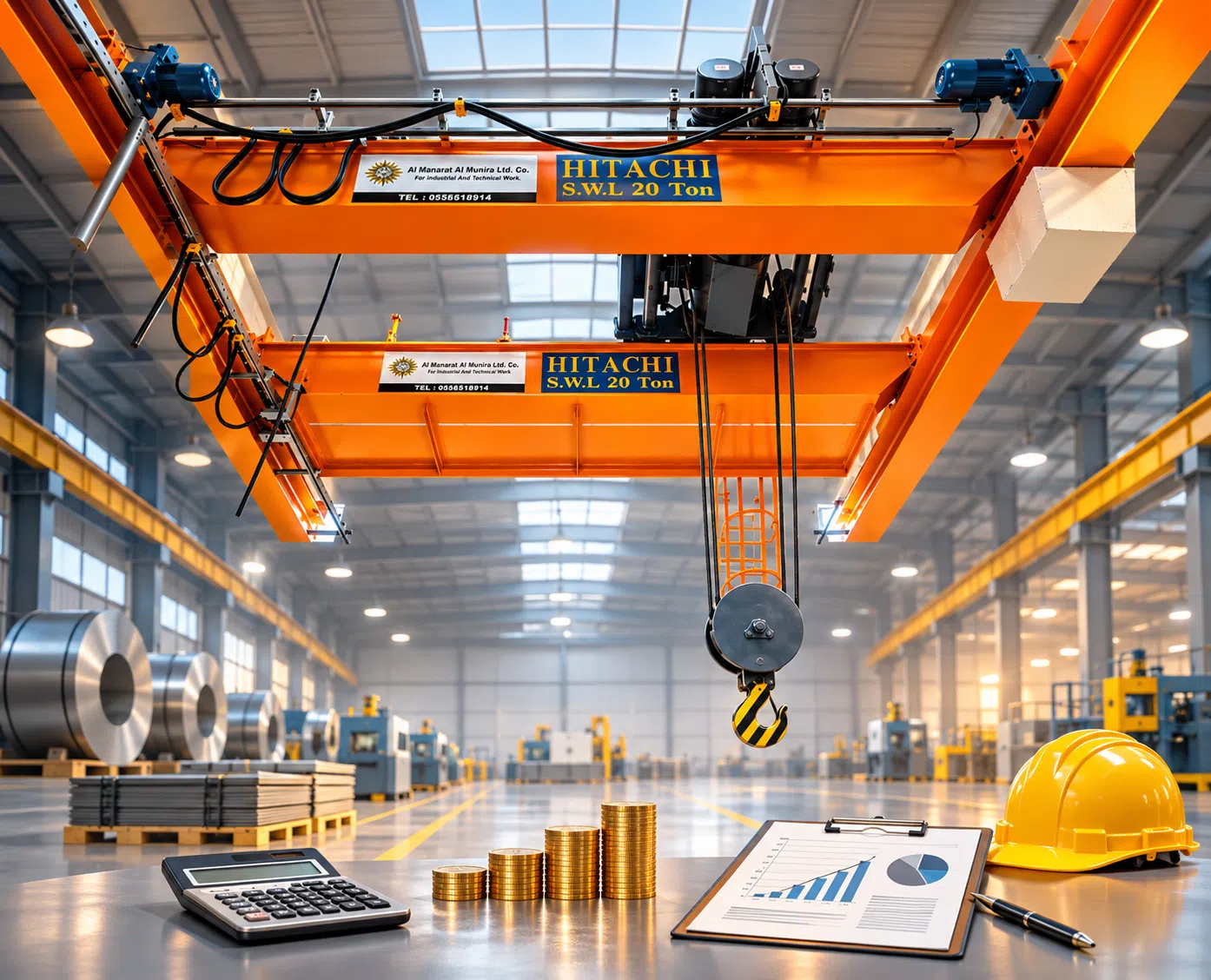
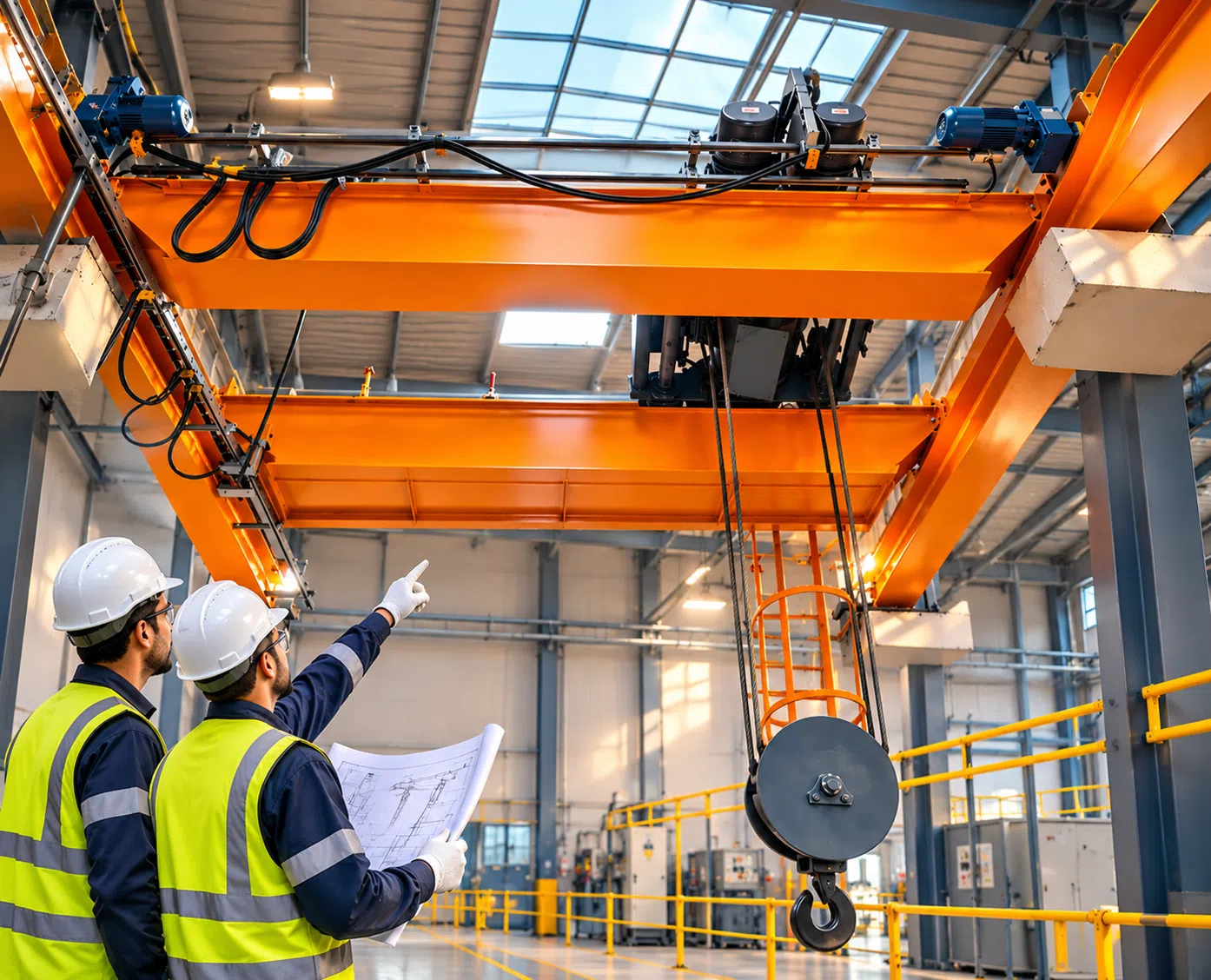
When production lines require lifting huge weights and reaching the maximum available hook height, the twin parallel girder design stands out, with the hoist trolley traveling on top of the two girders rather than hanging beneath them.
- Supports heavy, continuous operations for major loads exceeding 100 tons.
- Gives the maximum possible lifting height (Hook Height) to get close to the facility's roof.
- Equipped with side walkways and integrated inspection platforms that let technicians inspect electrical and mechanical parts easily and safely.
How Does an Overhead Crane Raise Productivity Levels in Your Factory?
The direct effect of installing an overhead crane goes beyond just lifting weights. It radically affects industrial performance indicators and the facility's profitability through three practical pillars:
Speeding Up Handling Cycles and Workflow
Overhead cranes reduce the time to move raw materials between forming stations. Instead of waiting and driving forklifts through narrow, crowded aisles, loads move in straight lines through the air at controlled speed and extreme precision. There are no logistics bottlenecks inside the hall. Vertical movement gives the production line a continuous flow that makes order delivery faster than ever.
Using 100% of Floor Space (Floor Space Optimization)
The overhead lifting system removes the need to leave wide aisles for loading trucks and ground handling equipment, giving factory management full flexibility to add new production lines or use that space for strategic storage of finished products.
Enhancing Technical Staff Safety and Meeting Safety Standards
Back injuries, falls and accidents caused by collisions with ground equipment are among the biggest causes of production line stoppages and rising insurance and compensation costs. Thanks to remote guidance systems (Radio Remotes), the operator stands at a completely safe distance from the load, which gives a clear panoramic view and removes any chance of direct contact with solid objects.
Detailed Comparison: Overhead Crane vs. Ground Forklifts
In logistics planning inside production environments, the choice is usually between overhead lifting equipment and ground carts. The following points reveal the strengths and operational differences between them:
- Use of space: The overhead crane gives you full use of the hall floor because it is entirely suspended, whereas forklifts eat up wide areas that require clear crossing aisles in advance for travel and maneuvering.
- Lifting capacity and nature of loads: Overhead crane loads reach tens of tons for long, huge objects with complete safety, while forklifts remain limited to restricted weights and load dimensions that can tip the machine over if it exceeds the balance point.
- Safety rate and worker safety: The risk of colliding with pedestrians is eliminated with overhead cranes thanks to their suspended path and wireless control from a distance, while forklifts are a leading cause of pedestrian strike accidents and collisions with warehouse racking.
- Operating and maintenance costs: The overhead crane relies on fixed, low-consumption electric motors, while forklifts require continuous maintenance including fuel consumption, periodic oil changes, tire replacement, and the risks of large battery wear.
When Does Your Facility Need to Adopt Overhead Crane Solutions?
Adding this equipment becomes an absolute necessity, not an engineering luxury, if you notice the following signs in your factory:
- Repeated damage and deformation of raw materials due to manual handling errors or their falling from improvised machinery.
- Operating aisles choked with forklifts and slow transport of products between processing machines.
- Product weights exceeding the 3 to 5 ton barrier, threatening the safety of the work team.
- Management's wish to increase manufacturing capacity without expanding the building or renting additional space.
Operating Specifications to Ensure the Longest Service Life for the Equipment
Maintaining the efficiency of the overhead crane requires regular inspection of the mechanical brakes and steel cables, with monitoring of runway alignment (Runway Alignment) to avoid wear on the bridge wheels from uneven friction, in addition to confirming that the overload sensors (Overload Cut-off) work accurately, which protect the gears and motors from sudden burnout when an attempt is made to lift weights exceeding the rated capacity.
Frequently Asked Questions About Overhead Cranes
Can an overhead crane be installed in a building that has no equipped concrete columns?
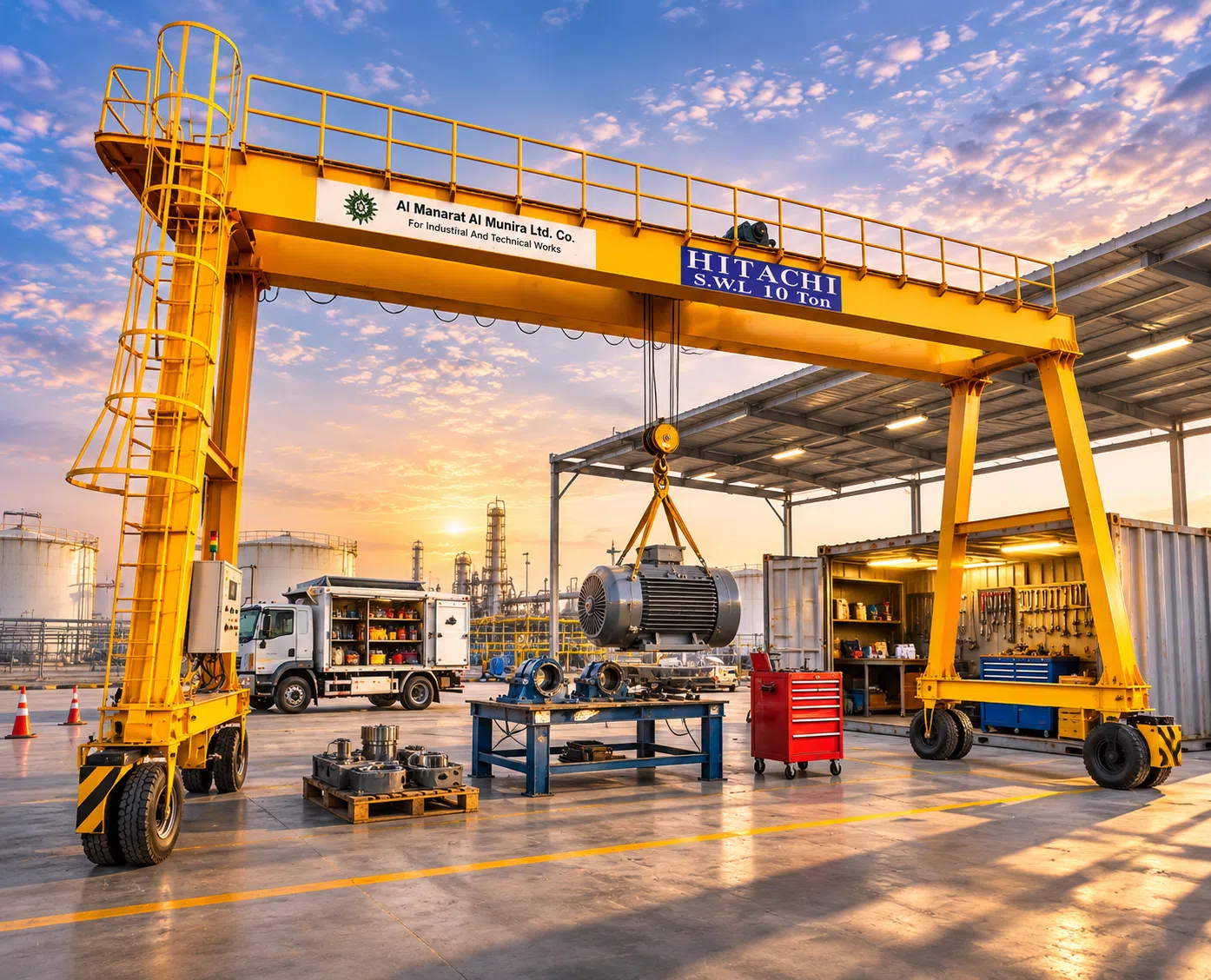
Yes, a self-supporting steel structure (Freestanding Crane System) resting on precast foundations can be designed and installed, with no need to place any weight on the roof or walls of the existing building.
What is the operational difference between cabin control and wireless control?
Wireless remote control offers greater flexibility and lets the operator move freely beside the loading area to make sure the hook is attached accurately, while cabins are used in giant cranes and metal smelting plants to protect the worker from high temperatures and dust.
How does the crane's duty cycle (Duty Cycle) affect motor selection?
The duty cycle (classified according to FEM or CMAA standards) defines the number of lifts and working hours in a single shift. The more continuous and demanding the operations, the more the crane requires self-cooling motors and thermal insulation of an advanced class to avoid stoppage and thermal exhaustion.
Read also: How to Choose Factory Cranes Suited to Your Space and Type of Work