
Overhead Crane Prices: A Guide to Budgeting Your Project
Many project managers fall into the trap of comparing quotations based only on the figure on the initial invoice, ignoring installation costs, civil works and the long-term consumption of spare parts. The result is a budget overrun large enough to delay the start-up of production lines. Studying overhead crane prices requires a comprehensive engineering and financial understanding that goes beyond buying the steel bridge and the hoist. It covers the full life-cycle cost of the equipment, from supply through ongoing operational maintenance.
What Determines Overhead Crane Prices?
Overhead crane prices are determined by five main manufacturing variables: maximum lifting capacity (in tonnes), bridge span (in metres), structural design (single or double girder), duty cycle classification (including motor specifications), and the quality of the control systems and additional safety equipment.
Together, these variables affect the cost as follows:
- Doubling the lifting capacity and the span requires larger quantities of high-strength steel and more powerful drive motors, which raises the base price of the equipment.
- Choosing a heavy-duty classification calls for specially specified electric motors that raise the initial cost but prevent repeated failures later.
- Ordering smart control systems and advanced sensors adds an upfront technical cost, but saves substantial sums in energy costs and the risk of on-site accidents.
The Engineering Factors with the Greatest Impact on Purchase Cost
Every technical detail in a crane's design carries a direct financial weight that is reflected in the final price set by the manufacturer or supplier:
1. Span and Load Capacity
The weight of steel used to fabricate the girder accounts for the largest share of the initial cost. The wider the span between the columns, the more additional reinforcement and heavier steel sections the girder needs to resist bending under the load. This cost multiplies if the design capacity exceeds 10 tonnes, or if the building requires giant cranes beyond 50 tonnes.
2. Single Girder vs. Double Girder Design
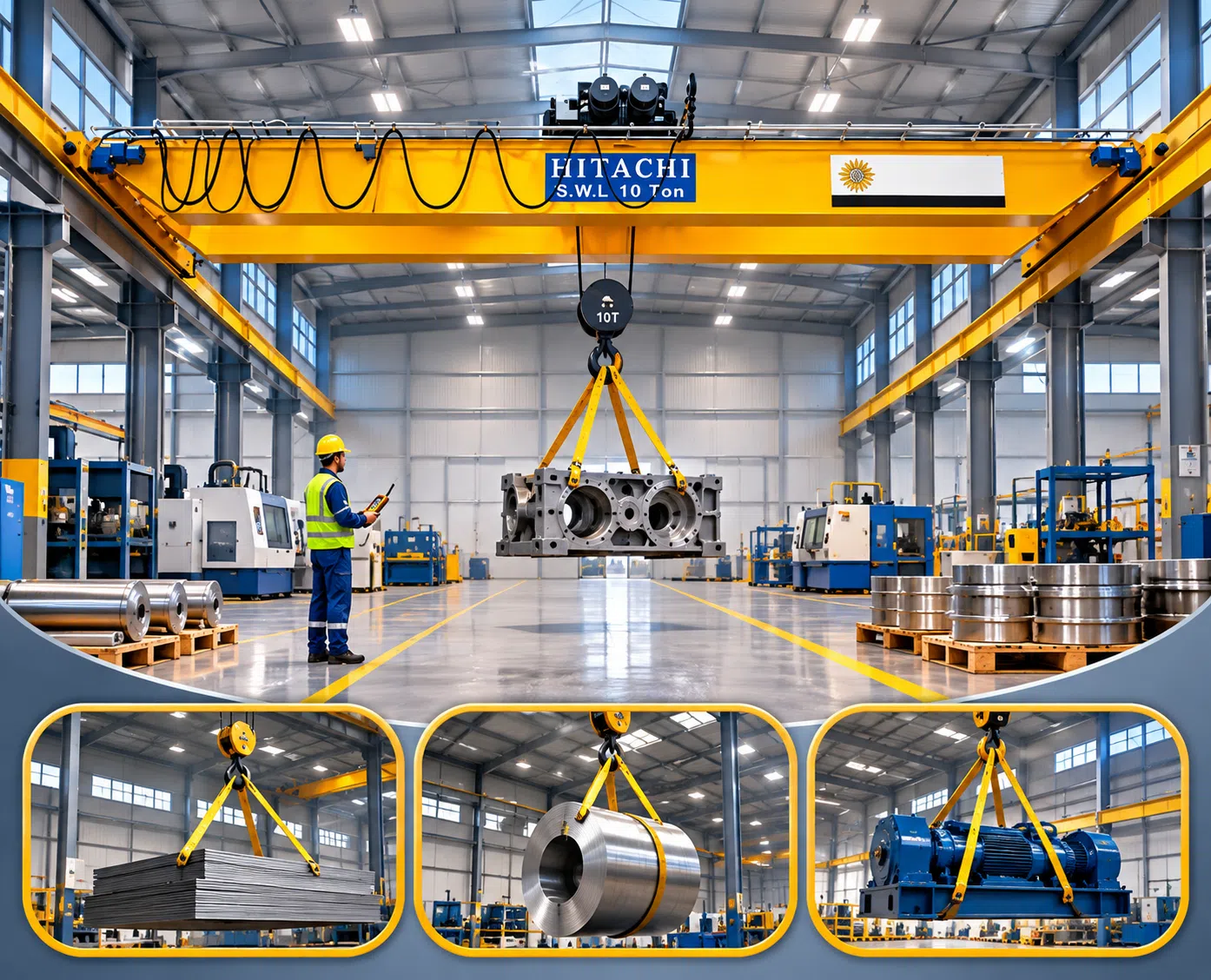
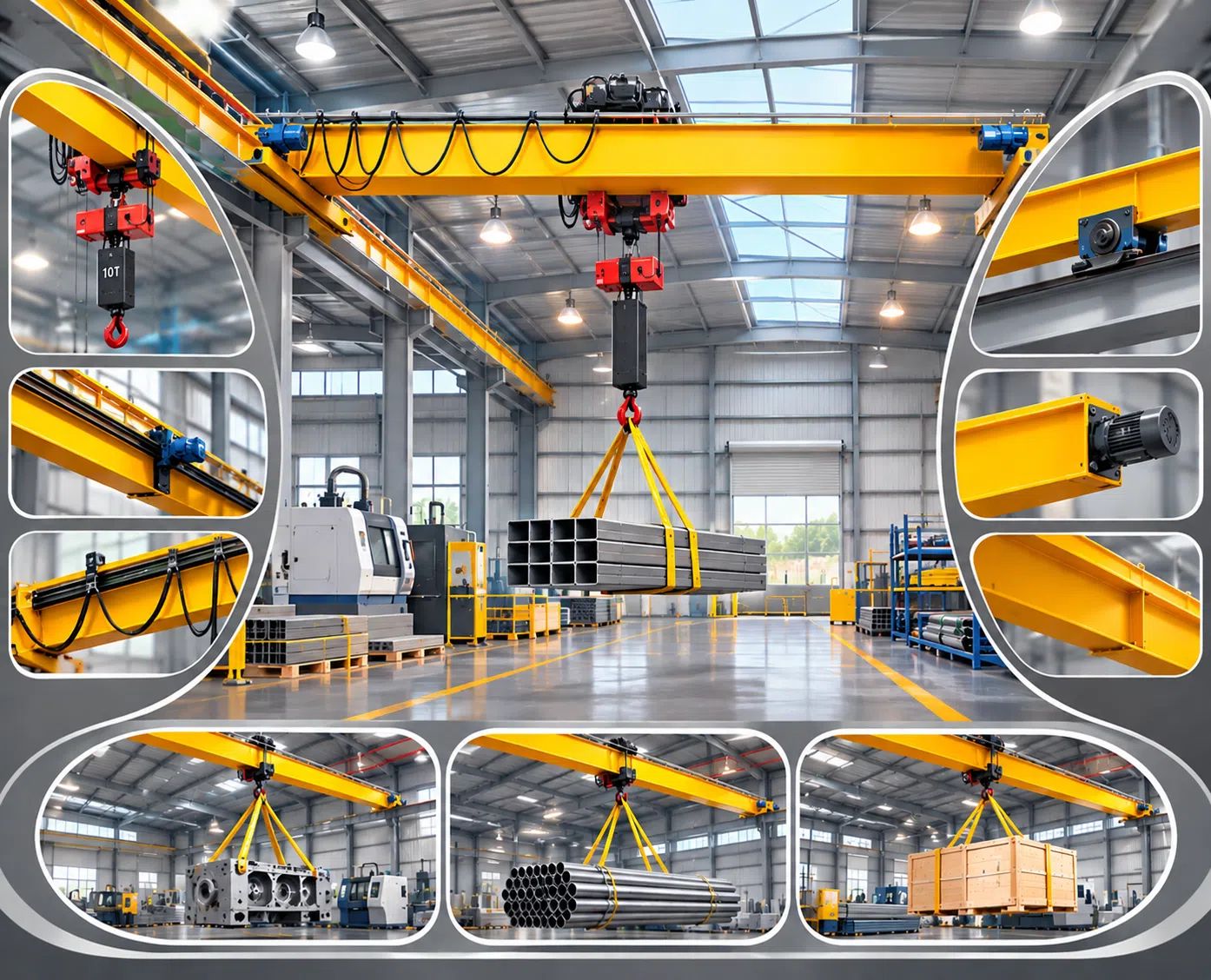
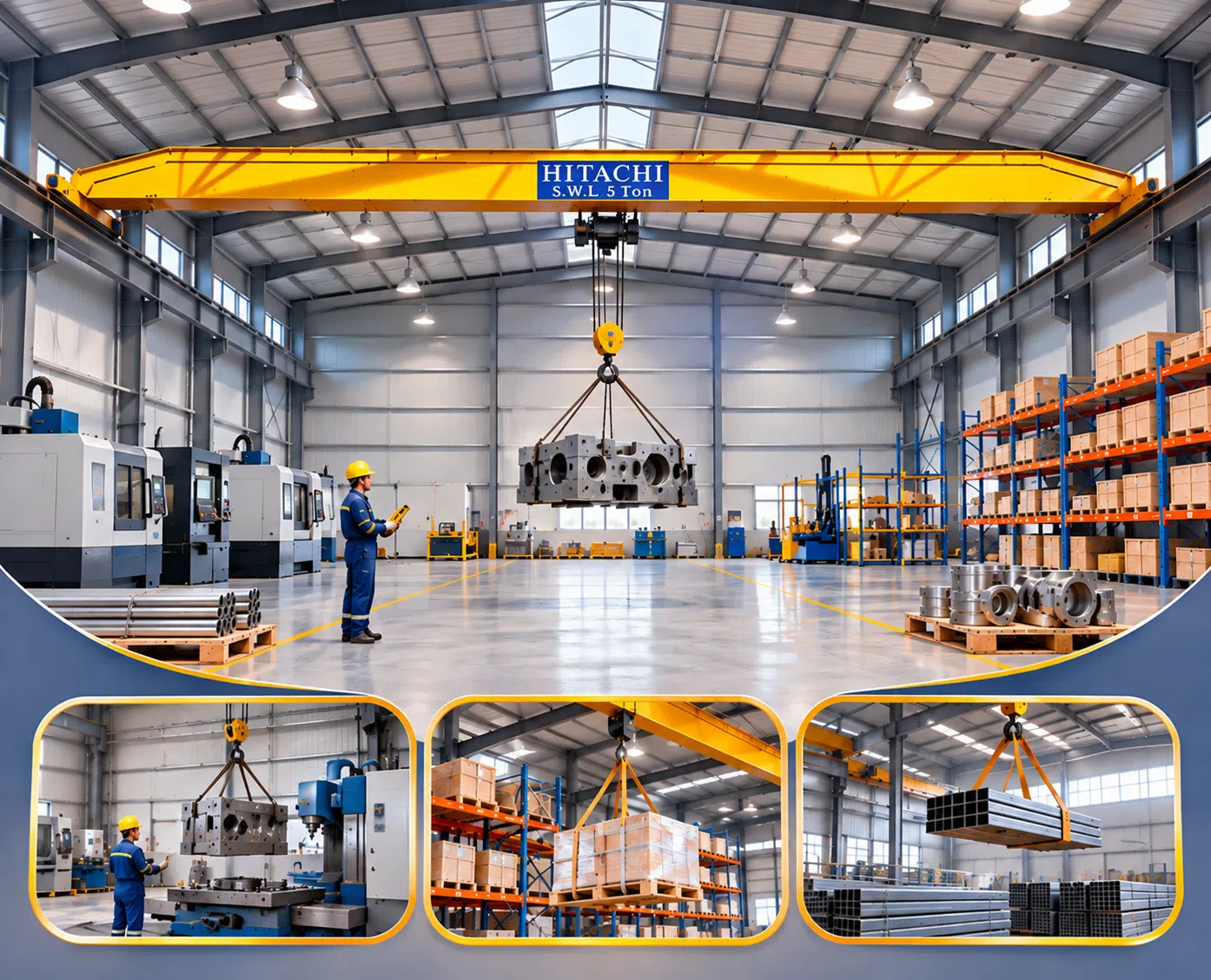
The single girder design is the lowest-cost option in terms of raw material consumption, ease of installation and compatibility with existing building structures.
- A single girder crane saves roughly 25% to 35% of the equipment cost compared with a double girder crane for the same limited capacity.
- A double girder crane raises the initial cost but offers superior lifting capability, greater hook height and integrated maintenance walkways that extend the life of the system.
3. Motor Speeds and Variable Frequency Drive (VFD) Technology
Conventional single-speed motors have a low initial cost, but they subject the gears and wire ropes to repeated mechanical shocks from sudden stops and starts. Adding Variable Frequency Drives (VFDs) to all motion axes raises the price of the equipment only slightly, yet it ensures smooth motion that reduces load swing and extends brake life by more than 50%.
Comparative Analysis: Initial Cost vs. Total Cost of Ownership (TCO)
A successful investment assessment does not depend only on lowering the purchase price. It depends on calculating everything the facility will spend over the equipment's operating life, by comparing the following aspects:
- Purchase and initial supply price: Buying cheap equipment of unknown origin gives an immediate cash saving in the set-up budget, whereas choosing certified European or Japanese components requires a higher initial investment that protects the plant's assets and their market value.
- Installation and structural works costs: Heavy cranes that have not been engineered properly need costly reinforcement of the building's columns and concrete foundations, whereas precise engineering customization reduces dead loads and saves large sums on the steel structures that carry the runways.
- Energy consumption and motor efficiency: Old, energy-inefficient motors draw high electrical currents that raise the plant's monthly electricity bills, while modern high-efficiency motors ensure controlled energy consumption that reduces fixed expenses.
- Downtime and production losses: A production line stoppage caused by the failure of a cheap hoist can cost thousands of dollars within a few hours, whereas equipment with the right duty classification ensures continuous operation without sudden breakdowns that disrupt delivery schedules.
- Spare parts availability and cost: Rare parts from little-known companies mean months of waiting and doubled shipping costs, whereas certified systems offer locally available gear sets, brakes and cables at clear, standard prices.
Hidden Items to Include in Your Lifting Project Budget
A project budget is not limited to buying the crane itself. There are unavoidable additional expenses that the finance department must clearly account for to avoid surprises:
- Runway cost (Runway Beams & Rails): Includes supply and installation of the steel rails, the fastening and levelling systems, and the supporting beams running the full length of the bay.
- Power supply system (Conductor Bars): Insulated conductor bars, electrical feeder cables and main isolation switches to ensure workshop safety.
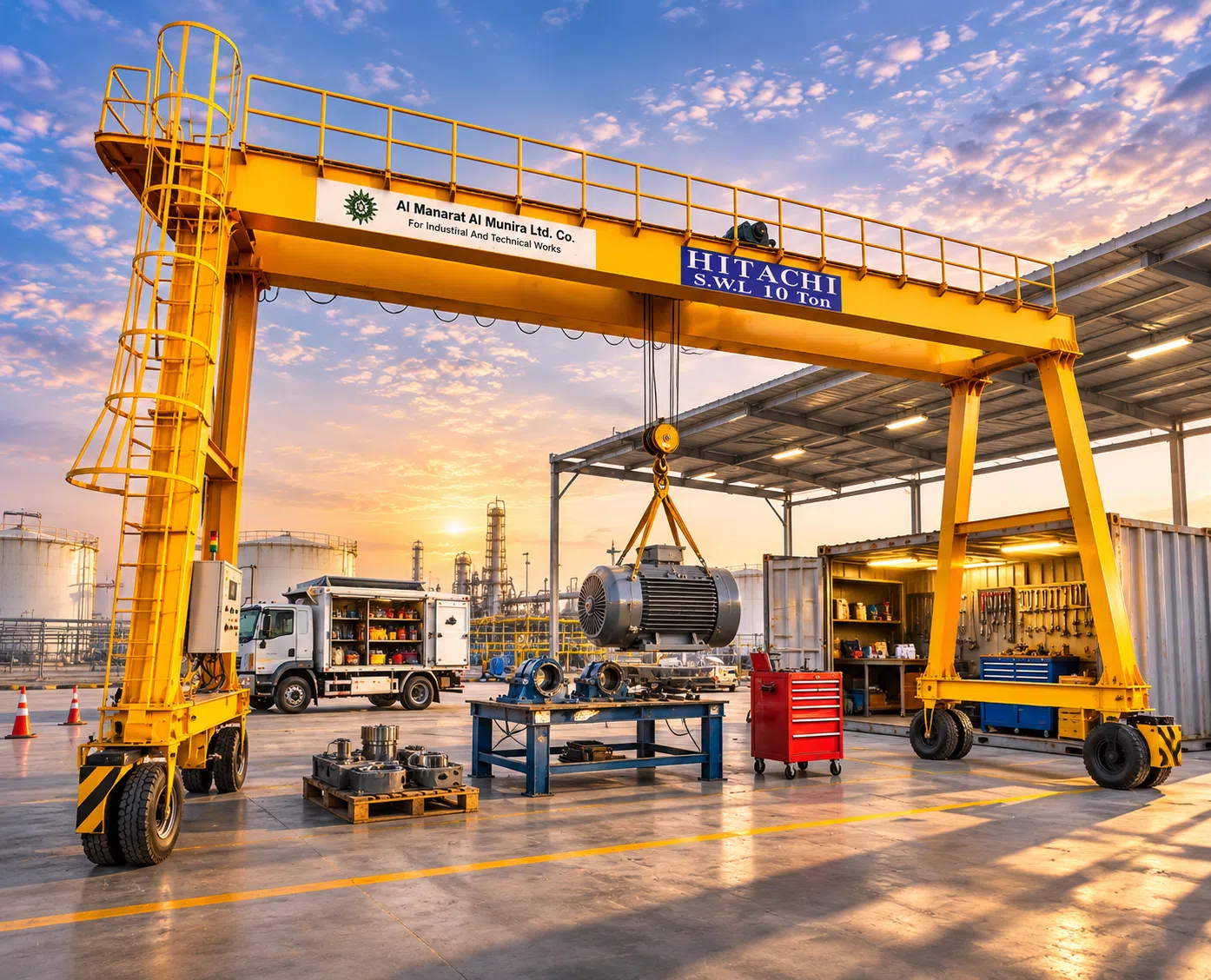
- Transport and heavy logistics equipment: Hiring mobile telescopic cranes (Mobile Cranes) and scaffolding to lower, lift and fix the bridge onto the overhead runways.
- Load testing and certification: Static and dynamic load testing (Load Testing) carried out by accredited third-party inspection bodies to issue safe operation permits.
- Operator training programs and safety equipment: The cost of training technicians in proper handling techniques, and of buying additional radio remote controls and digital load limiters.
How Do You Get the Best Value for Your Plant?
- Define the actual required load accurately and avoid excessive over-sizing of capacity, which raises the cost of motors and girders without any real operational need.
- Request itemized quotations that separate the price of the bridge from the hoist, the runways, installation charges and the warranty, so you can make a fair comparison.
- Balance the required span against the coverage area. In some cases, installing two medium-capacity cranes is better and cheaper to operate than installing one giant crane that shuts down the entire workshop whenever it is under maintenance.
- Require a comprehensive warranty of no less than two years on motors and electrical parts, along with a commitment to supply spare parts for at least 10 years.
Frequently Asked Questions About Overhead Crane Prices
What is the average price of overhead cranes in the industrial market?
Prices vary widely depending on the specifications. Light single girder cranes with limited capacities (1 to 5 tonnes) start in economical price brackets suited to small workshops, while the cost of large double girder systems with capacities above 20 tonnes and long spans runs into the hundreds of thousands, because of the steel requirements and complex engineering equipment.
Is buying a used overhead crane an economically viable option?
Buying used may free up initial cash, but it carries the risk of invisible metal fatigue, worn gears, the absence of safety guarantees, and difficulty matching the existing runways to your plant's dimensions. As a result, the cost of refurbishing and inspecting it comes very close to the cost of buying a new certified crane that ensures worker safety.
What makes one crane quotation higher than another for the same capacity?
The difference usually comes down to the country of origin of the critical components (motors, hoist and brakes), the thickness and grade of the steel used to build the girder, the inclusion of speed inverters, and whether the offer covers the runways, power bars, installation and on-site testing, rather than selling the equipment bare at the factory floor.
Read also: Crane Manufacturing Stages and Compliance with Global Quality and Safety Standards