
How to Choose Factory Cranes Suited to Your Space and Type of Work
A mistake in estimating the specifications of an industrial lifting system costs large sums that are not limited to the price of the equipment alone. They extend to the cost of complex structural modifications and repeated production line stoppages caused by unsuitable motor failures. Equipping your facility with the latest advanced factory cranes is not a routine purchasing decision to be made in haste. It is a careful engineering study that balances available space, load capacity and daily duty cycles to achieve the highest possible operating return with the highest level of safety.
How Do You Choose the Right Factory Cranes?
Choosing the ideal crane for your factory is determined by four decisive engineering factors: maximum load capacity with a future safety margin, the dimensions of the available space (span and free height), the nature of the operating environment (heat, dust, humidity), and the daily duty cycle classification (the number of lifts and their speed in each shift).
Matching these elements properly ensures the following results:
- Avoiding mechanical stress on the building's steel structures and extending the service life of the motors.
- Improving the flow of raw material transfer between machines without any waste of floor space.
- Protecting technical staff from falling-load accidents or cable breakage by complying with international safety standards.
Studying the Structural Space: Dimensions to Measure with Millimetre Precision
Before requesting a quotation or approving the crane drawings, engineering standards require a careful inspection of the installation site and the actual building measurements, to avoid any mechanical conflict during movement.
- Span (Span): The clear horizontal distance between the centres of the runway rails (Runway Rails). It is the dimension that determines the length and overall weight of the steel bridge.
- Required lift height (Lift Height): The vertical distance from the factory floor to the highest point the hook can reach when lifting the load, taking into account the height of the objects to be cleared.
- Headroom (Headroom): The remaining space between the highest point of the crane and the lowest obstruction in the facility's ceiling, such as fire-fighting pipes, roof trusses and air-conditioning ducts.
- Side clearance and approach (Hook Approaches): The minimum distance the hook can reach alongside walls and columns, which defines the dead area the crane cannot serve.
Determining the Most Suitable Crane Type According to the Nature of the Facility
Work environments differ from one factory to another, and so does the mechanical system able to deliver the best performance within that environment:
Enclosed Factories with Ready Structural Columns
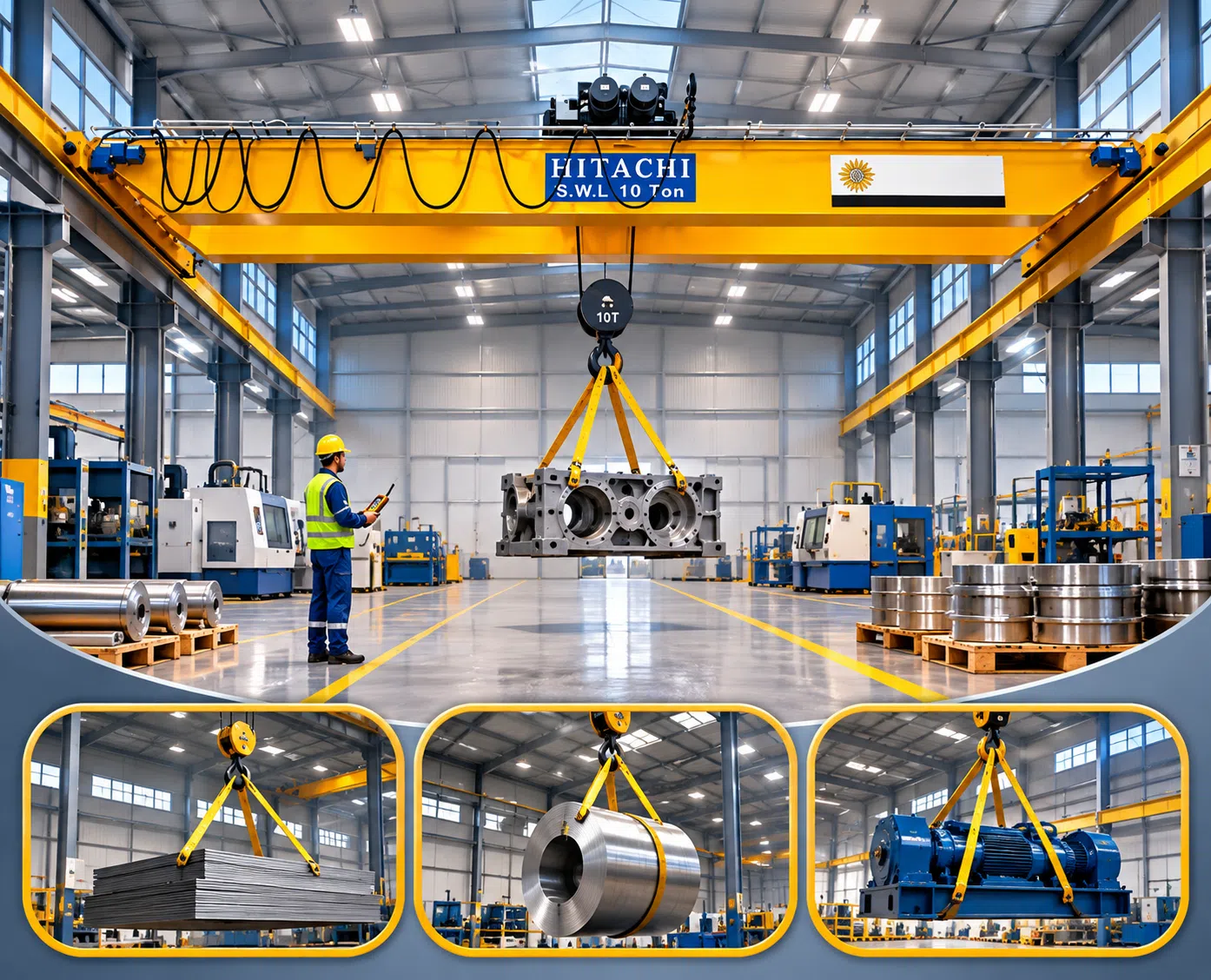
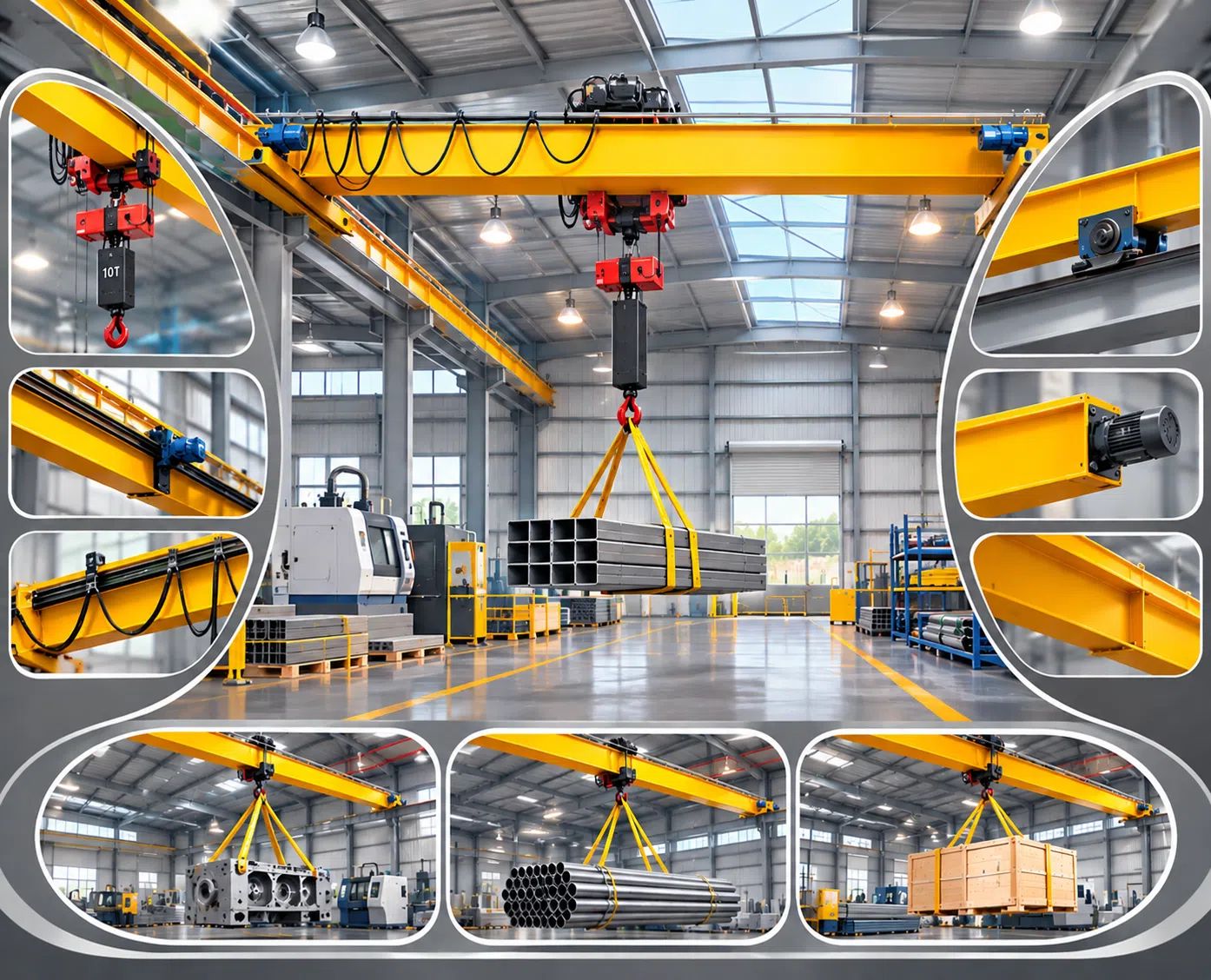
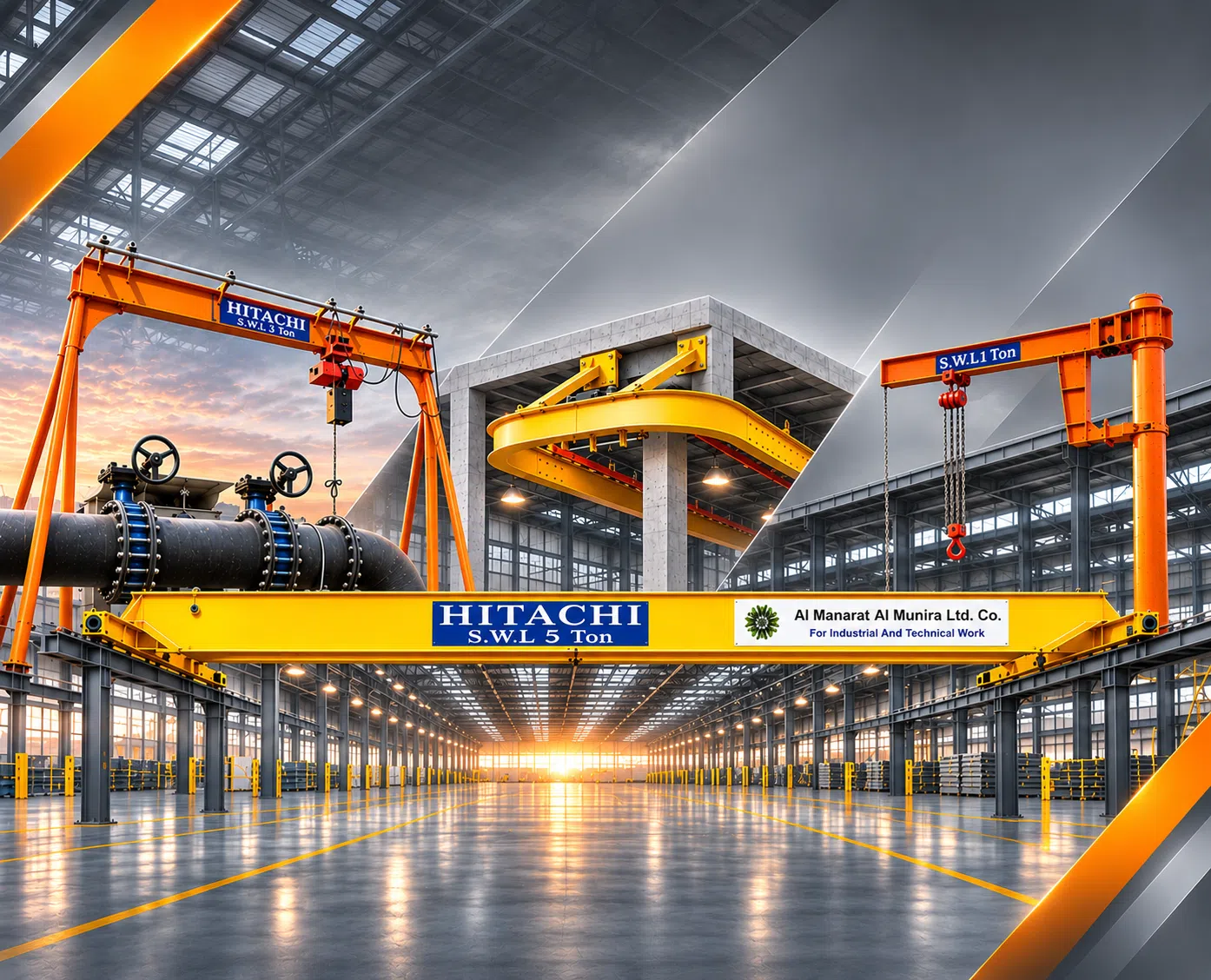
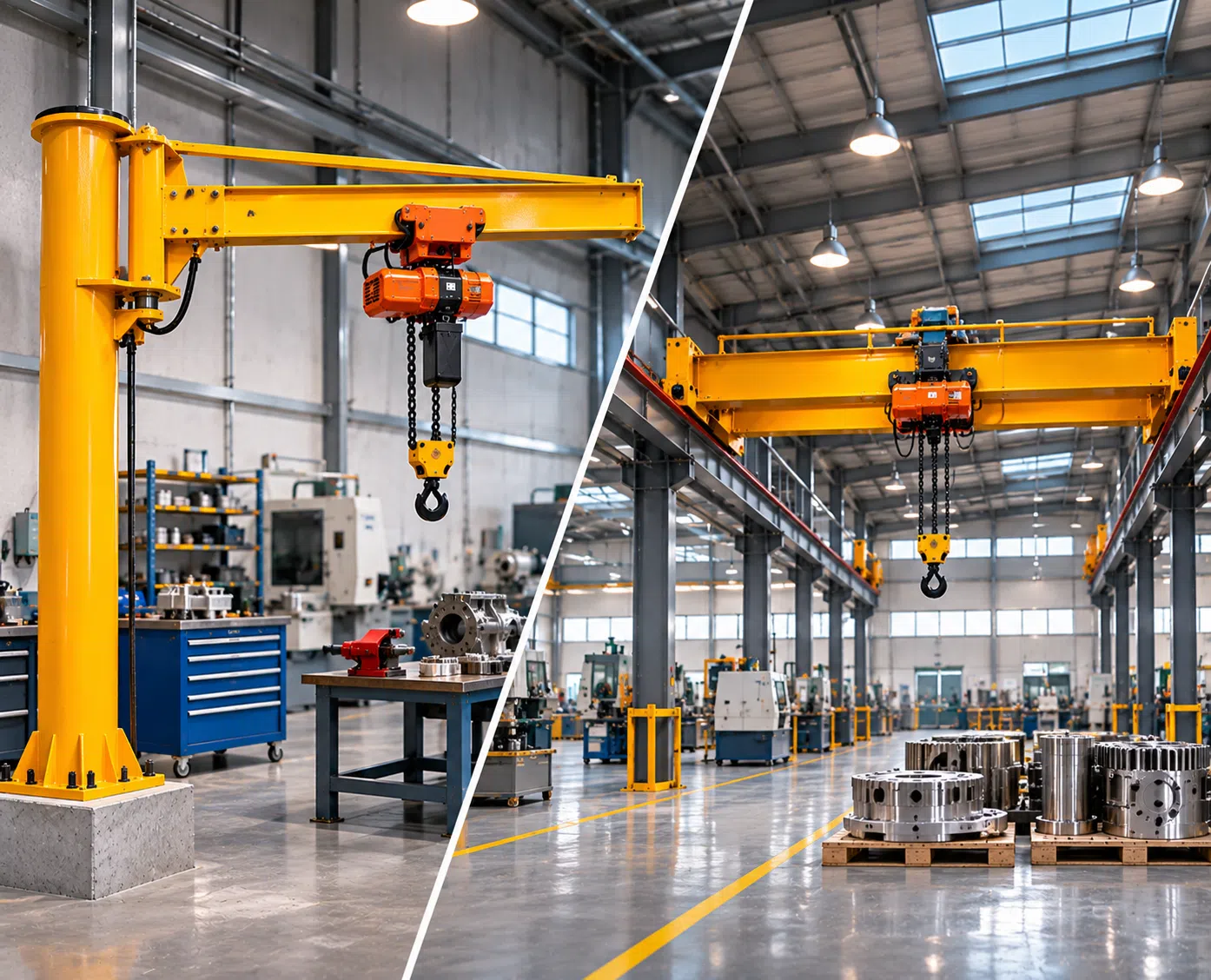
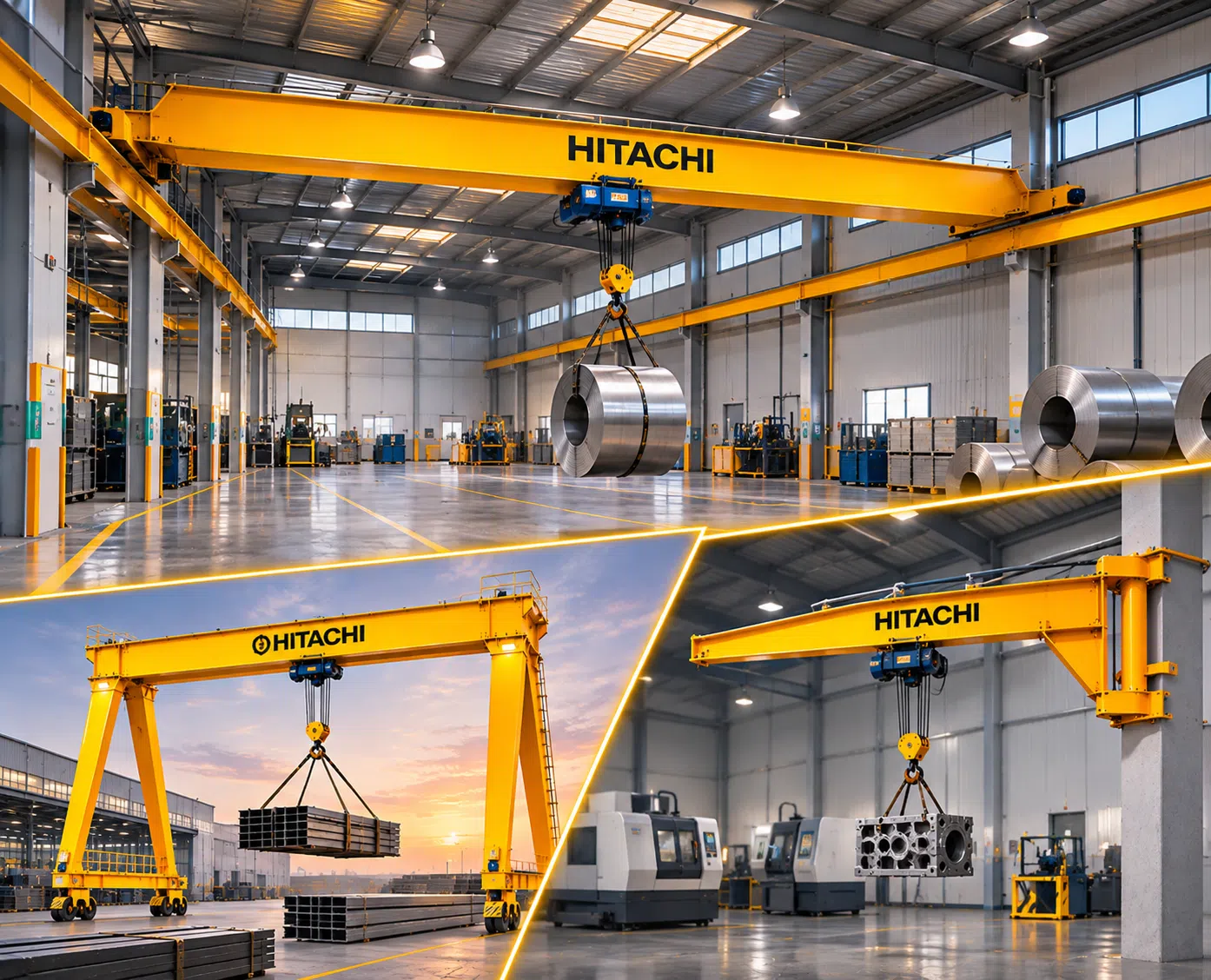
Overhead cranes (Overhead Cranes) suit them, as the runways rest directly on the columns, which gives completely free movement space below the lifting area.
- Choose single girder for limited spaces and light to medium loads to reduce overall cost.
- Choose double girder for very heavy loads and to achieve the maximum possible hook lifting height inside the hall.
Workshops Lacking Columns or Open Storage Yards
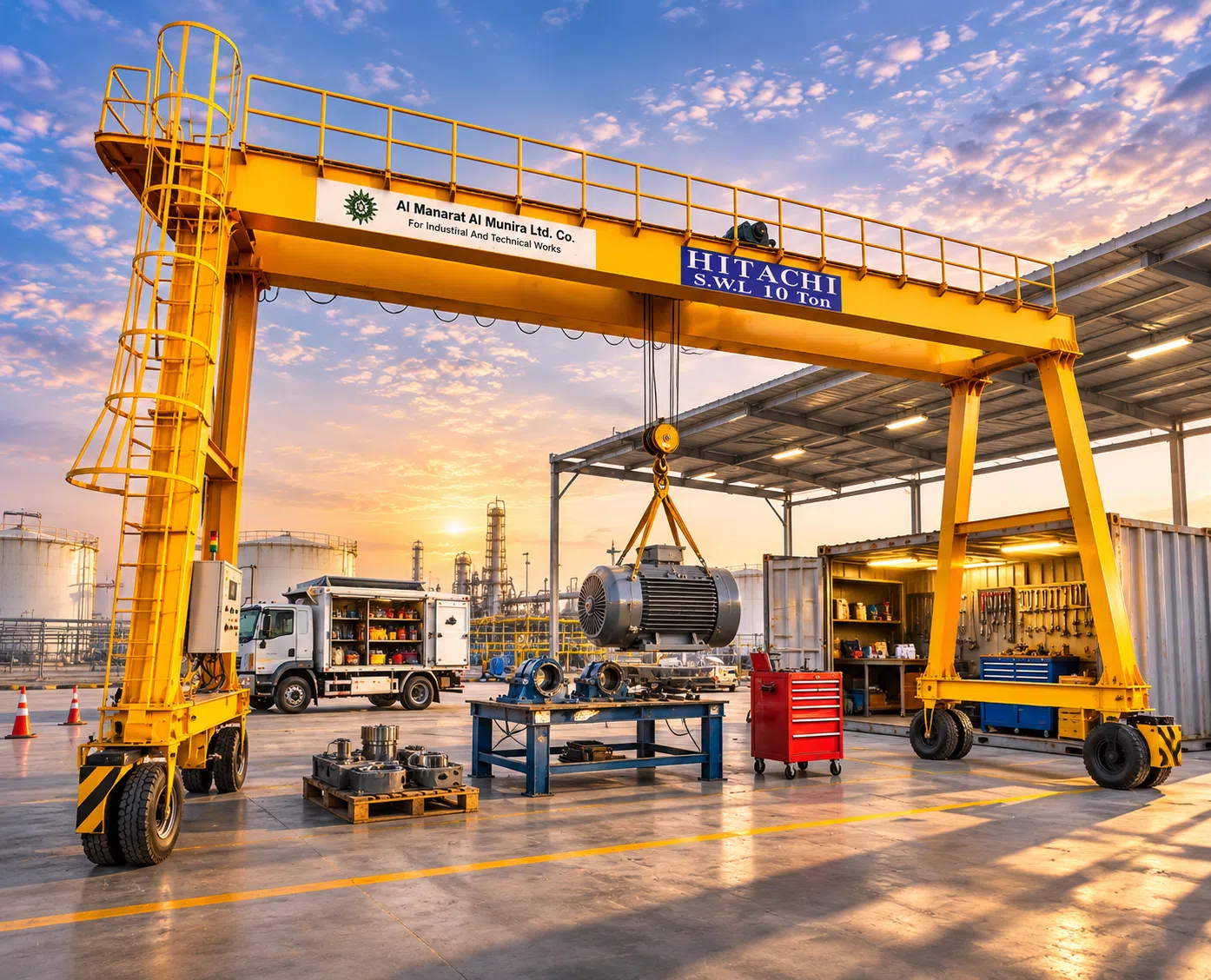
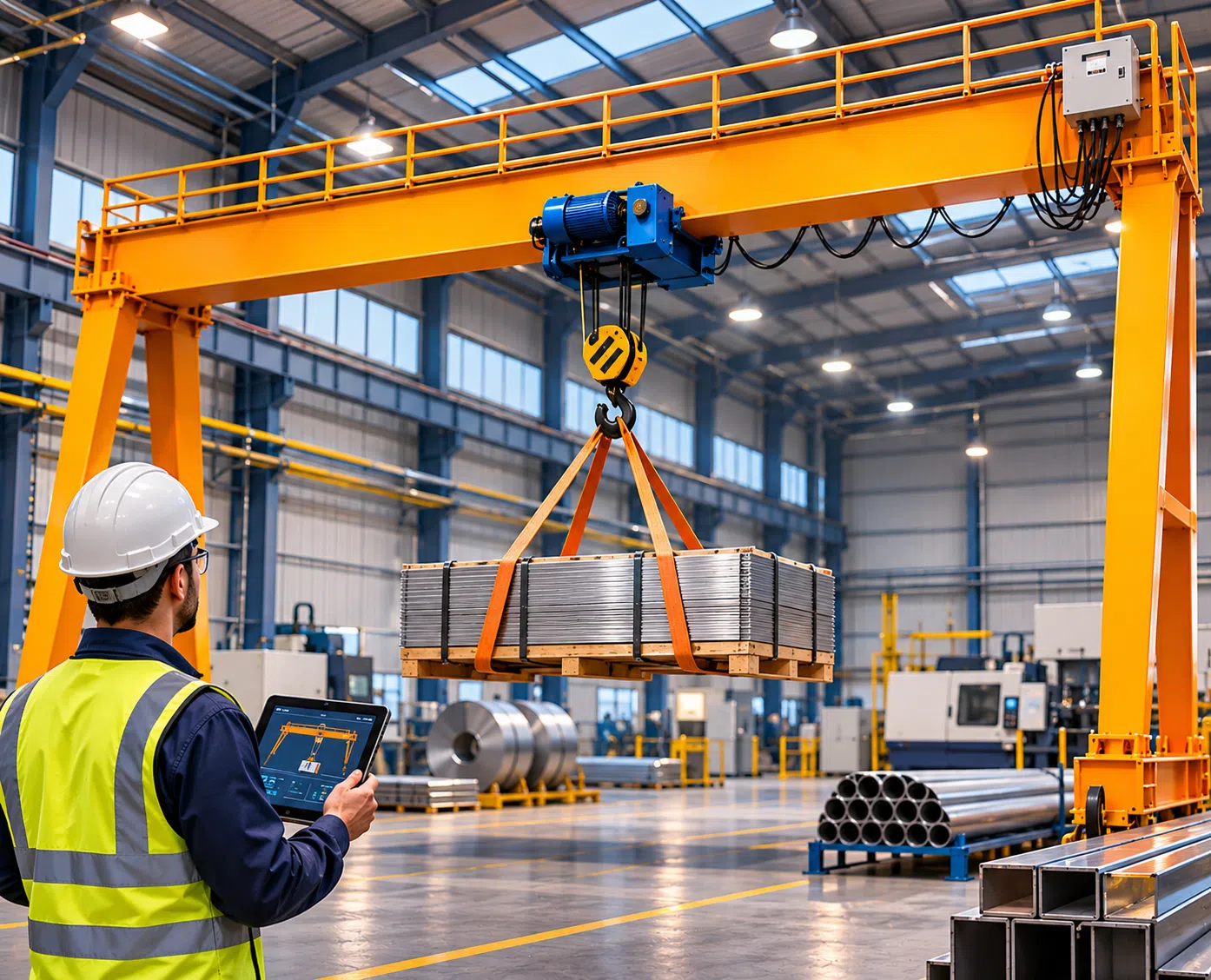
Gantry cranes (Gantry Cranes) or semi-gantry cranes are the most successful engineering alternative because they rely on steel legs travelling on ground rails, without placing any weight on the building's roof.
- High flexibility to relocate the entire equipment if the facility's location changes or a replacement warehouse is rented.
- Wide coverage of outdoor unloading areas and heavy truck loading in open spaces.
Individual Work and Mechanical Assembly Stations
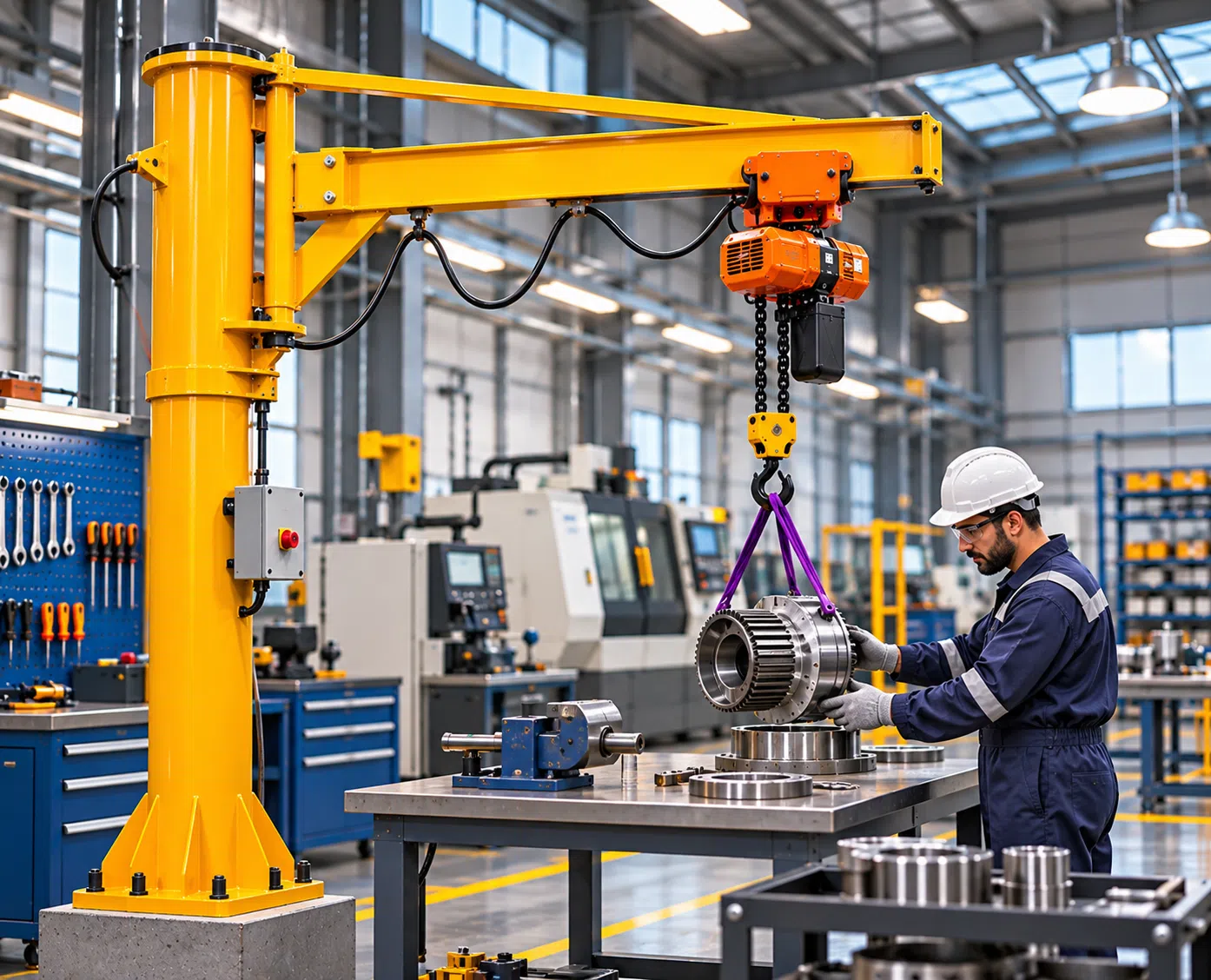
Not every handling operation requires running the factory's central crane, and this is where jib cranes (Jib Cranes) stand out as a highly flexible tactical choice.
- Free mounting on a freestanding column or direct mounting on wall columns to cover a rotation angle of up to 360 degrees.
- Saving electricity consumption and speeding up part handling on welding lines and fast automated machining.
Practical Comparison: How Does the Work Environment Affect Component Specifications?
The electrical and mechanical parts of a crane are affected by the surrounding conditions, and each environment requires specific engineering provisions:
- General factories and dry workshops: Rely on standard motors and make do with ordinary dust protection ratings (IP54/IP55) with standard power cables to lower the initial investment cost.
- Chemical and paint factories: Require control systems and switches fully insulated against explosion (Explosion-Proof / ATEX) and components that do not emit mechanical sparks on friction, to protect the facility from fires.
- Foundries and hot steel plants: Need thermal insulation plates for motors and hoist trolleys, with heat-resistant steel cables and dual brake systems to prevent molten metal from slipping.
- Coastal facilities and high-humidity areas: Call for corrosion-resistant marine epoxy paints, rust-treated hooks and chains, and tightly sealed electronic components (IP66).
Duty Cycle (Duty Cycle): The Hidden Secret to Avoiding Breakdowns
Many overlook the importance of the crane's service classification, which is the criterion that determines the amount of stress placed on the motors and gears during shifts:
- Light and intermittent duty (Class A / B): Used in maintenance workshops and power plants, where heavy weights are lifted but at very widely spaced intervals during the week.
- Medium duty (Class C): Suits general mechanical manufacturing workshops and warehouses with regular use at loads of around 50% of the rated capacity.
- Heavy and continuous duty (Class D / E / F): Designated for paper mills, iron and steel plants and container terminals, where the crane works without stopping for several consecutive shifts under loads approaching its maximum limit, which calls for special self-cooled motors, hardened gears and heavy-duty brakes.
Practical Steps to Take Before Completing the Purchase Order
- Calculate the heaviest piece that will be lifted now and add 25% as a margin for future production expansions and upgrades.
- Consult a structural engineer to check the adequacy of the plant's concrete foundations and steel columns and their ability to bear the reaction forces produced by the crane's movement.
- Choose the control system best suited to the operator's comfort and safety, and always prefer encrypted-frequency radio controls to reduce the risk of interference.
- Make sure consumable spare parts are available locally, and that the supplier's technical support and emergency maintenance services are reliable.
Frequently Asked Questions About Choosing Factory Cranes
How do I know that my factory's structure can support installing an overhead crane?
A specialist structural engineer reviews the engineering drawings and calculates the dynamic loads resulting from the crane's weight plus the maximum load and the braking and acceleration forces. If the building proves weak, independent support column systems (Free-standing structure) are used.
What is the difference between a wire rope hoist (Wire Rope Hoist) and a chain hoist (Chain Hoist)?
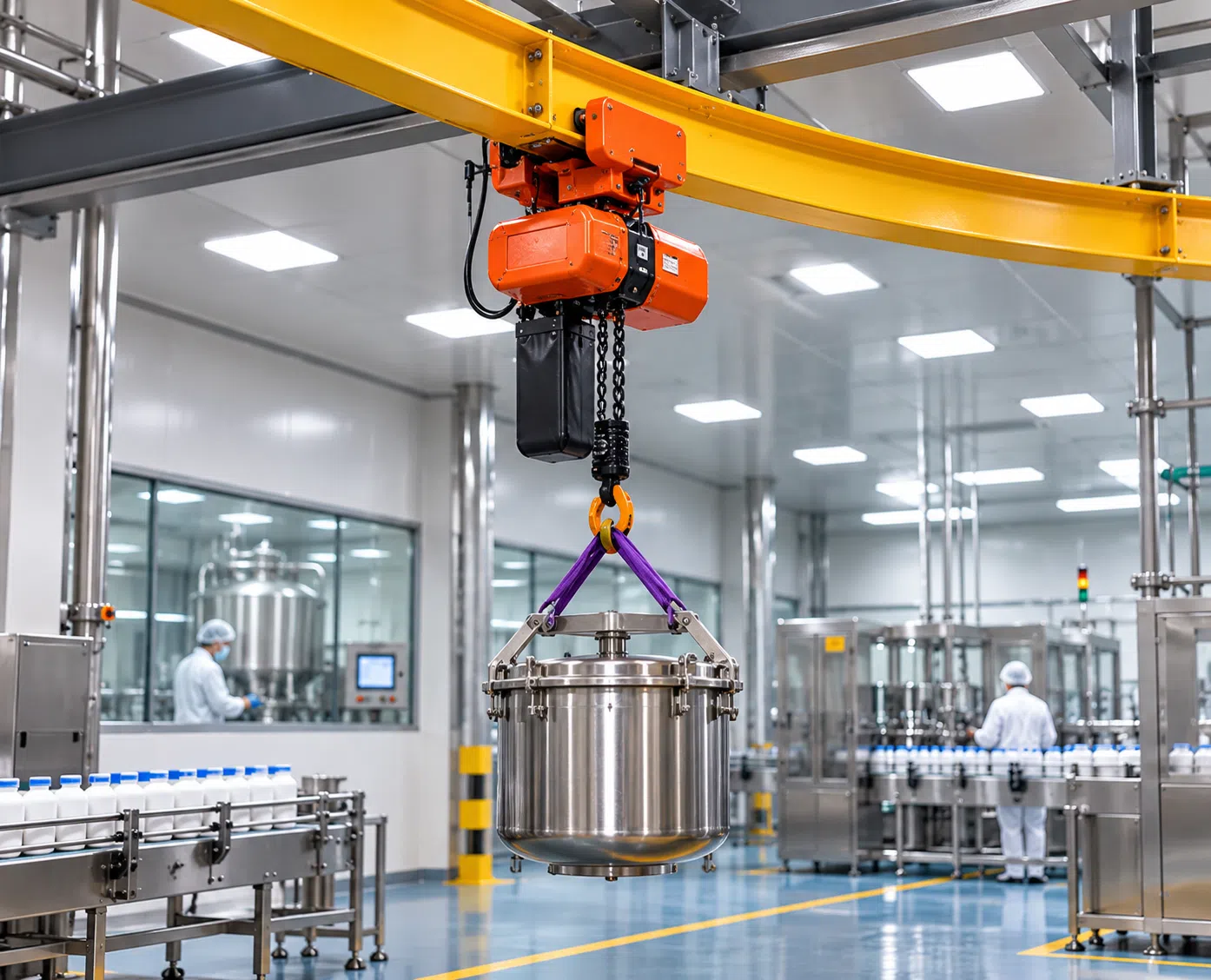
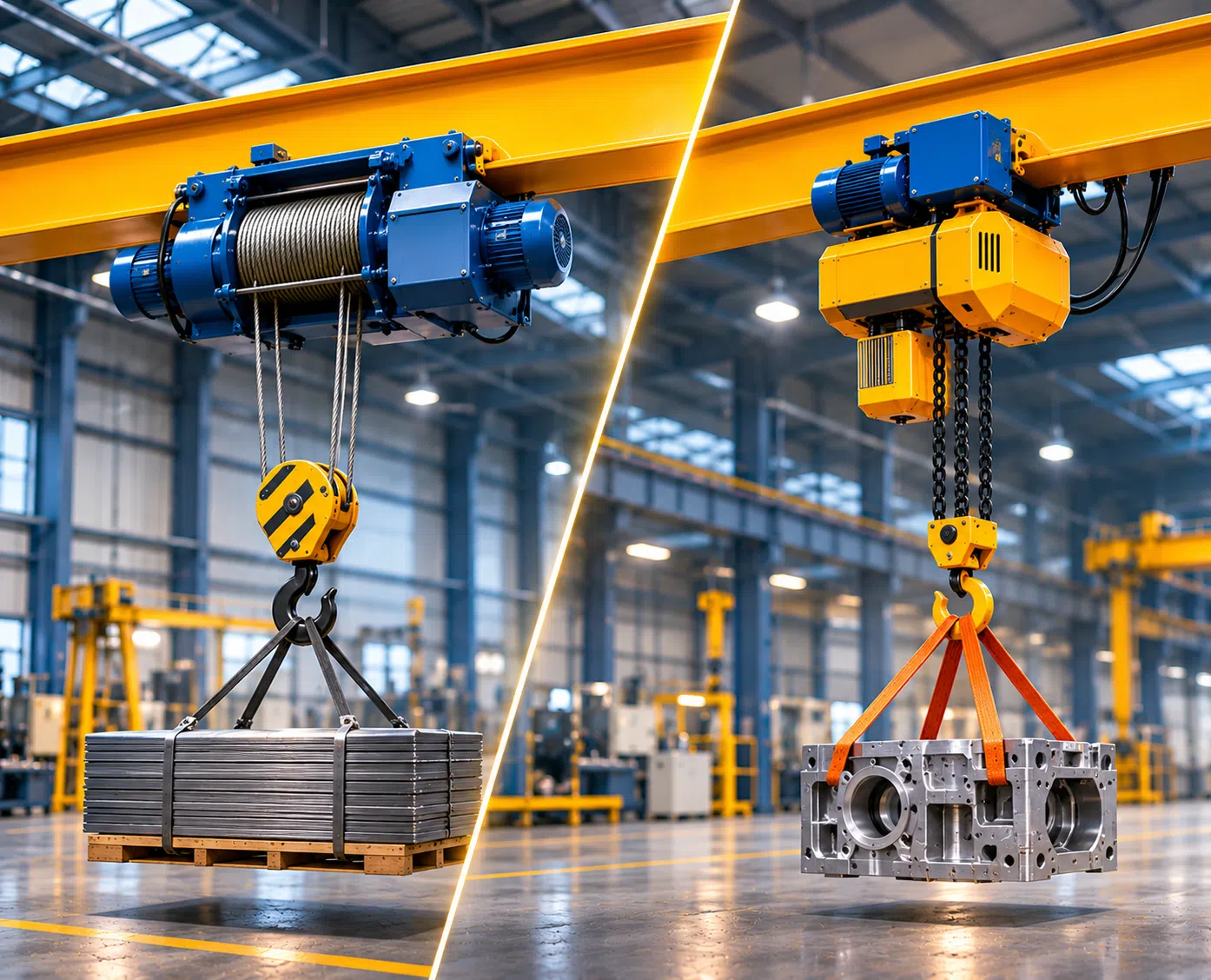
A chain hoist is normally used for light and medium weights up to 5 tonnes and for limited lifting distances, whereas a steel wire rope hoist is the strongest and most dependable choice for heavy loads, very high lifts and the high lifting speeds that large production lines require.
Does the choice of crane affect the factory's electricity consumption?
Yes, directly. Modern cranes fitted with smart frequency inverters (Inverters / VFD) reduce the high starting currents of the motors and provide smooth motion that prevents load swing, which saves energy consumption and limits wear on the brakes and mechanical parts.
Read also: Overhead Crane Prices: A Guide to Budgeting Your Project