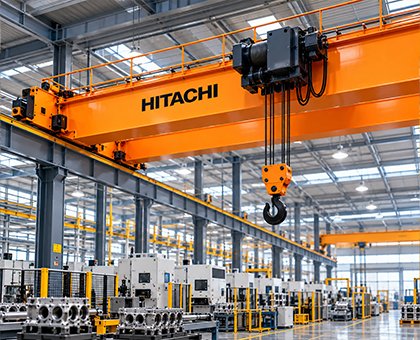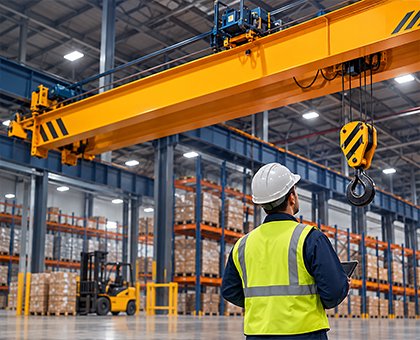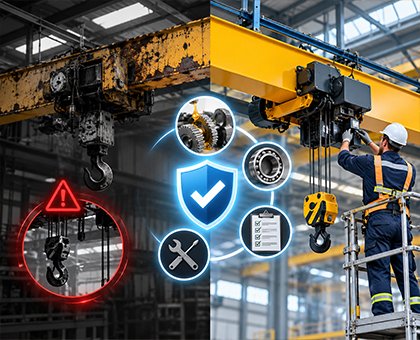

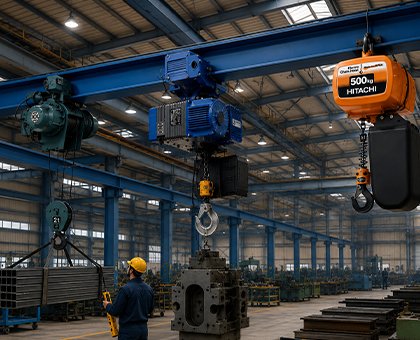
Industrial facilities and modern logistics warehouses stand at a critical strategic crossroads when planning to equip production halls with heavy lifting systems. Overhead cranes represent the backbone that determines material flow and daily production efficiency. With rapid industrial development, investors and decision-makers often find themselves torn between two options: importing ready-made factory cranes from global markets, or relying on flexible engineering solutions based on local design and manufacturing of overhead cranes with customized specifications.
This decision is not limited to initial cost comparison only, but extends to long-term operational efficiency, maintenance cost, and how well the equipment fits the structural nature of the building. In this analytical guide from Al Manarat Al Muneera Company, we compare both approaches in detail to help you make the most suitable investment decision for your project.
First: Importing Factory Cranes and Logistical Challenges
Some companies choose to import factory cranes driven by the desire to obtain specific European or Asian hoist technologies. However, this option faces several practical and technical challenges:
- Long delivery times: Shipping and customs clearance may take months, delaying factory setup and increasing financial pressure.
- High shipping costs for large components: Main crane girders are considered oversized cargo, significantly increasing transportation costs.
- Structural mismatch risks: Even minor errors in measurement or building dimensions can result in cranes that do not fit runway systems, leading to costly modifications.
Second: Local Design and Manufacturing of Overhead Cranes
On the other hand, local design and manufacturing through certified national workshops is considered a smarter and more sustainable engineering solution. This approach combines locally fabricated steel structures with imported global lifting units (German or Japanese technology), offering key advantages:
- Fully customized engineering: On-site surveys ensure 100% compatibility with building structure, including low headroom solutions for tight ceilings.
- Zero downtime response: Local availability of spare parts and emergency engineering teams ensures minimal production interruption.
- Compliance with local standards (SASO): Ensures strict adherence to safety standards, with modern control systems and VFD drives that reduce energy consumption by up to 20% and eliminate load swing.
Frequently Asked Questions
What is the mandatory load test protocol before operating an overhead crane?
Regardless of whether the crane is imported or locally manufactured, safety regulations require a dual load test before operation:
- Static test at 125% of rated capacity.
- Dynamic test at 110% of rated capacity.
This ensures structural integrity and braking system efficiency before certification.
How do you ensure cranes withstand harsh environmental conditions?
Cranes must be designed with protection ratings not less than IP55 for indoor use and IP65–IP66 for outdoor or coastal environments. Motors should have thermal insulation Class F or H to ensure stable operation during extreme temperatures.
Conclusion
Ultimately, the technical and financial analysis of capital equipment shows that the smartest approach is a hybrid model: locally manufactured steel structures combined with globally sourced lifting units. This ensures optimal cost efficiency, faster delivery, and reliable performance. Relying entirely on imported factory cranes without evaluating shipping complexity and after-sales support can lead to hidden operational costs.
At Al Manarat Al Muneera Company, we provide full engineering consultancy services to help you design, select, and supply advanced lifting systems that ensure long-term efficiency, safety, and productivity.
Equipment Cranes: A Complete Guide to Modern Storage