

How Are Cranes Load Tested Before Final Commissioning?
The moments before industrial lifting equipment is launched on a production line are a critically dangerous engineering stage that leaves no room for theoretical assumptions. Putting an overhead or gantry crane into actual service to move huge weights above technicians and expensive machinery requires conclusive practical proof of manufacturing soundness, installation accuracy and braking system readiness. Neglecting or rushing crane load testing opens the door to unexpected mechanical and structural disasters, from deformed steel girders, through brake linings slipping under the weight, to complete structural collapse. Rigorous static and dynamic load testing is therefore a mandatory requirement and the decisive milestone for approving the system from an engineering standpoint, ensuring it complies with international codes such as OSHA, CMAA and FEM and meets the licensing requirements of civil defense and industrial safety authorities.
How Are Cranes Load Tested Before Actual Operation?
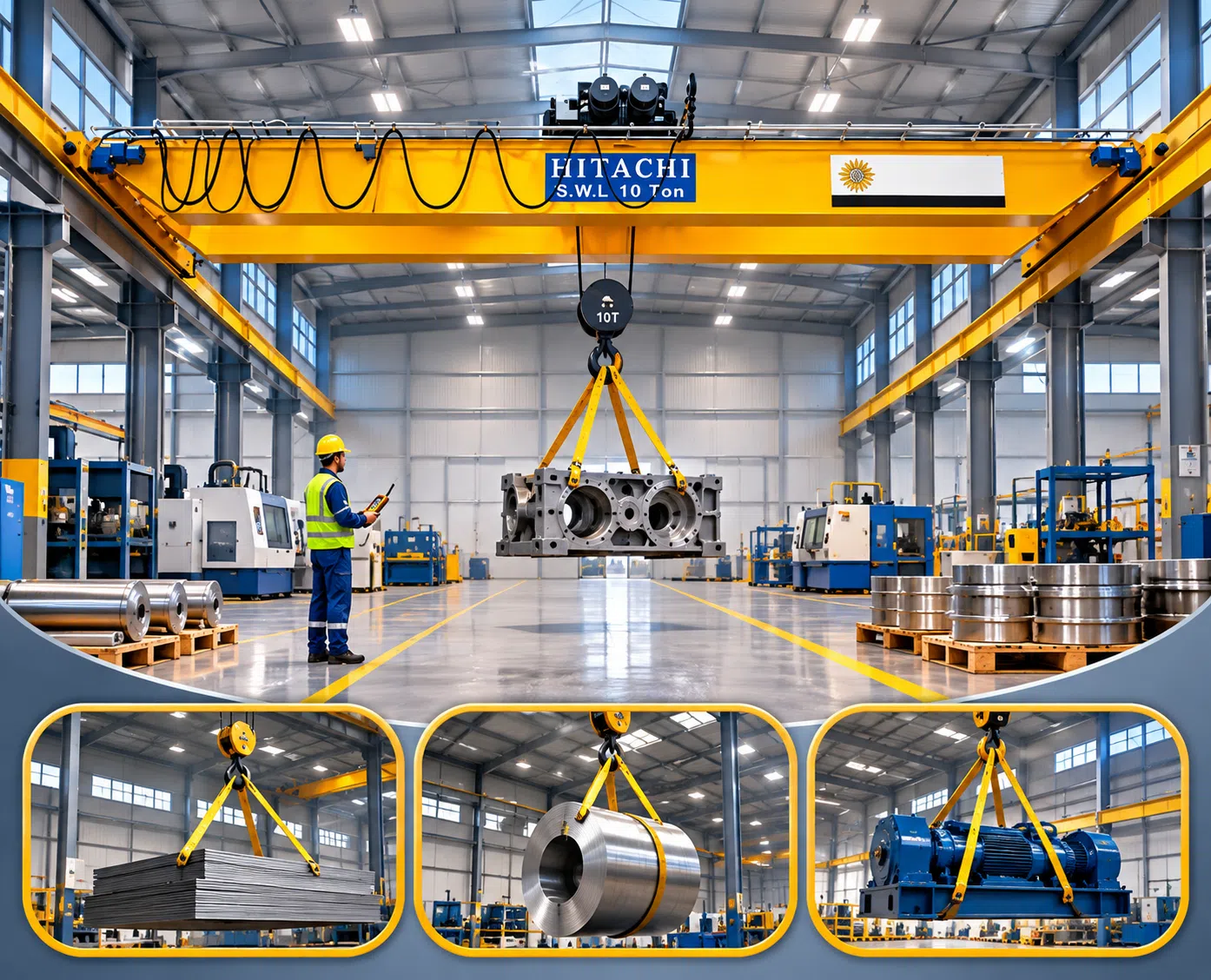
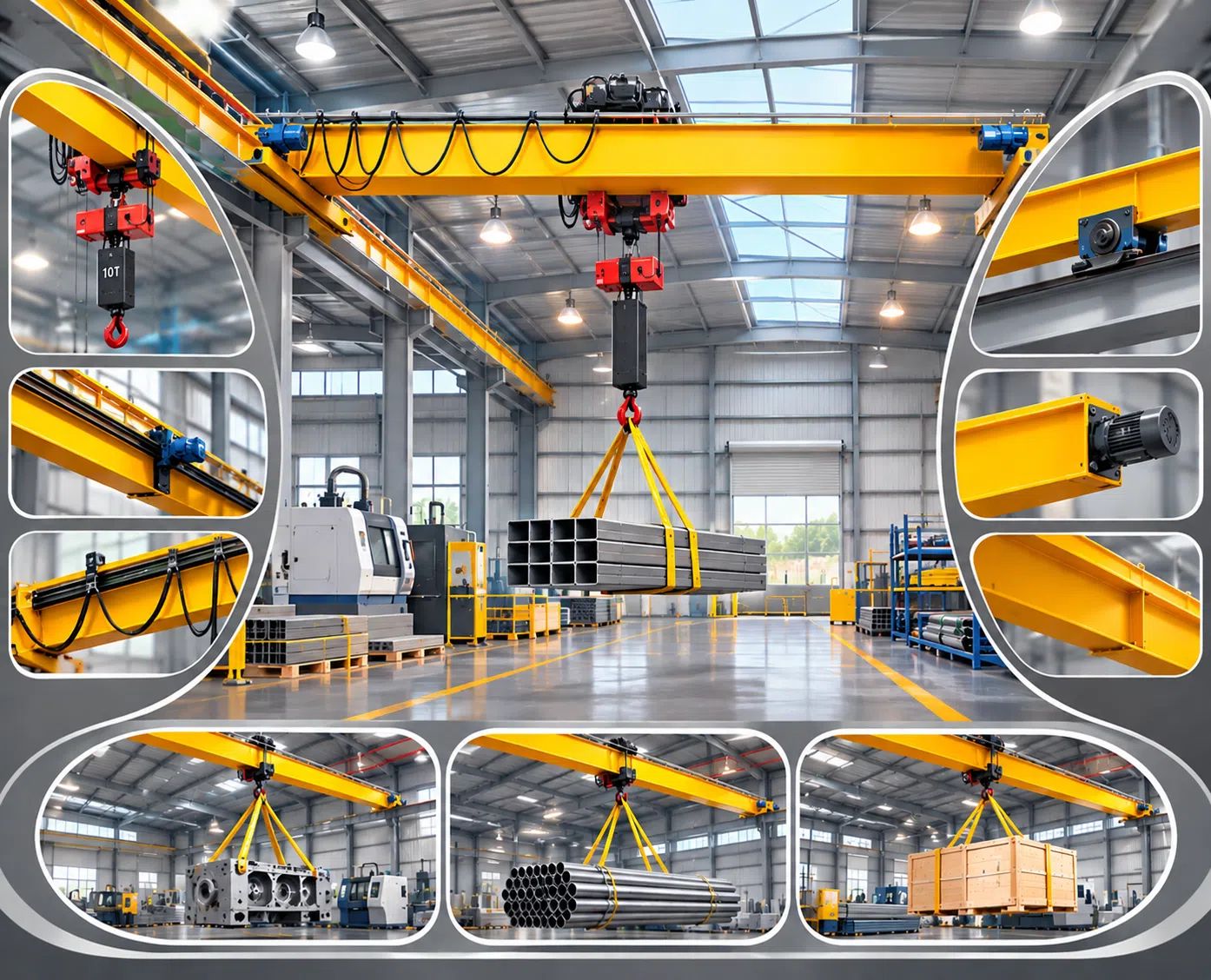
Cranes are load tested through a sequential engineering protocol that begins with a comprehensive visual inspection with no load, followed by a static load test at 125% of rated capacity at mid-span of the bridge for a set period to measure structural deflection and recovery of straightness, then a dynamic load test at 110% to run all hoisting and travel motions and test the efficiency of the electromagnetic brakes and digital load sensors, and it concludes with the issuance of certified calibration and inspection certificates.
Precise engineering execution of load testing delivers decisive field results:
- Confirming the rigidity of the steel structure and welds and that they are free of cracks or permanent deformation under maximum stress.
- Verifying the effectiveness of the emergency brakes and their ability to stop and hold loads within fractions of a second without slipping.
- Immediately obtaining the industrial operating licenses and safety certificates required by civil defense and regulatory bodies.
Stage One: Preliminary Inspections and the No-Load Test
Before any heavy weight is hung on the crane hook, basic mechanical and electrical readiness must be confirmed through a strict preliminary inspection:
1. Visual Inspection of Structural and Mechanical Components
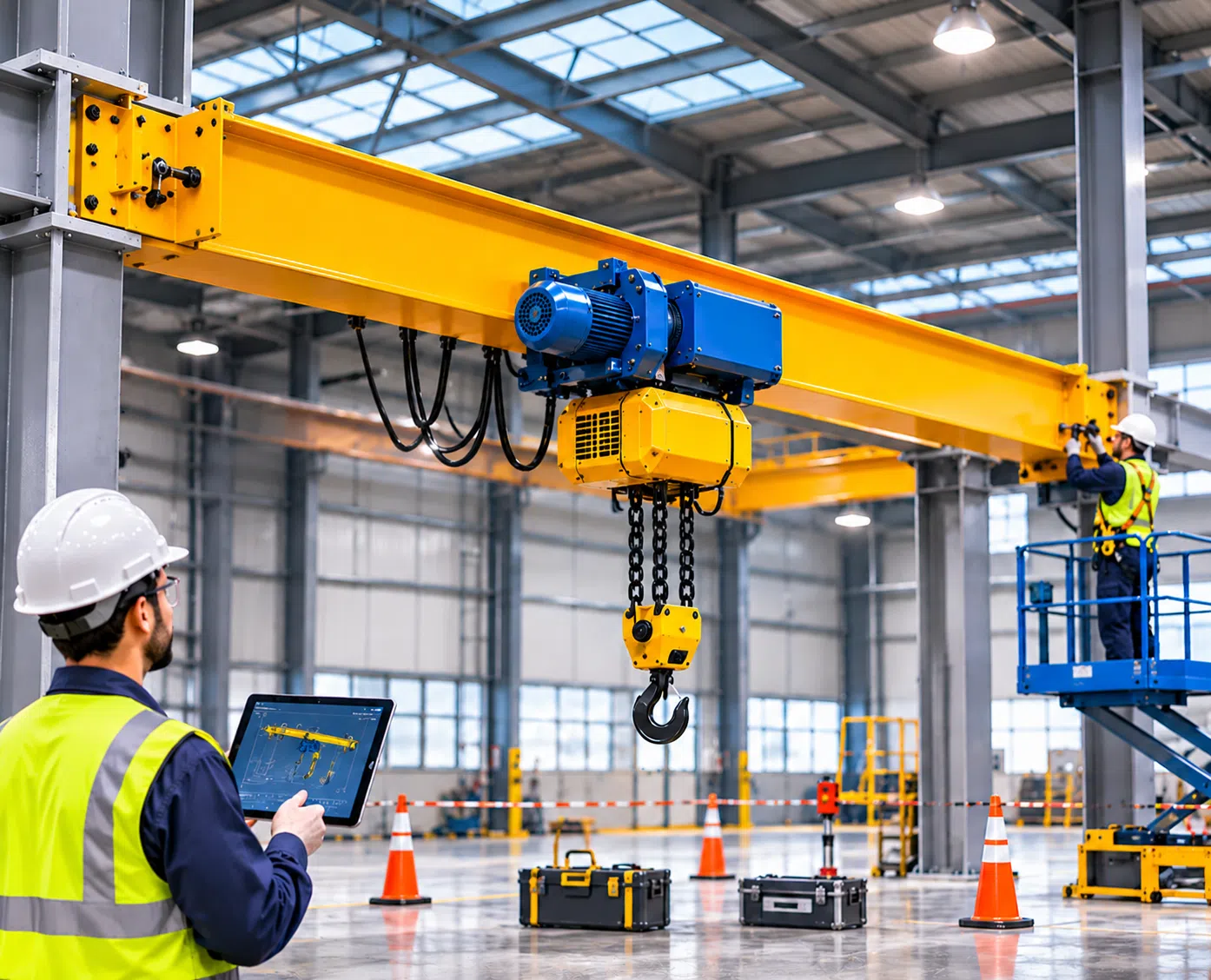
Inspect the runway track to confirm that the rail clamps are tightened to the specified torque, check the wire ropes or lifting chains to confirm they are correctly routed in the hoisting drum and free of kinks, and verify the oil levels in the gearboxes and the condition of the hook safety latch.
2. Checking Electrical Connections and Testing Limit Switches
Run the hoist trolley and the bridge through a full stroke without load to verify the stability of the busbar power supply, the correct response of the wireless or pendant controller, and the operation of the dual limit switches that automatically stop the hook's movement before it hits the hoist body or the end of the track.
3. Testing the Emergency Stop Button
Press the emergency stop while the crane is moving to verify the instant and complete electrical disconnection of all hoisting and travel motors, and confirm that the mechanical brakes perform their function in the fully stationary position.
Stage Two: Static Load Test (125%)
This test aims to verify the structural strength of the girders and the steel structure's resistance to bending forces according to the highest international standards:
Structural Deflection Measurement Criteria (Allowable Deflection)
Engineering codes (such as CMAA Specs 70/74 and FEM) require that the maximum relative sag at mid-span must not exceed set ratios that depend on the crane type:
- For cranes in normal and medium duty service: deflection must not exceed a specified fraction of the bridge span length.
- For heavy and critical duty cranes (such as steel plants and foundries): deflection must not exceed a tighter specified fraction of the span length.
- The decisive condition for passing: After the load is fully removed, the bridge must show no residual sag or plastic deformation (Zero Permanent Set), confirming that the applied stresses were within the design elastic limits of the steel.
Stage Three: Dynamic Load Test (110%)
The test is not limited to hanging the weight statically. The system must be tested during full mechanical motion to verify the interaction of the motors, gears and brakes:
1. Applying a Dynamic Load Equal to 110% of Maximum Capacity
The crane hook is loaded with calibrated weights representing 110% of the maximum working load, and successive hoisting and lowering cycles are run at the different hoisting speeds (slow micro-speed and full speed).
2. Testing the Efficiency and Torque of the Electromagnetic Brakes (Brake Performance)
While lowering the 110% load at maximum speed, the engineer suddenly releases the lowering button. The self-locking electromagnetic brakes (fail-safe brakes) must close instantly and stop the rushing weight within a standard braking distance, with no free slip or slack in the wire rope.
3. Running All Longitudinal and Cross Travel Motions
Move the hoist trolley across the full width of the bridge and the bridge along the full length of the plant bay with the load suspended, to confirm track stability and that there is no abnormal friction between the wheel flanges and the rails (no diagonal creep / skewing), and to confirm smooth acceleration and deceleration of the smart VFDs.
4. Calibrating the Electronic Overload Limiter
Test the sensitivity of the digital load cell and confirm that it triggers an audible and visual alarm and automatically cuts the motor's hoisting circuit as soon as an attempt is made to lift any weight exceeding 100% to 105% of the machine's programmed rated capacity.
Comparative Analysis: Load Testing with Solid Calibrated Weights vs. Certified Water Bags
The methods used to apply loads during testing differ depending on the site and the logistical resources available:
- Accuracy and conformity with standard measurements: Solid test weights (calibrated steel weights) offer absolute weight accuracy, pre-sealed by measurement laboratories, while industrial water proof test bags require suspended digital load cells (dynamometers) to precisely monitor the amount of water as they are filled.
- Ease of transport and maneuvering inside the bay: Steel weights are a heavy logistical burden that requires multiple transport trucks and forklifts to unload and assemble them on site, while water bags have a very light shipping weight that is easy to move to any facility and to fill from the water sources available at the plant.
- Safety when dumping loads in an emergency: If any unsafe indication appears in the sagging of the roof or the bridge, the water can be emptied from the bags in a matter of seconds through quick-release valves to relieve the structural stress immediately, whereas lowering steel weights to the ground takes longer.
- Suitability for very high lifts and offshore sites: Water bags are the preferred choice for testing seaport cranes, oil platforms and cranes in very tall halls, whereas foundries and steel mills prefer calibrated steel blocks because they are readily available on site.
Engineering Documents and Certificates Issued After Passing the Test
The test is legally void unless it is documented in a certified engineering file that includes:
- Comprehensive Inspection Report: Includes the crane's data, chassis number, and the results of the visual inspection of mechanical and electrical components before and after loading.
- Deflection Log Sheet: A tabulated record showing the measured distance between the rail and mid-span before loading, under the static load (125%), and after the load is fully removed, signed by a certified inspection engineer.
- Proof Load Test Certificate: An official certified document stating the crane's safe working load (SWL), the date the test takes effect and the date of the next periodic inspection, for submission to civil defense, industrial inspection bodies and insurers.
How Do You Ensure a Certified Load Test for Your Cranes with "Al Manarat Al Monerah"?
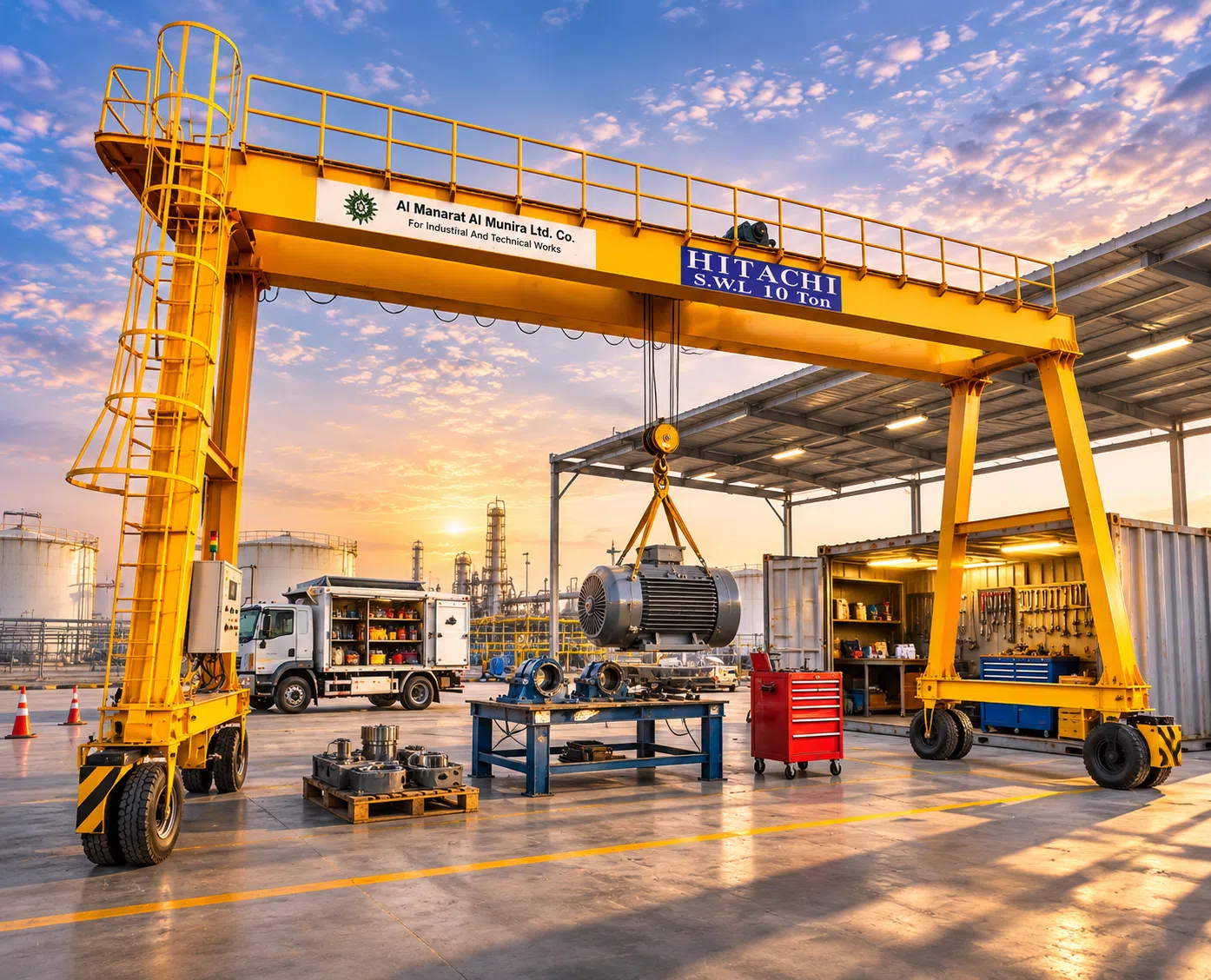
Al Manarat Al Monerah (almanratalmonerah.com) leads the supply, manufacture and engineering of industrial lifting equipment in the Kingdom of Saudi Arabia, Egypt and the Middle East, putting the latest equipment and engineering crews at your disposal to carry out load testing and calibration to the highest standards of accuracy:
- Certified and qualified engineering crews: Engineers specialized in inspecting and testing industrial lifting equipment according to CMAA, FEM, ISO and OSHA standards, ensuring that every structural and mechanical detail is reviewed.
- Provision of calibration weights and digital load cells: Full logistical readiness to supply calibrated steel weights or certified water bags fitted with accurate, officially calibrated electronic digital load cells.
- Laser surveying and precision alignment equipment: Using the latest laser equipment to measure bridge deflection to fractions of a millimeter and to verify rail straightness and wheel alignment before and after loading.
- Issuing calibration certificates and certified inspection reports: Providing technical files and certified non-destructive testing (NDT) reports for welds, qualified for immediate acceptance by civil defense authorities, the Ministry of Industry and international insurance companies.
- Integrated on-site technical and corrective support: If any mechanical fault is detected during loading (such as brake slippage or sensor discrepancy), our engineering team fixes it immediately and adjusts the calibration without having to postpone the start-up of the production line.
Al Manarat Al Monerah gives you direct access to its engineering experts to arrange and coordinate crane load testing procedures at your facility's site, to obtain certified inspection certificates and ensure your production operations launch with the highest levels of field safety and operational reliability.
Frequently Asked Questions About Crane Load Testing
How often should a crane load test be performed during its service life?
The full load test (125% static and 110% dynamic) is carried out in the following cases: before the crane is operated for the first time after installation; after the crane is moved from one site to another and reinstalled; after any substantial structural modification or repair to the girders or runway beams; after replacing the main lifting parts (such as the entire hoist or the main hoisting motor); in addition to the comprehensive periodic inspection and load test required by occupational safety regulations at intervals ranging from one to 4 years depending on operating intensity.
Can the plant's equipment or products be used as weights for crane load testing?
This is strongly discouraged and is prohibited by the standard codes unless those products have previously been weighed with documented accuracy on a certified, calibrated weighbridge. Using inaccurate blocks exposes the crane either to excessive loading that exceeds the safe design limits and damages the girders, or to insufficient loading that cannot accurately reveal brake and deflection defects, which invalidates the official certification of the test.
What happens if the bridge deflection exceeds the permitted ratio during the static load test?
If the deflection exceeds the limits allowed by the engineering code (L/888 or L/1000), or if the bridge does not return to its normal horizontal position after the load is lowered and shows a permanent bend, the test is stopped immediately and the crane is considered to have failed. The thickness of the steel sections and the welds are then inspected and the cause of the structural weakness is identified so it can be remedied, either by adding stiffening girders and underside supports, or by reducing the machine's rated capacity (derating).
Read also: Your Complete Guide to Crane Types and Their Uses in Factories