
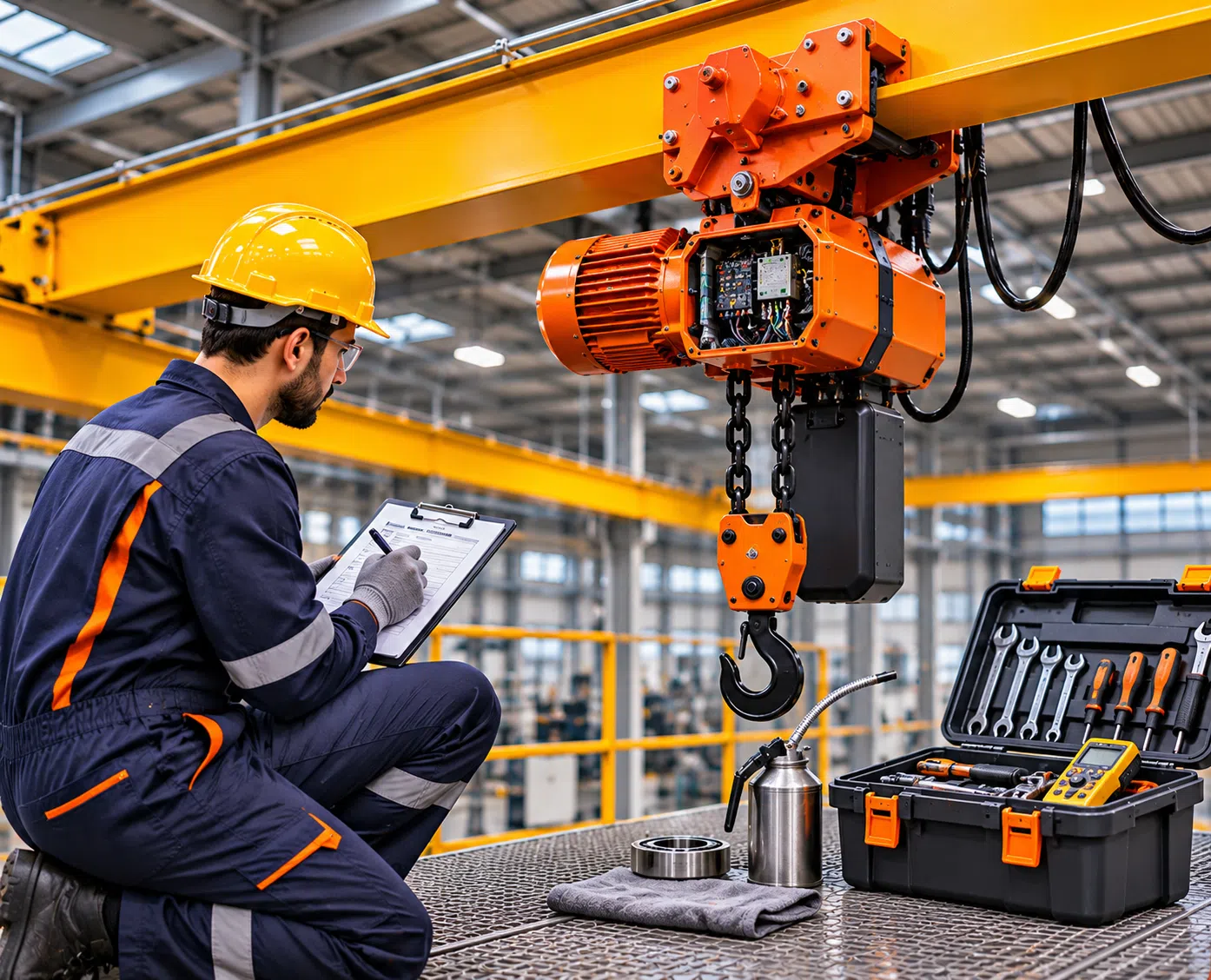
Electric Hoist Maintenance Guide: Avoiding Sudden Production Stoppages
Production lines and large industrial workshops move at an accelerating pace that leaves no room for unexpected mechanical failure. A sudden stoppage of the lifting system while moving molten steel, forming dies, or unloading an incoming shipment is a complex operational crisis that paralyzes the entire facility, wastes valuable working hours and piles up financial losses. Neglecting the scheduled periodic inspection of electric hoists opens the door to gradual wear of the gears, brakes and load-carrying media without the operator noticing, until the lifting ropes snap or the motor windings burn out at peak loading. Adopting a strict, engineered preventive maintenance guide is therefore the first line of defense for protecting the plant's investments and keeping the machines running at the highest levels of field safety.
How Do You Protect Electric Hoists from Sudden Stoppage?
Protecting electric hoists and avoiding production line interruptions is achieved by applying a three-tier preventive maintenance protocol: a quick daily visual and operational check before every shift, monthly mechanical and electrical preventive maintenance covering brake adjustment, oil monitoring and safety sensors, and a comprehensive technical inspection with load tests to certified international standards every six months or annually.
Strict adherence to this engineering approach delivers immediate and direct results:
- Reducing emergency crane stoppages by more than 75% over the operating year.
- Eliminating early friction wear on the runway beams and on the cable or chain guides.
- Keeping occupational safety certificates valid and keeping the facility compliant with industrial inspection and civil defense requirements.
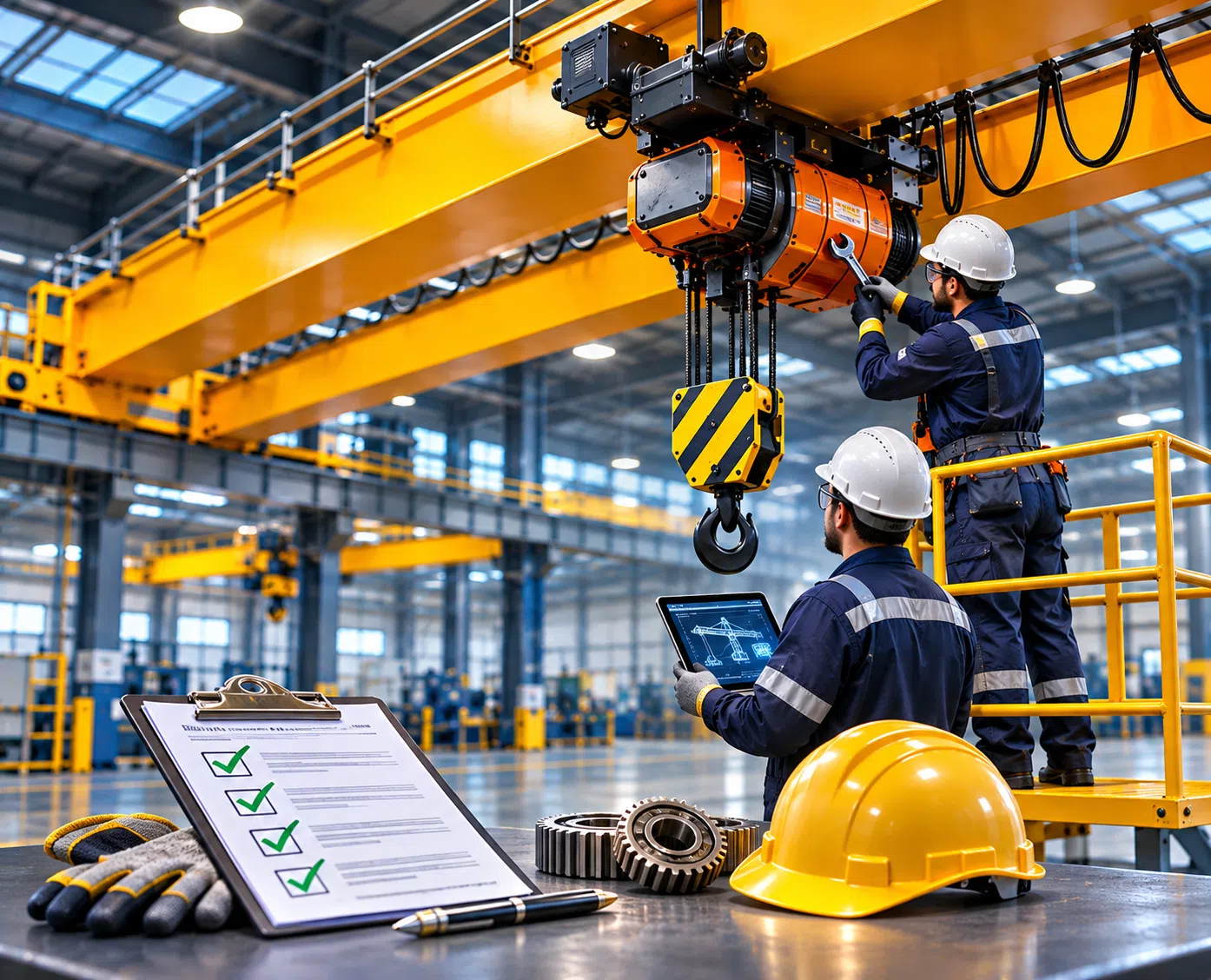
Quick Daily Inspection Steps (The Operator's First Line of Defense)
This inspection takes no more than ten minutes at the start of each shift, but it prevents sudden mechanical disasters:
1. Inspecting the Lifting Medium (Wire Rope or Chain)
Visually inspect the steel rope to confirm that it sits properly in the drum grooves and is free of broken strands, sharp kinks, and signs of rust or surface wear. For chain hoists, make sure there are no deformed links and that the chain feeds smoothly into the chain container.
2. Testing the Emergency Stop Button (Emergency Stop)
Press the emergency stop directly on the wired or wireless control unit during a no-load test movement, to confirm the instant and total electrical cut-off of all the hoist motors.
3. Testing the Limit Switches (Limit Switches)
Slowly raise the hook to its highest point to test the automatic cut-off before it reaches the hoist body, and lower it to test that at least two wraps of rope remain on the drum for safety.
4. Listening for Unusual Noises and Vibrations
Run the lifting and travel motions and listen to the gearboxes and motors. Any whistling or sharp metallic grinding indicates dry lubrication or bearing wear that must be dealt with immediately.
Detailed Monthly Maintenance Protocol for Critical Components
The specialized technical team inspects the elements exposed to continuous stress according to a precise technical schedule:
1. Electromagnetic Brake Systems (Brake Systems)
Brakes are the true safety valve that prevents loads from falling. The brake air gap (Brake Air Gap) must be measured and adjusted to match the manufacturer's catalogue, and the brake pads must be replaced immediately if they have worn by more than 30% to 40% of their original thickness, to ensure instant response.
2. Checking Gearbox Oils and Lubricating Shafts (Gearbox & Lubrication)
Check the synthetic oil levels inside the gearboxes and make sure it is free of sediment and metal filings, which show up when inspecting the magnetic drain plug. Renew the grease in the wheel bearings and lifting hook bearings using extreme pressure greases (EP Greases).
3. Rope Guide & Drum
Check the condition of the rope guide's fingers and springs and its free movement along the drum to prevent the rope from overlapping, and inspect the drum grooves to make sure there are no jagged edges or deformations caused by rope friction.
4. Trolley & Electricals
Review the contact quality of the current collector shoes with the insulated conductor bars (Busbars), tighten the control panel cables, and make sure industrial dust has not built up inside the inverter (Inverters) cabinets, to ensure effective cooling.
Comparative Analysis: Proactive Preventive Maintenance vs. Emergency Corrective Maintenance
An operational and financial comparison reveals the fundamental differences between adopting a regular maintenance strategy and waiting for a failure before intervening:
- Total financial cost: Preventive maintenance requires only the low-cost replacement of oils and brake linings, whereas corrective maintenance forces the purchase of entire gearboxes and new motors to replace burned ones, straining the operating budget.
- Impact of downtime on productivity: Preventive maintenance lets inspection work be scheduled outside shift hours or on official holidays without disrupting delivery schedules, whereas an emergency failure happens at peak activity and halts loading and unloading operations for days on end.
- Occupational safety rates: Proactive inspections keep the load sensors and emergency cut-offs ready and prevent accidents, whereas under corrective maintenance the likelihood of dropped loads, injuries to personnel or crushed ground equipment rises.
- Service life of the equipment: Sustained maintenance keeps the hoist working efficiently for more than 15 to 20 years, whereas neglecting periodic inspection leads to early wear of the mechanical structure and a fall in the equipment's market value within a few years.
Guidelines for Protection from Harsh Environmental and Climatic Conditions
Electric hoists are affected by the surrounding climate, and hot or humid environments call for additional preventive measures:
- Ventilation and high-temperature resistance: Clean the motor cooling fins and ventilation fans regularly to prevent dust build-up, which acts as a thermal insulator and leads to burned electrical insulation windings.
- Dust and moisture sealing (IP Protection): Make sure the rubber gaskets on the control panel and motor compartment doors are intact, to prevent fine sand and moisture from seeping in and causing short circuits.
- Combating rust and oxidation: Inspect the paint on the metal frame and remove any rust spots that appear on the trolley immediately, then repaint the surfaces with marine epoxy coatings that resist corrosion and salts.
- Protecting flexible power supply cables: Check the sheathing of the festoon cables (Festoon Cables) to make sure they remain flexible and are not cracked by heat and direct sunlight.
How Does "Al Manarat Al Monerah" Support You in Maintaining and Upgrading Electric Hoists?
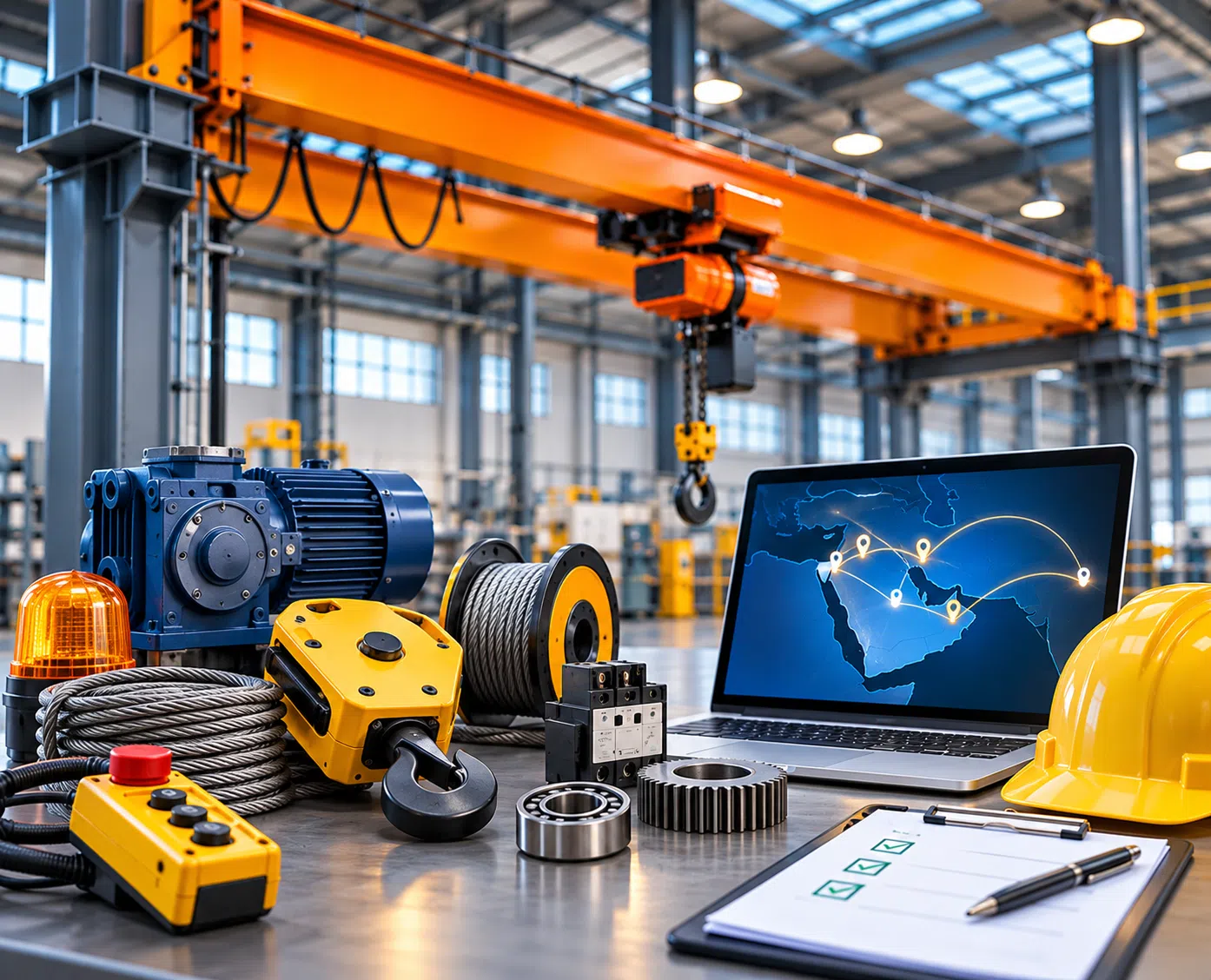
Al Manarat Al Monerah (almanratalmonerah.com) is a leader in technical support services and the outfitting of industrial lifting equipment in the Kingdom and the Middle East, offering a package of engineering services that ensures the continuity of your operations:
- Scheduled preventive maintenance contracts: Flexible periodic maintenance schedules matched to your plant's operating hours, including monthly and semi-annual inspections to keep the hoists running at full capacity.
- Laser measurement and precision alignment instruments: Inspecting runway beams and adjusting the parallelism and straightness of the travel wheels with precision optical instruments, to prevent flange wear and provide smooth, quiet motion.
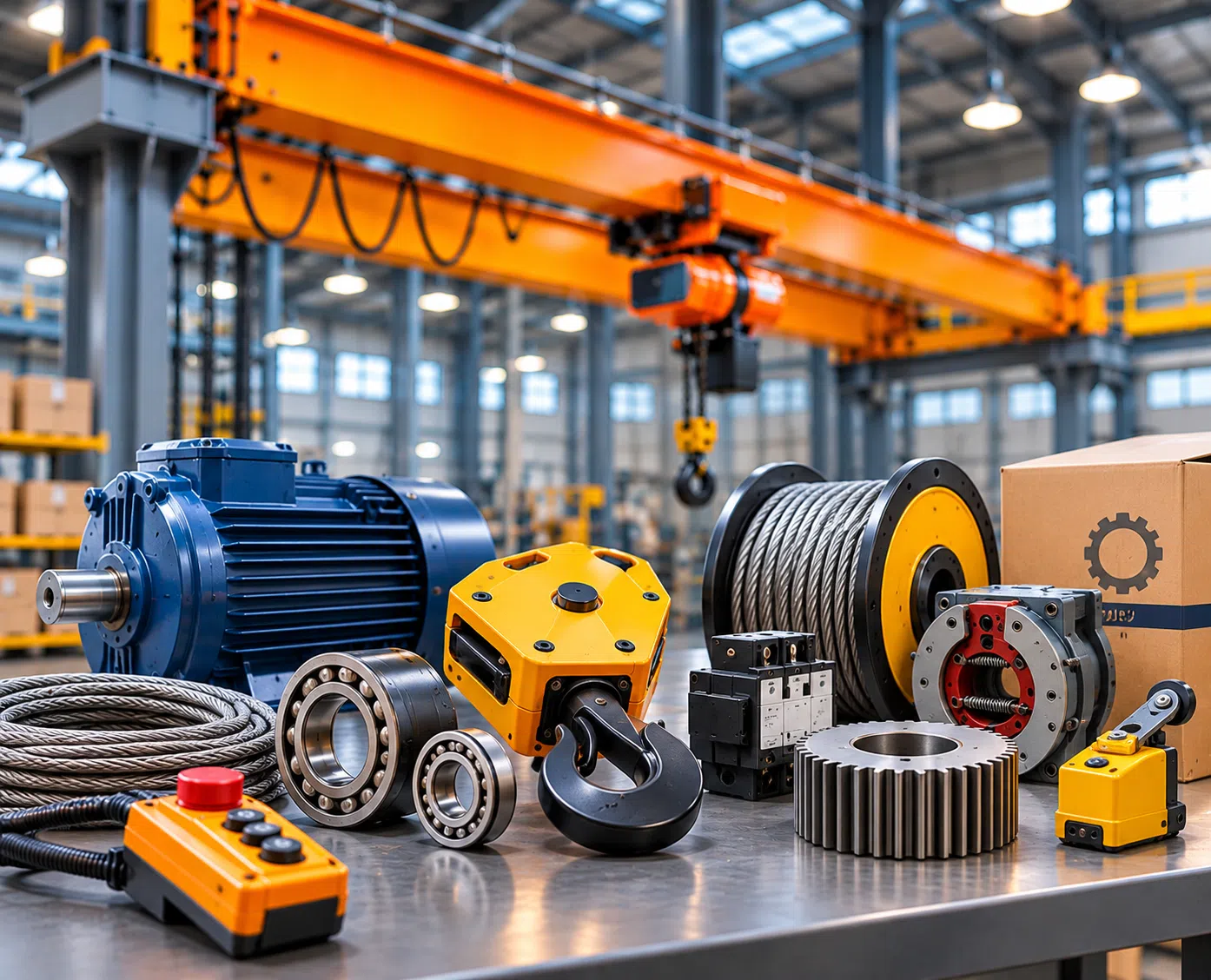
- Immediate availability of certified genuine spare parts: Fully stocked local warehouses holding cables, chains, rope guides, brake linings and electrical panels to cut waiting times to zero.
- Upgrading and modernizing existing cranes (Retrofitting): Upgrading old hoists by replacing obsolete control systems with smart frequency inverters (VFD) and installing digital load sensors and modern radio controls to raise operating efficiency.
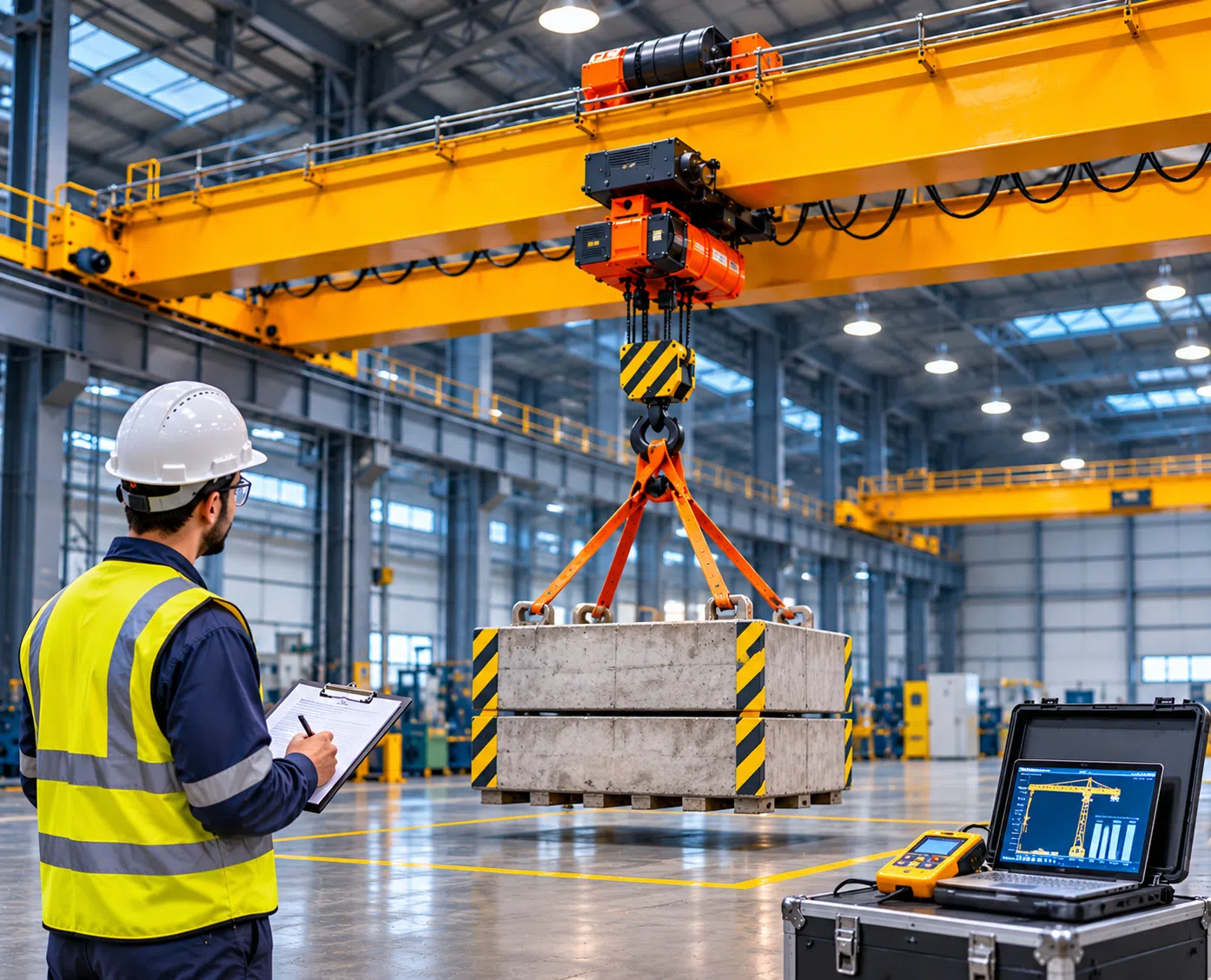
- Load testing and official calibration certificates: Carrying out certified static and dynamic load tests and providing engineering inspection reports that prove the equipment's compliance with civil defense requirements and industrial inspection bodies.
You can visit the Al Manarat Al Monerah website and contact its specialist engineers directly to request a comprehensive on-site inspection and an assessment of the technical condition of the lifting systems in your facility, so you get a maintenance program that prevents sudden stoppages and boosts the productivity of your lines for years to come.
Frequently Asked Questions About Electric Hoist Maintenance
When does replacing the steel rope (wire rope) in an electric hoist become mandatory?
The rope must be replaced immediately under the ISO 4309 standard if its diameter has decreased by 7% or more from the nominal diameter due to internal wear, or when a specified number of broken wires is found in a single strand (according to the hoist rope classification), or when any sharp kinks that cannot be straightened or deep rust in the steel fibers appear.
What type of oil is suitable for an electric hoist gearbox?
Use a synthetic gear oil designed for heavy loads and extreme pressures, with a viscosity between ISO VG 220 and VG 320, or VG 460 for high-temperature environments. It provides a stable lubricating film that prevents direct tooth contact and carries away the heat generated by fast operation.
How is the electromagnetic brake clearance adjusted on a hoist?
The air gap (Air Gap) between the friction disc and the magnetic coil is measured with a feeler gauge (Feeler Gauge) and compared with the values stated in the maintenance manual (often between 0.3 and 0.6 mm). The gap is adjusted by evenly tightening or loosening the mechanical calibration bolts, to ensure instant response and prevent braking delay.
Read also: The Complete Guide to Monorail Crane Systems in Assembly Lines and Factories