

Why Periodic Crane Maintenance Contracts Matter for Avoiding Production Losses
Industrial lifting equipment is the beating heart of material flow inside factories, ports and stockyards, since delivery schedules and product shipping depend on the mechanical readiness of overhead and gantry cranes. Lifting failures do not start suddenly. They arise from the buildup of invisible mechanical stress, such as hidden wear in brake linings, gradual drying out of gear oils, or microscopic fraying of wire rope strands under the effect of temperature and industrial dust. Waiting for a failure to occur before stepping in, known as emergency corrective maintenance, is an unmeasured investment gamble that paralyzes assembly lines for days on end and piles up delay penalties. This is where preventive, scheduled crane maintenance contracts stand out as a decisive engineering and management tool that ensures the sustainability of industrial assets and turns random emergency spending into a disciplined, proactive investment that protects the facility's profits and the safety of its staff.
How Do Crane Maintenance Contracts Protect Your Factory from Production Losses?
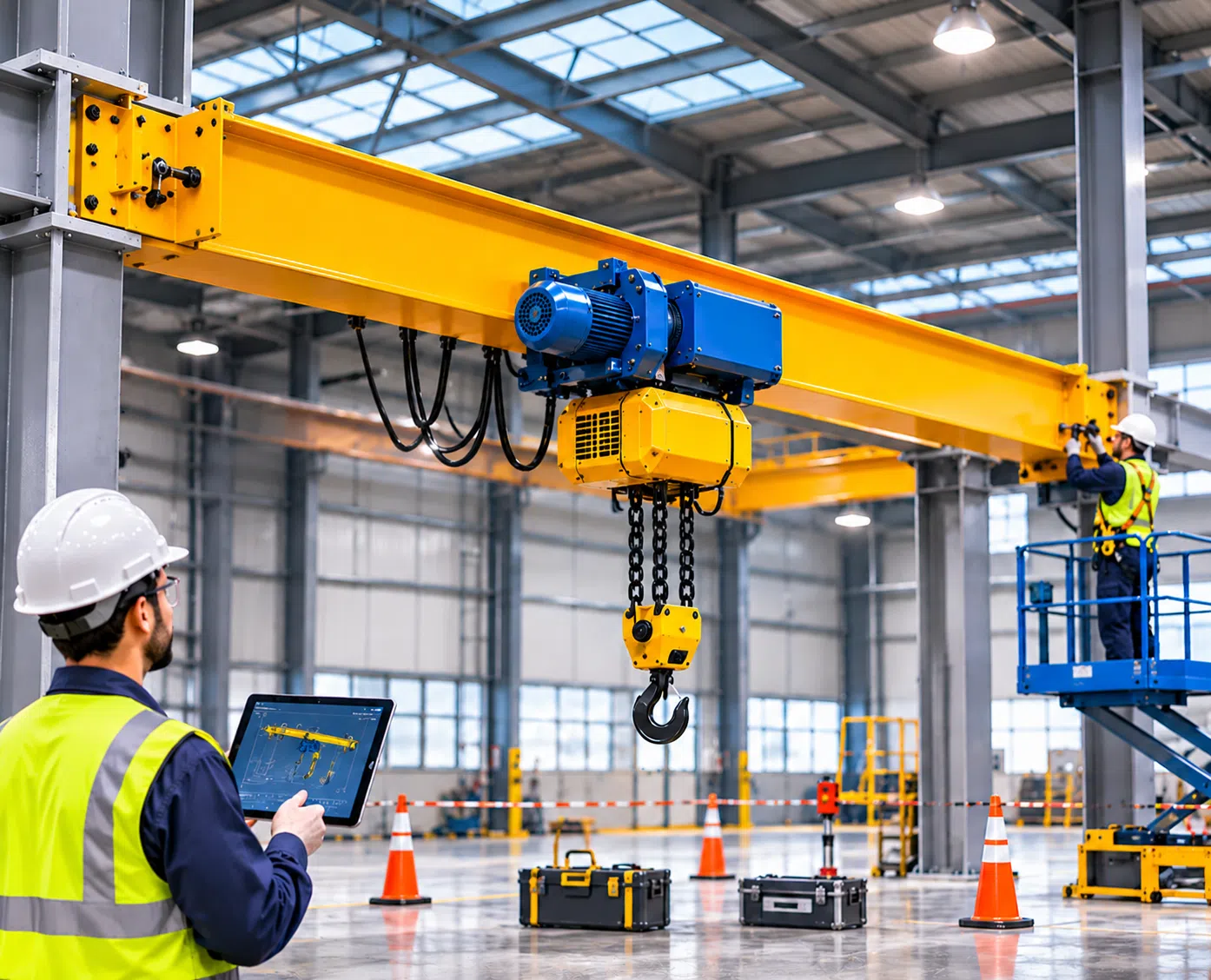
Periodic maintenance contracts protect industrial facilities by scheduling regular engineering visits (monthly, semi-annual and annual) to monitor wear on vital mechanical parts, adjust rail alignment by laser, and test the efficiency of the braking systems and digital safety sensors, while providing immediate response priority for emergency breakdowns and securing genuine spare parts in advance.
This contractual commitment delivers direct financial and operational returns:
- Reducing unplanned production line downtime by 70% to 85%.
- Doubling the operating life of motors, gearboxes and rails by additional years.
- Keeping calibration certificates permanently valid and the facility compliant with the requirements of Civil Defense and industrial inspection bodies.
The Hidden Losses of Neglecting Contractual Crane Maintenance
The damage from a crane breakdown goes beyond the bill for repairing the faulty part; it hits several areas of the facility:
1. Idle Labor and Assembly Line Costs (Downtime Costs)
When the crane in a processing hall or mold unloading area breaks down, dozens of technicians and workers stop working while waiting for the crane to come back. Meanwhile wages and fixed operating expenses keep draining money with no matching productive return.
2. Late Delivery Penalties and Lost Customers
Factories are bound by strict schedules for delivering product shipments or unloading ships and trucks. A breakdown of the loading crane delays order deliveries and triggers heavy penalty clauses, in addition to damaging trust with major customers in the market.
3. Cascading Damage to Expensive Components (Catastrophic Failure)
Neglecting to replace a cheap rope guide causes the steel rope to overlap and jam, which breaks the entire hoisting drum and seriously damages the gearbox and motor. Contractual maintenance prevents damage to a simple part from turning into a mechanical disaster costing thousands of dollars.
4. Legal and Insurance Liabilities
If an operational accident occurs because of a snapped cable or a brake failure that was not covered by a documented contractual inspection, insurance companies refuse to pay compensation, and plant management faces direct legal liability for failing to meet occupational safety and health requirements.
Comparative Analysis: Scheduled Periodic Maintenance Contracts Versus Emergency Corrective Maintenance
The operational and financial comparison reveals the key differences that settle the case for committing to a certified engineering maintenance contract:
- Total financial cost: Maintenance contracts allow a fixed, planned annual budget covering inspections and consumable oils, while emergency maintenance imposes sudden expenses and the cost of rush air-freight imports for completely broken spare parts.
- Inspection scheduling: Contractual maintenance is carried out during weekends or shift downtime without interrupting production, whereas emergency breakdowns occur at peak working hours and intensive operation.
- Availability of genuine spare parts: The contracting party commits to securing a strategic stock dedicated to your cranes, whereas searching for emergency alternatives on the open market takes a long time and may involve the risk of buying counterfeit parts.
- Inspection records and legal compliance: A maintenance contract provides a cumulative technical file containing inspection reports and the load tests needed to renew Civil Defense licenses, which standalone maintenance done through random workshops lacks.
What Do Professional Crane Maintenance Contracts Cover?
Integrated contractual maintenance programs include detailed inspection levels covering all the mechanical and electrical aspects of the system:
1. Brakes and Hoisting Media (Brakes & Hoisting Media)
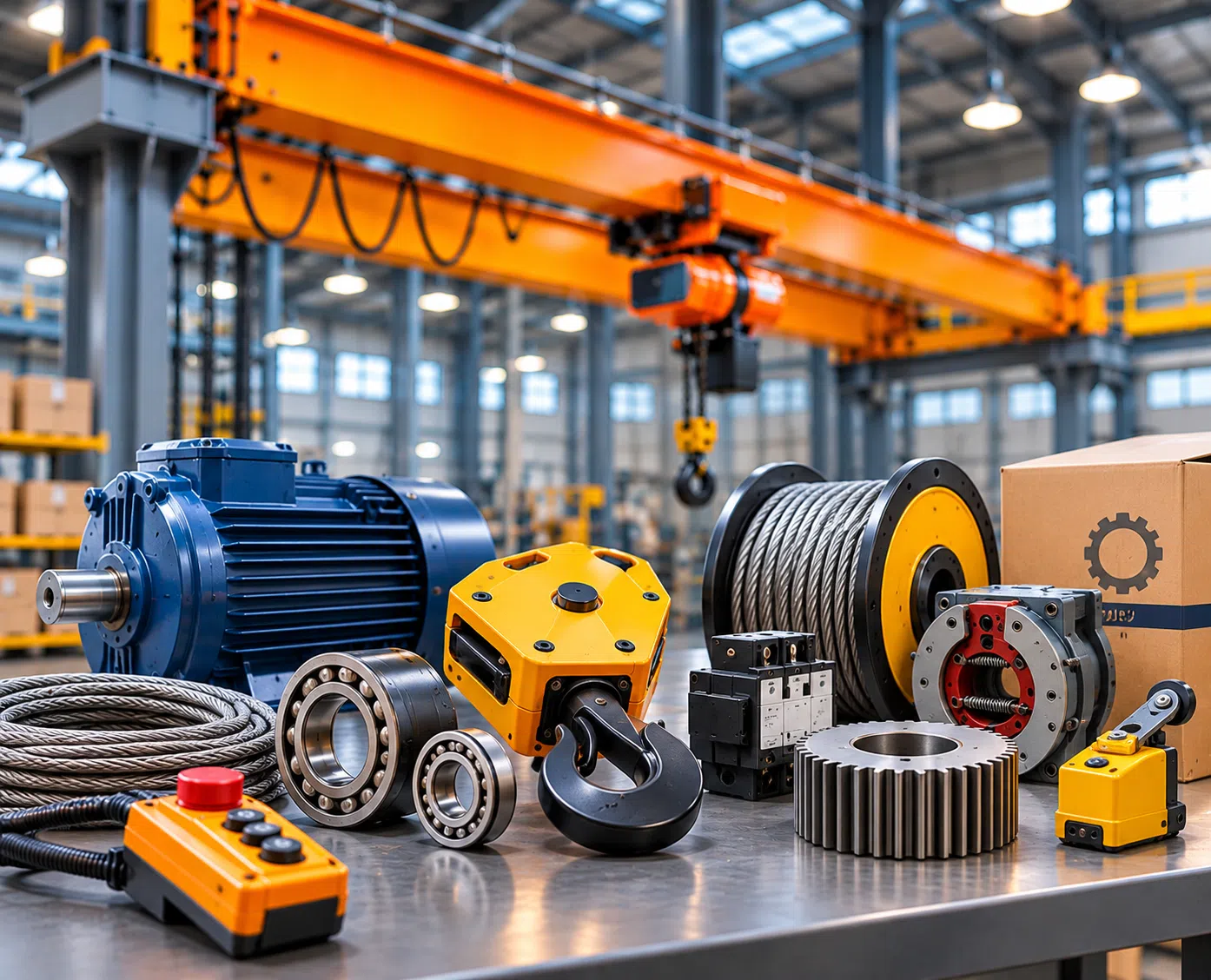
- Measuring the air gap and the wear of electromagnetic brake linings and adjusting their clearance to prevent suspended loads from slipping.
- Inspecting wire ropes under ISO 4309 criteria to determine the number of broken wires, brittleness and diameter elongation.
- Cleaning and lubricating rope guides, and checking the integrity of the hook safety latch and the absence of cracks in the sheave bodies.
2. Structural Integrity and Runway Alignment
- Using laser surveying equipment to adjust the straightness and parallelism of the rail tracks and prevent crane skewing, which eats away at the wheels.
- Checking the tightening torque of the high-strength structural bolts that connect the girders to the end trucks, using calibrated torque wrenches.
3. Electrical System and Smart Control (Electrical & Automation)
- Cleaning control cabins and inspecting the cooling filters of the variable frequency drives (VFDs) to protect them from industrial dust and heat.
- Inspecting the copper current collector shoes on the insulated conductor busbars and replacing worn ones to prevent sparking and power interruption.
- Verifying the programming of overload limiters and limit switches for the hoisting, long travel and cross travel motions.
How Do You Choose the Maintenance Contract Model That Suits Your Facility?
Maintenance contract formats vary according to workload and the hall's operating hours:
- Standard Preventive Maintenance Contract: Includes scheduled periodic visits (monthly or quarterly) for inspection, lubrication, adjustment and technical condition reports, with spare parts billed separately. It suits workshops and warehouses with light to medium duty cycles.
- Comprehensive Contract with Spare Parts: Covers preventive visits, the cost of emergency repairs, and the supply of fast-moving consumable spare parts within the contract value. It is the ideal option for plants running continuous shifts (24/7) such as steel mills and foundries, to fix operating expenses completely.
- Annual Inspection and Certification Contracts: Focus on comprehensive engineering tests, live load tests and the issue of official conformity reports to renew industrial and municipal operating licenses.
Why Is "Al Manarat Al Monerah" Your Ideal Partner for Crane Maintenance Contracts?
Al Manarat Al Monerah (almanratalmonerah.com) leads the engineering, supply and maintenance of industrial lifting equipment in Saudi Arabia, Egypt and the Middle East, offering contractual maintenance programs that ensure the highest standards of readiness and safety:
- Flexible, engineering-tailored maintenance programs: Designing inspection schedules fully matched to your factory lines' operating hours and service classification categories (FEM/ISO/CMAA) with no disruption to the pace of production.
- Field emergency teams equipped around the clock: Specialized engineering crews equipped with the latest optical and laser measuring tools for rapid intervention and resolving emergency breakdowns in record time.
- Integrated local warehouses of genuine spare parts: Priority immediate supply of wire ropes, brake linings, motors and genuine electrical panels at fixed, preferential contract prices.
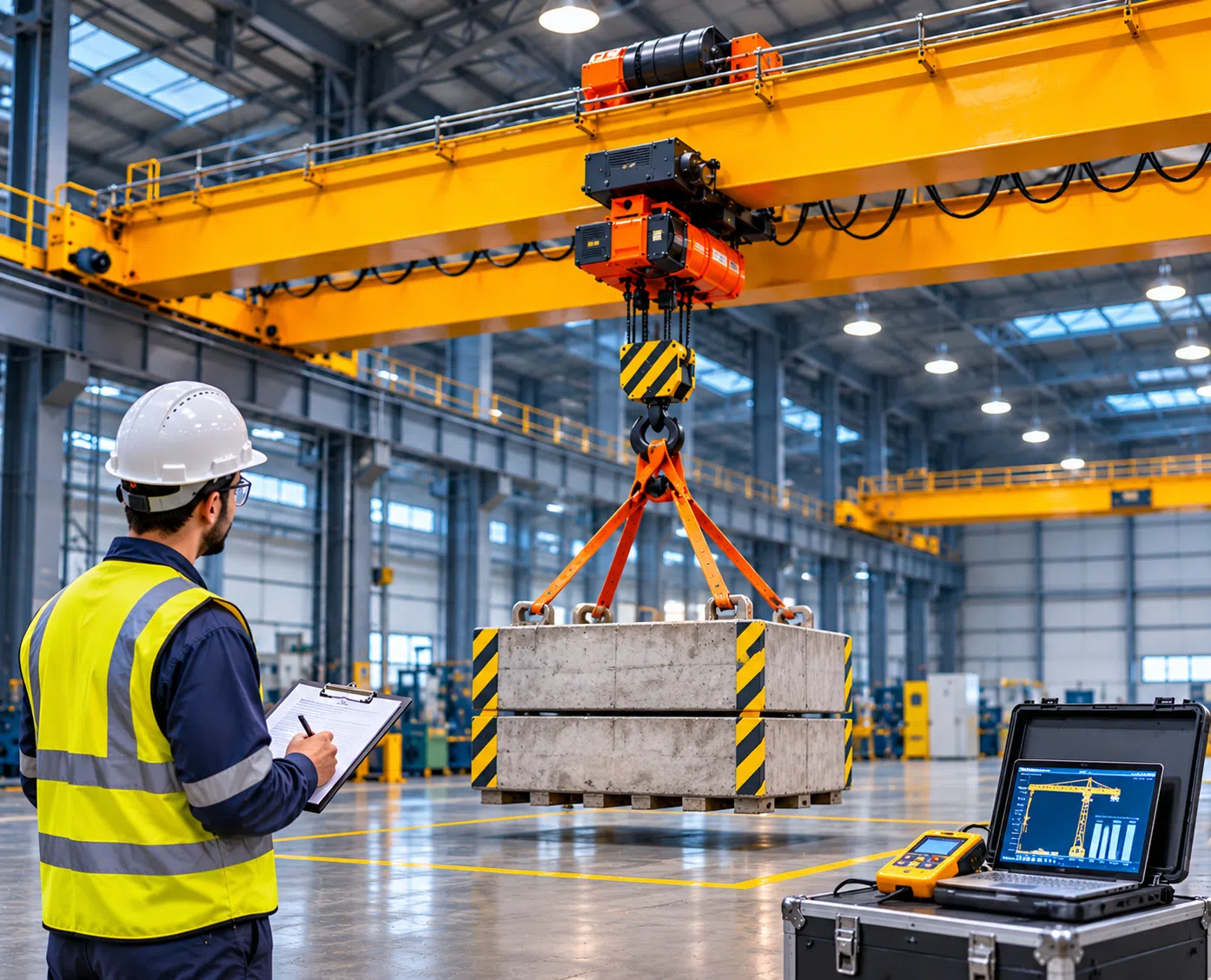
- Load tests and official calibration certificates: Carrying out static load (125%) and dynamic load (110%) tests on site and providing the certified inspection certificates needed for Civil Defense and insurance requirements.
- A digital history record for every crane: Documenting all inspections, replaced parts and wear measurements in periodic technical reports delivered to plant management, to track the structural condition of the equipment and plan upgrades proactively.
Al Manarat Al Monerah gives you direct access to its engineering experts to inspect your factory's cranes and prepare a customized preventive maintenance contract proposal that protects your investments and prevents sudden production losses, with the highest standards of field safety.
Frequently Asked Questions About Crane Maintenance Contracts
What Is the Ideal Visit Frequency in Industrial Crane Maintenance Contracts?
The frequency depends on the crane's duty class and daily operating hours. In steel plants, foundries and production lines running continuous shifts, regular monthly visits are recommended. In logistics warehouses and maintenance workshops with medium use, a preventive inspection every two or three months is enough, with a comprehensive engineering inspection and load test at least once a year.
Do Maintenance Contracts Cover Wireless Controls and Electrical Power Feed Tracks?
Yes, specialized contracts include a comprehensive inspection of the encrypted wireless control circuits, receivers, transmitter batteries and emergency stop switches, along with cleaning and aligning the insulated copper busbars and reviewing the efficiency of the current collector brushes to ensure a stable, spark-free power supply.
How Does a Maintenance Contract Help Reduce the Insurance Cost of an Industrial Facility?
Insurance companies give lower risk ratings to facilities that hold documented periodic maintenance contracts with certified engineering companies. Inspection records and annual load test reports prove that the systems are free of structural and mechanical defects, which reduces the likelihood of lifting accidents and leads to lower annual insurance premiums and fewer disputes when claims are made.
Read also: How Are Cranes Load Tested Before Final Commissioning?