
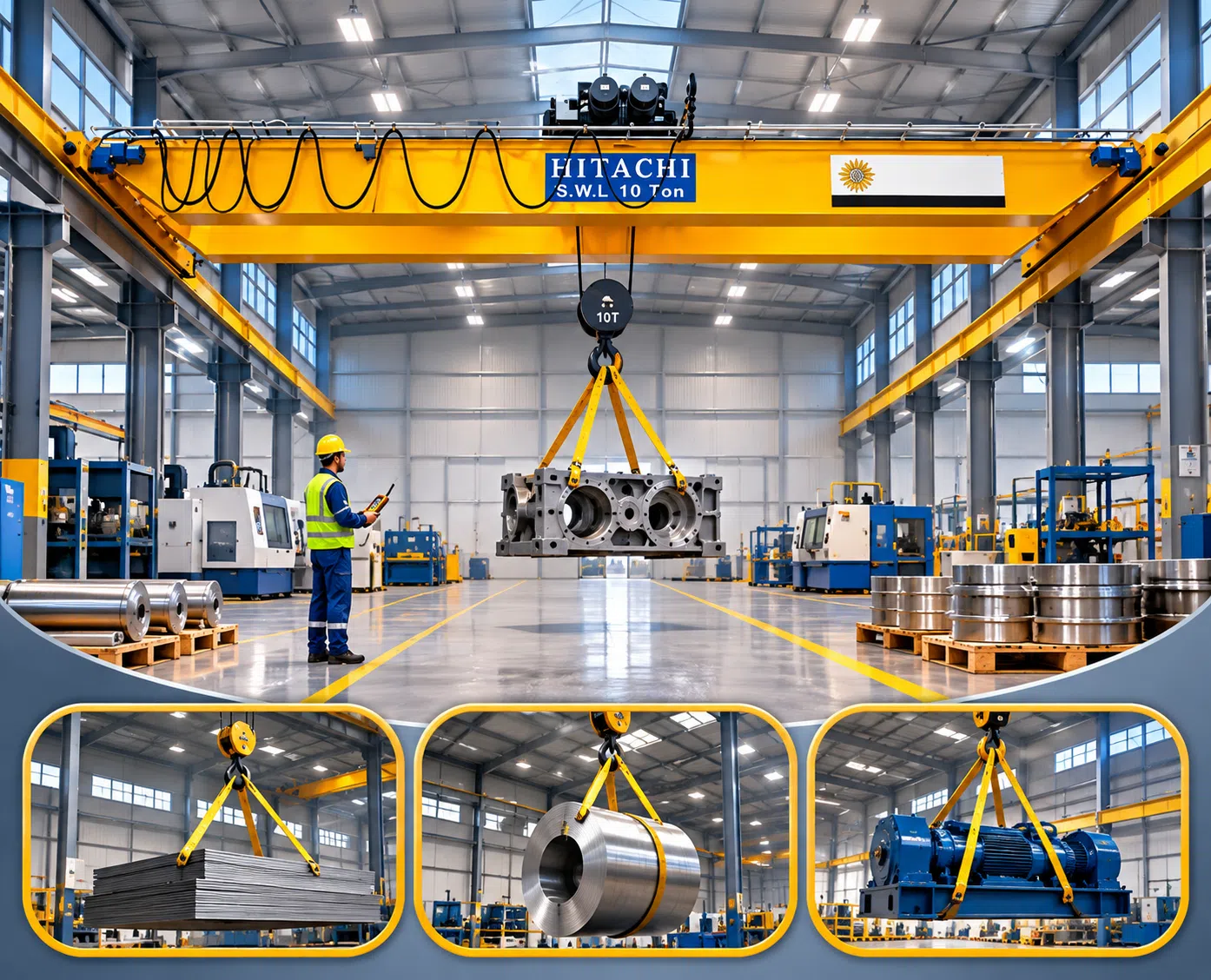
When Do You Need to Install a 10-Ton Overhead Crane in Your Industrial Facility?
Industrial facilities and heavy fabrication shops reach a critical stage in their growth when their existing lifting equipment can no longer keep pace with the size of raw materials and large production fixtures. Relying on light cranes, or trying to use two forklifts to lift a single piece together, becomes an uncalculated gamble that threatens both production lines and worker safety. Considering a 10-ton overhead crane for your factory is not simply a wish to add muscle to the shop. It is a considered operational response to products that are becoming heavier and larger, and that demand the highest degree of mechanical stability and balance.
When Does Installing a 10-Ton Overhead Crane Become Essential?
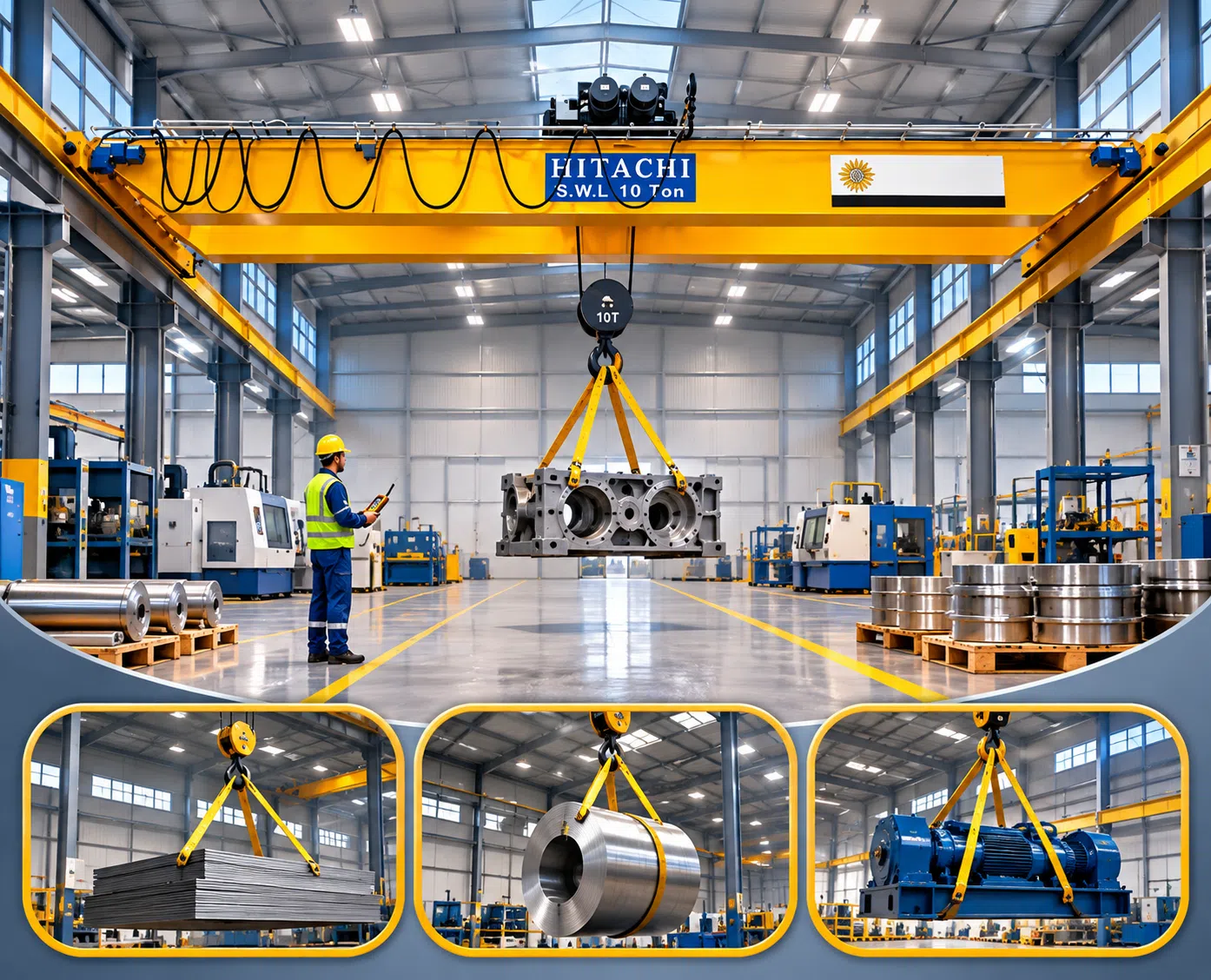
Your facility needs a 10-ton overhead crane when the weights you handle regularly exceed the 5 to 7 ton threshold, or when you deal with mechanical parts, casting molds and large steel coils that cannot be lifted and positioned safely with conventional lifting equipment.
This equipment upgrade lets your factory achieve decisive operational results:
- Complete elimination of waiting time caused by splitting materials into smaller loads or by renting expensive outside equipment.
- A quiet, stable lifting platform with no vibration when lowering heavy parts onto sensitive machine tools.
- New contracting opportunities for manufacturing and supplying giant structures that the facility previously had to decline because of weak handling capability.
5 Practical Signs That It Is Time to Move to a 10-Ton Capacity
If you notice any of the following scenarios recurring in your production hall, it means your current equipment has reached its operating limits:
1. Your Material Weights Reach the Danger Line (the Safety Margin Rule)
Sound engineering practice says a hoist should not be run continuously at 100% of its maximum capacity. If your current 5-ton crane regularly lifts pieces weighing 4.5 to 5 tons, the motors, drive components and wire ropes are under constant mechanical stress that accelerates their wear and brings them closer to sudden failure. Moving up to 10 tons is then a smart way to run the equipment within its comfort and safety range.
2. Congestion and Pile-Ups of Steel Coils and Prefabricated Structures
Steel coils, rebar and bundles of structural beams commonly available on the market weigh between 6 and 9 tons per bundle. Trying to break these bundles apart on the trailer and unload them in pieces consumes long hours of shift time, whereas a 10-ton crane unloads the whole truck load in a matter of minutes.
3. Growing Changeovers of Injection Molds and Large Drawing Presses
Automotive plants, heavy plastic forming plants and home appliance factories use solid steel dies that weigh close to 8 and 10 tons. Lowering these dies into machine paths with exacting precision and without any friction requires a heavy-duty crane fitted with motors that give fine control at slow inching speeds.
4. Frequent Maintenance Stoppages and the Cost of Renting Outside Equipment
If your finance department keeps recording repeated payments to telescopic crane rental companies each time a new machine shipment arrives, or is spending heavily on maintaining forklifts strained by pulling weights beyond their capacity, the return on investment of a fixed 10-ton overhead crane will pay back its cost within a short period.
5. Expansion and Growth Plans for the Next Five Years
Buying a crane that only meets today's need is a short-sighted decision. Developing production lines and adding larger products requires infrastructure that is one step ahead, and choosing a 10-ton crane gives your factory the flexibility to take on any new manufacturing contracts for many years without having to modify the building again.
Comparative Analysis: A 10-Ton Single Girder Crane Versus a Double Girder Crane
When you settle on a 10-ton capacity, the factory reaches an engineering crossroads between the single and double girder designs. The following points show the key differences to help you make the right technical decision:
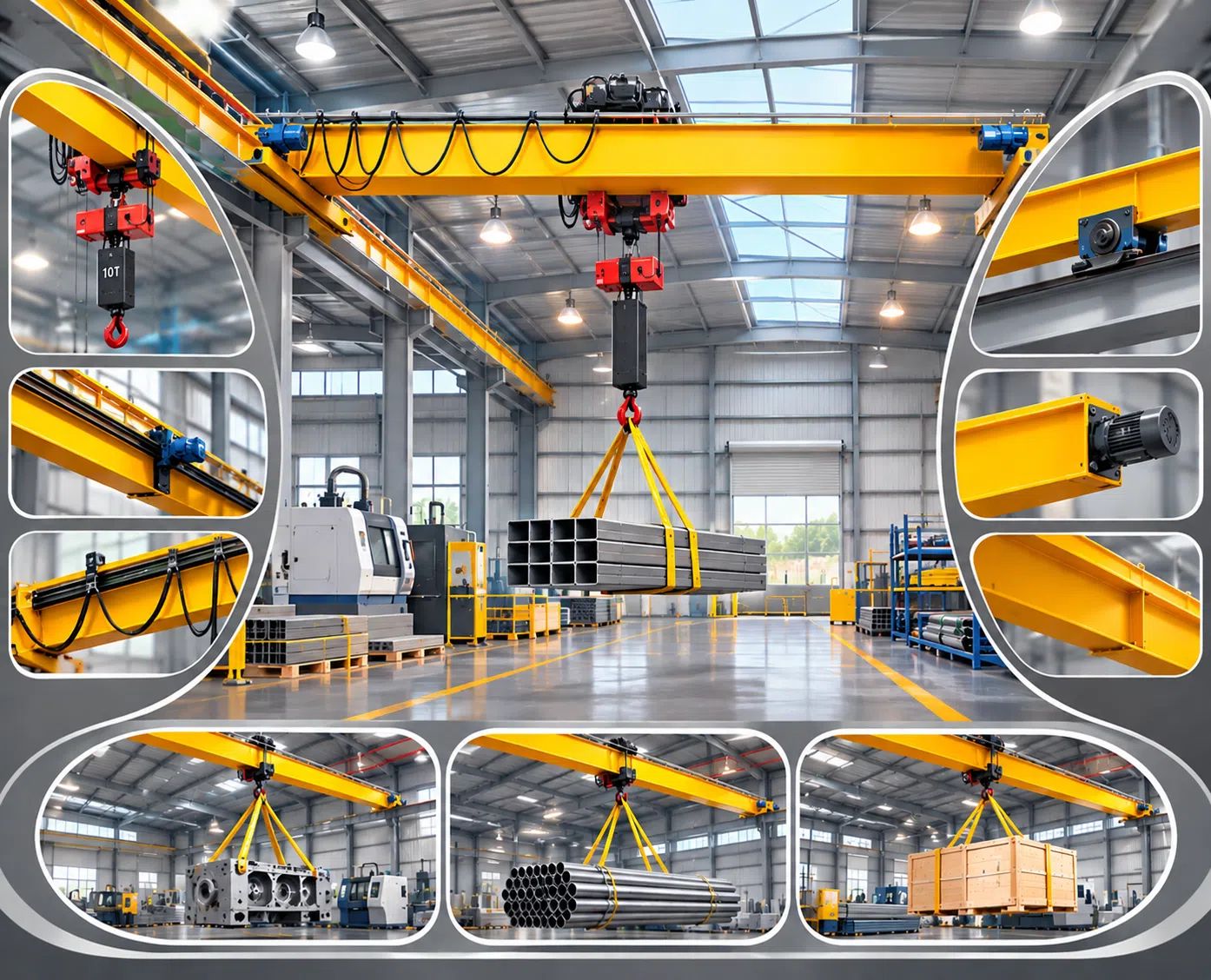
- Available span and distance between columns: The single girder design succeeds in covering short and medium spans of up to 18 or 20 meters at an excellent cost, whereas the double girder design becomes mandatory in wide halls whose span exceeds 20 to 30 meters, in order to resist twisting and maintain structural rigidity.
- Vertical hook height: The double girder crane provides greater lifting height within the same building because the hoist trolley runs on top of the rails of the two girders, raising the hook to the highest possible point. The trolley of a single girder crane, by contrast, hangs from the lower flange of the beam, which reduces the clear vertical distance below the hook.
- Crane self-weight and the loads on the structure: The single girder crane has a lighter structural weight, which reduces the reaction forces on the runway beams and the existing factory columns, whereas the double girder crane weighs more and calls for stronger, more heavily reinforced concrete or steel columns.
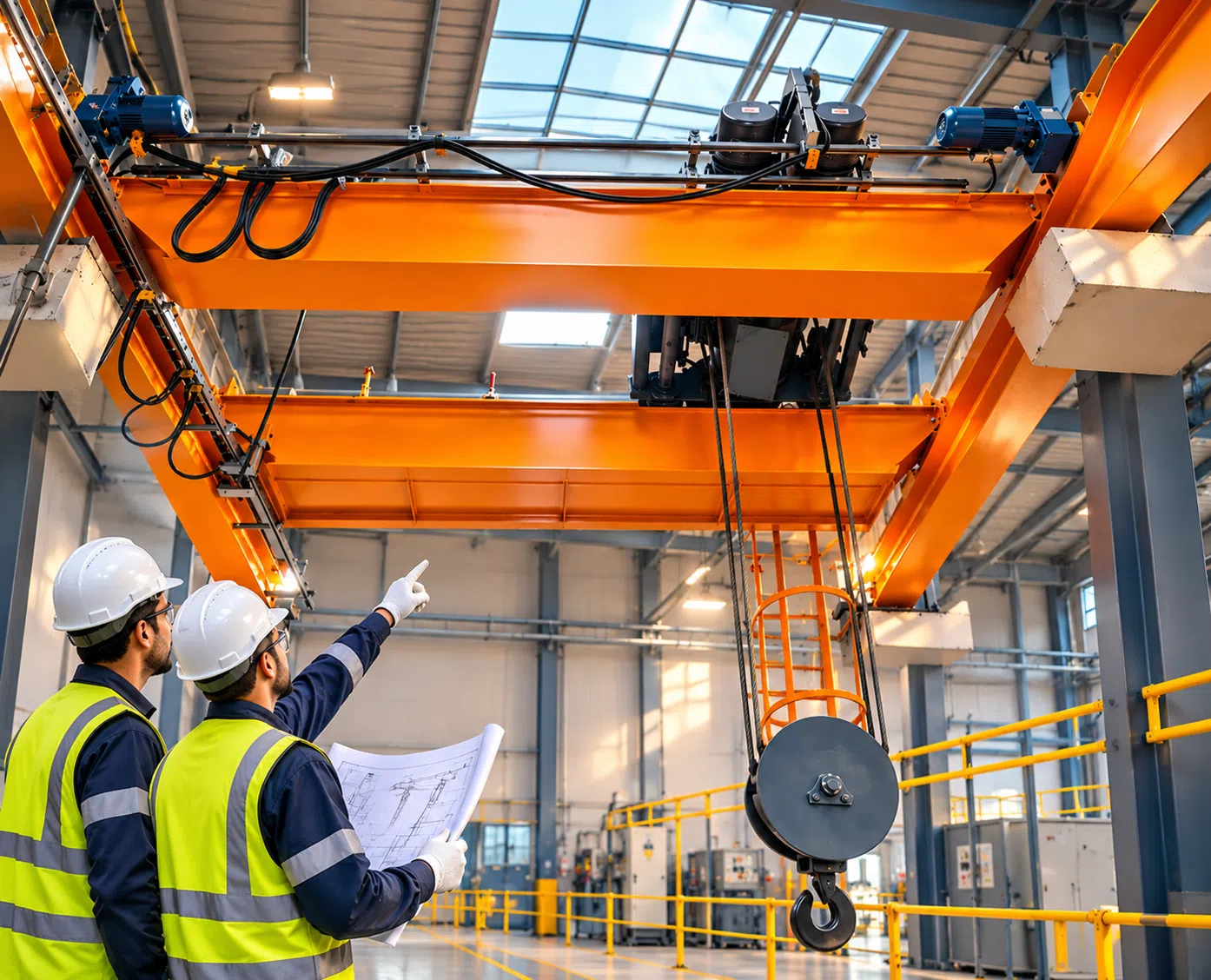
- Maintenance walkways and ease of periodic inspection: The double girder structure provides wide walkways with integrated guard rails along the girder, allowing technicians to service motors, brakes and wire ropes in complete safety at roof level, an advantage that is hard to provide on light single girder cranes.
Structural Requirements and Provisions Needed Before Installation
Installing a 10-ton crane requires a prior check of the readiness of the factory's facilities to ensure safe and stable operation:
- Checking runway beams and hall columns (Runway System): Confirming that the columns and foundations can carry the crane's self-weight plus the 10,000 kg load, together with the transverse and longitudinal braking and acceleration forces (wheel loads).
- Stable electrical power supply: Providing the crane with an independent three-phase supply circuit, using fully insulated copper conductor busbars to prevent voltage fluctuation while the heavy hoisting motors are running.
- Clearance height: Ensuring a clearance of at least 100 to 150 mm between the highest point of the hoist cabin or bridge and the lowest obstruction in the factory roof, such as fire-fighting pipes or lighting beams, to avoid collisions during movement.
Mandatory Smart Safety Systems for 10-Ton Cranes
There is no room for compromise on safety standards when handling loads of this size, so this class is fitted with a set of protective digital sensors:
- Digital Load Cell: A digital display that reads the weight of the lifted load in real time and automatically cuts off upward hoisting as soon as an attempt is made to lift an object weighing more than 10 tons, while sounding an audible warning to the operator.
- Inverters / VFDs: Installing them on the long travel and cross travel motors ensures very smooth acceleration and deceleration, which prevents the dangerous phenomenon of load sway that could cause the suspended object to hit workshop machinery.
- Optical Anti-Collision Sensors: They automatically stop the crane's movement when it approaches another crane working on the same runway or comes too close to the end-of-travel stops.
- Dual Brake System: The hoist is fitted with a primary electromagnetic brake and an additional mechanical safety brake on the rope drum that acts immediately to prevent the load from falling in the event of an unexpected gearbox failure.
Frequently Asked Questions About the 10-Ton Overhead Crane
Can a 10-ton overhead crane be installed in a prefabricated hangar?
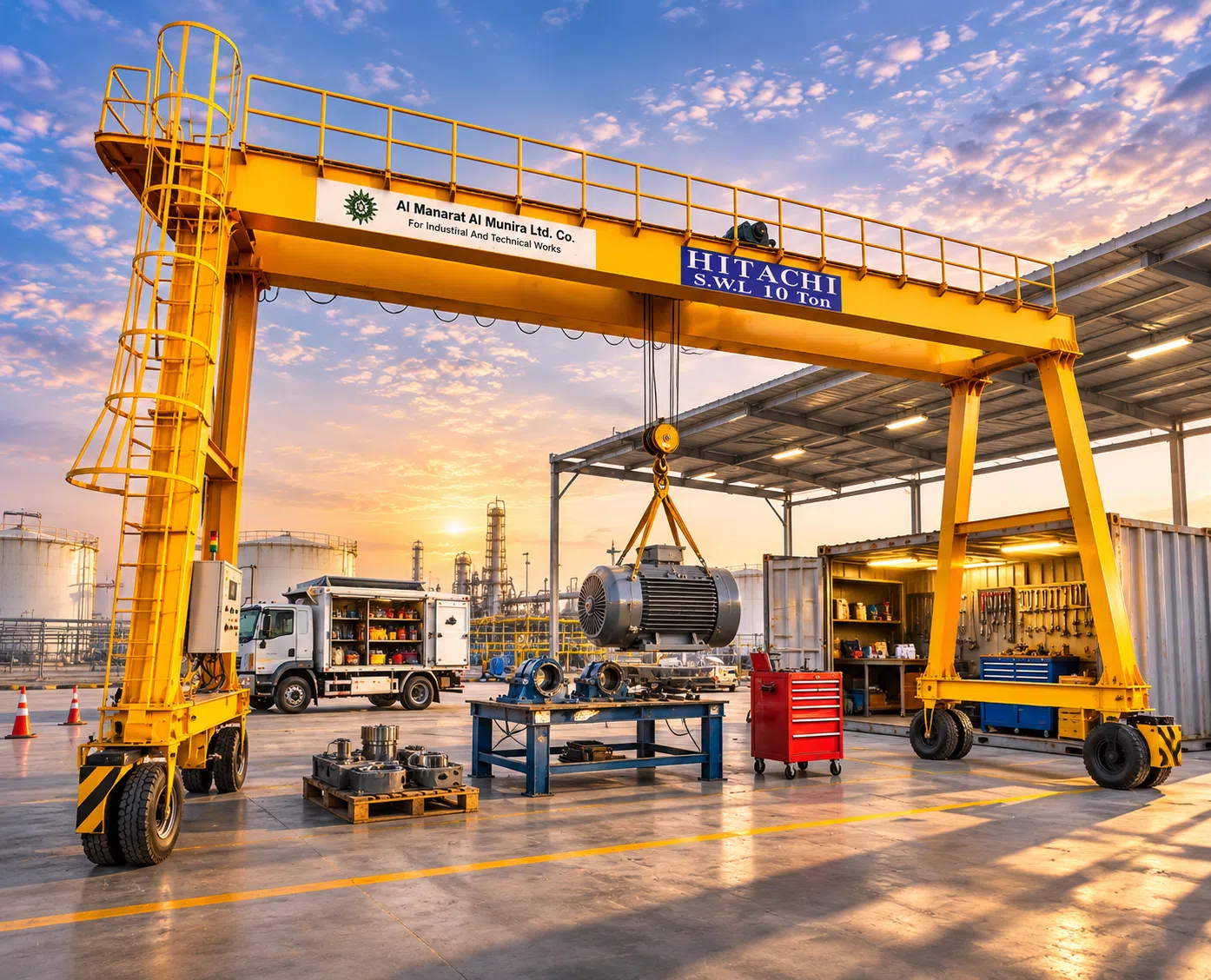
Yes. This is done either by making sure the building's beams were designed from the outset to carry the wheel loads of a 10-ton crane, or by building a fully independent internal support structure of steel columns (portal frames) anchored to the factory floor, so that no mechanical stress is placed on the roof of the prefabricated building.
What type of wire rope is best for a 10-ton crane?
High-tensile galvanized multi-strand steel wire rope reinforced with an internal steel core (steel core wire rope) is used, as this construction gives superior resistance to crushing and wear when winding in multiple layers on the hoist drum under heavy loads.
What is the difference in working area served by a 10-ton crane compared to a heavy forklift?
A 10-ton overhead crane serves 100% of the hall's cubic space from wall to wall and up to the roof without needing any floor aisles, whereas a 10-ton forklift needs clear aisles at least 5 to 6 meters wide for maneuvering and turning, which wastes valuable storage space on the facility floor.
Read also: Pros and Cons of Single Girder Overhead Cranes and How to Get the Most from Them