
Making the decision to equip your factory or large workshop with advanced lifting systems is a major step toward automation and higher daily productivity. However, have you ever considered the level of mechanical and dynamic stresses imposed on building walls and roofs when lifting loads that can reach tens of tons in mid-air?
Crane installation is not a simple matter of suspending heavy equipment. It is a fully integrated engineering safety system that requires complex structural calculations to ensure the stability of both the building and the lifting system.
Any negligence in installation standards or reliance on unqualified contractors can lead to structural cracks or, in worst-case scenarios, catastrophic crane failure during operation. In this technical guide from Al Manarat Al Muneera Company, we highlight the approved engineering methods for installing ceiling cranes, along with key securing protocols to ensure the safe operation of overhead cranes at maximum efficiency and safety.
What Are the Engineering Methods for Installing Ceiling and Overhead Cranes?
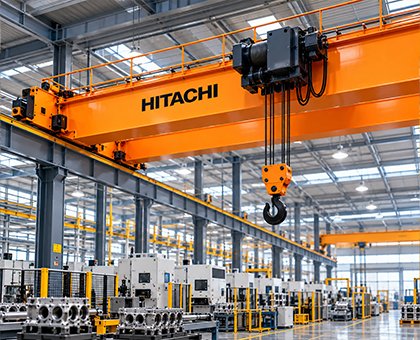
The installation method depends on the structural design of the factory (steel hangar or concrete building) and the load capacity required. Globally accepted methods fall into three main categories:
1. Top-Running System
The main crane bridge runs on rails installed on top of runway beams.
This is the strongest configuration and is suitable for heavy loads exceeding 10 tons. It also provides the maximum possible lifting height.
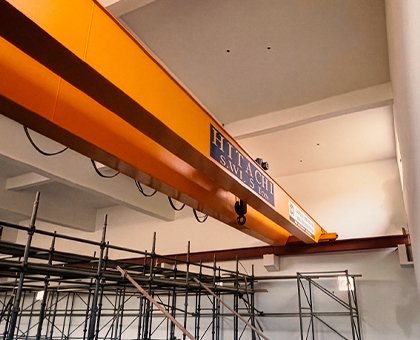
2. Under-Hung System
The crane is suspended from the lower flange of roof beams.
This system is ideal for confined spaces and light-to-medium loads, as it keeps the factory floor completely free of additional support columns.
3. Free-Standing System
If the existing building structure is not capable of supporting crane loads, a separate steel structure of columns is constructed to carry the entire crane system independently, without transferring any load to the building walls.
Before selecting any installation method, structural engineers must calculate fatigue stress to ensure the building can withstand repeated dynamic vibrations over time.
Safety Protocols for Securing Overhead Cranes
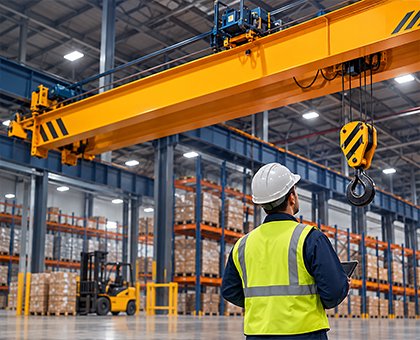
Structural installation alone is not enough. Overhead cranes must be supported by intelligent safety systems that automatically intervene during human error to prevent accidents.
1. Runway Bumpers (Mechanical and Hydraulic Buffers)
Installed at the ends of crane travel paths to absorb impact in case of control failure, preventing the crane bridge or trolley from derailing.
2. Overload Protection Systems
Overloading is one of the leading causes of crane accidents.
Modern systems include digital load sensors that automatically cut power to the hoisting motor when the rated capacity is exceeded—even by a small margin.
Preventive Maintenance: The Third Pillar of Safety
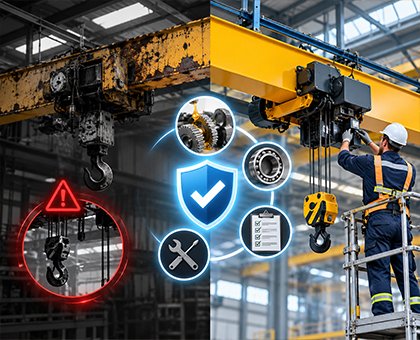
After successful installation and safety integration, preventive maintenance remains the key factor for long-term reliability. Al Manarat Al Muneera recommends a strict inspection schedule that includes:
- Structural bolt tightening (Anchor Bolts): Ensuring no loosening occurs due to continuous vibration.
- Track alignment inspection: Misalignment leads to wheel wear, motor strain, and uneven crane movement.
- Electromagnetic brake calibration: Ensures immediate and safe stopping of the load when the operator releases the control button.
Frequently Asked Questions
How do I know if my factory roof can support a suspended ceiling crane?
This cannot be determined visually. A structural engineering office must analyze the building drawings and assess the capacity of steel trusses to withstand both live and dynamic loads generated by crane operation.
Why are dual limit switches important in overhead cranes?
They act as a double safety barrier. The first switch reduces crane speed near the travel limit, while the second completely cuts power to prevent mechanical collision.
Conclusion
Ultimately, investing in proper installation methods and strict safety standards for ceiling cranes is not just regulatory compliance—it is a direct investment in operational stability and worker safety.
Improper installation of overhead cranes can cost far more than the savings achieved through low-cost solutions.
At Al Manarat Al Muneera Company, we believe safety and engineering are inseparable. That is why we provide highly skilled technical teams specializing in the design and installation of lifting systems to ensure maximum operational efficiency and absolute long-term safety.