
What Is a Crane and How Has It Revolutionized Manufacturing and Logistics?
Handling materials and massive loads is the first pillar on which modern industrial facilities and global supply chains were built. Large factories, container ports, and steel and automotive production lines could never have reached their current output by relying on muscle power or simple mechanical solutions. Answering the question what is a crane means understanding an integrated mechanical and engineering lifting and handling system that built the bridges of the Industrial Revolution and turned the movement of heavy loads from an obstacle on production lines into precise, automated motion through the overhead space of a facility, without occupying floor aisles and in compliance with the highest standards such as ISO, FEM and CMAA.
What Is a Crane?
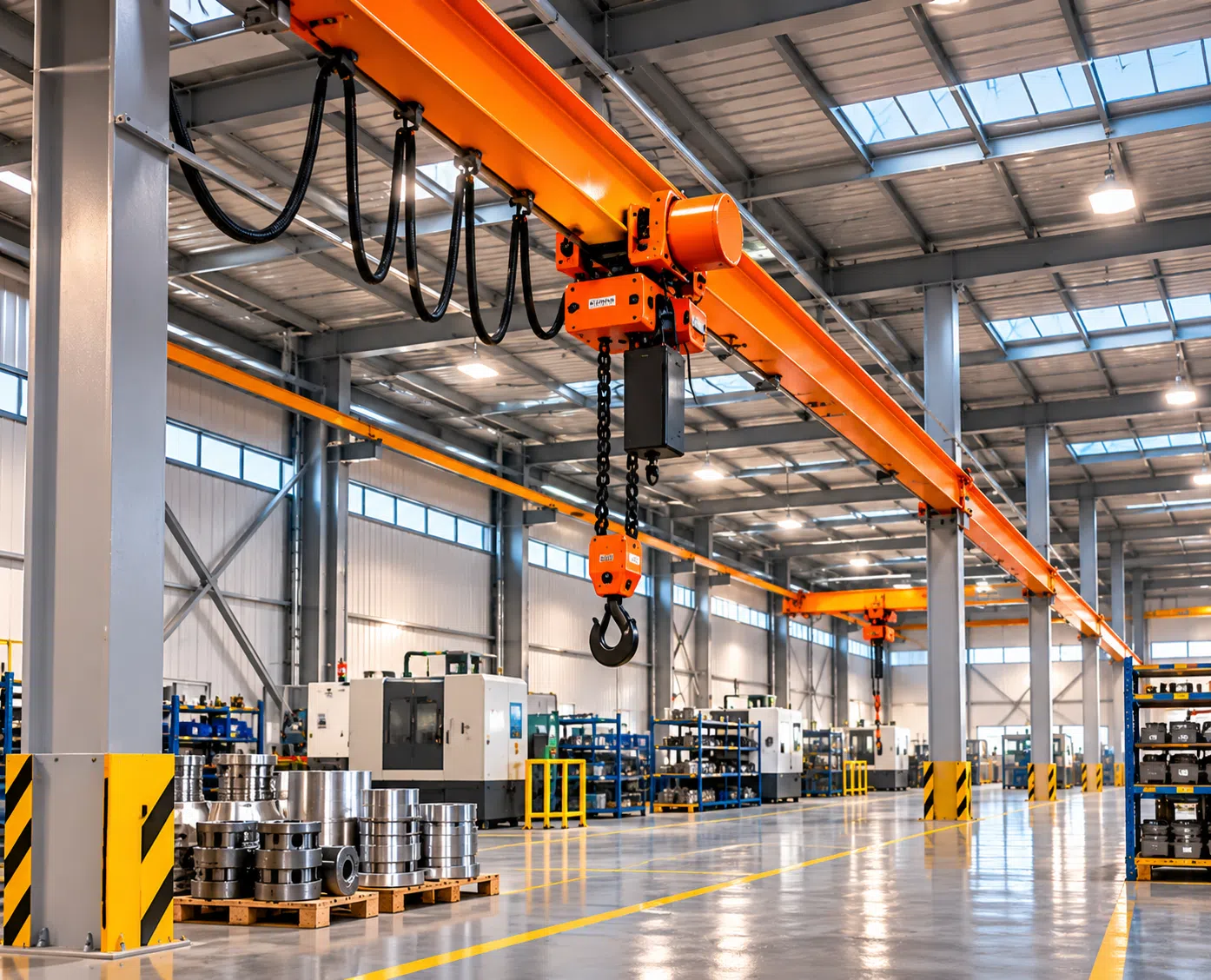
A crane (industrial lifting machine) is an electromechanical engineering machine designed to lift, lower and move heavy loads and raw materials in three-dimensional space (vertically and horizontally), through the integration of a steel structure (a bridge, boom or gantry) with a hoist unit, a trolley, and a set of gears and wire ropes or chains, driven by electric motors fitted with safety brakes and smart frequency inverters.
Integrating cranes into manufacturing and logistics brought a radical shift, reflected in direct results:
- Handling and unloading of raw materials and loading of products is more than 70% faster than with traditional methods.
- Complete elimination of falls and occupational injuries caused by uncontrolled manual lifting.
- Use of vertical height in production halls and warehouses, freeing floor space entirely for productive operations.
The Mechanical Anatomy of an Industrial Crane System
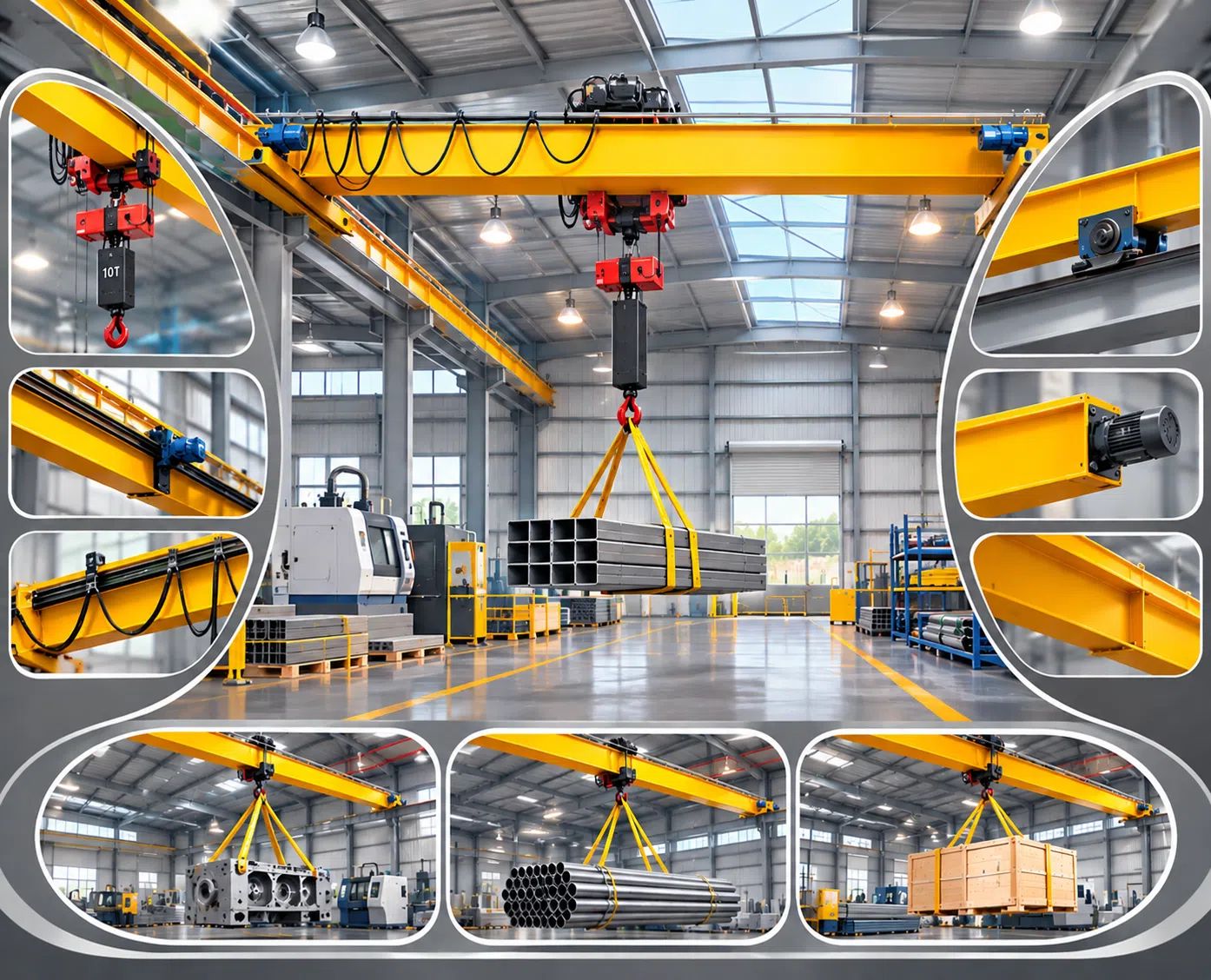
A crane's efficiency rests on the functional interdependence of its mechanical and electrical components:
1. The Supporting Structure (Structural Frame)
This includes box or lattice steel girders, cantilever (jib) arms, or gantry legs. It is made from high-strength steel alloys engineered to withstand the bending forces and deflection caused by self-weight and dynamic movement.
2. Hoist Unit and Trolley (Hoist & Trolley)
The trolley travels horizontally along the bridge and carries the hoist, which includes an electric motor, a speed-reduction gearbox, a grooved wire rope drum or a chain sprocket, and a lifting hook fitted with a safety latch.
3. Long Travel System (End Trucks / Long Travel)
The end trucks are mounted at both ends of the crane bridge and contain hardened steel wheels that run on the rails installed along the length of the hall, giving the crane freedom of movement across the entire work area.
4. Power Supply and Smart Control Circuits (Power & Control System)
The crane draws its power from insulated copper conductor bars (busbars) and is operated through control panels with variable frequency drives (VFDs) that provide smooth acceleration and deceleration to prevent load swing, with control also available through encrypted wireless units.
How Did the Crane Revolutionize Manufacturing and Supply Chains?
The crane has reshaped how work is done inside industrial and logistics facilities through several key operational pillars:
Speeding Up Material Flow on Sequential Production Lines
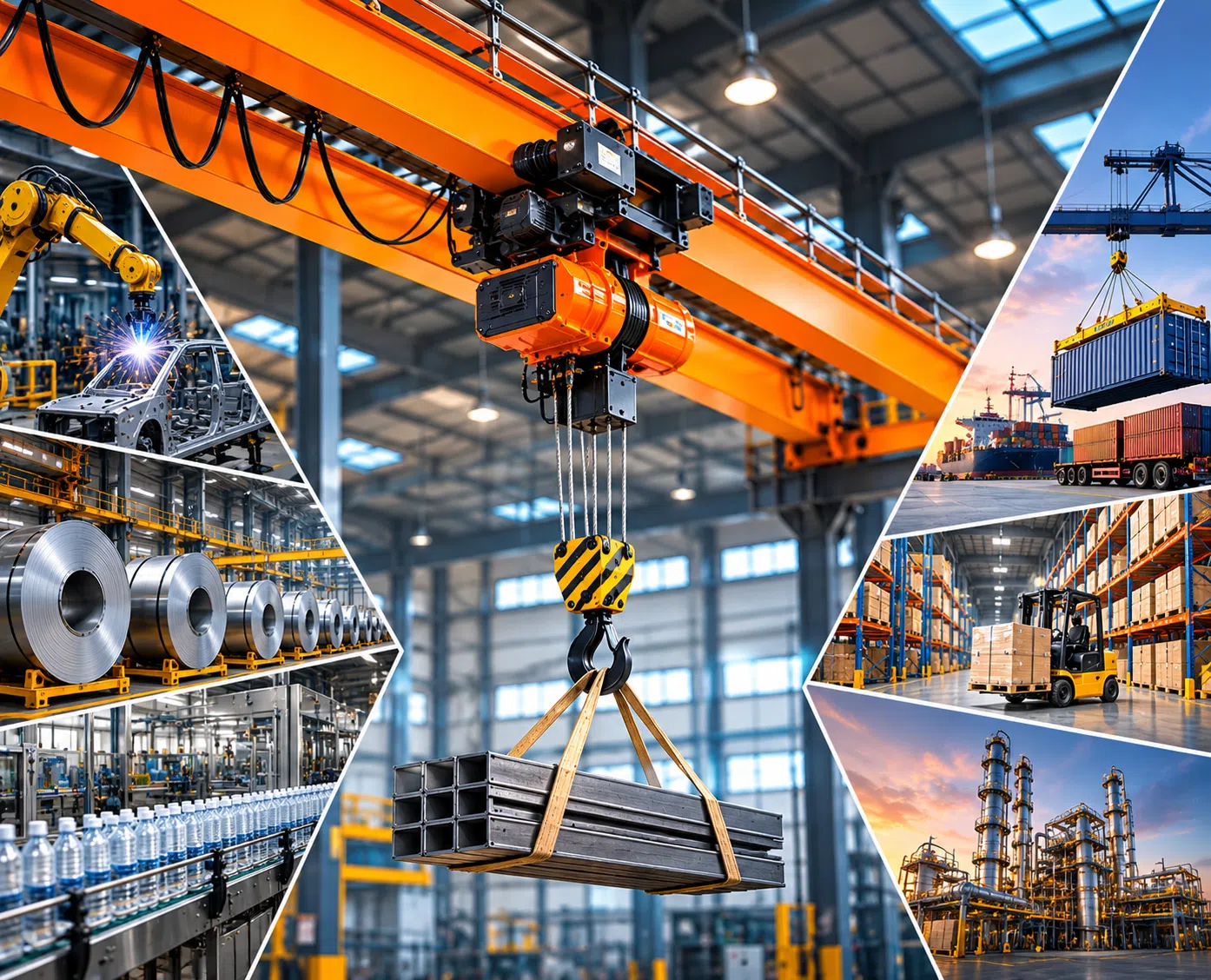
In automotive and heavy equipment assembly, the crane moves body shells and engines between the welding, painting and assembly stations in a matter of minutes, travelling in a straight line through the air above machines and floor obstacles. This ensures continuous flow in line with lean manufacturing principles.
Unlocking Ultra-High-Density Vertical Storage in Logistics
Before modern cranes, warehouses were limited by the height a person could stack to or by the capacity of forklifts. Overhead and gantry cranes made it possible to stack goods and containers to towering heights of tens of meters, multiplying the storage capacity per square meter in ports and logistics centers.
Enabling the Steel and Precast Construction Industries
It would not have been possible to fabricate giant steel bridge girders, 30-ton steel coils, or precast concrete slabs, or to move them, without cranes designed to carry extreme loads and set them down with millimeter precision on forming tables and trucks.
Comparative Analysis: Crane Types and Their Applications in Different Work Environments
Engineering crane models vary to cover different spatial and operational requirements. The following points show the key differences between the common systems:
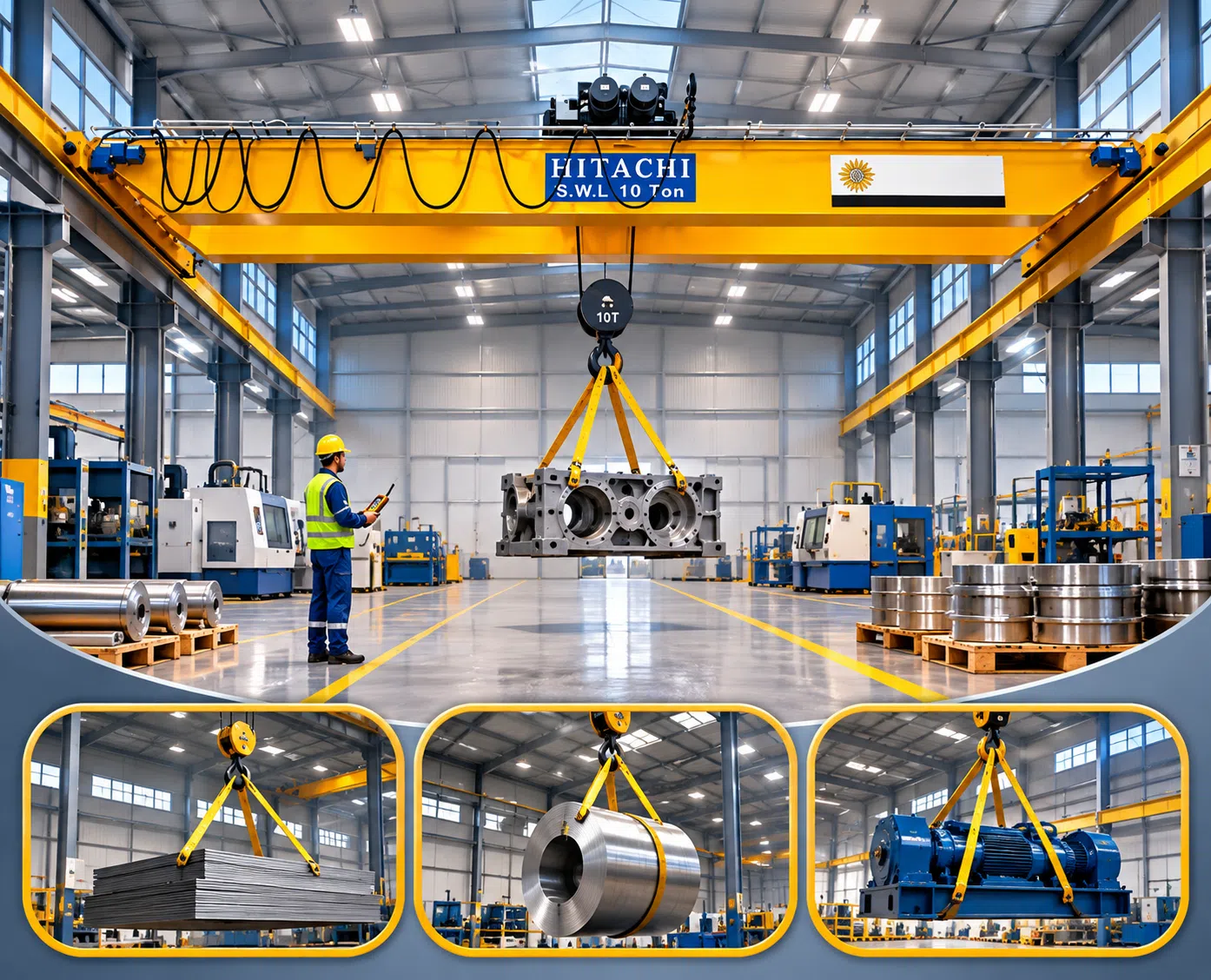
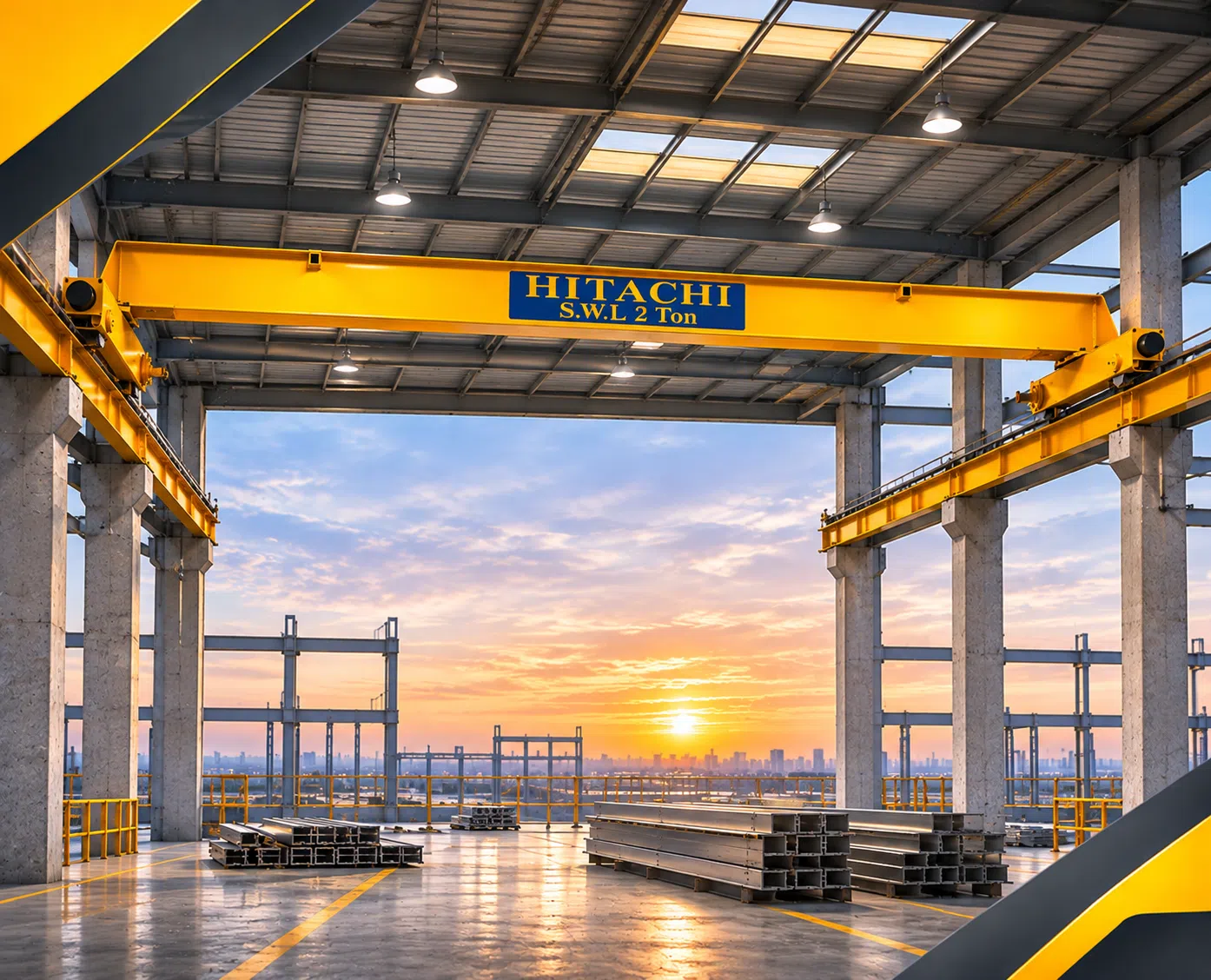
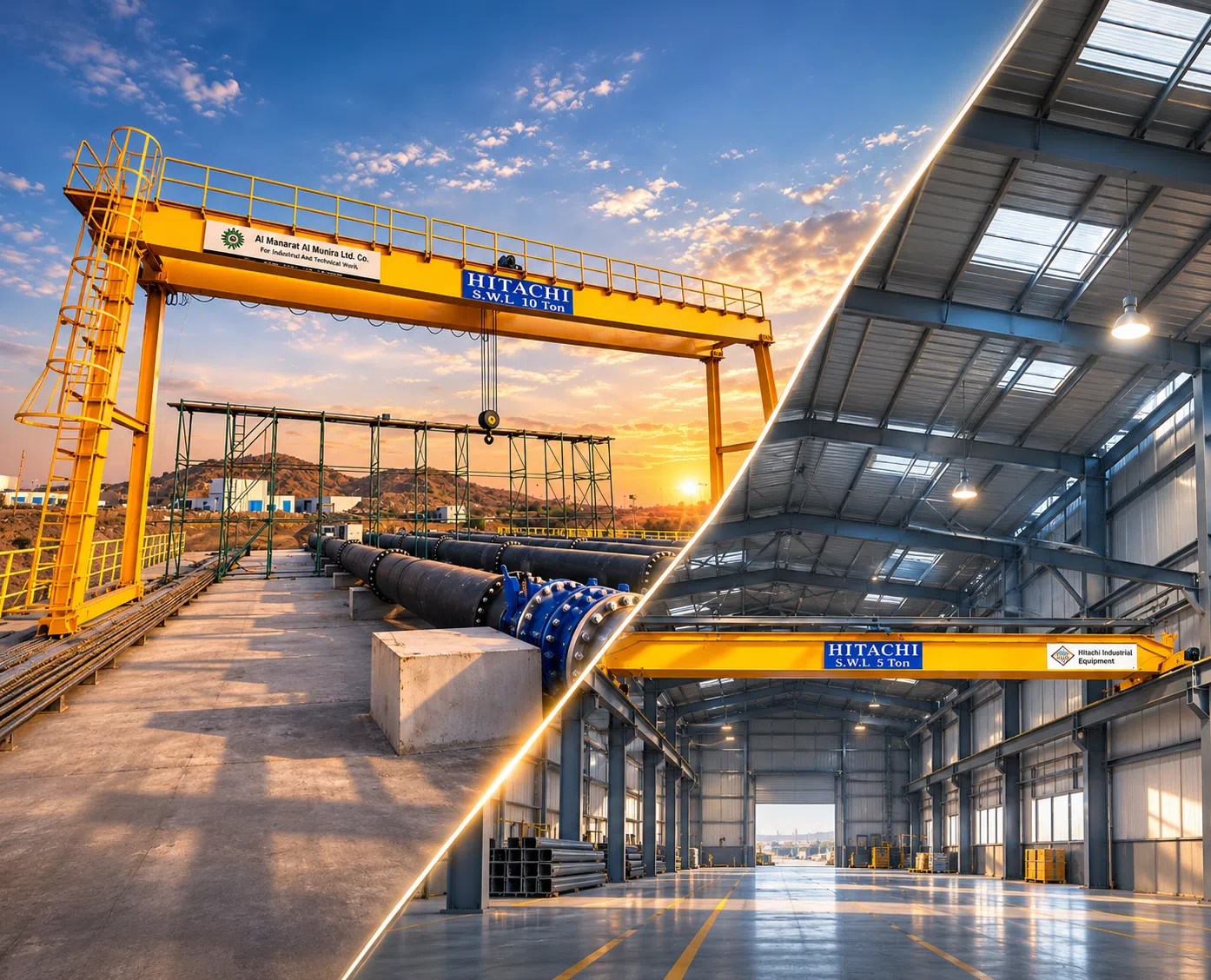
- Overhead Bridge Crane: It rides on overhead runways fixed to the hall columns and covers a three-dimensional rectangular area. It is the standard choice for maintenance workshops, steel plants and enclosed production lines with loads from one ton up to hundreds of tons.
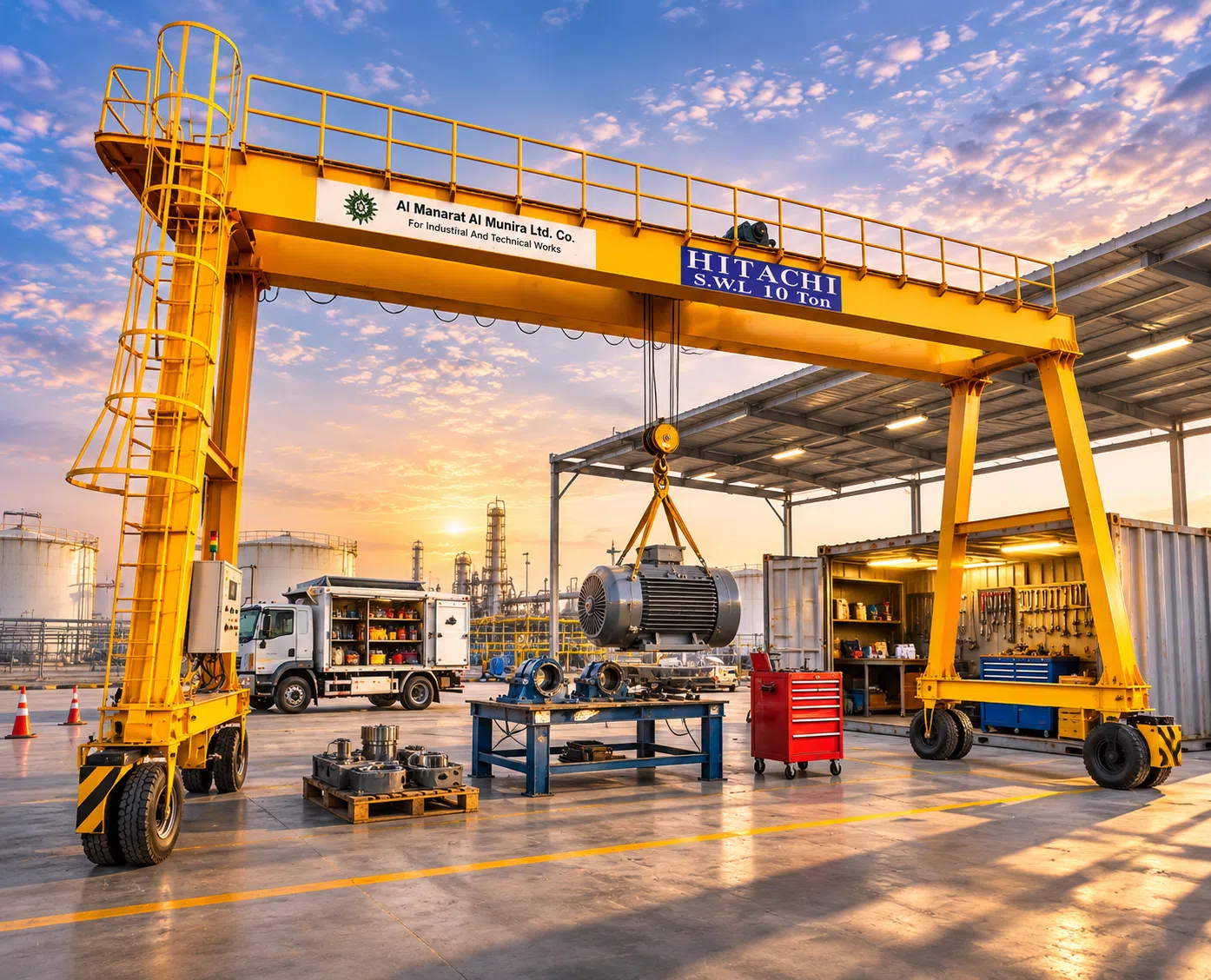
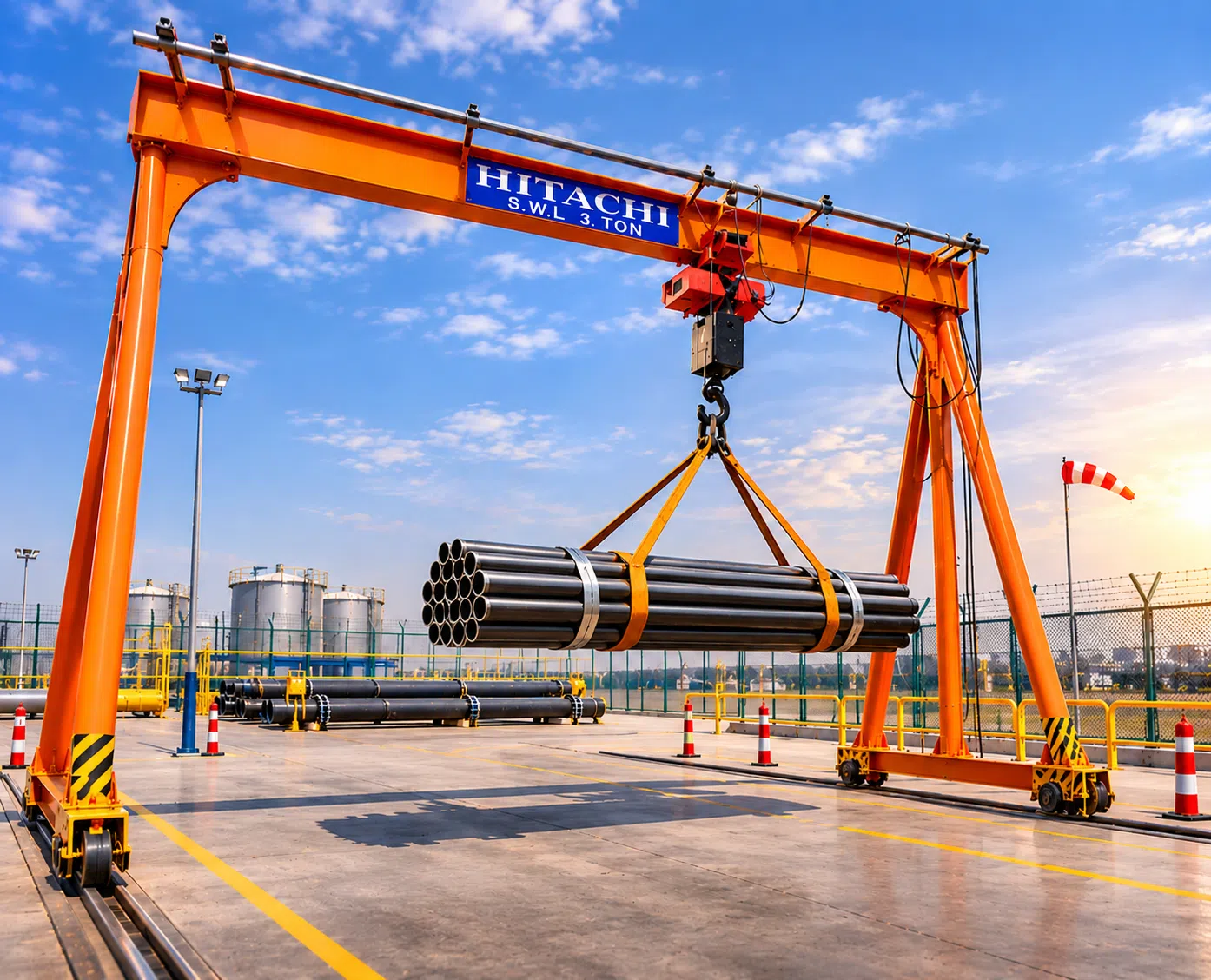
- Gantry and Semi-Gantry Crane: It stands on steel legs that travel on ground-level rails. It is the ideal solution for open storage yards, container ports, and concrete plants that lack roof structures able to carry runways.
- Jib Crane: It consists of a horizontal arm that rotates through 180 to 360 degrees around a freestanding column or a wall bracket. It serves individual workstations and feeds CNC machines so that the main overhead crane is not tied up.
- Suspended Monorail Crane: It travels on a single beam suspended along a fixed linear path (straight or curved). It excels in surface treatment lines, paint tanks, and sterile food and pharmaceutical plants.
Approved Safety Requirements for Modern Crane Systems
An industrial crane is not complete until it is fitted with a package of protective equipment that prevents accidents in the field:
- Overload Limiters: Electronic load cells that automatically cut off the hoisting motion when an attempt is made to lift a weight above the crane's rated capacity.
- Dual Limit Switches: Mechanical cut-outs that automatically stop the hoisting, lowering and travel motions before the moving parts reach dangerous limits.
- Self-Locking Electromagnetic Brakes (Fail-Safe Brakes): They close mechanically within a fraction of a second when power is lost or the emergency stop (E-Stop) button is pressed, holding the suspended load safely in place.
- Photoelectric Anti-Collision Sensors: Laser sensors that stop bridges as they approach one another on the same runway to prevent impact.
How Does Al Manarat Al Monerah Support Industrial Crane Projects?
Al Manarat Al Monerah (almanratalmonerah.com) leads the design, manufacture and supply of industrial crane systems and lifting equipment in Saudi Arabia, Egypt and the Middle East, providing integrated solutions built on the highest engineering standards:
- Engineering study and structural survey: Studying building loads, checking hall spans and floor thicknesses, and recommending the crane type best suited to the logistics flow of your facility.
- Manufacturing and supply compliant with international standards (FEM/ISO/CMAA): Building rigid steel structures and bridges and fitting them with reliable European motors and gearboxes suited to harsh climates.
- Field installation and precision laser alignment: Specialized engineering crews equipped with the latest optical measuring instruments supervise installation to set the straightness and parallelism of the rails, preventing wheel wear and mechanical vibration.
- Load testing and approved calibration certificates: Carrying out static load tests (125%) and dynamic load tests (110%) and issuing official inspection certificates eligible for acceptance by the civil defense authorities and regulators.
- Preventive maintenance contracts and immediate spare parts availability: Fully stocked local warehouses supply wire ropes, chains, brakes, travel wheels and electrical panels for a rapid response that protects your operations from sudden downtime.
Al Manarat Al Monerah gives you direct access to its engineering consultants for an on-site inspection and a tailored technical proposal, putting in your hands an advanced crane system that meets the demands of modern manufacturing and logistics with the highest standards of safety and sustainability.
Frequently Asked Questions About Cranes and Their Industrial Uses
What is the difference between a crane and a hoist?
A hoist is the mechanical lifting unit responsible only for vertical movement (raising and lowering the load by wire rope or chain). A crane is the complete integrated system that includes the hoist, trolley, girders, rails and motors, and that provides the ability to move and position loads vertically and horizontally across large areas.
How is the crane capacity a facility needs determined?
Capacity is determined by calculating the weight of the heaviest piece or machine expected to be lifted on the production line, plus an operating safety margin of no less than 20% to 25%. The daily duty cycle factor must also be checked against FEM codes in order to select a motor that can withstand continuous operating hours without excessive temperature rise.
Does a crane need an annual operating license?
Yes. Civil defense and occupational health and safety regulations require periodic inspection and load tests to specified standards each year, and an approved calibration and inspection certificate issued by a qualified engineering body proving the soundness of the wire ropes, brakes, limit switches and structure.
Read also: Best Crane Companies in Saudi Arabia for Equipping Factories with Heavy Lifting Equipment