
How Does an Electric Wire Rope Hoist Speed Up Demanding Handling Tasks?
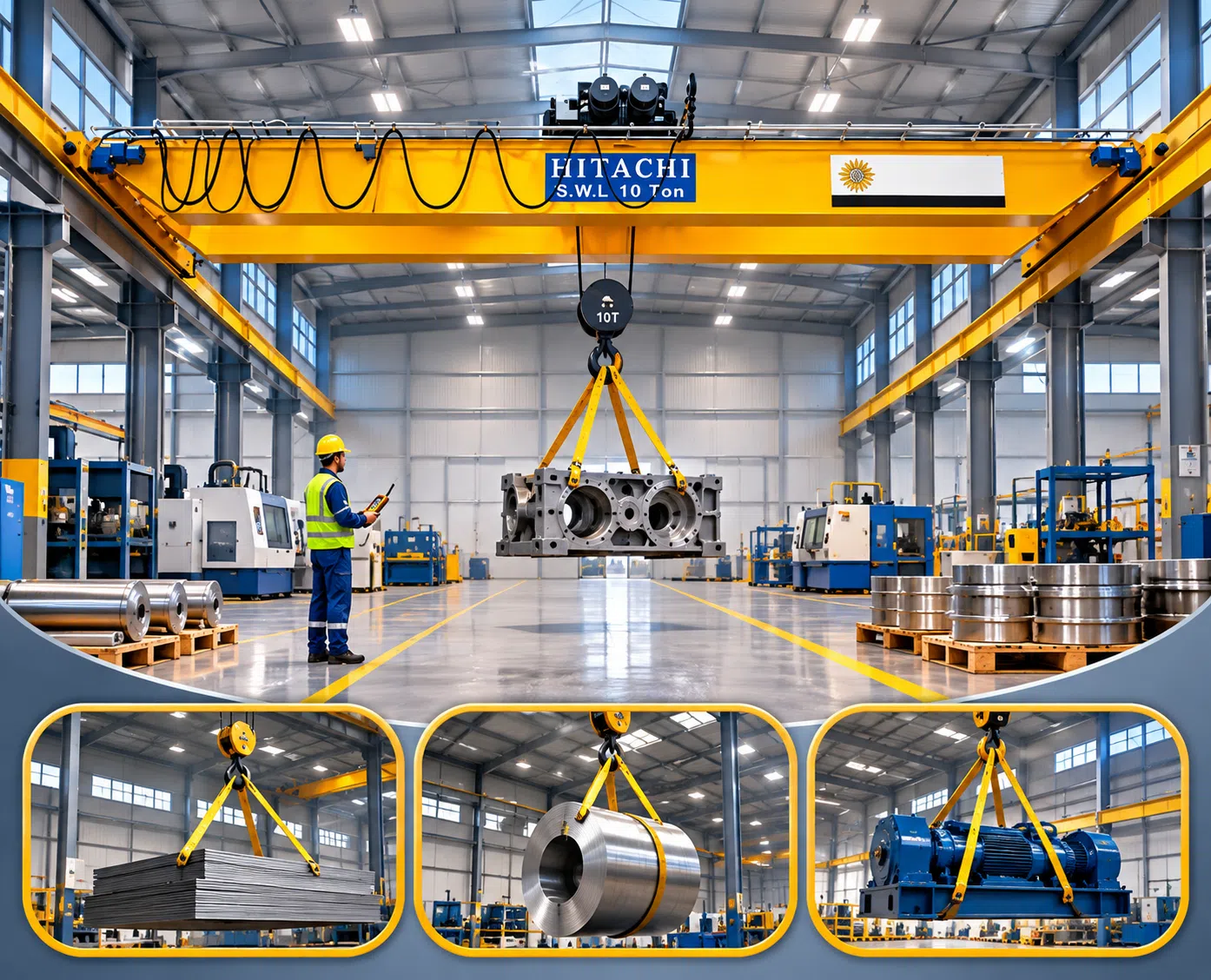
Heavy production lines and logistics staging yards impose an extremely complex handling pace that cannot tolerate mechanical slowness or unstable movement of loads suspended in the air. Steel dies, turbine equipment and bundles of raw material weigh tens of tons and need fast, precise transport in environments with high temperatures and industrial dust levels. In such tough conditions, ordinary lifting means cannot deliver the required balance between high speed and dynamic stability, which makes an advanced electric wire rope hoist a key pillar for breaking the facility's bottleneck, turning exhausting hours of manual transport and waiting into smooth mechanical lifting cycles that raise overall productivity and ensure worker safety around the clock.
How Does an Electric Wire Rope Hoist Speed Up Demanding Handling Tasks?
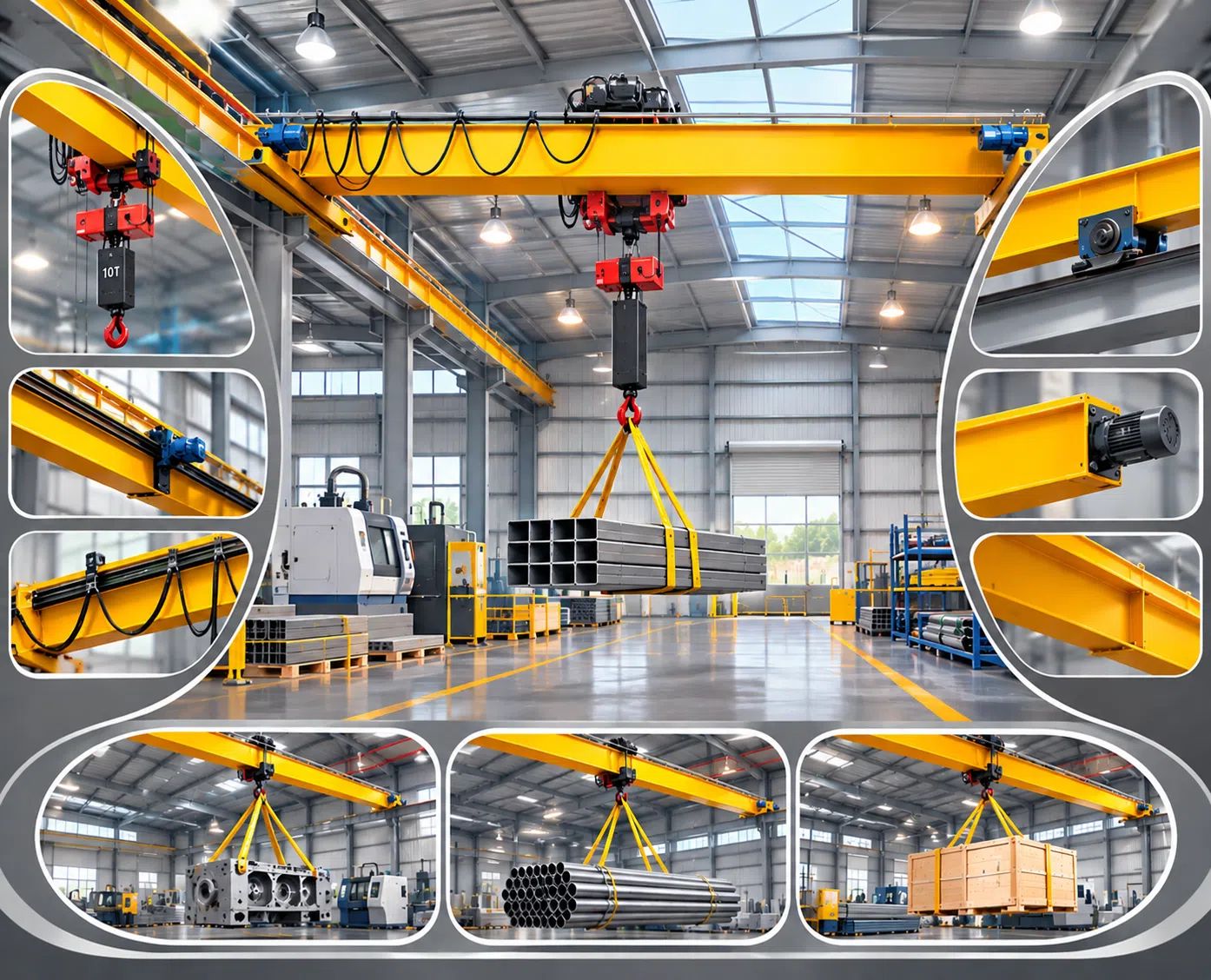
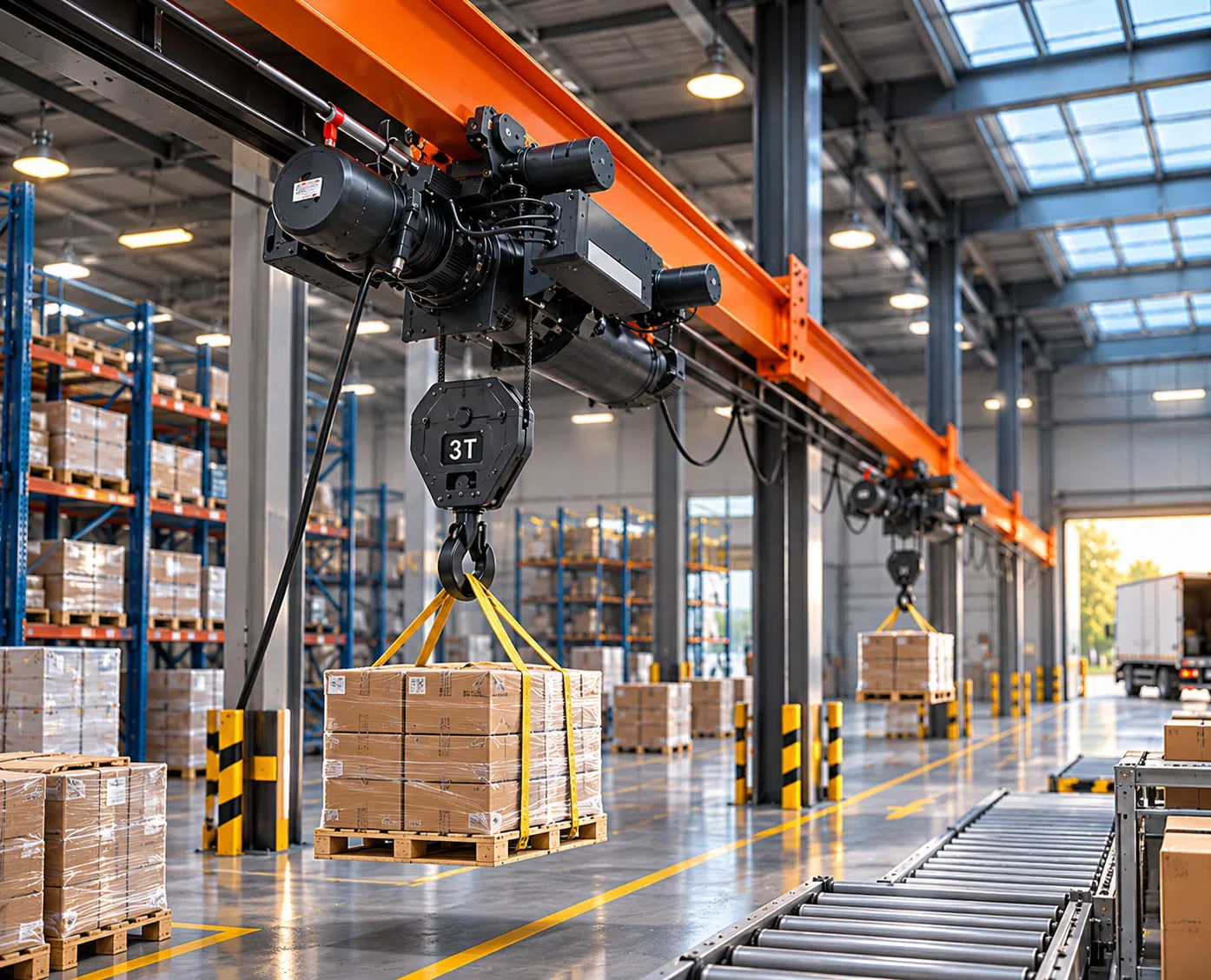
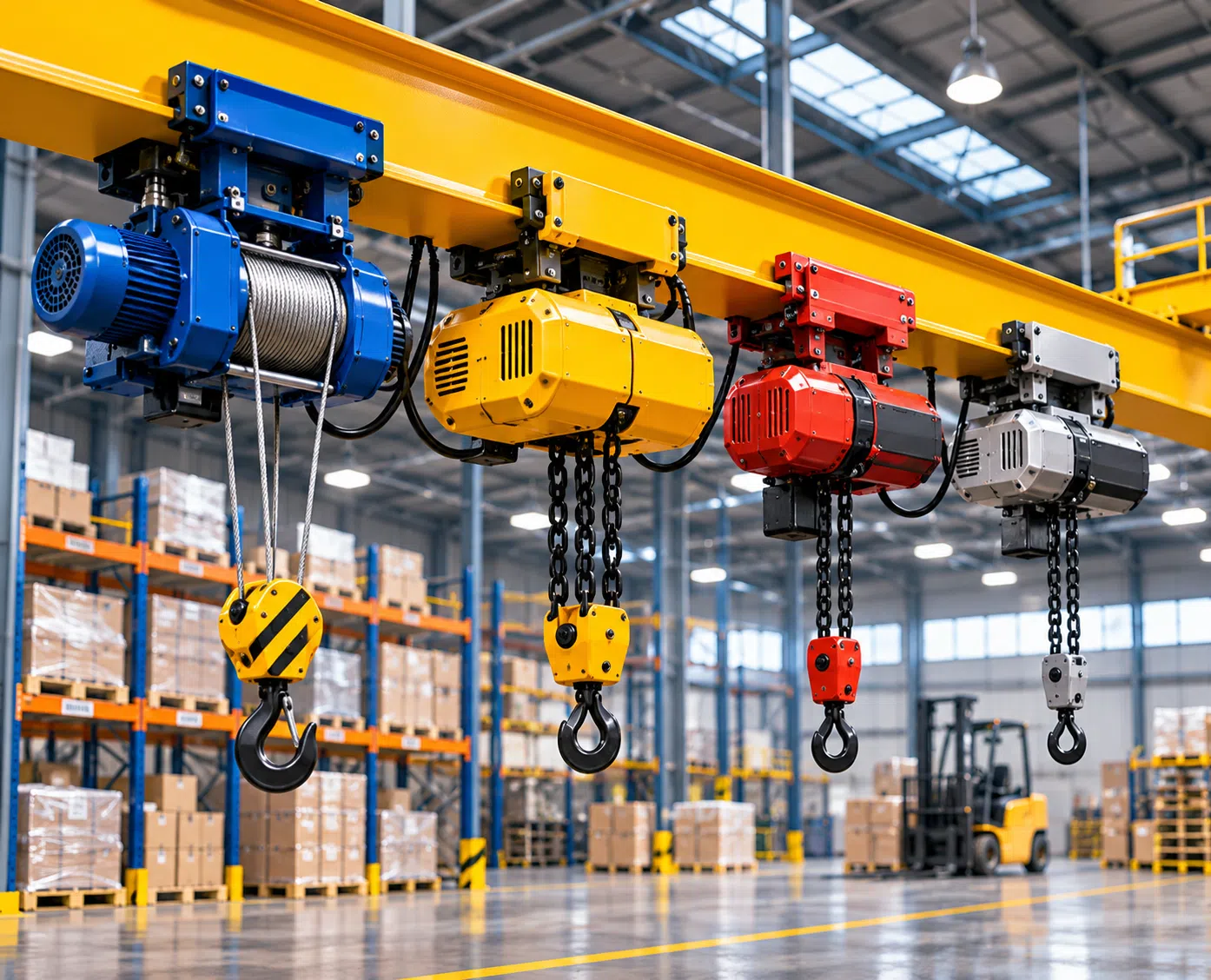
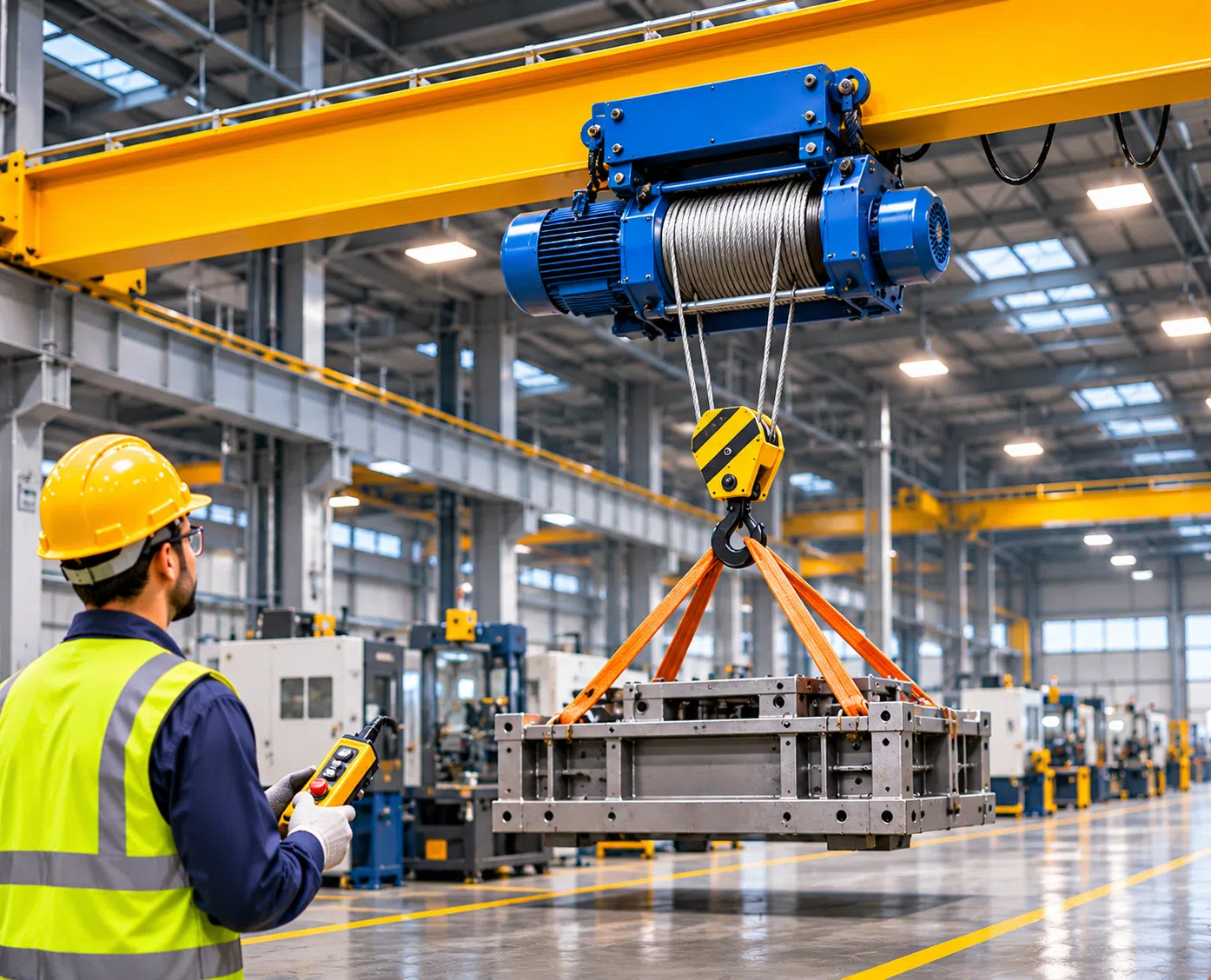
An electric wire rope hoist speeds up complex handling operations by generating exceptional pulling torque through synchronized electromechanical motors, using highly flexible stranded steel cables wound around grooved drums at multiple hoisting speeds, and integrating smart frequency control systems (VFD) that eliminate load swing and allow vertical and horizontal positioning with millimeter accuracy without repeated stops.
This integrated engineering performance translates into immediate operational gains:
- Cutting the lifting and lowering cycle time for heavy loads by 35% to 50%.
- Reaching very high lift heights exceeding 30 to 60 meters with absolute stability and no dangling extras to obstruct movement in the workshop.
- Avoiding mechanical shocks and rebound that damage sensitive dies and modern manufacturing machines.
The Mechanical Foundations That Give the Electric Wire Rope Hoist Its Edge in Heavy-Duty Tasks
This machine's ability to tame huge weights and complete difficult tasks comes from the functional harmony among its rugged mechanical components:
1. Stranded Steel Cable with Independent Wire Rope Core (IWRC)
The pulling wire rope is made from heat-treated carbon steel wires stranded around a highly durable independent steel core. This construction gives the rope exceptional resistance to repeated tensile stress and a superior ability to absorb the shocks caused by instantly lifting heavy weights, along with high resistance to temperature and surface wear in harsh work environments.
2. Helical Winding Drum and Smart Rope Guide (Drum & Rope Guide)
The hoisting drum has grooves machined with engineering precision to receive the cable and lay its wraps evenly. The rope guide ring, synchronized with the rotation, prevents the cable from jumping out of its path or the wraps from overlapping one another, which completely eliminates the risk of rope jamming and ensures it pays out and winds in at top speed with no side friction.
3. Sheave Blocks and Multiple Reeving Systems (Reeving Configurations)
The hoist allows multiple wire rope reeving arrangements (such as 2/1 for high speeds with light loads, or 4/1 and 4/2 to double the lifting force and keep the central line of pull stable). This engineering flexibility gives an even distribution of stress across the cables and reduces the direct load on the gearbox and motor while maneuvering giant steel masses.
How Does the System Meet the Most Difficult Handling Challenges?
Cranes in large factories deal with complex operating scenarios that call for smart solutions that save time and prevent losses:
Controlling Huge and Uneven Loads
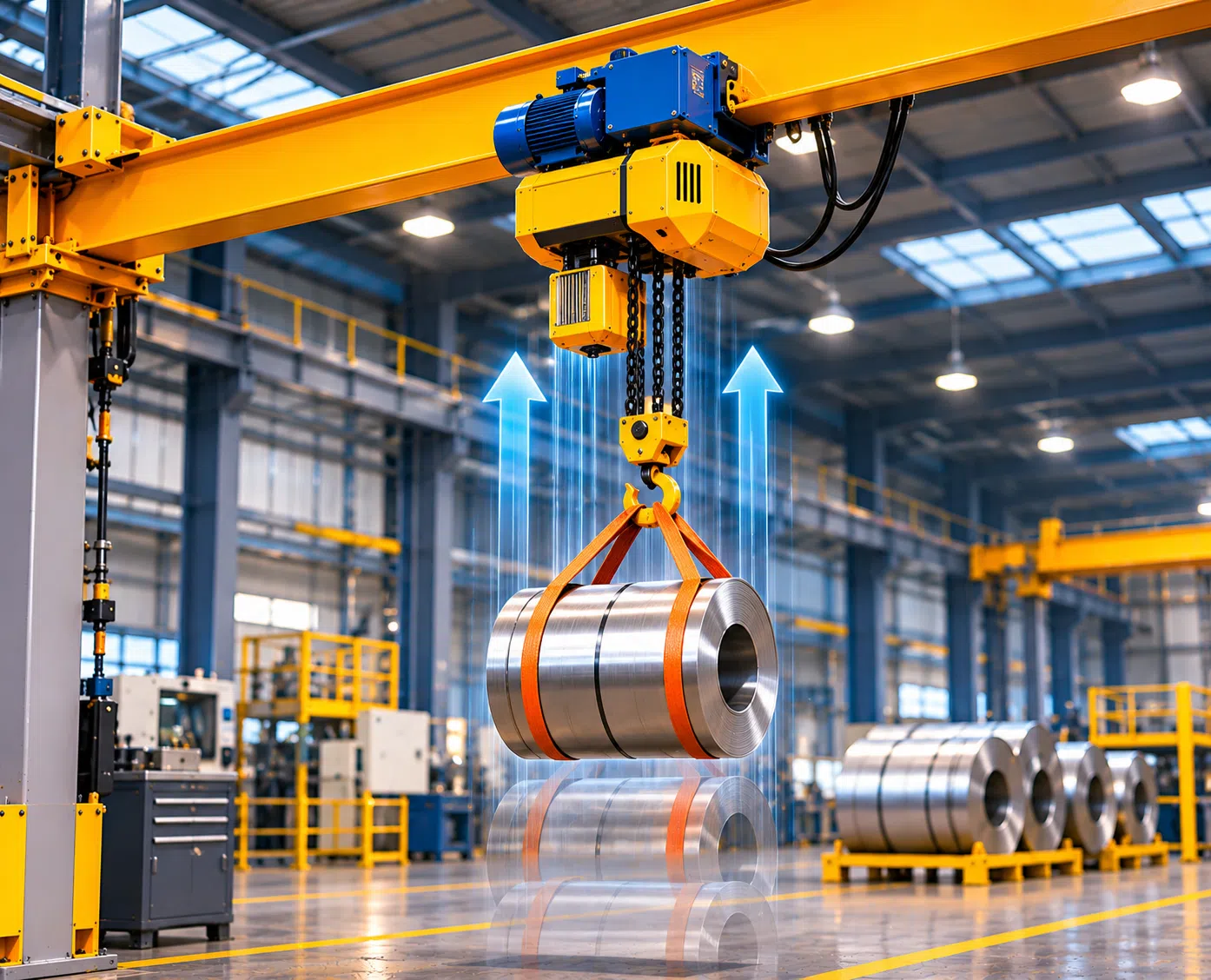
Factories find it very hard to lift objects whose center of gravity lies far from the middle. An electric wire rope hoist backed by smart frequency drives distributes the vertical motion with extreme smoothness that prevents the hook from drifting, allowing technicians to guide huge blocks and position them accurately inside milling and forming machines without wasting time on manual rebalancing.
Continuous Heavy-Duty Service Across Multiple Shifts Without Stopping
Continuous lifting in foundries and rolling mills generates intense heat that damages weak motors. Wire rope hoist motors feature advanced thermal insulation ratings (Class F/H) with external cooling fins and fully enclosed designs (IP55/IP65), allowing the machine to run through successive shifts at the peak of summer without interruption or any drop in lifting torque.
Fast Access to Very Tall Warehouses
When work requires lifting materials from the floor to upper platforms above 20 meters, wire rope hoists excel at maintaining a high, steady, linear ascent speed, storing the entire cable length within the drum diameter without leaving any dangling chains or collection bags that could strike the surrounding rack structures.
Comparative Analysis: Electric Wire Rope Hoist vs. Chain Hoist in Heavy-Duty Environments
The following points show the fundamental technical and operational differences between the two systems when put through fast, demanding load tests:
- Maximum lifting capacity and endurance: The electric wire rope hoist is far superior at handling heavy loads that start from 3 tons and safely exceed 100 tons, while the chain hoist remains confined to light and medium lifting ranges up to a maximum of 5 tons for fast operations.
- Vertical load handling speeds: The wire rope hoist achieves much higher lifting speeds, ranging from 6 to 12 meters per minute, with the option of doubling the speed when the hook rises empty, whereas chain hoist speeds are engineering-limited to avoid heating the links and excessive friction against the sprocket.
- Lift heights and storage of the pulling medium: The wire rope hoist accommodates very long cables that wind smoothly inside the integrated hoisting drum without affecting hall space, whereas at large heights a chain hoist needs huge, heavy chain containers and baskets that reduce the free clearance beneath the crane.
- Service life under continuous duty: Stranded steel cables are better at distributing cyclic stresses and cooling their strands internally with synthetic grease, giving them a long service life in steel mills and ports compared with metal chains whose link contact surfaces wear quickly under heavy friction.
Built-In Safety Features That Protect a Fast Work Pace
Material movement cannot be sped up at the expense of occupational safety standards, so the modern hoist integrates several safety mechanisms that work together digitally and mechanically:
- Variable frequency drive system (VFD Anti-Sway): Prevents sudden acceleration and provides gentle starts and stops that absorb the load's inertia, eliminating pendulum-like swinging of goods and allowing the operator to move pieces through narrow aisles quickly and with complete safety.
- Digital overload limiter (Digital Overload Limiter): A sensitive measuring cell that reads the actual tensile stress and automatically cuts the motor's hoisting circuit as soon as an attempt is made to pick up a weight exceeding the rated capacity by 1%, to protect the cable and girders from structural deformation.
- Rotary limit switches (Rotary Limit Switches): Precise mechanical cutouts that count the drum revolutions and automatically cut hoisting motion before the hook reaches the hoist body at the top, and prevent the cable from leaving its grooves at the lowest point of descent, while always keeping two safety wraps on the drum.
- Self-locking electromagnetic brake system (Fail-Safe DC Brakes): Dual brakes that apply instant mechanical braking on the gear shafts as soon as the control buttons are released or on any sudden loss of power, so the load stays steadily suspended in the air with no slipping.
How Do You Equip Your Factory with the Best Electric Wire Rope Hoist with "Al Manarat Al Monerah"?
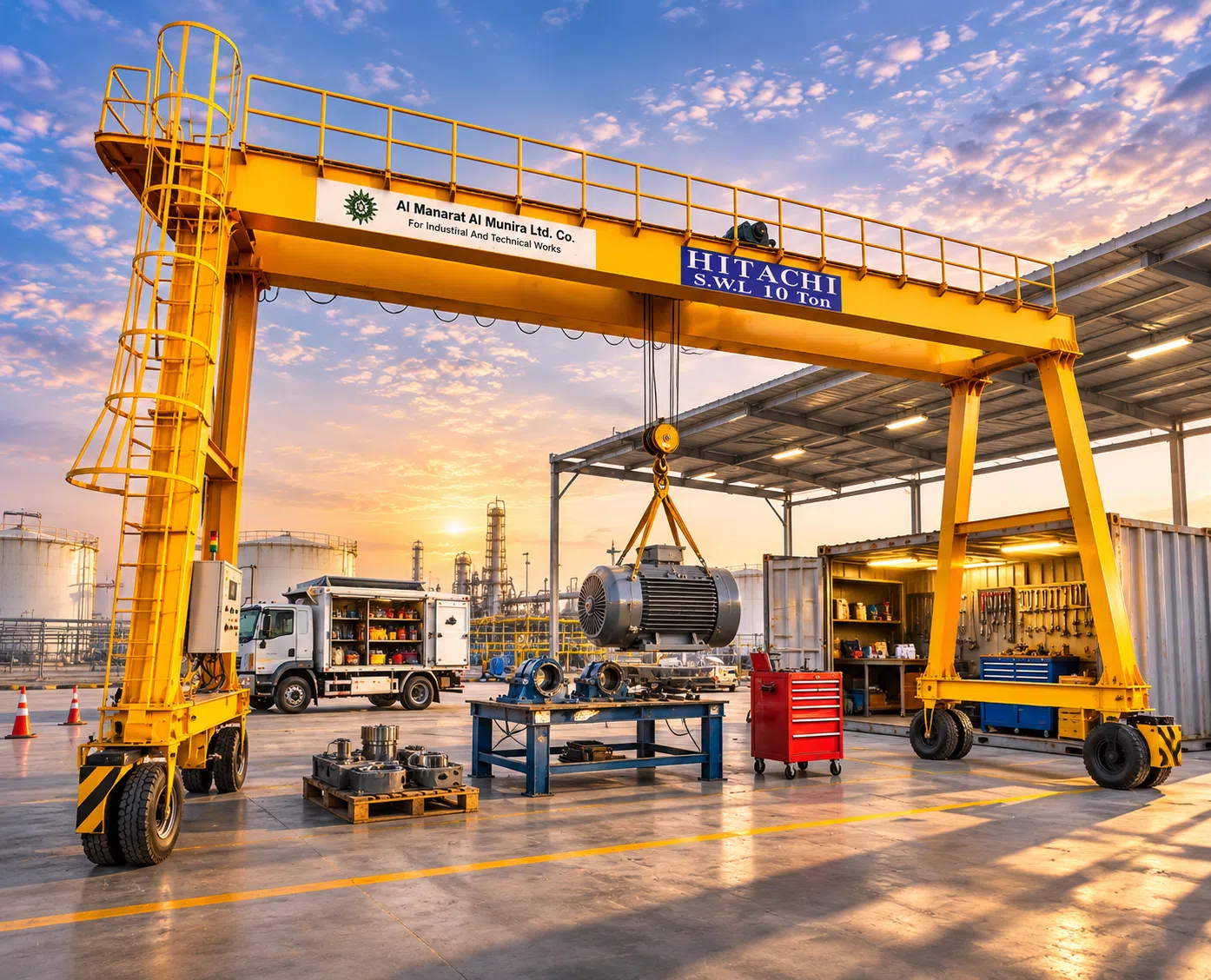
Al Manarat Al Monerah (almanratalmonerah.com) leads the supply and design of advanced industrial lifting systems in the Kingdom and the Middle East, putting integrated engineering solutions in your hands that ensure the highest efficiency in handling your goods:
- Advance engineering study of work lines: The engineering team surveys your site and analyzes hall dimensions, product weights and movement paths to select the most suitable wire rope hoist and determine the ideal hoisting speeds that serve your production cycle without financial waste.
- Supply of products compliant with international specifications (FEM/ISO/CMAA): Providing electric wire rope hoists fitted with European motors and gearboxes and high-quality components able to withstand the region's high temperatures and heavy dust.
- Installation and precision laser alignment: Certified engineering crews supervise fixing the hoist trolleys and adjusting wheel clearance against the track beams with extreme laser precision to prevent mechanical wear and ensure quiet, smooth travel.
- Modernizing and upgrading existing cranes (retrofitting): Replacing aging wire rope hoists with modern lifting units fitted with smart frequency drives and connecting them to encrypted digital wireless controllers that give the operator freedom of movement from a safe distance.
- Genuine spare parts readiness and periodic maintenance contracts: Securing steel cables, rope guides, brake linings and electrical panels in local warehouses to provide an instant response that protects your facility from unplanned stoppages.
- Load testing and calibration certificates: Carrying out static (125%) and dynamic (110%) load tests on site and providing certified inspection reports that ensure the machine meets the requirements of civil defense and industrial inspection bodies.
Al Manarat Al Monerah gives you direct access to its engineering experts for a complete survey and technical consultation to ensure your hall is equipped with an electric wire rope hoist solution that boosts material handling speed and multiplies your productivity with the highest levels of field safety.
Frequently Asked Questions About the Electric Wire Rope Hoist in Demanding Handling Tasks
How does the rope reeving system (2/1 vs. 4/1) affect the speed of an electric wire rope hoist?
The 2/1 system reeves only two lines of rope and gives double hoisting speed suited to fast tasks with light and medium loads, while the 4/1 system reeves four lines to cut the ascent speed in half while doubling the lifting capacity and loading force, which suits very heavy loads that need calm, controlled movement.
What steps should be followed when slackness or broken wires are detected in the cable?
The hoist must be shut down immediately and no loads lifted. The maintenance officer inspects the cable according to ISO 4309 to measure the depth of wear and the number of broken wires in the strand. If the permitted limits are exceeded or a sharp kink or diameter deformation is detected, the cable must be replaced entirely, with the hoisting drum grooves and hook sheaves inspected to identify the cause of the damage and avoid a repeat.
Can an electric wire rope hoist be integrated on the bridge of an old overhead crane?
Yes, absolutely. This is done after an engineering review of the existing bridge girder's load-bearing capacity and the track flange width, and a calculation of the dynamic loads and self-weight of the new hoist to confirm structural compatibility, followed by mechanical fixing, connecting the power supply lines and adjusting the travel trolley to the standard specifications.
Read also: Electric Hoist Maintenance Guide: Avoiding Sudden Production Stoppages