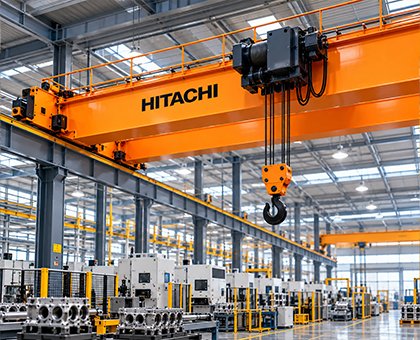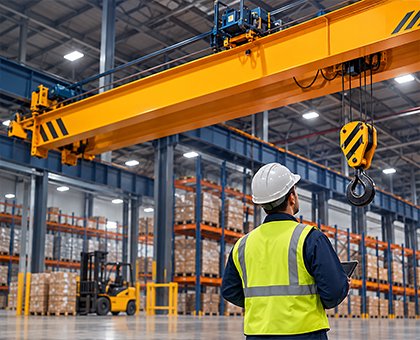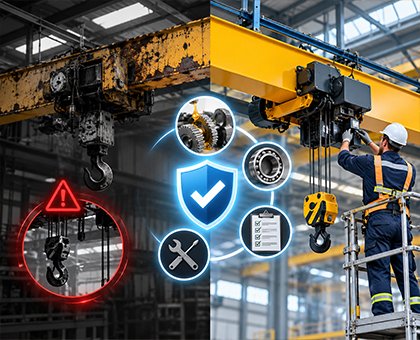

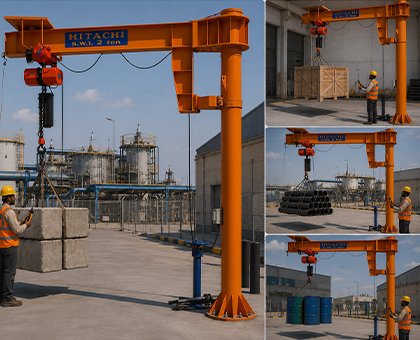
The Kingdom of Saudi Arabia is witnessing an unprecedented industrial and construction boom, driven by major national development projects and the expansion of industrial cities and logistics zones across the country in line with Vision 2030. In such a fast-paced environment governed by strict project timelines, the automation of material handling and heavy lifting has become the backbone of factories, warehouses, and ports. Selecting lifting equipment is no longer a simple purchasing decision for mechanical machines—it is a strategic investment directly linked to daily production rates, the protection of high-value capital assets, and the safety of human resources.
With the increasing number of suppliers and companies in the local market, the main challenge for project managers and procurement engineers is identifying a reliable technical partner capable of delivering sustainable, trouble-free solutions. In this technical and advisory guide from Al-Manarat Al-Muneera Company, we outline the engineering and service criteria that define the best crane company in Saudi Arabia and how to evaluate suppliers to ensure a safe and profitable investment.
1. Technical and Engineering Capability for Customized Solutions
Supplier competence is not measured only by the availability of ready-made equipment, but by the engineering ability to analyze project sites and develop solutions tailored to structural and spatial challenges:
Structural load assessment of buildings:
The supplier must have qualified engineers capable of reviewing your facility’s drawings to ensure that columns and roof structures can safely withstand both static and dynamic crane loads before delivery.
Design flexibility and customization:
The ability to provide low headroom hoists for restricted ceiling heights, or explosion-proof cranes for petrochemical and sensitive chemical environments within the Kingdom, is a key indicator of engineering maturity.
2. After-Sales Technical Support and Maintenance Contracts
A single crane failure in a production hall or logistics warehouse can cost thousands of riyals per hour in downtime. Therefore, rapid maintenance response is a critical factor in evaluating suppliers:
Availability of local emergency engineering teams:
When searching for the best crane supplier in Saudi Arabia, ensure the company has real local maintenance centers and certified engineers and technicians ready to respond immediately to emergency breakdowns, ensuring uninterrupted operations.
3. Availability of Genuine Spare Parts and Global Reliability Records
Purchasing a crane at a low price from a supplier who cannot provide spare parts is a costly trap that leads to long waiting periods for international shipments. Ensure the supplier maintains a continuous stock of:
Wire ropes and chains:
Compliant with original equipment specifications and Saudi standards (SASO) to maintain operational safety.
Brakes and gear systems:
Original electromagnetic brakes and gear components from globally recognized manufacturers (such as German or Japanese technology) with trusted local distributors.
4. Compliance with Saudi Standards (SASO) and International Regulations
Saudi safety regulations impose strict requirements on lifting equipment to protect lives and property. No company can be considered the best crane supplier in Saudi Arabia unless it complies with the following testing protocols before delivery:
On-site load testing (Load Test):
The supplier must conduct a static load test at 125% of rated capacity followed by a dynamic test at 110% to verify structural integrity, weld strength, and braking system performance before issuing official commissioning certificates.
Equipping cranes with VFD systems:
Variable Frequency Drives ensure smooth and controlled motion, eliminating load swing and reducing energy consumption by up to 20%.
Frequently Asked Questions by Decision Makers and Project Managers
What is the difference between supply-only contracts and turnkey contracts?
A supply-only contract shifts responsibility for transport, external lifting equipment rental, and installation onto the client. In contrast, a turnkey contract ensures the supplier takes full engineering responsibility—from design and 3D modeling to installation and final commissioning with safety certification.
How can you ensure cranes are suitable for Saudi climate conditions?
Ensure that motors and electrical panels are designed with IP protection ratings of at least IP55 for indoor environments, and IP65 or IP66 for outdoor applications, to withstand dust, heat, and saline humidity.
Conclusion
Ultimately, choosing the right logistics and engineering partner is the key to protecting major capital investments and ensuring workforce safety. Opting for low-cost offers without strong local engineering support often leads to costly downtime and operational losses.
At Al-Manarat Al-Muneera Company, we place our full technical and consulting expertise at your service to help you assess project sites, define your exact lifting requirements, and supply advanced industrial lifting systems—ensuring your operations in the Kingdom progress with stability, efficiency, and absolute long-term safety.