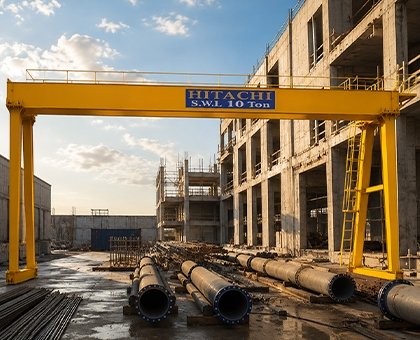
At the heart of major construction projects, industrial facilities, and logistics centers, heavy loads are moved daily as part of a continuous workflow that demands precision, efficiency, and safety. Managing these loads requires more than simply having powerful lifting equipment—it demands a structured operational strategy that ensures smooth execution while maintaining the highest safety standards. Neglecting proper operating procedures when handling critical loads can lead to serious accidents, costly equipment damage, and significant disruptions to business operations.
For this reason, adopting internationally recognized safety procedures and engineering best practices is essential when operating lifting equipment. In this guide from Al Manarat Al Munira, we explore the most important operational and technical practices for using advanced equipment lifting cranes and maximizing efficiency when handling heavy goods lifting cranes in industrial and logistics environments.
1. Develop a Comprehensive Lift Plan Before Every Operation
Successful lifting operations should never rely on assumptions or improvisation. Every lift should be planned and reviewed by qualified personnel before work begins.
Key planning considerations include:
Determine the Load’s Center of Gravity
Accurately identifying the center of gravity ensures the load remains balanced throughout the lifting process and minimizes the risk of dangerous load swings or tilting.
Evaluate Environmental Conditions
Outdoor lifting operations require continuous monitoring of weather conditions, particularly wind speed. International safety standards recommend suspending crane operations whenever wind conditions exceed approved safety limits.
Secure the Entire Travel Path
The planned route for the suspended load must remain completely clear of personnel, vehicles, and structural obstacles throughout the operation.
Using tag lines operated by trained ground personnel can help control load movement and prevent unwanted rotation while maintaining a safe distance from the suspended load.
2. Conduct Daily Pre-Operation Inspections
A thorough visual inspection is one of the most effective ways to prevent unexpected failures and maintain safe operations.
Operators of equipment lifting cranes should perform daily inspections that include:
Inspection of Rigging Components
Wire ropes, lifting slings, shackles, hooks, and other lifting accessories should be examined for wear, deformation, corrosion, broken strands, or other signs of damage. Special attention should be given to hook safety latches to ensure they function correctly.
3. Ensure Proper Load Alignment and Avoid Side Pulling
One of the most common operational mistakes when using heavy goods lifting cranes is attempting to pull loads at an angle rather than lifting them vertically.
Side pulling creates excessive stress on crane structures, trolley assemblies, and lifting mechanisms. It can also cause uncontrolled load swing, derailment of trolley systems, and severe structural damage. To maintain safe operation, the crane hook should always be positioned directly above the load's center of gravity before lifting begins.
4. Utilize Smart Control Systems and Variable Frequency Drives (VFDs)
Modern crane technologies play a critical role in improving operational safety and equipment longevity.
Soft Start and Soft Stop Functions
Variable Frequency Drives (VFDs) provide smooth acceleration and deceleration during lifting and travel movements. This reduces shock loading on motors, gearboxes, wire ropes, and structural components.
Electronic Overload Protection
Advanced overload monitoring systems continuously measure lifting loads and automatically prevent crane operation when the rated capacity is exceeded. These systems provide an essential layer of protection for personnel, equipment, and facility infrastructure.
Frequently Asked Questions
How Often Should Equipment Lifting Cranes Be Tested and Certified?
A comprehensive inspection and load test should be conducted at least once every twelve months by an authorized inspection body. In addition, internal maintenance teams should perform routine quarterly inspections and preventive maintenance procedures throughout the year.
What Should Be Done If a Power Failure Occurs While a Load Is Suspended?
Modern heavy goods lifting cranes are equipped with fail-safe electromagnetic brakes that automatically engage when electrical power is lost, securely holding the load in place. In such situations, the area beneath the suspended load should be immediately isolated, and qualified maintenance personnel should be called to safely lower the load using approved emergency procedures.
Conclusion
Implementing industry best practices when operating equipment lifting cranes is not only a regulatory requirement—it is a strategic investment in productivity, safety, and operational reliability. Selecting the appropriate lifting equipment and ensuring personnel receive proper training can significantly reduce maintenance costs while maximizing workplace safety and efficiency.
At Al Manarat Al Munira, we believe that sound engineering practices and strict adherence to safety standards are the foundation of every successful industrial operation. Through our expertise in lifting solutions, consultation services, and technical support, we help organizations operate heavy goods lifting cranes safely, efficiently, and with confidence for years to come.