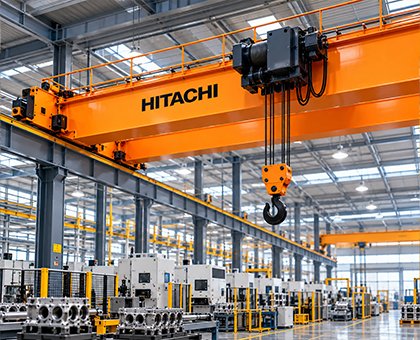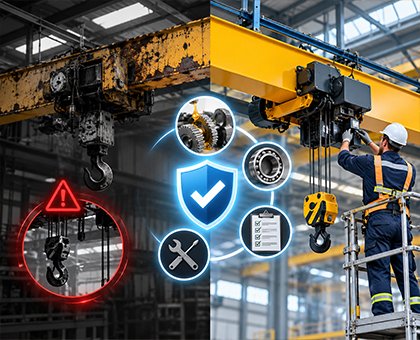

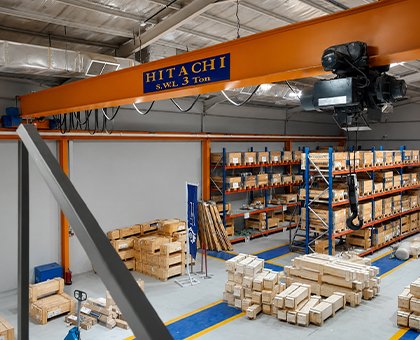
The transition from purchasing industrial equipment to its on-site installation and actual operation is one of the most critical engineering phases, requiring close coordination between engineers and technicians. It is not simply about fixing heavy steel structures to a facility’s ceiling; it is a complex mechanical and electrical process governed by strict safety standards to ensure reliable operation for many years without serious failures. Any mistake during installation can lead to misalignment, rapid equipment wear, or—God forbid—serious accidents.
Therefore, having a clear practical guide for handling modern overhead cranes is essential to protect both your financial investment and human capital. In this comprehensive guide from Al Manarat Al Muneera Company, we break down the globally accepted technical stages for installing and operating overhead lifting systems safely and efficiently.
What Are the Main Stages of Installing Overhead Cranes?
The installation process goes through several sequential engineering steps that must be supervised by certified professionals to ensure compliance with manufacturer specifications and international standards:
Structural Inspection and Site Evaluation:
Verifying that the building’s concrete or steel columns and beams can safely support the crane’s weight plus the maximum operational load.
Runway System Installation:
Installing the rails on which the crane travels with high precision, as even a few millimeters of misalignment can cause continuous friction and wheel damage.
Bridge Hoisting and Assembly:
Using external lifting equipment to raise and install the main bridge beam, followed by mounting the trolley and hook system.
Engineering Rule:
The allowable alignment tolerance of crane runway rails must strictly follow international codes, as improper leveling causes excessive mechanical stress on motors and drive systems.
Testing and Commissioning Before Operation
Once electrical and mechanical connections are completed, overhead cranes must never be used directly in production. Instead, they undergo strict testing procedures:
1. Pre-Commissioning Inspection
This includes checking gearbox oil levels, verifying power cables, and testing limit switches that prevent the crane from exceeding safe movement boundaries.
2. Static and Dynamic Load Testing
The crane is first tested with 125% of its rated capacity in a static state to ensure structural integrity. Then it is tested dynamically at 110% capacity to verify braking performance and smooth motion in all directions.
Daily Safe Operation Guidelines for Overhead Cranes
The human factor is the first line of defense against workplace accidents. Al Manarat Al Muneera recommends that operators strictly follow this daily protocol:
- Quick Visual Inspection: Check for wear or damage in wire ropes or load chains.
- Clear Work Area: Ensure no obstacles or personnel are present in the load travel path.
- Avoid Side Pulling: The hook must always be vertically aligned above the load’s center of gravity to prevent dangerous swinging during lifting.
Frequently Asked Questions About Installation and Operation
How often should overhead cranes be inspected and recalibrated?
A full inspection should be conducted at least every 12 months by a certified third-party inspection body to issue an operational safety certificate, in addition to monthly and quarterly internal maintenance checks.
What causes sudden vibrations during overhead crane operation?
This is usually caused by runway rail misalignment, uneven wheel wear, or damage to motor bearings, all of which require immediate technical inspection and repair.
Conclusion
Installing and operating overhead cranes in your facility is a strategic investment that demands the highest level of engineering precision and adherence to safety standards. Neglecting even minor installation details can lead to costly maintenance and unexpected production downtime in the future.
At Al Manarat Al Muneera Company, we consistently emphasize that relying on qualified installation teams and strictly following testing protocols is the only guarantee for safe, efficient, and long-term crane operation—ensuring the protection of both your facility and workforce.