
In the world of modern construction and contracting, large-scale projects are no longer just a matter of time and manual effort. They now rely heavily on the efficiency of technology and the equipment used on site. Choosing the right machine is not a casual decision—it is the real difference between completing a project safely at the lowest possible cost, or facing delays and financial losses that can completely disrupt your budget.
Whether you are managing a major construction site or looking for smart solutions for load handling, understanding how to select advanced lifting cranes ensures smooth workflow. In this comprehensive guide from Al Manarat Al Muneera Company, we take you through a practical overview of the latest specifications and global standards before making a purchase or rental decision.
What Are the Most Efficient Types of Lifting Cranes in Modern Projects?
Heavy lifting equipment varies in the market depending on terrain conditions and load requirements. A crane designed for paved surfaces cannot be used in muddy or sandy rough environments. Therefore, cranes are divided into key categories, each serving a specific purpose:
Telescopic Cranes:
These feature a hydraulic boom that extends to great heights. They are ideal for projects requiring fast execution and frequent height adjustments.
Crawler Cranes:
Mounted on tracks similar to tanks, they offer exceptional stability on soft and uneven terrain and can handle extremely heavy loads.
Tower Cranes:
The signature equipment of skyscrapers and high-rise buildings, fixed to the ground and providing unmatched vertical lifting capability.
Expert Tip from Al Manarat Al Muneera:
Determining the site terrain is the first and most critical step before evaluating crane capacity, because stability is the foundation of safety.
How to Choose Heavy Lifting Equipment That Fits Your Budget and Project Needs
Selection is not random; it follows precise engineering calculations that should ideally be supervised by specialists to ensure both financial and physical safety. Key factors include:
1. Load Capacity
One of the critical mistakes companies make is calculating exact load weight without a safety margin. If your maximum load is 50 tons, it is safer and more sustainable to invest in a crane rated for at least 60 tons to avoid overloading the hydraulic system and components.
2. Reach and Working Radius
You must consider not only vertical height but also horizontal reach. The farther the load moves away from the crane’s center, the lower its lifting capacity becomes, according to mechanical physics principles.
Safety Standards in Modern Cranes: A Non-Negotiable Requirement
According to OSHA international safety guidelines, more than 80% of heavy equipment accidents are caused by human error or lack of smart sensing systems. Therefore, Al Manarat Al Muneera highlights the essential systems that must exist in your cranes:
Load Moment Indicator (LMI):
A digital screen inside the operator cabin that provides immediate visual and audio warnings when the crane approaches its maximum capacity.
Limit Switches:
Prevent the boom or cables from exceeding safe operational limits, avoiding self-collision or mechanical damage.
Surround View Cameras:
Allow the operator to see blind spots that cannot be observed directly from the cabin.
Frequently Asked Questions by Project Owners
Is it better to buy or rent lifting cranes for my next project?
Renting is the best option for short-term or temporary projects (less than one year) as it reduces maintenance and storage costs. However, for long-term continuous operations, purchasing becomes a strategic investment that increases your company’s asset value.
What is the recommended maintenance cycle for heavy lifting equipment?
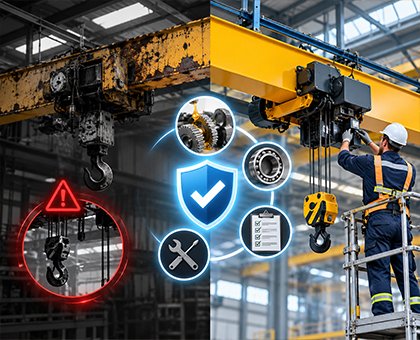
Maintenance is divided into daily visual inspection before each shift, and a major inspection every 250 operating hours, including oil and filter changes and checking lifting cables for cracks or wear.
Conclusion
Investing in advanced heavy lifting equipment is an investment in your company’s reputation and worker safety. Always ensure you deal with suppliers who have proven experience and provide strong after-sales service and technical support, because a single crane failure on site can bring the entire workflow to a standstill.