
Introduction
Manual lifting cranes and industrial lifting systems are essential solutions relied upon by factories, warehouses, workshops, and construction sites across the Kingdom of Saudi Arabia. Choosing the right lifting system depends on the nature of the project, load sizes, daily operating hours, and the work environment.
Despite significant technological advancements in electric cranes, manual cranes remain an ideal choice for many applications that do not require continuous operation or massive loads. In this article, Al Manarat Al Munira explains when using manual cranes is the best option and when you need to rely on industrial lifting systems to achieve the highest efficiency and productivity.
What Are Manual Cranes?
Manual lifting cranes are equipment that rely on human power or mechanical chains to raise and lower heavy loads. They are characterized by ease of use, low operating costs, and no requirement for an electrical power source, making them highly suitable for various work environments.
These cranes are widely used for transporting equipment and materials within workshops, warehouses, production lines, as well as for maintenance and installation tasks.
What Are Industrial Lifting Systems?
Industrial lifting systems encompass all equipment designed to lift and transfer loads within industrial facilities, whether powered manually, electrically, or hydraulically.
These systems include:
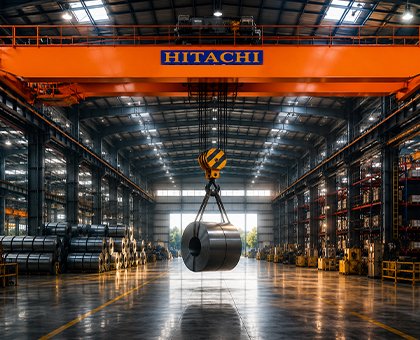
- Overhead cranes.
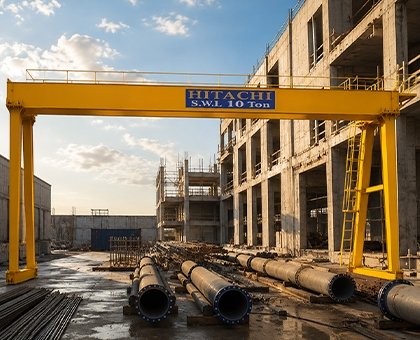
- Gantry cranes.
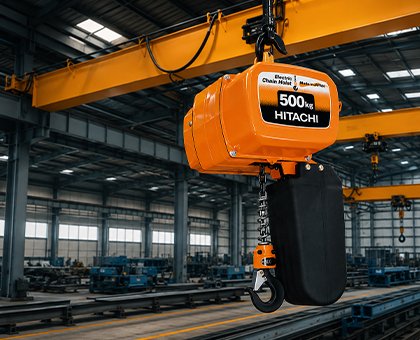
- Electric hoists.
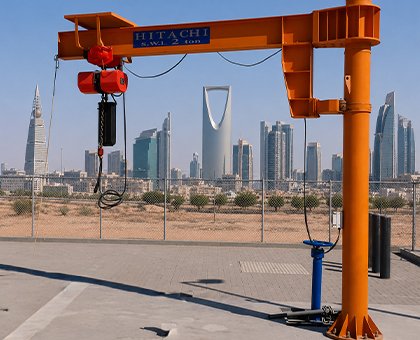
- Jib cranes.
- Winching and lifting systems.
- Material handling equipment.
These systems help enhance operational efficiency and reduce the time needed to move loads across job sites.
When Are Manual Cranes the Best Option?
There are numerous scenarios where using manual lifting cranes is preferred, including:
Light and Medium-Duty Applications
If loads are not excessively heavy and do not require repetitive lifting operations, a manual crane provides suitable performance at a low operational cost.
Locations Without an Electrical Power Source
At certain construction sites or remote locations, supplying electrical power can be difficult, making manual cranes the ultimate solution.
Maintenance Operations
Manual cranes are heavily utilized in machinery and equipment maintenance, offering precise lifting control in confined spaces.
Intermittent or Occasional Use
If lifting operations occur at widely spaced intervals, the cost of an electric system may not be economically justified.
When Do You Need Industrial Lifting Systems?
Conversely, industrial lifting systems become essential when work demands:
- Lifting heavy loads repeatedly.
- Operating equipment for extended hours.
- Moving materials continuously along production lines.
- Accelerating operational speed.
- Minimizing reliance on manual labor.
- Elevating safety standards within the facility.
For these reasons, modern factories rely on advanced lifting systems to ensure continuous production and maximize operational efficiency.
The Role of Material Handling Equipment in Boosting Productivity
Material handling equipment plays a crucial role in facilitating the movement of raw materials and finished products within industrial facilities, significantly reducing the time and physical effort required during transport.
Applications include:
- Moving materials between plant departments.
- Loading and unloading trucks.
- Warehouse organization.
- Supporting assembly and production lines.
- Handling heavy equipment.
- Transferring molds and machinery.
Selecting the right equipment leads to higher operational efficiency and lower long-term operating and maintenance costs.
Difference Between Manual Cranes and Electric Hoists
Choosing between the two systems depends on the nature of application.
Manual cranes feature:
- Lower initial purchase cost.
- No electricity required.
- Easy maintenance.
- Suitability for limited or occasional use.
- Simple operation.
Electric hoists feature:
- Faster operational performance.
- Higher lifting capacities.
- Capability for continuous duty cycles.
- Reduced human strain and labor.
- Higher efficiency along production lines.
How to Choose the Right Lifting System?
Before purchasing any lifting equipment, consider several key factors:
- Load Weight: Determine the maximum weight to be lifted consistently to ensure selecting appropriately rated machinery.
- Usage Frequency: The higher the daily operating hours, the greater the need for a high-efficiency automated or electric lifting system.
- Workplace Clearance: Site dimensions and ceiling heights dictate the type of crane or lifting structure that can be installed.
- Operating Environment: Certain environments require equipment resistant to humidity, high temperatures, or dust, especially in factories and outdoor sites.
- Budget: Balance initial capital expenditure against long-term operating and maintenance costs.
Mistakes to Avoid When Selecting Lifting Equipment
Incorrect equipment selection can lead to reduced productivity or frequent breakdowns. Common errors include:
- Purchasing equipment rated below actual project requirements.
- Ignoring future business expansion plans.
- Selecting machinery based solely on the lowest purchase price.
- Neglecting post-sale maintenance services.
- Overlooking safety standards.
- Using equipment unsuited to the specific load type.
Why Choose Al Manarat Al Munira?
Al Manarat Al Munira provides integrated solutions in lifting and material handling equipment across the Kingdom of Saudi Arabia, offering technical consultations that guide clients toward selecting the optimal system for their operational needs.
Company services include:
- Supplying manual and electric cranes.
- Designing and implementing industrial lifting systems.
- Providing material handling equipment.
- Equipment installation and commissioning.
- Preventive and periodic maintenance programs.
- Supplying original spare parts.
- Specialized technical support.
The company is committed to delivering solutions that achieve maximum efficiency and safety across various industrial and construction sectors.
Tips Before Purchasing Lifting Equipment
To ensure selecting the right equipment, make sure to:
- Accurately define the operational use case.
- Identify required payload capacity.
- Select machinery compliant with safety standards.
- Confirm the availability of reliable maintenance services.
- Partner with a supplier experienced in the Saudi market.
- Review warranty terms and after-sales support.
- Invest in high-quality equipment to guarantee a longer operational lifespan.
Frequently Asked Questions (FAQ)
When should I use manual lifting cranes?
Manual cranes suit light to medium-duty tasks, maintenance operations, job sites without electricity, or intermittent usage.
What is meant by industrial lifting systems?
They are a comprehensive group of machinery used to lift and transfer loads within factories, warehouses, and industrial projects, including cranes, hoists, and material handling systems.
What is the importance of material handling equipment?
It accelerates material transfer, enhances operational efficiency, reduces physical strain on workers, and elevates workplace safety.
Can manual cranes be used in manufacturing plants?
Yes, they are used in many factories, particularly for maintenance tasks or lifting medium loads that do not require continuous electrical operation.
Why is Al Manarat Al Munira the right choice?
Because Al Manarat Al Munira offers end-to-end solutions in cranes and industrial lifting systems, supplying high-quality equipment along with installation, maintenance, and technical support services tailored to diverse projects in Saudi Arabia.
Conclusion
Deciding between manual lifting cranes and industrial lifting systems depends on project scale, load sizes, and daily operating hours. While manual cranes provide an economical and practical solution for simpler tasks, industrial lifting systems ensure maximum efficiency and productivity for continuous, heavy-duty operations. Leveraging its extensive experience in the Saudi market, Al Manarat Al Munira guides clients in selecting tailor-made solutions that ensure safe performance, elevated productivity, and maximum return on investment.