
Introduction
Overhead cranes are among the most critical lifting equipment used in factories and industrial facilities. They play a vital role in transferring heavy loads quickly and safely across production lines and warehouses. With the ongoing industrial expansion in the Kingdom of Saudi Arabia, the demand for advanced lifting systems has become increasingly important to boost productivity and reduce the time and labor required for material handling.
The success of any industrial project relies on selecting the right system. Therefore, custom design and manufacturing of overhead cranes tailored to each facility's specific needs is a key factor in ensuring operational efficiency and production continuity. Al Manarat Al Munira provides comprehensive overhead crane solutions engineered to meet the requirements of various industrial sectors.
What Are Overhead Cranes?
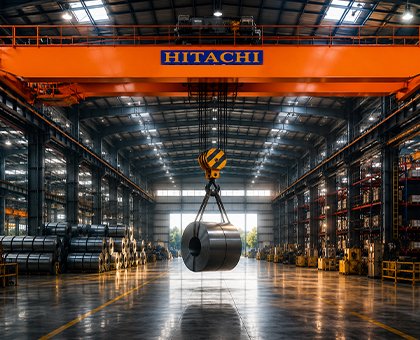
Overhead cranes are lifting systems that travel along elevated runways mounted near the top of a building structure. They are used to lift and transport heavy loads horizontally and vertically inside factories, warehouses, and production facilities.
These cranes maximize spatial efficiency by utilizing elevated space, keeping the floor area clear for equipment and personnel movement, while enabling precise and efficient load handling.
How Do Overhead Cranes Work?
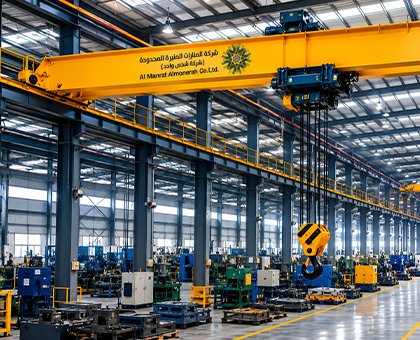
Overhead cranes rely on several core components working in harmony, including:
- Main Bridge Girder
- Traveling Hoist Trolley
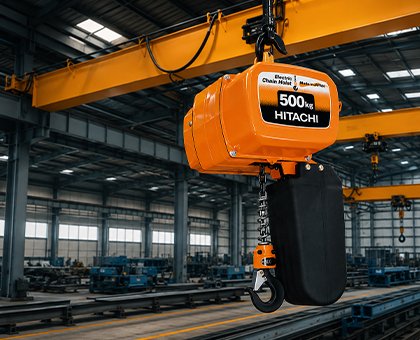
- Electric Hoist or Lifting Unit
- Steel Runway Beams / Rails
- Control Systems
- Safety Units and Limit Switches
The system lifts and maneuver loads in multiple directions across the designated bay, accelerating production and material handling operations.
Types of Overhead Cranes
Overhead cranes are available in several configurations to suit diverse industrial applications:
Single Girder Overhead Cranes
Ideal for facilities handling medium-capacity loads. They offer lower initial investment, compact design, and ease of installation and maintenance.
Double Girder Overhead Cranes
The preferred choice for projects requiring heavy-duty lifting. They deliver higher structural strength, greater lifting capacity, and higher hook reach.
Underslung (Underhung) Overhead Cranes
Suspended directly from the facility's roof or ceiling structure, making them suitable for plants aiming to optimize floor space and headroom.
Custom-Engineered Overhead Cranes
Custom-built to meet specialized operational demands, whether regarding unique capacity, non-standard span dimensions, or harsh operating environments.
Industrial Applications of Overhead Cranes
Overhead cranes are widely deployed across numerous sectors, including:
- Iron and steel plants
- Cement manufacturing
- Petrochemical industries
- Automotive assembly plants
- Food processing facilities
- Warehouses and distribution hubs
- Heavy equipment manufacturing
- Power plants
- Plastics manufacturing
These systems facilitate the safe and effortless movement of raw materials, heavy machinery, and finished goods.
Key Advantages of Overhead Cranes
Overhead cranes offer significant benefits that make them the gold standard for indoor industrial lifting:
- Increased Productivity: Accelerates material transfer between plant departments, reducing cycle times and driving overall output.
- Space Optimization: Operating overhead keeps floor pathways clear, creating a better organized and safer working environment.
- Heavy Load Handling: Handles massive tonnage safely and efficiently compared to traditional ground-based handling methods.
- Enhanced Workplace Safety: Minimizes manual handling, significantly reducing workplace accidents and ergonomic injuries.
- Precision Control: Modern control interfaces allow exact load positioning, essential for production lines requiring delicate handling.
Importance of Custom Overhead Crane Design and Manufacturing
A crane's long-term performance relies heavily on the engineering quality during design and manufacturing. Custom designs must account for several site-specific parameters:
- Nature of the industrial activity
- Available building dimensions and clear span
- Maximum required lifting capacity
- Required hook height
- Daily duty cycle and operating hours
- Environmental conditions (e.g., temperature, dust, humidity)
Proper engineering ensures smoother operation, reduces future downtime, and extends equipment lifespan.
How to Choose the Right Overhead Crane?
Before purchasing or installing an overhead crane, evaluate the following key factors:
- Required Payload Capacity: Determine the maximum operational weight to choose an appropriately rated crane.
- Lifting Height: Building headroom and operational needs directly impact crane configuration and hoist selection.
- Operating Area: Measure factory length, width, and runway lengths to ensure complete bay coverage.
- Duty Cycle: 24/7 continuous operations require heavy-duty classification components built for intensive wear.
- Safety Features: Ensure inclusion of overload limiters, emergency stop switches, limit switches, and reliable braking systems.
Common Mistakes to Avoid When Purchasing Overhead Cranes
Selecting a crane without proper evaluation can lead to operational bottlenecks and unexpected costs. Common pitfalls include:
- Sizing capacity strictly based on current needs while ignoring future expansion.
- Prioritizing initial purchase price over quality and durability.
- Neglecting after-sales maintenance and spare parts availability.
- Failing to choose an appropriate control system (e.g., radio remote vs. pendant control).
- Selecting equipment ill-suited for environmental conditions.
Why Choose Al Manarat Al Munira?
Al Manarat Al Munira offers complete solutions for the design, manufacturing, and installation of overhead cranes in Saudi Arabia, executing every project according to strict quality and safety standards.
Company services include:
- Custom overhead crane engineering and design
- High-grade crane manufacturing
- Supply, erection, and commissioning
- Upgrading and modernizing existing lifting systems
- Preventive and periodic maintenance programs
- Supply of genuine OEM spare parts
- Expert engineering consultations and technical support
Our technical team assesses each client's facility requirements to deliver custom-fit lifting solutions that maximize operational efficiency.
Tips to Maintain Overhead Crane Efficiency
To ensure consistent peak performance, adopt these essential maintenance guidelines:
- Perform routine preventive maintenance inspections.
- Conduct pre-operational checks before daily use.
- Never exceed rated load limits.
- Train operators on safe crane operation procedures.
- Inspect wire ropes, chains, and hooks regularly for wear.
- Keep runway rails clean and free of debris.
- Use genuine spare parts for all component replacements.
Frequently Asked Questions (FAQ)
What are overhead cranes?
Overhead cranes are elevated lifting systems running on fixed runways inside industrial facilities, designed to lift and transfer heavy loads safely and efficiently.
What is the difference between single girder and double girder overhead cranes?
Single girder cranes suit light to medium loads at a lower cost, whereas double girder cranes offer higher load capacities, greater hook heights, and suit heavy-duty industrial applications.
Why is custom crane design and manufacturing important?
Custom engineering aligns the crane precisely with the facility's dimensions, load profiles, and operational duty cycles, maximizing safety, reducing maintenance, and extending equipment life.
Can cranes be customized for specific plant layouts?
Yes, overhead cranes can be custom-engineered to match exact facility dimensions, target load capacities, and specific environmental or operational conditions.
Why is Al Manarat Al Munira the right partner?
Al Manarat Al Munira brings proven expertise in designing, manufacturing, supplying, and installing overhead cranes across Saudi Arabia, backed by tailored solutions, responsive technical support, and comprehensive maintenance services.
Conclusion
Overhead cranes are a cornerstone for advancing industrial operations and enhancing material handling efficiency inside plants. Investing in custom design and manufacturing according to top engineering standards yields higher productivity, lower operating costs, and reduced maintenance overhead. Leveraging its technical expertise in industrial lifting, Al Manarat Al Munira delivers integrated overhead crane systems tailored to diverse sectors, maintaining unwavering commitment to quality and safety for long-term operational success.
Gantry Cranes for Factories: Types, Advantages, and Main Applications