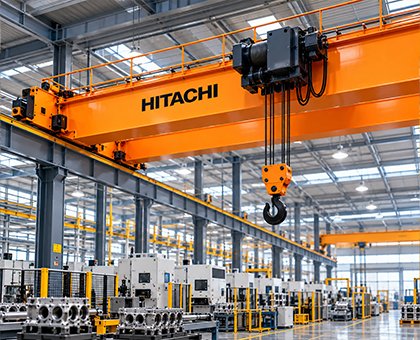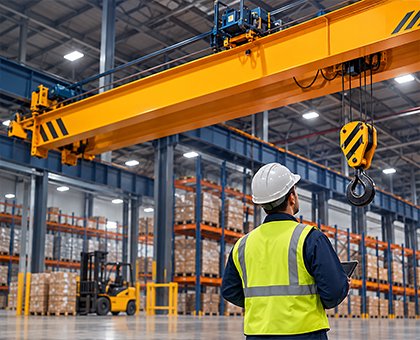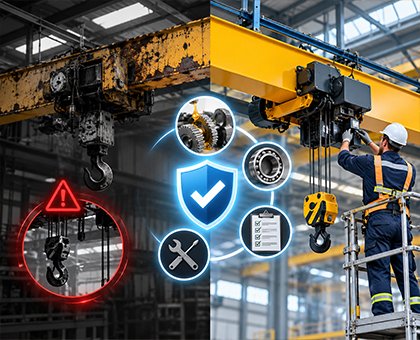

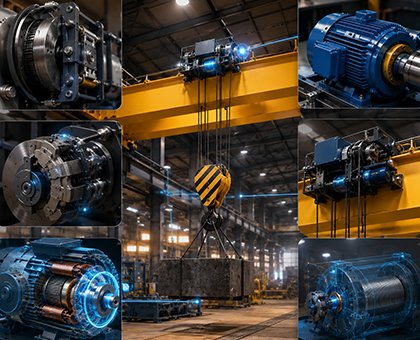
Modern factories, logistics complexes, shipping terminals, and shipyards rely heavily on overhead cranes and lifting systems as critical capital assets for handling steel structures and extremely heavy loads. Behind the smooth motion that lifts tens of tons at the push of a button lies a highly integrated engineering system. At the core of this system, motors and braking devices are not just mechanical components—they are the driving force and the true safety backbone that determines crane efficiency, prevents free-fall accidents, and protects both equipment and human lives.
Understanding how these vital components work and how they are selected is essential to ensuring operational continuity and minimizing unexpected failures that can halt production. In this consultancy guide from Al Manarat Al Muneera Company, we highlight the critical role of electric hoist motors for cranes in generating lifting power, and the strategic importance of electric crane brakes in maintaining full control and safety during heavy lifting operations.
First: Electric Hoist Motors for Cranes (Power Generation and Smart Torque Control)
The electric motor is the heart of the hoisting unit (Hoist) and is directly responsible for converting electrical energy into massive mechanical torque capable of lifting loads vertically and moving them horizontally. In heavy industrial environments, these motors must comply with strict engineering standards:
High Starting Torque:
Cranes require extremely high initial torque to lift loads from a stationary position and overcome gravity. Therefore, motors are designed to withstand high starting currents without damage or burnout.
Full Compatibility with VFD Systems (Variable Frequency Drives):
Integration with digital VFD systems ensures smooth acceleration and deceleration (soft start/stop). This intelligent control eliminates dangerous load swinging, protects mechanical gears from sudden shocks, and reduces energy consumption by up to 20%.
Advanced Thermal Insulation Classes (Class F or H):
Due to continuous operation and harsh climate conditions, motor windings must withstand internal temperatures exceeding 150°C without insulation failure or overheating.
Second: Electric Crane Brakes (The First Line of Defense and Safety Mechanism)
If the motor is responsible for movement, the brake is responsible for life safety. Electric crane brakes are classified as fail-safe systems, meaning they are automatically engaged in a resting state.
In engineering terms, the brake remains closed under spring pressure and only opens when electrical current activates the magnetic system, allowing movement. This design ensures several critical safety functions:
Instant Load Holding During Power Failure:
In case of sudden power loss or emergency stop activation, the brake engages instantly in milliseconds, preventing any dangerous load drop.
Resistance to Harsh Environmental Conditions (IP Standards):
Dust and humidity can significantly affect braking efficiency. Therefore, braking systems and electrical components are sealed according to IP55 for indoor use, and IP65 or IP66 for outdoor yards and ports to prevent dust and moisture ingress.
Mandatory Load Testing and Calibration Protocol (Load Test)
Al Manarat Al Muneera emphasizes that motor and brake performance must be verified through strict load testing in the field, typically every 12 months or after replacing critical components, in compliance with safety standards (SASO):
Static Test (125% Load):
The crane is tested at 125% of its rated capacity while stationary to ensure structural integrity and verify that no deformation occurs in the bridge structure.
Dynamic Test (110% Load):
The load is moved in all directions (lifting, lowering, longitudinal and lateral travel) to confirm that electric hoist motors operate without overheating and that electromagnetic brakes can precisely stop and hold the load with minimal allowable drift.
Frequently Asked Questions (Maintenance & Procurement Engineers)
What are the signs of electromagnetic brake failure that require immediate action?
Key warning signs include load drifting after stopping, loud metallic friction noises during operation, or a burning smell caused by worn brake linings. If any of these signs appear, the crane must be stopped immediately and inspected by the maintenance team to prevent accidents.
How do overload limiters protect motors and brakes?
Load limiters are intelligent sensors that measure the actual suspended weight. If the operator attempts to lift a load exceeding the crane’s rated capacity, the system immediately cuts power and triggers alarms. This prevents motor burnout and protects the brake system from excessive wear.
Conclusion
Ultimately, technical analysis of industrial lifting systems confirms that the engineering integration between heavy-duty electric hoist motors and certified crane braking systems is the foundation of safe, reliable, and efficient operations. Investing in genuine components and applying preventive maintenance schedules (PPM) protects capital assets, reduces emergency repair costs, and ensures long-term production continuity.
At Al Manarat Al Muneera Company, we provide full engineering consultancy, precise component selection, and maintenance solutions for advanced lifting systems—ensuring your operations run with maximum safety, efficiency, and long-term reliability.