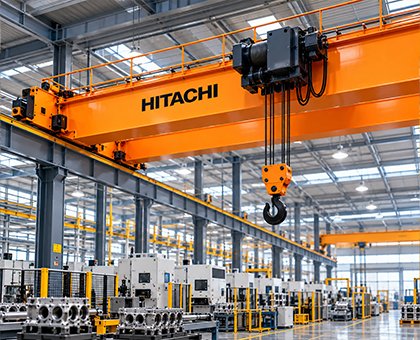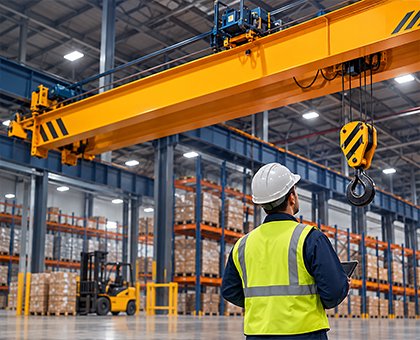

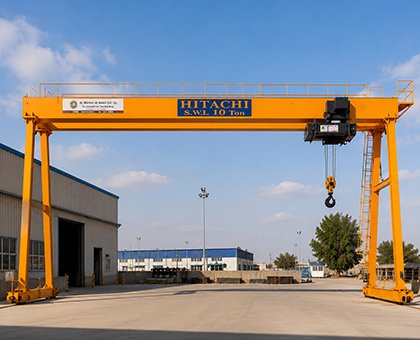
The movement of heavy materials and large loads inside major factories and logistics warehouses represents one of the biggest challenges facing operations engineers aiming to improve daily productivity rates. Relying on manual hydraulic solutions or traditional mechanisms is no longer sufficient to keep up with modern production growth. Instead, the global trend now focuses on automated systems and intelligent motors that ensure absolute precision. Any overlooked technical detail when selecting a lifting system may later result in costly downtime or accelerated wear of critical mechanical components.
Therefore, understanding the standard specifications and engineering features of modern electric cranes is the first step toward building a sustainable and accident-free industrial environment. In this technical guide from Al Manarat Al Muneera Company, we highlight the global standards and technical specifications that must be considered when planning to acquire heavy-duty electric hoists.
What Are the Critical Technical Specifications of Electric Cranes?
The quality of industrial cranes is not measured by size alone, but by the technical harmony between their mechanical and electrical components and their ability to withstand harsh working environments. The key pillars that define equipment efficiency include:
Motor Insulation Class:
It is always preferred to choose motors insulated with Class F or H, which are specifically designed to withstand high temperatures generated by continuous operation without damaging the electrical windings.
Ingress Protection Rating (IP Rating):
In industrial environments filled with dust or high humidity, the protection level of control panels and motors should not be less than IP55 to prevent contaminants from reaching sensitive components.
Hoisting Medium Type:
Selection between steel wire rope systems designed for heavy loads and high speeds, or chain systems suitable for medium loads and compact spaces.
Ensure that electric cranes are equipped with Phase Failure Protection, which immediately prevents motor operation in case of any fault in the power supply system, protecting the equipment from burning out.
How Do Electric Hoists Ensure Maximum Control and Safety?
Digital technology has evolved significantly in recent years, and this has positively impacted control systems in electric hoists, transforming them from basic switches into intelligent systems:
1. Variable Frequency Drives (VFD)
Using VFD technology in horizontal and vertical movement motors ensures very smooth acceleration and deceleration (Soft Start / Soft Stop). This feature completely eliminates load swinging in the air and protects the building structure from sudden mechanical shocks.
2. Electromagnetic Self-Acting Brakes
Electromagnetic brakes are the first line of safety in cranes. They are engineered to automatically engage and hold the load instantly in case of power failure or emergency stop, preventing catastrophic load drops.
Maintenance Standards for Sustainable Electric Cranes
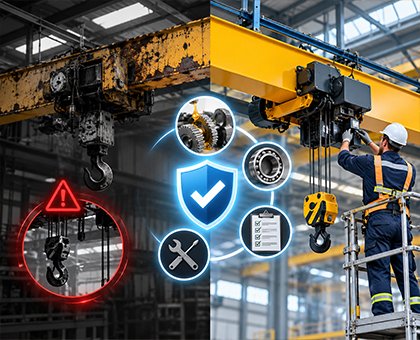
Al Manarat Al Muneera emphasizes that the lifespan of equipment is directly linked to the preventive inspection protocol implemented within the facility. Following these points helps prevent unexpected failures:
Control Panel and Contactor Inspection:
Monthly inspection of electrical connections prevents spark formation caused by loose wiring, which may lead to crane shutdown.
Wire Rope Lubrication and Inspection:
Maintaining proper lubrication protects the ropes from wear and corrosion caused by continuous friction inside the drum grooves.
Load Cell Calibration:
Ensures the crane does not operate if the operator attempts to lift a load exceeding the rated capacity.
Frequently Asked Questions About Electric Crane Specifications
What is the difference between Single Phase and Three Phase power in cranes?
Single-phase cranes (220V) are used for light-duty applications and small workshops, while industrial electric hoists rely on three-phase power (380V and above) to provide high torque and the required capacity for heavy lifting operations.
How do you choose the appropriate FEM/ISO duty class for electric cranes?
The selection is based on daily operating hours and the percentage of maximum load usage. For example, class 2m is suitable for moderate regular operation, while steel plants and ports require higher classes such as 3m or 4m for heavy-duty continuous service.
Conclusion
Ultimately, investing in electric cranes that comply with international technical standards is not just a production requirement but a fundamental pillar for protecting your factory assets and workforce safety. Careful evaluation of motors, control systems, and safety brakes helps prevent operational losses caused by unplanned downtime. At Al Manarat Al Muneera Company, we always recommend consulting mechanical and electrical engineering experts during equipment specification to ensure customized electric hoist solutions that meet your investment goals and operate with maximum efficiency and safety for many years to come.