
Work environments in seawater desalination plants and oil and gas storage facilities are among the most complex and hazardous in the entire infrastructure and heavy industry sector. In these critical facilities, lifting equipment is not only exposed to heavy loads and mechanical stress, but also to extremely harsh environmental and chemical conditions such as high saline humidity, flammable gases, and corrosive vapors. Any small overlooked technical detail in the design or selection of lifting systems in such locations can quickly escalate into environmental disasters, material damage, or direct threats to human safety.
Therefore, engineering and equipping these facilities requires exceptional safety standards that go far beyond conventional industrial cranes available in the general market. In this specialized guide from Al-Manarat Al-Muneera Company, we will explore in detail the engineering principles governing the design of explosion-proof cranes, as well as the main protection protocols for cranes in desalination plants to ensure uninterrupted and fully safe operation.
First: Explosion-Proof Crane Specifications (Explosion-Proof Cranes)
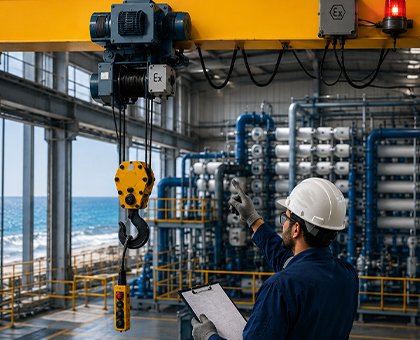
In workplaces containing high concentrations of flammable gases or vapors (such as water chlorination rooms or chemical storage facilities), the greatest risk lies in any electrical or mechanical spark caused by friction between crane components, which could trigger a catastrophic instantaneous explosion. To prevent such risks, explosion-proof cranes are subjected to strict engineering modifications compliant with international codes such as ATEX or NEC:
Flameproof electrical enclosures:
Electrical panels, motors, and control switches are enclosed within steel housings designed to contain any internal explosion and prevent flame or spark leakage into the surrounding atmosphere.
Non-sparking mechanical components:
Bridge wheels, trolley units, and hook assemblies are manufactured from special bronze or copper alloys, or coated with anti-spark materials to eliminate spark generation during mechanical friction with rails.
Continuous grounding systems:
Static electricity generated by crane movement is continuously discharged into the ground to prevent sudden electrical discharges or ignition sources.
The hazard level of the site must be precisely classified according to zoning systems (Zone 1 or Zone 2) before purchasing, to ensure the crane design fully complies with the type of gases present in the working environment.
Second: Challenges of Desalination Plant Cranes (Corrosion and Salinity Resistance)
On the other hand, cranes in desalination plants face a different enemy: corrosion and rust caused by continuous exposure to seawater environments and the chemicals used in water treatment. Saline humidity alone can destroy steel cables and gear systems within months if the equipment is not properly engineered and protected through the following specifications:
1. Multi-layer epoxy coating systems
The metal structure and crane bridges are coated with high-density marine-grade coatings (Marine Coating) at specified thickness levels to protect steel from chemical reactions caused by airborne salinity and water spray.
2. Stainless steel components
Traditional steel cables are replaced with stainless steel wire ropes and chains (Grade 316). Electrical cabinets and hook assemblies are also manufactured from stainless steel to ensure long operational life without mechanical degradation.
Safety Protocols and Preventive Maintenance for Critical Sites
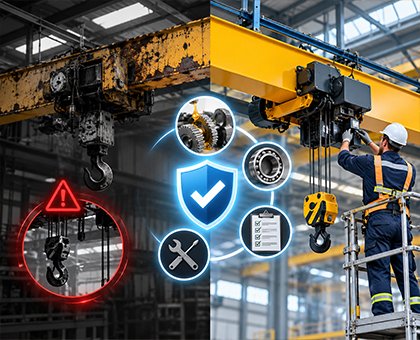
Al-Manarat Al-Muneera emphasizes that operating cranes in hazardous environments requires strict adherence to preventive maintenance schedules, which include three key pillars:
Inspection of electrical enclosure insulation:
Monthly verification of gasket integrity in control panels to ensure no gas or vapor leakage into internal components.
Continuous monitoring of safety sensors:
Calibration of overload limiters and dual limit switches to ensure instant automatic shutdown during emergency conditions.
Periodic dynamic load testing:
Testing cranes with loads exceeding their rated capacity under engineering supervision to verify weld integrity and electromagnetic brake performance.
Frequently Asked Questions (Water & Energy Sector Engineers)
What is ATEX certification and why is it important for explosion-proof cranes?
ATEX is the official European directive for equipment used in explosive atmospheres. A crane certified under ATEX ensures it has undergone strict laboratory testing confirming it will not ignite surrounding gases under any operating condition.
How do you choose the appropriate IP rating for desalination plant cranes?
Due to direct exposure to moisture, heavy water spray, and dust, crane motors and electrical panels must have a minimum IP55 rating in enclosed areas, and preferably IP65 or IP66 in open or directly exposed environments.
Conclusion
Ultimately, strict engineering preparation of critical facilities using advanced solutions such as explosion-proof cranes and chemically protected desalination plant cranes is not merely an operational requirement—it is the first line of defense for protecting human lives and securing strategic assets. Investing in high-quality safety specifications such as Japanese or German engineering standards protects against catastrophic costs and unexpected failures that could shut down entire water or energy supply systems.
At Al-Manarat Al-Muneera Company, we place our long technical and consulting expertise at your service to help design, supply, and engineer the most complex industrial lifting systems—ensuring your facilities move toward the future with stability, efficiency, and absolute long-term safety.
Operational for a 20-Ton Gantry Crane in Open Work Yards