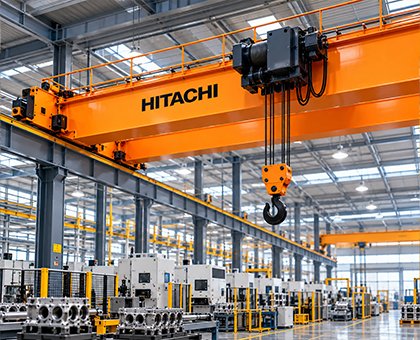

Large factories, central workshops, and modern logistics warehouses rely heavily on material handling and lifting systems to maintain daily operations and ensure continuous production flow. At the core of these systems, cranes and overhead bridge cranes represent high-value capital assets that require continuous engineering care.
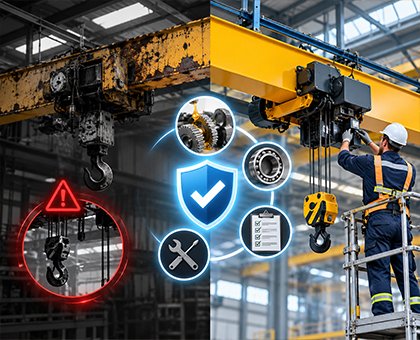
Operating these heavy-duty machines under constant loads and variable environmental conditions exposes their mechanical and electrical components to ongoing stress. Neglecting timely maintenance is therefore a major financial and operational risk that can lead to unexpected breakdowns and complete production shutdowns.
To avoid emergency failures and costly repairs, modern industrial operators increasingly rely on long-term technical partnerships. In this guide from Al Manarat Al Muneera Company, we highlight the strategic and operational value of annual maintenance contracts for cranes and how they contribute to successful repair and refurbishment of existing overhead cranes at the highest standards of quality and safety.
First: ROI of Annual Maintenance Contracts for Cranes
Annual maintenance contracts are not an additional expense; they are a strategic financial tool to protect operational capital and secure long-term asset performance. They provide several key advantages:
1. Eliminating Unplanned Downtime
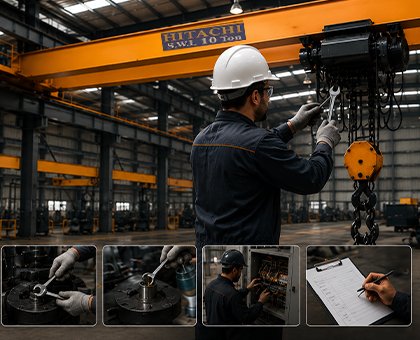
Through regular inspections (monthly or quarterly), early signs of wear in consumable parts—such as brake pads and electrical carbon brushes—are detected and replaced before failure occurs. This prevents sudden production stoppages that can cost thousands per hour.
2. Priority Emergency Response and On-Site Support
Annual contracts guarantee immediate response from field engineering teams 24/7 in case of failure, along with direct access to original spare parts from supplier warehouses, avoiding long import delays.
3. Compliance with Safety Regulations (SASO)
Contracted service providers maintain updated inspection and calibration records, ensuring full compliance with official safety audits and regulatory requirements with minimal operational disruption.
Second: Key Pillars of Overhead Crane Repair and Refurbishment
In many cases, the steel structure and bridge beams of older cranes remain structurally sound, while failures occur mainly in outdated electrical systems or worn-out hoisting units.
This is where crane retrofitting and refurbishment programs become a cost-effective solution—often saving up to 50% compared to purchasing a new crane. These upgrades include:
1. Hoist Replacement
Replacing the old hoisting unit with modern rope or chain hoists from leading global manufacturers. This effectively resets the crane’s operational life and significantly reduces failure rates.
2. Upgrading to VFD Control Systems
Modernizing electrical control systems with Variable Frequency Drives (VFD) enables smooth start/stop operation. This eliminates load swing, reduces mechanical shock, and protects gears and structural components from stress damage.
3. Remote Control System Upgrades
Replacing outdated cabins or wired controls with wireless radio remote systems allows operators to control loads from a safe distance with better visibility and improved operational safety.
Mandatory Load Testing Protocol After Refurbishment
Al Manarat Al Muneera emphasizes that refurbished or upgraded cranes must undergo strict on-site load testing before returning to commercial operation, in compliance with international standards:
Static Load Test (125%)
The crane is loaded with 125% of its rated capacity while stationary to verify structural integrity and ensure no deformation occurs in the steel bridge.
Dynamic Load Test (110%)
The crane operates under 110% of its rated load while moving in all directions to verify brake performance, overload sensors, and limit switch functionality.
Frequently Asked Questions
How do maintenance contracts protect cranes from harsh environmental conditions in Saudi Arabia?
During scheduled visits, sealing components of electrical panels and motors are inspected to ensure compliance with IP55 standards for indoor environments and IP65/IP66 for outdoor and coastal areas. This prevents dust ingress, moisture damage, and electrical failures caused by harsh weather conditions.
When should a wire rope be immediately replaced during inspection?
A steel wire rope must be replaced if:
- Broken wire strands exceed allowable limits per meter
- Visible kinking or deformation is present
- Rope diameter reduction exceeds 7% of the original size
- Mechanical repair attempts are strictly prohibited.
Conclusion
Ultimately, real-world operational and financial experience confirms that annual crane maintenance contracts are the most effective strategy for protecting high-value industrial assets and eliminating unexpected production downtime.
Similarly, relying on certified partners for the repair and refurbishment of overhead cranes extends equipment lifespan at significantly lower cost while maintaining the highest safety standards.
At Al Manarat Al Muneera Company, we provide full engineering and consulting expertise to design customized maintenance programs and supply genuine spare parts—ensuring your operations continue with stability, efficiency, and absolute safety for years to come.