
Saudi Arabia is witnessing an unprecedented industrial and construction boom, driven by massive national projects and initiatives aimed at developing the logistics and manufacturing sectors under Vision 2030. In this rapidly growing economic environment, operational efficiency and automation of material handling inside factories, warehouses, and construction sites have become key factors for business success and competitiveness. Any delay in moving heavy loads or unexpected failure in lifting systems can immediately result in financial losses and project delivery delays.
From this perspective, searching for engineering solutions that balance durability with fair pricing is one of the biggest challenges faced by procurement managers and project engineers in the Saudi market. In this advisory guide from Al Manarat Al Muneera Company, we provide a comprehensive overview of the key factors influencing electric hoist prices in Saudi Arabia, and explain the essential criteria for selecting the best crane and hoist supplier in Saudi Arabia to protect your capital investments.
Factors Affecting Electric Hoist Prices in Saudi Arabia
The pricing of heavy equipment and cranes in the Kingdom is not fixed. Instead, it varies significantly depending on several technical and engineering parameters that must be carefully analyzed before making a purchasing decision:
Lifting capacity and duty class:
Prices increase depending on load capacity (from 1 ton up to more than 50 tons). However, the more important factor is the duty class (such as ISO or CMAA classifications). Cranes designed for continuous heavy-duty operations in steel plants and ports are significantly more expensive than those used in workshops or intermittent maintenance facilities.
Country of origin and technology used:
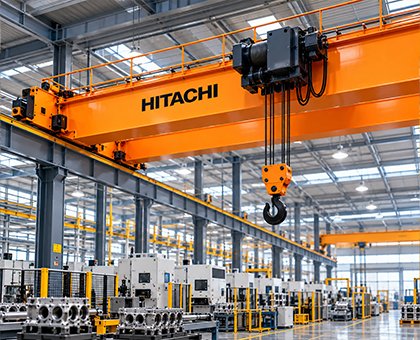
The Saudi market offers a wide range of options. German and Japanese technology cranes (such as Demag and Hitachi) represent the premium segment due to their exceptional reliability, while other Asian-manufactured equipment provides cost-effective solutions suitable for emerging businesses.
Lifting medium (chains vs. wire ropes):
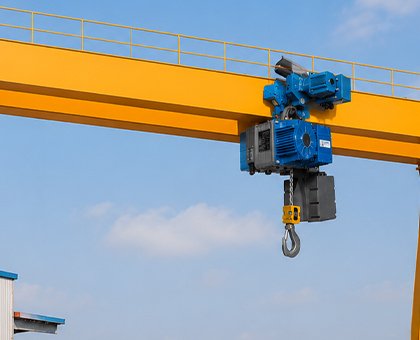
Chain hoists are more compact and cost-effective for medium loads and tight spaces, whereas wire rope hoists are designed for extremely heavy loads and high lifting heights, requiring a higher investment.
Integration of Variable Frequency Drives (VFD):
Adding VFD systems to electrical control panels may increase initial cost by around 10%, but it reduces energy consumption by up to 20% and protects mechanical gears from premature wear, making it a cost-saving investment in the long term.
How to Choose the Best Crane and Hoist Supplier in Saudi Arabia
When evaluating supply offers in the local market, price should not be your only factor. The supplier must be assessed based on engineering capability and service quality to ensure operational sustainability. Make sure the following elements are available:
1. After-sales support and maintenance services
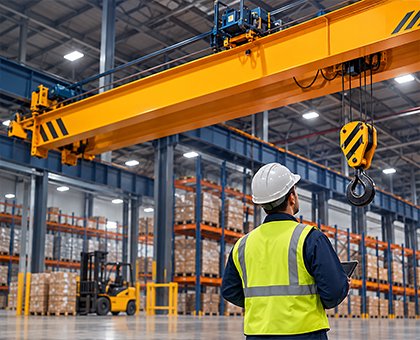
A single crane failure in a production line can cost thousands of riyals per hour. Ensure the supplier has a local engineering team ready for rapid response and emergency maintenance services.
2. Availability of genuine spare parts and reliability record
Purchasing equipment from a supplier that does not maintain local spare parts inventory is a major financial risk. Reliable suppliers should provide constant availability of wire ropes, electromagnetic brakes, and gear components.
Safety and Calibration Standards in the Saudi Market
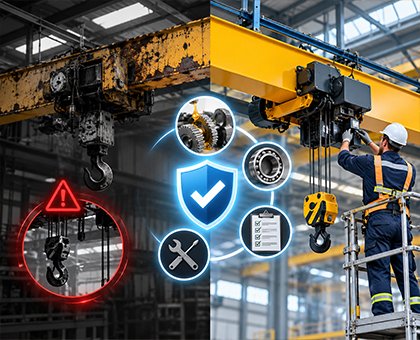
The Saudi Standards, Metrology and Quality Organization (SASO), along with occupational safety regulations, impose strict requirements on lifting equipment to protect lives and property. Al Manarat Al Muneera highlights the importance of compliance with the following:
Load test certification:
Suppliers must perform official on-site load testing, including static (125%) and dynamic (110%) tests, before final handover to ensure structural integrity and brake performance.
Overload limiters:
Smart sensors that completely prevent crane operation if the load exceeds the rated capacity, protecting the structure from mechanical failure.
Protection and weather resistance standards:
Due to the harsh climate in Saudi Arabia, motors and electrical panels must have at least IP55 protection to withstand dust and high temperatures.
Frequently Asked Questions by Technical Investors in Saudi Arabia
Is it better to buy cranes under EXW terms or include installation?
The best option is always a full package contract including supply, installation, and on-site testing, ensuring the supplier is fully responsible for alignment, commissioning, and certification.
How does Vision 2030 affect lifting equipment requirements?
Saudi Arabia is moving toward Industry 4.0 and smart factories. Therefore, investing in electric hoists with digital monitoring and condition-based maintenance systems is increasingly preferred to reduce downtime and predict failures.
Conclusion
Ultimately, carefully evaluating electric hoist prices in Saudi Arabia and selecting a crane and hoist supplier with proven engineering expertise is not just a purchasing decision—it is a strategic investment in protecting your assets and ensuring workforce safety. Choosing low-cost, unverified offers often leads to hidden maintenance costs and operational risks. At Al Manarat Al Muneera Company, we provide our full technical and consulting expertise to support you in site evaluation, accurate requirement definition, and supply of advanced industrial lifting systems, ensuring your projects in the Kingdom operate with maximum efficiency, safety, and long-term reliability.