
Capital budgeting decisions for equipping construction sites, factories, and industrial facilities with heavy lifting equipment are among the most critical choices for project managers and investors in the construction and manufacturing sectors. In a volatile and rapidly changing economic market, it becomes clear to every detail-oriented engineer that pricing is not fixed, but rather influenced by a complex combination of technological advancements and mechanical specifications. Relying on random estimates or approving budgets without analyzing the technical factors may lead to unexpected operational costs in the future.
Whether you need mobile equipment for flexible lifting tasks in open construction sites, or you are planning to install a fixed and sustainable lifting system inside production halls, understanding the cost structure can save significant financial resources. In this advisory guide from Al Manarat Al Muneera Company, we highlight the key variables that determine telescopic crane prices, and we break down the hidden factors affecting overhead crane installation costs at your site.
First: Key Technical Factors Affecting Telescopic Crane Prices
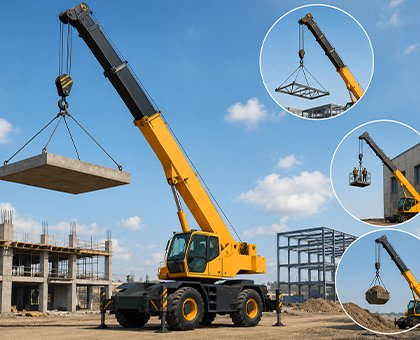
Telescopic cranes are characterized by their extendable hydraulic boom that can reach long distances and heights, making them essential for projects requiring fast execution and operational flexibility. Their pricing is not determined by size alone but by several core engineering factors:
Rated Lifting Capacity (Load Capacity):
The maximum lifting capacity (in tons) significantly affects pricing. Costs increase sharply when moving from medium capacities (20–50 tons) to heavy-duty or ultra-heavy cranes exceeding hundreds of tons.
Boom Length and Extension Technology:
The maximum vertical height and horizontal reach of the hydraulic boom directly influence the complexity of steel fabrication and hydraulic systems, increasing overall cost.
Carrier Type and Chassis Technology:
Whether the crane is mounted on a standard truck (Truck-Mounted) or an all-terrain chassis significantly impacts the final price structure.
Cranes equipped with digital control systems and Load Moment Indicators (LMI) may increase initial cost by 10%–15%, but they are essential for ensuring operational safety and preventing tipping accidents.
Second: Engineering Cost Breakdown for Overhead Crane Installation
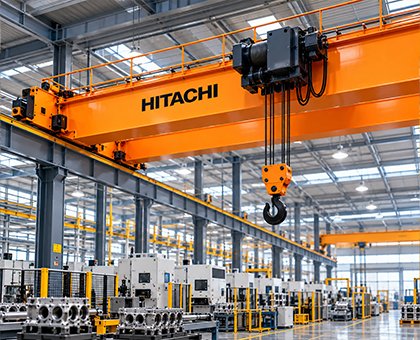
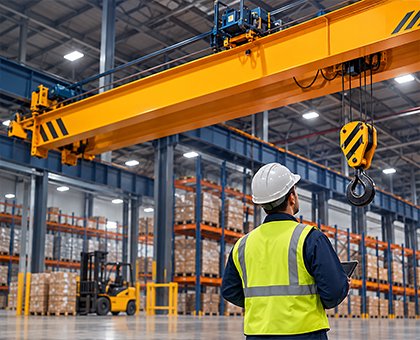
On the other hand, cost calculations change completely when moving from mobile cranes to fixed overhead crane systems inside factories and warehouses. Many investors mistakenly consider only the purchase price of the crane itself, while overlooking critical installation cost components:
1. Building Structure and Runway System
If the factory structure is already designed to support dynamic crane loads, installation costs are limited to rail mounting. However, if the structure is not suitable, an independent free-standing steel support system must be constructed, significantly increasing costs.
2. Crane Span and Operational Height
The horizontal span between building walls determines the length and weight of the main bridge girder. Longer spans often require external heavy lifting equipment for installation, increasing labor and execution costs.
Long-Term Return on Investment (ROI)
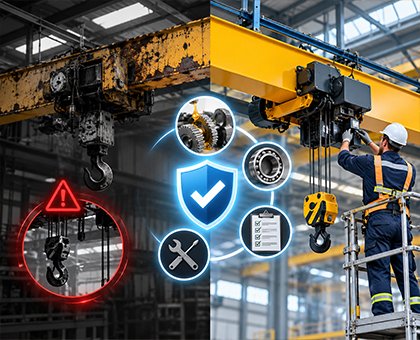
Al Manarat Al Muneera emphasizes that true evaluation is not based on initial purchase price only, but on total lifecycle cost. Proper engineering selection ensures:
- Reduction in unexpected breakdowns through high thermal class motors (Class F or H) and VFD systems, saving up to 20% energy consumption.
- Enhanced worker safety through electromagnetic braking systems that automatically hold loads in case of power failure.
Frequently Asked Questions
Which is better: new or used telescopic cranes in terms of pricing?
New cranes offer manufacturer warranties and the latest safety technologies, making them ideal for long-term industrial projects. Used cranes, however, can save 30%–50% of capital cost and are suitable for short-term projects (less than two years), provided they are inspected using NDT testing methods.
What are the mandatory requirements for commissioning an overhead crane after installation?
International safety regulations require both static load testing (125% of rated capacity) and dynamic load testing (110%) before operational approval is granted.
Conclusion
Ultimately, financial and technical analysis of heavy lifting equipment proves that proper engineering begins with understanding cost-driving factors. Evaluating telescopic crane pricing and overhead crane installation costs carefully protects your project from unnecessary expenses and unplanned downtime.
At Al Manarat Al Muneera Company, we provide full technical and consulting support to help you study site requirements, define specifications accurately, and supply advanced lifting systems that ensure safety, efficiency, and long-term performance.