
Industrial facilities and large construction projects constantly strive to achieve the highest levels of reliability in their logistics systems, where unexpected equipment downtime represents a real financial nightmare that threatens delivery schedules. In harsh operating environments that require lifting and moving extremely heavy loads around the clock, only equipment designed with exceptional engineering can withstand the most severe mechanical and climatic conditions. The integration of smart technology with raw mechanical power has become the key standard for evaluating the efficiency of modern production lines and workshops.
When decision-makers seek innovative quality that combines precise control with extreme durability, attention naturally turns to Japanese and global engineering giants. In this advisory guide from Al Manarat Al Munira Company, we highlight the legendary performance of Hitachi cranes in load endurance, and explore how modern electric lifting cranes are reshaping the concept of safety and sustainable productivity.
Hitachi Cranes: Japanese Quality That Does Not Compromise on Safety
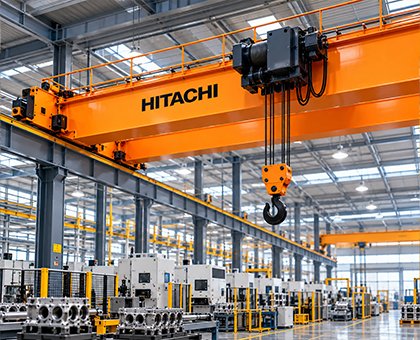
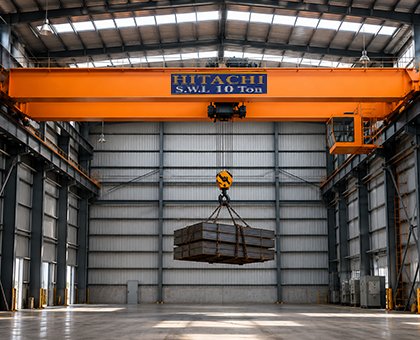
Hitachi cranes stand among the leading lifting equipment brands thanks to Japan’s engineering philosophy, which focuses on absolute durability and continuous refinement of mechanical details. These cranes—whether crawler cranes or electric hoist units—are designed to withstand continuous operational stress in the harshest environments, such as petrochemical plants and open construction sites:
- High-durability planetary gear system: Hitachi uses heat-treated alloy steel gearboxes, ensuring a significantly longer service life and reduced internal friction compared to conventional systems.
- High-efficiency induction motors: Hitachi electric crane motors are designed to tolerate voltage fluctuations and resist excessive heat buildup during heavy-duty operation.
- Weather-resistant structures: Sensitive components and control panels are protected with advanced insulation standards (IP ratings), making them highly resistant to dust and humidity.
Thanks to Hitachi’s exclusive dual braking system (combining mechanical and electromagnetic brakes), loads are secured in mid-air even in the event of sudden power failure at the facility.
Electric Hoists: The Smart Mobility Backbone of Modern Factories
If Japanese technology represents durability, then modern electric hoists provide the flexibility and high-speed responsiveness needed to manage material flow smoothly. Electric cranes are no longer simple lifting tools; they have become intelligent systems that reduce operational costs through integrated technological solutions:
1. Soft Electronic Control Systems (VFD)
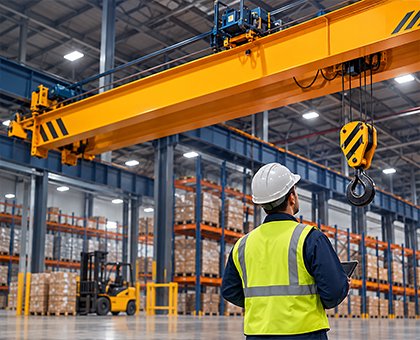
Advanced Variable Frequency Drives (VFD) allow smooth, millimeter-level control of lifting and horizontal movement speeds. This prevents dangerous load swinging, protects infrastructure, and ensures worker safety.
2. Digital Load Limiters (Overload Limiters)
Modern electric cranes are equipped with highly accurate load sensors that automatically cut power if the operator attempts to lift a load beyond the rated capacity, protecting the crane from dangerous structural stress.
How Maintenance Ensures Long-Term Load Capacity Performance
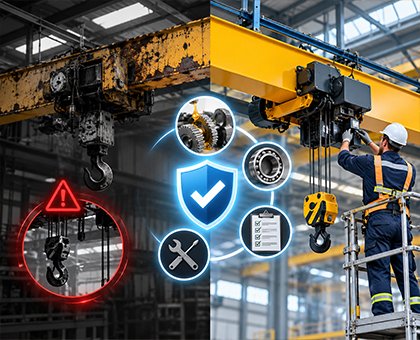
Al Manarat Al Munira emphasizes that owning high-quality equipment is not enough without a strict preventive maintenance program. Sustaining load performance depends on three key pillars:
- Regular lubrication and greasing: Maintaining proper oil levels in gearboxes and wire ropes prevents premature wear caused by dry friction.
- Electrical inspection of connections and contactors: Monthly inspection of control panels prevents failures caused by loose wiring and vibration.
- Periodic dynamic load testing: Testing cranes with loads above their rated capacity (under engineering supervision) ensures structural integrity and brake performance.
Frequently Asked Questions
What distinguishes Hitachi cranes from competitors?
Hitachi cranes are known for extremely low failure rates, long-lasting genuine spare parts, and intelligent engineering that reduces energy consumption by up to 20% compared to conventional cranes.
How do you choose the correct rated capacity for electric hoists?
The engineering rule is to calculate the maximum expected load and then select a hoist with a capacity 15% to 25% higher, ensuring a safety margin that protects the motor and structure from overload stress.
Conclusion
Ultimately, equipping factories and workshops with advanced solutions such as Hitachi cranes and modern electric hoists is not just a production upgrade—it is a strategic decision directly tied to asset protection and workforce safety. Investing in durability and high performance protects against costly unexpected breakdowns that can halt entire production lines.
At Al Manarat Al Munira Company, we always recommend consulting engineering specialists to accurately define load classes and operational requirements before purchasing, ensuring sustainable, long-lasting solutions that operate with maximum efficiency and absolute safety.
Repairing and Refurbishing Cranes