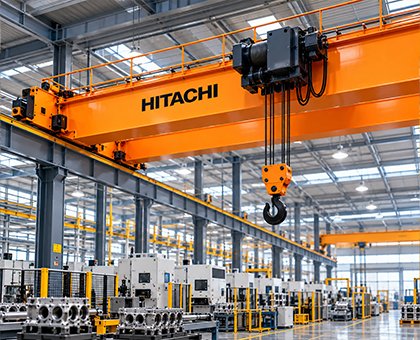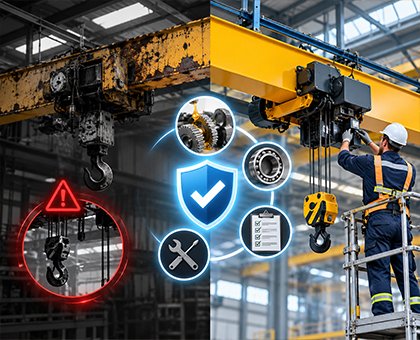

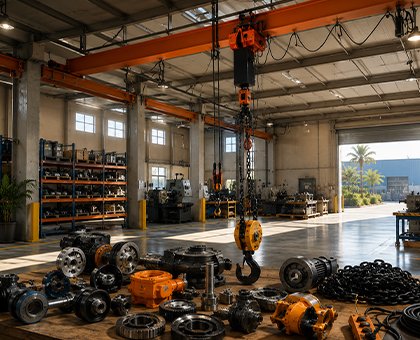
Industrial cranes and material handling systems represent the core operational backbone of large factories, logistics hubs, and maintenance workshops. Because these capital-intensive machines operate under continuous heavy loads and long working cycles, their mechanical and electrical components are constantly exposed to stress, wear, and fatigue.
Delaying the replacement of worn-out parts or using low-quality counterfeit components to reduce costs is a critical engineering mistake. It does not only lead to unexpected breakdowns that halt production lines, but also creates serious safety risks for personnel and infrastructure.
Building a reliable maintenance strategy requires precise engineering-based selection of spare parts that comply with international standards. In this guide from Al Manarat Al Munira, we outline the technical framework for selecting high-quality crane spare parts and ensuring long-term operational reliability.
1. Critical Components When Selecting Spare Parts for Overhead Cranes
Spare parts for overhead and gantry cranes can be divided into two main categories: mechanical and electrical components. Both must be carefully evaluated before procurement.
Wire Ropes and Load Suspension Systems
Wire ropes and chains are the primary load-bearing elements of any lifting system.
Key selection criteria:
- Compliance with ISO and ASME standards
- Correct diameter matching original crane specifications
- High tensile strength rating
- Resistance to fatigue and abrasion
Using substandard wire ropes can lead to catastrophic failure and sudden load drop.
Braking Systems (Electromagnetic Brakes)
Brakes are responsible for holding the load in a fixed position instantly.
Critical requirements:
- Fast and reliable electromagnetic response
- Zero-load slippage tolerance
- Certified friction materials
- OEM-level compatibility
Using non-original brake components significantly increases accident risk due to uncontrolled load movement.
Wheels and End Carriages
Crane wheels operate under continuous rolling stress on steel rails.
Important specifications:
- Heat-treated steel with proper hardness rating
- Accurate machining for rail alignment
- Resistance to wear and deformation
- Proper load distribution design
Incorrect wheel selection leads to rail damage and structural misalignment over time.
2. Technical Standards for Industrial Crane Spare Parts
Ensuring reliability in harsh industrial environments requires strict adherence to engineering standards.
1. IP Protection Ratings (Environmental Resistance)
Electrical spare parts such as:
- Remote control systems
- Push-button pendants
- Control panels
must meet:
- IP55 minimum for indoor environments
- IP65–IP66 for outdoor or coastal environments
This prevents dust, moisture, and salt exposure from causing electrical failures.
2. Compatibility with Variable Frequency Drives (VFD)
Modern crane systems rely heavily on VFD technology.
Spare parts must support:
- Smooth acceleration and deceleration (Soft Start / Soft Stop)
- Reduced mechanical shock loads
- Lower gearbox and motor wear
- Improved energy efficiency
Improper compatibility leads to vibration, jerking movements, and premature mechanical failure.
3. Mandatory Load Testing After Spare Part Replacement
According to industrial safety standards (including SASO requirements), cranes cannot return to service after replacing critical components without formal testing.
Static Load Test (125%)
- Load exceeds rated capacity by 25%
- Crane remains stationary under load
- Validates structural integrity and weld stability
Dynamic Load Test (110%)
- Load is moved in all directions
- Tests braking systems, VFD response, and limit switches
- Ensures full operational safety before commissioning
4. Frequently Asked Questions
When should a wire rope be replaced immediately?
A wire rope must be discarded if:
- Broken wire strands exceed allowed limits per meter
- Visible kinking or deformation occurs
- Diameter reduction exceeds 7%
- Corrosion or severe wear is detected
Repair or welding of wire ropes is strictly prohibited.
Why is maintaining an in-house spare parts inventory important?
Keeping critical spare parts in stock provides:
- Zero downtime during failures
- Immediate replacement capability
- Reduced dependency on external suppliers
- Continuous production flow without interruption
Typical stocked items include:
- Control contactors
- Remote control units
- Limit switches
- Brake components
Conclusion
Effective spare parts selection for cranes is not a purchasing decision—it is a critical engineering strategy that directly impacts safety, productivity, and equipment lifespan.
Relying on certified OEM components and internationally compliant specifications ensures operational stability and protects both human lives and industrial assets.
At Al Manarat Al Munira, we support industrial facilities with expert consultation, precise component selection, and supply of high-quality crane spare parts designed to meet the most demanding operational environments—ensuring long-term reliability, efficiency, and maximum safety.