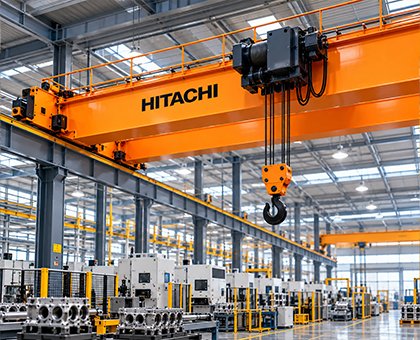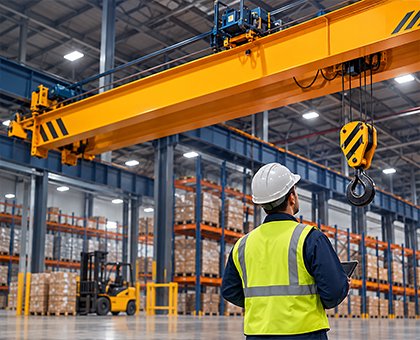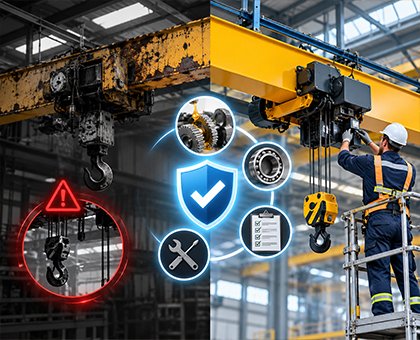

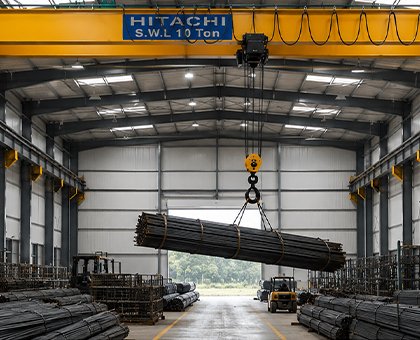
Operational requirements vary significantly across industrial sectors depending on the nature of handled materials and the working environment. A single engineering configuration cannot be applied universally across all facilities. A crane that performs efficiently in a metal fabrication workshop may completely fail to meet safety and productivity standards in a petrochemical plant or a steel melting facility. Understanding these fundamental differences and customizing lifting equipment based on the application is the key to reducing capital costs and preventing unexpected breakdowns that can halt production.
Between the extreme heat of steel furnaces, the precision required for plastic injection molds, and the dynamic operations of iron workshops, there is a growing need for specialized engineered lifting solutions. In this industry-focused guide from Al Manarat Al Muneera Company, we explore the standard specifications required when selecting cranes for iron workshops, and how to define technical requirements for cranes used in plastic and steel factories with maximum efficiency and safety.
First: Crane Specifications for Small and Medium Iron Workshops
Iron workshops (such as machining shops, blacksmithing units, and steel structure fabrication facilities) are characterized by continuous movement and varying load sizes throughout the day. In such environments, the goal is not necessarily to use large-capacity cranes, but rather flexible and compact systems that provide operators with full independence.
Jib Cranes and Wall-Mounted Cranes:
These are among the most efficient solutions for individual workstations and CNC machine feeding. They are mounted on walls or columns without occupying valuable floor space.
Monorail Systems:
Ideal for transporting steel sections, pipes, and long materials along a fixed or curved path between cutting, welding, and painting areas.
Portable Gantry Cranes:
Provide exceptional flexibility due to their mobility, allowing manual relocation within the workshop for maintenance or lifting tasks anywhere in the facility.
For iron workshops, it is highly recommended to integrate electric lifting magnets, which allow fast and direct handling of steel plates and beams without the need for manual slings or straps.
Second: Plastic Factory Cranes (Precision and Mold Protection)
In plastic injection and molding factories, the main lifting operation revolves around handling heavy injection molds used in production machines. These molds are high-value assets, and even minor impact during installation can cause severe damage.
1. Smooth Control via VFD Systems
Plastic molds require extremely precise positioning. Therefore, cranes used in plastic factories must be equipped with Variable Frequency Drives (VFD) to ensure micro-speed control, smooth lifting, and zero load swing during movement.
2. Clean and Oil-Free Environments
Industries such as food-grade and medical plastic manufacturing require strict cleanliness standards. For this reason, cranes are equipped with chain collection bags to prevent grease or debris from falling onto production lines.
Third: Steel Plant Cranes (Heavy-Duty and Heat Resistance)
Steel mills and smelting plants represent the most extreme industrial environments. Cranes in these facilities operate under intense heat, rising fumes, and continuous 24/7 duty cycles (Class E & F).
Thermal Protection Shields:
Operator cabins, electrical panels, and lifting cables are equipped with heat-resistant insulation to protect against radiant heat from molten metal ladles.
Dual Braking Systems:
Heavy-duty cranes are equipped with two independent electromagnetic brakes that ensure instant load holding even in case of sudden power failure, preventing catastrophic accidents.
Dedicated Cooling Systems:
Electrical control rooms are fitted with industrial-grade air conditioning systems to maintain stable operation of VFDs and PLC units under extreme temperatures.
Frequently Asked Questions
What is the appropriate duty class for cranes in plastic and steel factories?
Plastic factories typically require medium duty (Class C) since mold handling is periodic. Steel plants, however, require heavy continuous duty classifications (Class E or F) due to nonstop operation and extreme load conditions.
How can iron workshop cranes be protected from metallic dust corrosion?
Electrical components must be protected using IP55 or IP65-rated enclosures to prevent fine metal particles and dust from entering sensitive electrical systems and causing failures.
Conclusion
Ultimately, industrial success begins with precise engineering-based equipment selection. Choosing the right cranes for iron workshops or installing properly specified cranes in plastic and steel factories ensures uninterrupted production, reduced downtime, and enhanced worker safety.
At Al Manarat Al Muneera Company, we provide full engineering and consulting support to help design, specify, and supply customized lifting systems that guarantee efficiency, stability, and long-term operational safety.