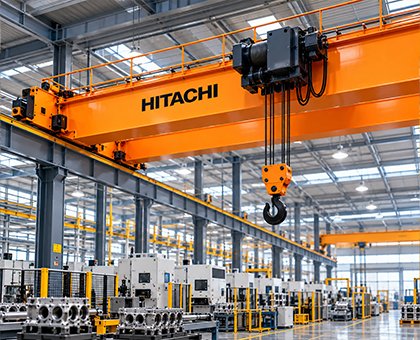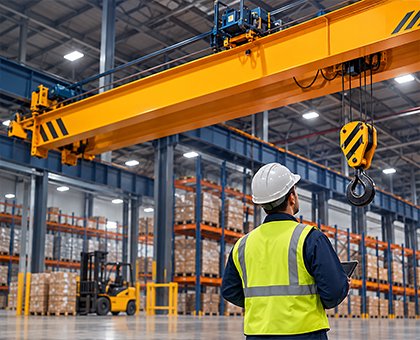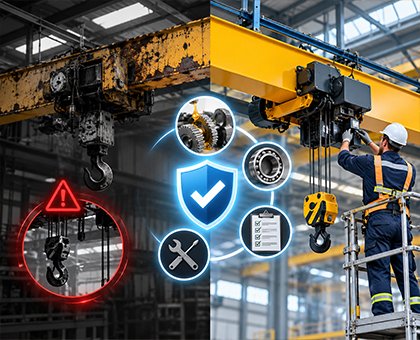

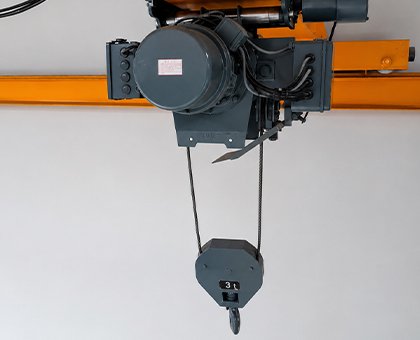
The Eastern Province, particularly the city of Dammam, represents the primary industrial and logistical backbone of the Kingdom of Saudi Arabia and the heart of the oil, gas, and petrochemical sectors. With the massive development of industrial cities in Dammam (First, Second, and Third Industrial Cities) and the expansion of shipping activities through ports in line with Saudi Vision 2030, the development of material handling and heavy lifting systems has become a critical factor for business success.
In this environment, lifting and material handling equipment is no longer a supplementary tool—it has become the main artery that defines production speed, assembly efficiency, and return on investment.
Given the harsh working conditions in Dammam, industrial equipment must be engineered with exceptional specifications to ensure continuous operation under demanding shifts. In this technical guide from Al Manarat Al Munirah Company, we highlight the key standards for supplying cranes in Dammam with world-class specifications, as well as the essential engineering requirements for installing and operating hoisting equipment in Dammam safely and efficiently.
Engineering Design Requirements Before Supplying Cranes in Dammam
The first step to protecting your investment starts with a detailed site survey and engineering study before procurement. Choosing equipment without proper analysis may lead to frequent breakdowns. Professional engineering consultation provides several strategic advantages:
- Load classification and duty cycle compliance (Duty Class): Determining the correct duty class (such as Class D for heavy-duty applications or Class E and F for steel plants and petrochemical facilities) to ensure gearbox and motor durability.
- Structural compatibility with building design: Calculating crane span and reviewing structural drawings to ensure that columns and steel structures can safely withstand dynamic loads.
- Customized design for critical environments: Providing low headroom cranes for tight spaces or explosion-proof cranes for sensitive petrochemical zones.
It is essential that electrical systems are equipped with Variable Frequency Drives (VFD), which ensure smooth start and stop operations, eliminate load swinging, protect mechanical components, and reduce energy consumption by up to 20%.
Key Requirements for Installing Hoisting Equipment in Dammam (Coastal Environment Challenges)
The climatic conditions in Dammam impose severe chemical and environmental challenges due to high humidity, salt-laden air from the Gulf, and high summer temperatures. Proper equipment protection requires:
1. Marine Epoxy Coating Systems
Steel structures and crane bridges must be treated with high-density marine-grade epoxy coatings to prevent corrosion and ensure long-term structural stability.
2. International Protection Standards (IP Ratings)
Electrical panels and motors must have a minimum protection rating of IP55 for indoor applications, and IP65 or IP66 for outdoor yards, ports, and coastal environments to protect against moisture, salt, and dust ingress.
Safety and Pre-Commissioning Protocols
According to Saudi Standards, Metrology and Quality Organization (SASO) regulations, cranes must undergo strict testing before commercial operation:
- Overload limiters: Automatically shut down lifting operations when loads exceed rated capacity.
- On-site load testing: Static test at 125% of rated capacity to verify structural integrity, followed by a dynamic test at 110% to confirm braking system performance and operational safety.
Frequently Asked Questions
How can a local crane supplier ensure production continuity in Dammam?
Downtime of a single crane can lead to significant financial losses. Working with a supplier that has local spare parts inventory (such as wire ropes, gears, and brake systems) and a rapid-response technical team in Dammam is essential for minimizing downtime.
What is better for storage yards in Dammam: overhead cranes or gantry cranes?
Overhead cranes require building-supported runway structures, while gantry cranes operate on ground rails and are ideal for open yards, ports, and outdoor storage facilities where building structures are not available or are limited.
Conclusion
Ultimately, strategic planning for industrial development begins with accurate technical specifications when selecting crane supply solutions in Dammam and ends with professional installation of hoisting equipment under certified engineering supervision.
Choosing the lowest-cost option without proper engineering support and after-sales service can lead to costly failures and operational downtime. At Al Manarat Al Munirah Company, we provide full engineering consultancy, site assessment, equipment supply, installation, and maintenance of complex industrial lifting systems to ensure your operations run with maximum efficiency, safety, and long-term reliability.