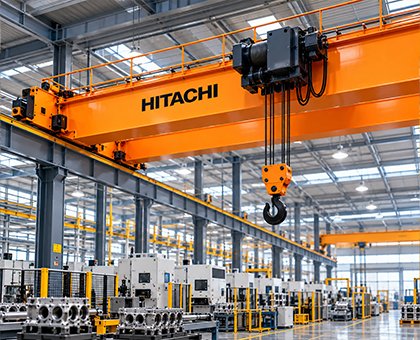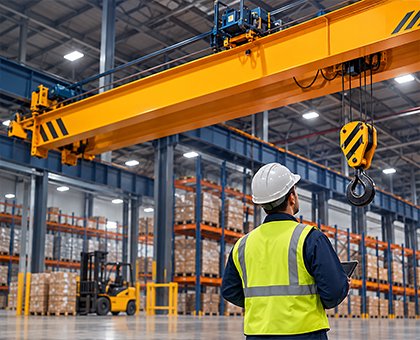

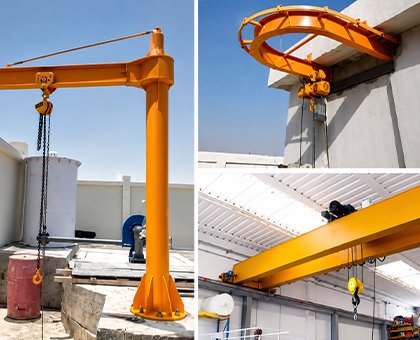
The Kingdom of Saudi Arabia is currently undergoing a remarkable wave of industrial and economic transformation, with industrial cities and logistics zones across the country evolving into leading regional and global hubs in line with Saudi Vision 2030. Within this comprehensive economic development, material handling and heavy lifting operations have become the core artery that powers factories, large warehouses, and major infrastructure projects.
Any sudden failure or malfunction in capital lifting systems does not only cause temporary production stoppages, but can also lead to significant financial losses that may disrupt delivery schedules and negatively impact a company’s market reputation.
Therefore, modern business practices no longer allow the use of unverified equipment or unqualified installation and maintenance providers. Working exclusively with officially certified and accredited engineering companies has become the only reliable way to protect investments and ensure a safe working environment. In this consultancy guide from Al Manarat Al Munirah Company, we outline the technical roadmap for identifying certified industrial crane companies in Saudi Arabia, along with the key criteria for selecting among crane suppliers in the Kingdom.
Why You Must Deal Only with Certified Industrial Crane Companies
Certification provides both technical and legal assurance. Companies licensed and accredited by Saudi regulatory authorities—such as the Saudi Standards, Metrology and Quality Organization (SASO) and Civil Defense—offer critical operational advantages:
- Full compliance with engineering standards: Cranes are designed and manufactured according to international codes such as FEM (European standards) or CMAA (American standards), ensuring structural safety under heavy dynamic loads.
- Official inspection and certification reports: Certified companies are authorized to issue load test and inspection certificates required for regulatory compliance and occupational safety audits.
- Advanced safety systems integration: Including Variable Frequency Drives (VFD) to eliminate load swinging, and electronic overload limiters to prevent exceeding rated capacity.
It is essential that the company is officially registered as an approved vendor in major governmental and industrial platforms such as Etimad, and within major industrial entities like Saudi Aramco and SABIC, as this reflects technical credibility and strict quality adherence.
Key Criteria for Evaluating Crane Companies in Saudi Arabia
When comparing industrial crane suppliers, price should not be the only deciding factor. Technical capability and service infrastructure must be carefully evaluated based on the following:
1. Availability of Fast Technical Support and Local Emergency Teams
A breakdown of a main crane in a production hall or logistics warehouse can result in significant financial losses every minute. Always choose companies that have local engineers and technicians capable of immediate on-site response and 24/7 emergency support.
2. Availability of Genuine Spare Parts in Local Warehouses
A low-cost crane becomes a major risk if spare parts are not locally available. Ensure the supplier maintains ready stock of critical components such as steel wire ropes, chains, brakes, and gear systems to avoid long import delays.
Crane Specifications Suitable for Saudi Environmental Conditions
Al Manarat Al Munirah emphasizes that crane reliability depends heavily on how well the equipment is engineered to withstand Saudi Arabia’s harsh climate. Certified companies ensure the following mandatory specifications:
- Thermal-resistant motor insulation: Motors should have insulation class F or H to withstand high operating temperatures during continuous summer operation.
- High-level protection ratings (IP Ratings): Electrical panels and motors must have at least IP55 protection for indoor use, and IP65 or IP66 for outdoor yards, ports, and coastal areas to protect against dust and moisture.
Frequently Asked Questions
What is the mandatory load testing protocol before crane commissioning?
Engineering regulations require a dual load test before commercial operation:
- A static test at 125% of rated capacity to verify structural integrity and welding strength.
- A dynamic test at 110% of rated capacity to ensure braking systems and control responsiveness are fully operational.
Why are annual preventive maintenance contracts (PPM) important with certified companies?
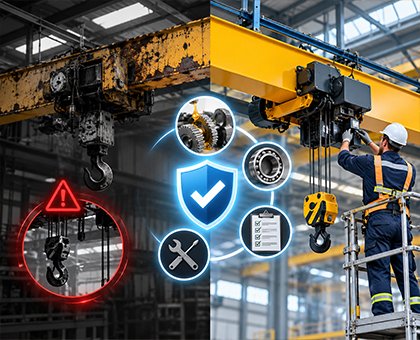
Preventive maintenance contracts ensure periodic inspections (quarterly or semi-annually), lubrication of mechanical systems, and early detection of wear. This prevents unexpected failures, minimizes downtime, and extends the crane’s operational lifespan.
Conclusion
Ultimately, investing in industrial equipment by carefully selecting certified crane companies in Saudi Arabia is a strategic decision directly linked to protecting high-value assets and building a reliable industrial reputation. Choosing low-cost solutions without certified engineering support and after-sales service often leads to costly downtime and operational risks.
At Al Manarat Al Munirah Company, we provide full engineering consultancy, site evaluation, logistics planning, and supply of advanced industrial lifting systems to help your operations achieve maximum efficiency, safety, and long-term reliability—supporting your journey toward industrial leadership in the Kingdom.