
Modern plants rely heavily on industrial lifting systems to enhance operational efficiency and facilitate the safe movement of heavy equipment and materials across production floors. Factory cranes represent vital material handling solutions that hoist and maneuver heavy payloads, directly cutting down on time and physical effort while boosting total throughput.
Selecting the appropriate lifting system varies depending on plant activities, payload weights, spatial footprints, and daily operating cycles. Conducting a detailed feasibility assessment prior to procuring equipment ensures your facility acquires a robust system engineered to deliver top performance over the long term.
Al Manarat Al Munira provides turnkey industrial lifting solutions across the Kingdom of Saudi Arabia—encompassing the supply, installation, and maintenance of specialized cranes and material handling gear tailored to diverse manufacturing and industrial projects.
Importance of Lifting Solutions in Manufacturing Facilities
Lifting systems play a pivotal role in optimizing daily production cycles and material handling operations by enabling the fast and precise transfer of heavy payloads.
Key benefits of implementing industrial lifting solutions include:
- Accelerating production line cycles.
- Streamlining raw material and component workflows.
- Reducing reliance on manual material handling.
- Elevating workplace safety standards.
- Cutting downtime associated with equipment relocation.
- Maximizing usable floor space within the facility.
What Are Industrial Lifting Systems?
Industrial lifting systems encompass a wide range of specialized machinery engineered to raise, lower, and transport heavy loads across manufacturing plants and construction environments. These systems include bridge cranes, overhead cranes, electric hoists, and integrated material handling apparatus.
System configurations depend heavily on application demands—some facilities require stationary cranes along continuous assembly lines, while others need flexible, multi-bay lifting solutions adaptable to varying work zones.
Types of Cranes Suitable for Manufacturing Plants
Several crane configurations are tailored to specific industrial workflows:
Overhead Cranes
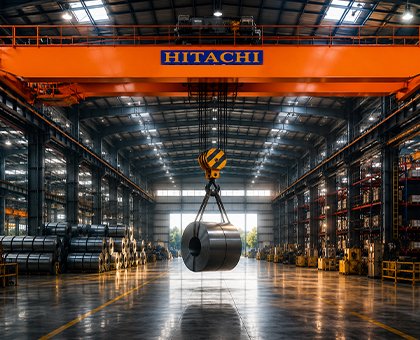
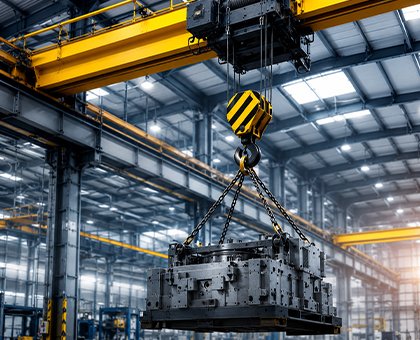
Overhead travelling cranes are among the most widely deployed solutions inside manufacturing plants, operating on elevated runway beams to optimize load transfer across active work bays.
Primary applications include:
- Metals and steel fabrication facilities.
- Heavy machinery manufacturing plants.
- Continuous production lines.
- Maintenance and assembly workshops.
They deliver exceptional heavy lifting capacities combined with smooth, highly accurate maneuvering.
Bridge Cranes
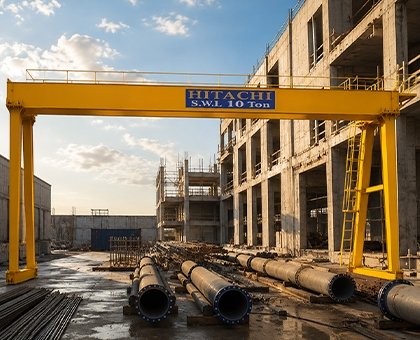
Bridge cranes serve expansive facilities and heavy-duty industrial projects requiring wide span coverage and high load limits.
Key features include:
- Exceptional load-bearing capacity for heavy industrial payloads.
- Suitability for large-scale manufacturing bays and warehouses.
- Precise control over material positioning.
- Versatility for both indoor plant bays and outdoor yards.
Electric Hoists
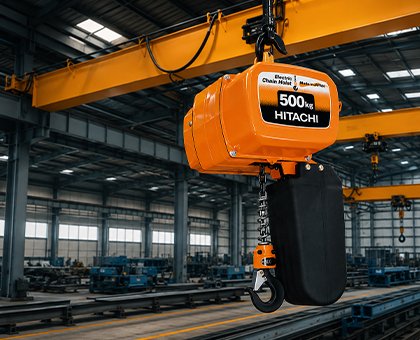
Electric hoists offer a practical solution for facilities requiring fast, repetitive lifting cycles across localized workstations.
Key features include:
- Intuitive operation and control.
- Rapid lifting and lowering speeds.
- Precise load positioning.
- Reduced operator fatigue and physical strain.
Monorail Cranes
Monorail systems are designed for assembly lines and processing facilities where materials move continuously along a single, fixed path.
Ideal for:
- Component assembly plants.
- Processing lines.
- High-frequency, repetitive material transfers.
How to Choose the Right Lifting System for Your Plant
When sourcing factory cranes, evaluate several technical parameters to guarantee the right operational fit:
- Target Load Capacities: Payload weights dictate necessary crane capacities. Select a system rated with a sufficient working load limit (WLL) to operate safely under peak conditions.
- Nature of Plant Operations: Match the crane layout to your industry—heavy machinery plants demand different structural and mechanical duty ratings than light manufacturing units.
- Spatial Footprint & Clearances: Available building height, hook clearance, and runway span dictate structural crane configurations and travel paths.
- Daily Duty Cycles: Multi-shift, continuous-duty environments require heavy-duty rated motors and gearboxes designed to handle constant operation without premature wear.
- Operating Environment: Account for environmental factors such as ambient temperature, dust levels, moisture, or chemical exposure that could impact structural or electrical performance.
The Role of Material Handling Equipment in Boosting Production
Material handling equipment serves as the backbone of plant operations, ensuring the fluid transfer of raw materials, tooling, sub-assemblies, and finished products between manufacturing stages.
Primary operational advantages include:
- Streamlining facility workflow and reducing bottlenecks.
- Cutting internal transport and staging times.
- Driving overall production efficiency and output.
- Minimizing risk of material damage during transit.
- Improving facility layout organization and floor safety.
Core material handling equipment includes:
- Industrial bridge and overhead cranes.
- Electric chain and wire rope hoists.
- Integrated conveyor systems.
- Heavy storage and staging apparatus.
Lifting Solutions for Industrial Projects
Complex industrial projects demand powerful, adaptable lifting machinery to maneuver heavy structures and equipment during construction, installation, and commissioning.
Cranes for industrial projects are essential in:
- Industrial plant construction.
- Power generation stations.
- Infrastructure and civil projects.
- Equipment assembly and staging yards.
- Major engineering endeavors.
The chosen configuration depends on project duration, environmental constraints, and target payload profiles.
Criteria for Selecting a Lifting Systems Supplier
Partnering with the right equipment supplier is as critical as selecting the machinery itself. A specialized vendor provides expert guidance to ensure optimal system design.
Key criteria to evaluate include:
- Extensive field experience in industrial lifting systems.
- Machinery build quality and safety certifications.
- Capability to engineer bespoke, custom solutions.
- Turnkey supply, installation, and commissioning capabilities.
- Dedicated post-sales service, spare parts availability, and routine maintenance.
- Strict adherence to regional and international safety codes.
Importance of Maintaining Industrial Lifting Systems
Routine preventive maintenance preserves equipment performance, protects workforce safety, and prevents costly, unexpected production halts.
Standard maintenance protocols include:
- Inspecting drive motors, gearboxes, and electrical contactors.
- Evaluating control panels, pendants, and remote systems.
- Diagnostic checks on wire ropes, chains, and load hooks for wear.
- Testing primary and secondary brake assemblies.
- Verifying mechanical fasteners, end stops, and runway rail integrity.
Why Choose Al Manarat Al Munira?
Al Manarat Al Munira delivers comprehensive industrial lifting solutions across the Kingdom of Saudi Arabia, bringing deep field expertise to supplying, installing, and servicing equipment for manufacturing plants and industrial projects.
Company services include:
- Supplying factory cranes across all duty ratings.
- Engineering tailored lifting solutions for industrial projects.
- Professional installation and site erection of overhead systems.
- Supplying complete material handling equipment packages.
- Preventive maintenance, modernizations, and equipment retrofits.
- Engineering consultations and technical feasibility studies.
The company focuses on delivering reliable equipment that helps clients elevate productivity while maintaining strict safety standards.
Essential Tips Before Selecting an Industrial Lifting System
Prior to making a procurement decision:
- Clearly define your plant’s material handling objectives.
- Analyze maximum payload weights and structural profiles.
- Match machinery specifications to building dimensions and clearances.
- Verify supplier track record, references, and engineering credentials.
- Establish a structured post-installation maintenance plan.
- Select modular equipment designed to accommodate future expansion.
Frequently Asked Questions (FAQ)
What are the best types of cranes for manufacturing plants?
Selection depends on plant layout and workflow, but overhead cranes, bridge cranes, and electric hoists represent the most widely implemented industrial solutions.
How do I choose the right material handling equipment?
Evaluate material dimensions, payload weights, available floor space, and operational frequency along your production line.
Do lifting systems vary based on the type of industrial project?
Yes, equipment choices vary based on project scale, structural load demands, operating cycles, and site conditions.
Why do plants require regular crane maintenance?
Routine servicing maintains equipment efficiency, minimizes unscheduled downtime, and ensures long-term operational safety.
Does Al Manarat Al Munira provide lifting solutions for plants?
Yes, Al Manarat Al Munira provides complete industrial lifting solutions—covering supply, installation, custom engineering, and technical maintenance across Saudi Arabia.
Conclusion
Selecting the right lifting system is a pivotal operational decision that directly influences plant productivity, workflow efficiency, and workplace safety. Assessing target loads, facility layouts, and duty cycle demands ensures your site acquires a system built to deliver long-term performance. Offering a comprehensive lineup of industrial lifting solutions—including factory cranes, project cranes, and material handling gear—Al Manarat Al Munira provides complete supply, erection, and maintenance services to support industrial growth across the Kingdom of Saudi Arabia.
Modern Industrial Lifting Systems and Their Role in Improving Production Efficiency