
Introduction
Lifting cranes have become essential equipment across various industrial sectors in the Kingdom of Saudi Arabia. Factories, warehouses, infrastructure projects, and the oil and gas sectors rely on them to transport heavy loads safely and efficiently. With the variety of lifting equipment types and their varying operational capacities, choosing the right crane can be a challenge that requires a thorough study of project needs.
In this comprehensive guide, we review the most important criteria to help you select suitable cranes and hoists for the nature of your work, explaining the different types, key factors influencing buying decisions, and practical tips provided by experts at Al Manarat Al Munira to help you achieve the highest levels of safety and productivity.
Why is Choosing the Right Lifting Cranes Important?
Selecting the appropriate crane is not limited to just lifting loads; it directly impacts:
- Increasing the efficiency of industrial operations.
- Reducing operating time.
- Enhancing safety standards.
- Lowering maintenance costs.
- Extending the operational lifespan of equipment.
- Boosting production line productivity.
For this reason, Al Manarat Al Munira is dedicated to providing integrated solutions tailored to the needs of various industrial sectors in the Kingdom.
Key Factors to Consider When Selecting Lifting Cranes
1. Determining Load Weight
Load weight is the first factor to define before purchasing any lifting crane. You should determine:
- Actual load weight.
- Maximum expected future load weight.
- An adequate safety margin.
Choosing a crane with a capacity lower than required poses significant operational risks, while excessively over-specifying capacity increases project costs without real benefit.
2. Required Lifting Height
It is not only the load weight that matters; you must also specify:
- Maximum lifting height.
- Building height.
- Operating space.
- Nature of production lines.
3. Nature of the Work Environment
Operating environments vary across:
- Factories.
- Warehouses.
- Ports.
- Construction sites.
- Steel mills.
- Cement plants.
- Petrochemical industries.
Each environment has distinct requirements regarding resistance to heat, humidity, dust, and chemicals. Therefore, cranes and hoists must be selected that are engineered to withstand the specific operating conditions of each sector.
Types of Lifting Cranes Used in Industrial Projects
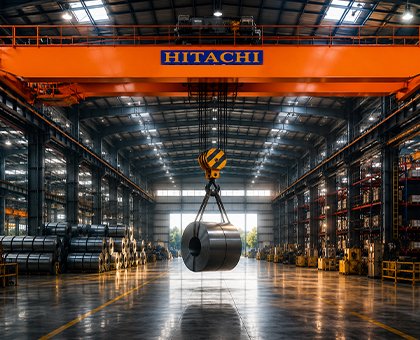
Overhead Cranes
One of the most widely used types inside factories, operating on tracks mounted at the upper structure of the building. Key advantages include:
- Efficient space utilization.
- Fast load movement.
- High precision in movement.
- Suitable for heavy loads.
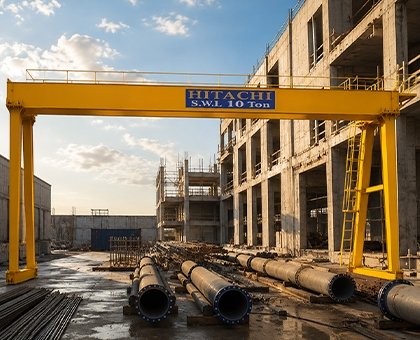
Gantry Cranes
Mainly used in:
- Outdoor yards.
- Ports.
- Steel yards.
- Concrete plants.
Key features include easy mobility and the ability to operate without requiring internal building runways.
Jib Cranes
An ideal choice for small spaces and production lines, providing high-speed load handling within a specific operating radius.
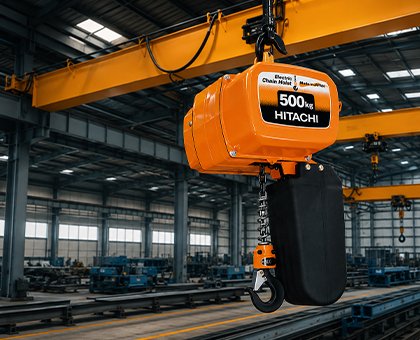
Electric Hoists
Used in combination with many lifting equipment systems, featuring:
- Ease of operation.
- Fast lifting speed.
- Reduced manual effort.
- High operating efficiency.
- Low maintenance costs.
How to Determine the Appropriate Crane Capacity?
Before purchasing any lifting crane, you should answer the following questions:
- What is the maximum weight to be lifted?
- How many times will the crane be used daily?
- Will operation be continuous or intermittent?
- Is there a potential for future production increases?
- Does the project require lifting irregular or asymmetric loads?
All this information helps in selecting the suitable equipment and avoiding breakdowns or unnecessary expenses.
Importance of Safety Standards in Lifting Cranes
Safety is a top priority when operating cranes and hoists in industrial facilities. Therefore, ensure the inclusion of:
- Overload protection systems.
- Emergency stop switches.
- Fail-safe braking systems.
- Electrical protection mechanisms.
- Limit switches.
- Regular inspection and preventive maintenance.
Al Manarat Al Munira is committed to offering lifting solutions that adhere to the highest quality and safety standards, meeting the demands of industrial projects across the Kingdom of Saudi Arabia.
Crane Prices in Saudi Arabia: Comprehensive Guide to Costs and Influencing Factors